 Guinea pigs have been very popular as decorative pets for several years now. This is due to their docile nature, very simple maintenance, unique coloring, and ease of breeding at home. Their name has nothing to do with their care. They don't require a saltwater aquarium. They can easily live in a terrarium, without water, of course.
Guinea pigs. Origin
There are several theories as to why these rodents are called pigs. The Spaniards who landed on the coast of South America wrote in their records that these animals were look like suckling pigs, when they first saw them. Guinea pigs were also bred for food, just like common pigs in Europe. Guinea pigs make sounds similar to squeals and grunts when they are happy or anxious, which is also very similar to common pigs. The rodents are called "marine" only in Russia and Germany. Initially, they sounded like "overseas" (literally, "foreign"), due to the fact that they were brought to these countries by sea. However, their name was later simplified and they became known as "sea pigs."
Guinea pigs are rodents, and their care at home is similar to that of rabbits. Many organizations and private breeders around the world keep and breed these animals. They have successfully developed several rodent breeds with various colors, patterns, and long fur.
Unfortunately, guinea pigs no longer exist in the wild. Around 5000 BC, domestication of these rodents began, primarily for food. Fossil specimens of these animals reveal about their belonging to South AmericaScientists believe that today's guinea pigs are descendants of now-extinct wild species that lived in North and South America.
It is believed that rodents were once quite flexible and could thrive in a variety of conditions. They could adapt to survive in a wide range of altitudes, from sea level to 4,000 meters above sea level. Temperatures ranged from 22 degrees Celsius during the day to -7 degrees Celsius at night, although studies have shown that rodents would die in extremely hot or cold conditions.
Guinea pigs weigh between 700 and 1100 grams. Females are typically smaller than males. Their body shape resembles a small, compact cylinder, 20 to 25 cm long. Small, petal-shaped ears are located on the top of their heads. rodents don't have tailsThe triangular mouth contains 20 teeth. Their teeth, like those of other rodents, grow continuously, and their length is maintained by wearing them down while eating.
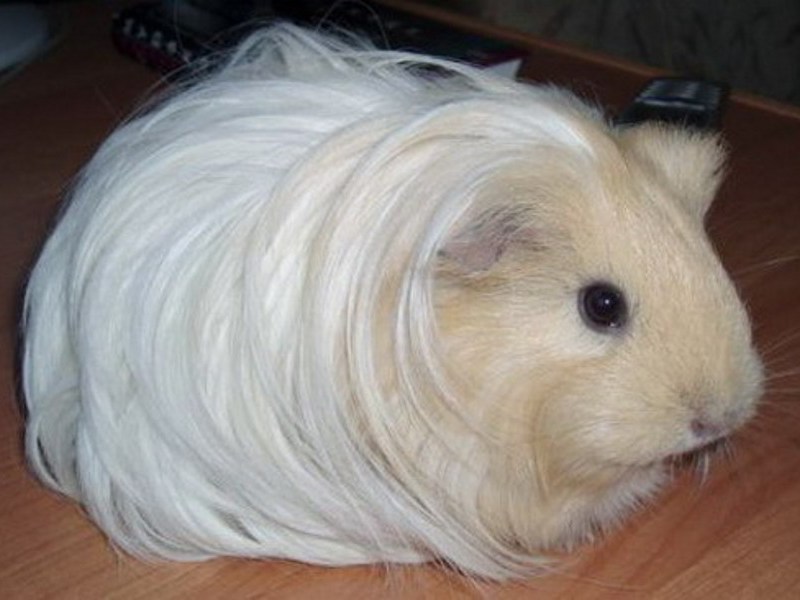
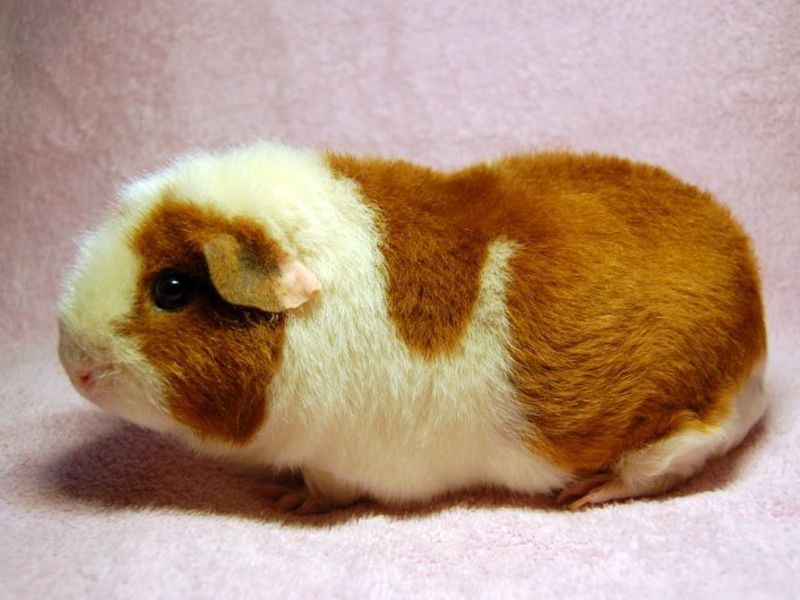
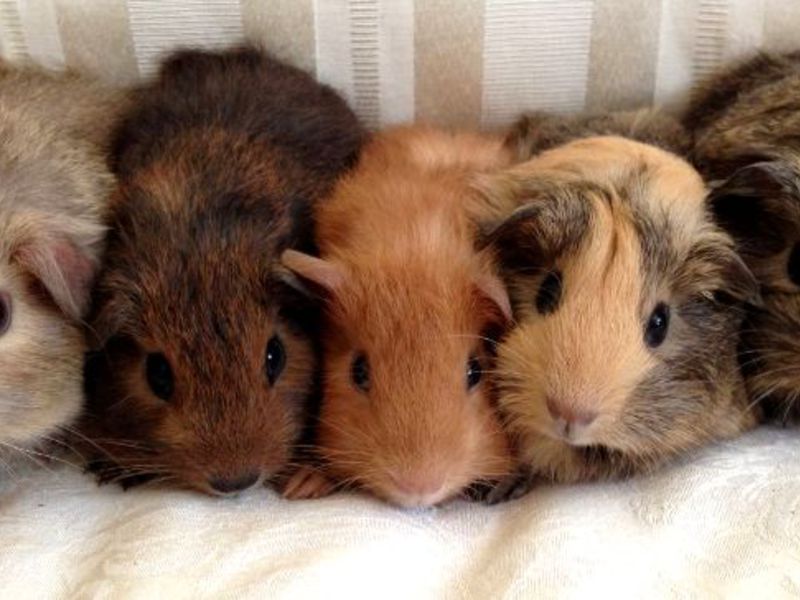
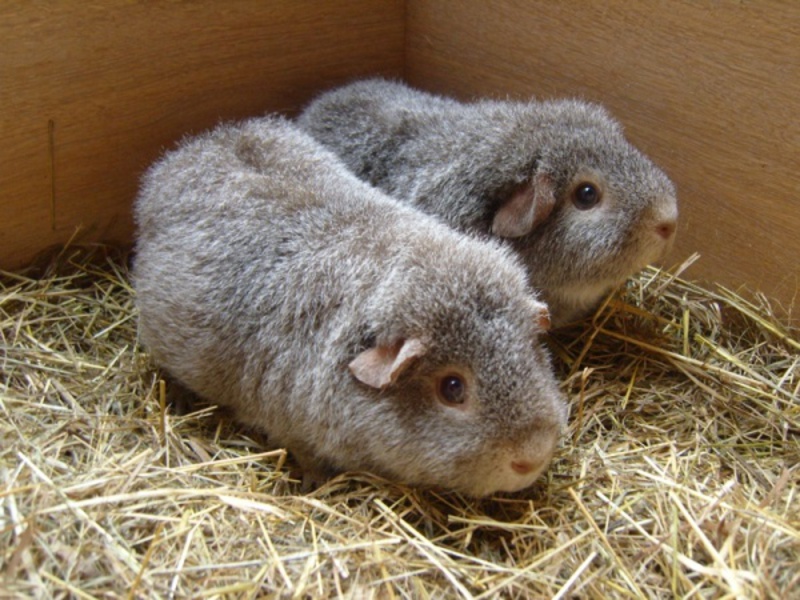
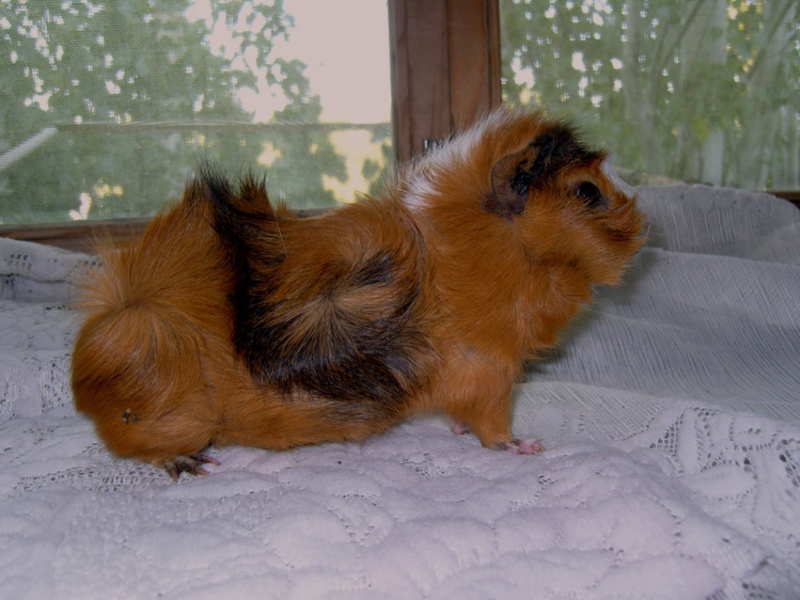
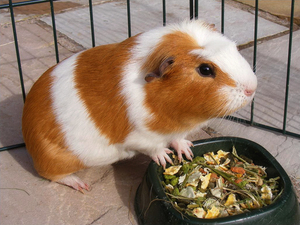
Through selective breeding, approximately 20 different phenotypes of this rodent have been developed, each differing in color, and approximately 13, each differing in fur texture and length. Scientists believe that wild species of these animals had short, chestnut-colored fur, which helped them camouflage from predators. Photo of a guinea pig:
Breeds
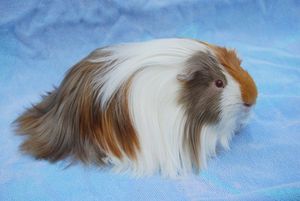 There's more than one classification for this animal among specialists. To simplify matters, all breeds can be divided into groups based on coat length, and the most well-known and popular types can be considered. Guinea pigs are divided into two types:
- Longhaired;
- Shorthaired.
The following species are classified as short-haired breeds:
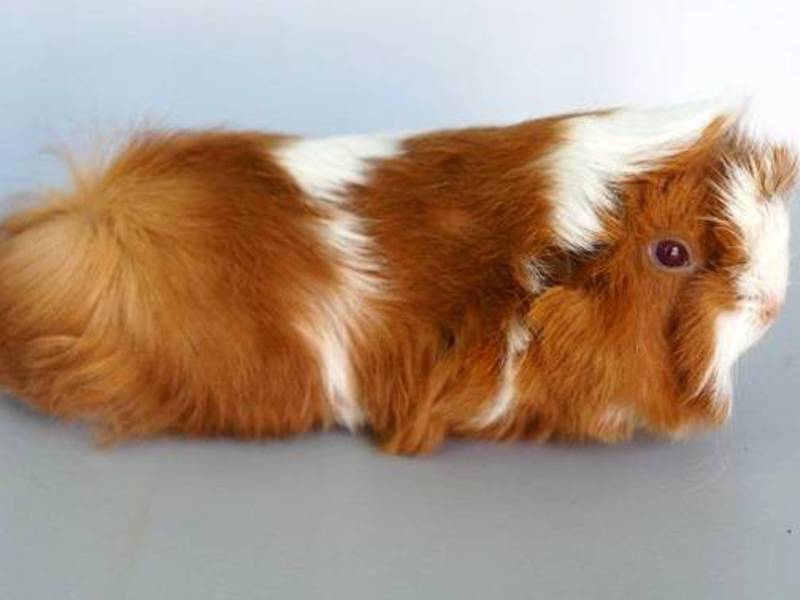
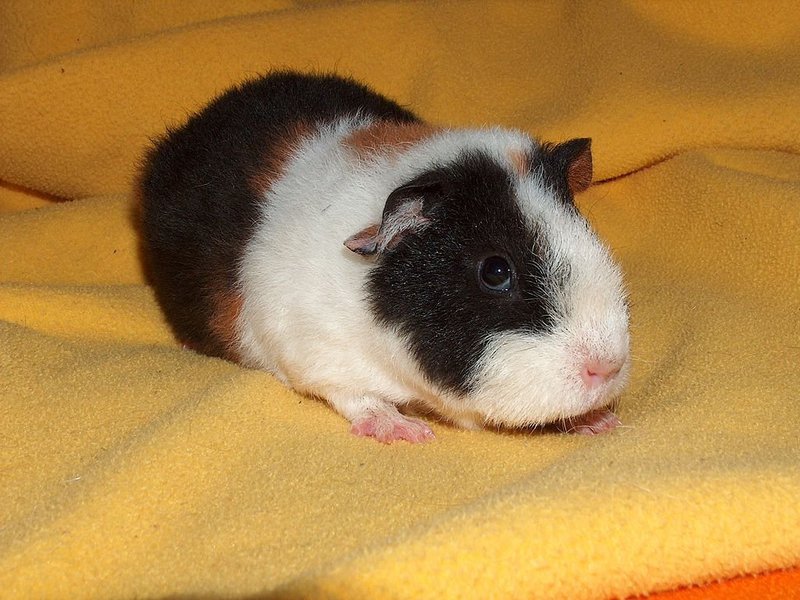
- Bicolor. A rodent's body can have only two different colors;
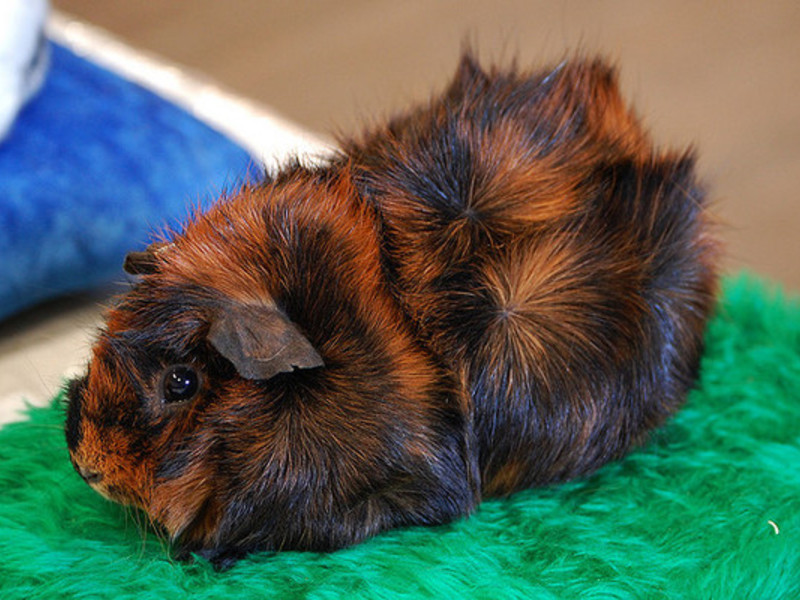
- Tricolor. The rodent's coloring combines only three different colors;
- Self. The entire coat of a guinea pig is only one shade, with the ears and paws matching the base coat. Guinea pigs can be black and white with dark eyes, gold and white with red eyes, gold with dark eyes, beige, lilac, red, brown, saffron, or cream.
- Agouti. These species have lighter tips than the rest of their coat. Agouti can be silver, gold, brown, or lemon;
- Satin. These guinea pigs have a soft, textured coat with a glossy, shiny finish. Satin guinea pigs can come in any color, but bicolor and solid colors are most common.
- Dalmatians. This breed is characterized by a white stripe on the face, pea-sized spots that are darker than the base color, and spots all over the body and belly. Their paws and ears are solid-colored.
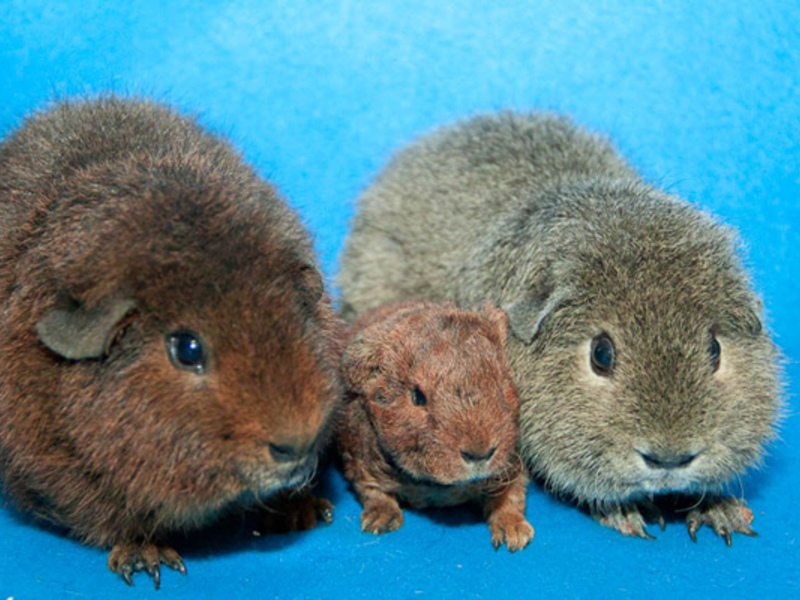
- Teddy. The coat is soft, short, slightly wavy or straight, slightly raised, and plush-like all over the body. The color of this breed can vary;
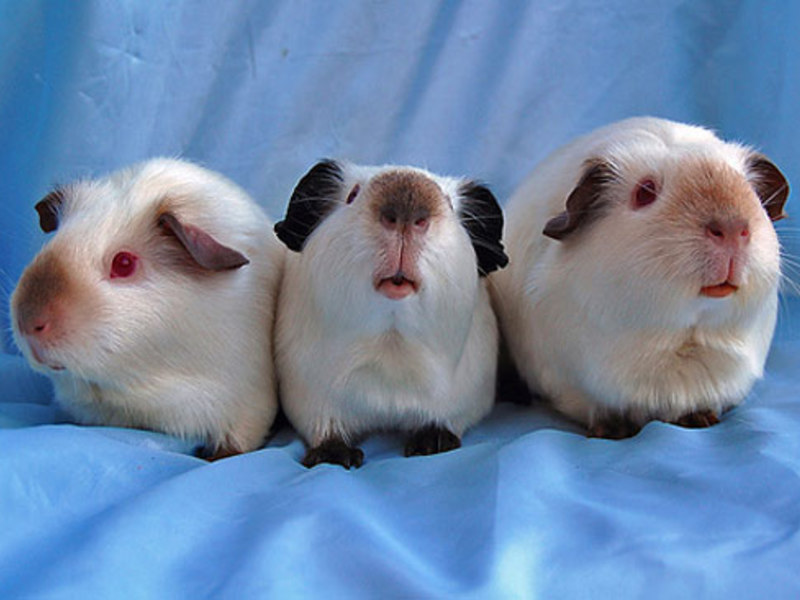
- Himalayans. This rodent species is white, but its ears, paws, and nose are brown or black.
Long-haired species include:
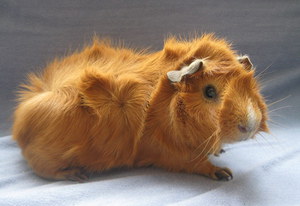
 Texel cats have curly fur that grows from their muzzle down, with no rosettes on their body. They can come in a variety of colors;
- Sheltie. The Sheltie breed's coat grows downwards from the muzzle. Shelties can come in a variety of colors;
- Alpaca. This species has curly fur that grows forward toward the muzzle. There are two rosettes at the back;
- Peruvian. The Peruvian breed's fur grows forward toward the muzzle and falls over the eyes. The Peruvian guinea pig has only two rosettes on the bottom, but some individuals have additional rosettes on their body.
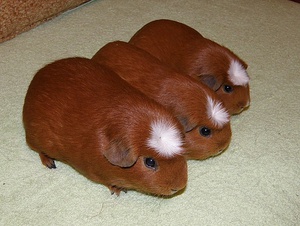 Texel cats have curly fur that grows from their muzzle down, with no rosettes on their body. They can come in a variety of colors;
Among the rare breeds we can highlight:
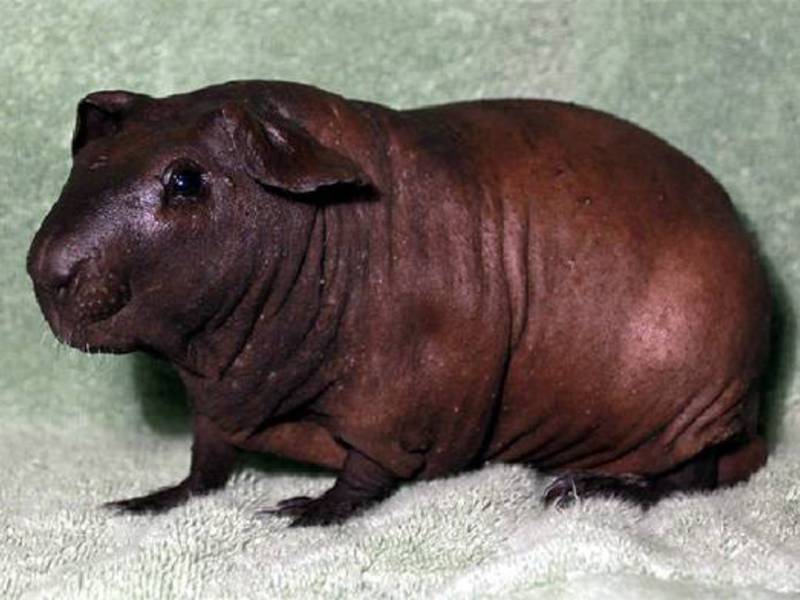
- Baldwin. This species is hairless. Babies are born with fur, but it falls out over time;
- Kui. This species is considered giant, as at birth the pig weighs 100-150 g, at 3 months it reaches 700-800 g, and at 4 months it can weigh 1000 g. Adults can reach an average weight of 2 to 3 kg.
- Skinny. This breed has no hair on its body, except for its paws and nose.
Conclusion
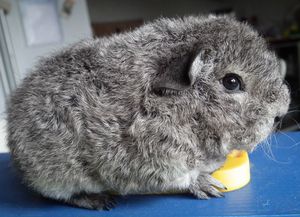 Guinea pigs are currently sold and distributed as a domestic decorative animalAlthough guinea pigs are still eaten in their native South America, they are also commonly used as test subjects in biomedical research. Guinea pigs are now readily available in any city. You can often find advertisements for sale in newspapers, and online pet stores and pet shops are also well established. Prices for these rodents are low and affordable.