Caring for a hamster involves not only providing adequate nutrition and a comfortable home, but also ensuring your pet has plenty of active leisure time. In the wild, rodents are active. At home, they also need a place to stretch their legs. The best way to do this is with a maze. It's also a budget-friendly option, as you can make your own maze using simple materials.
Content
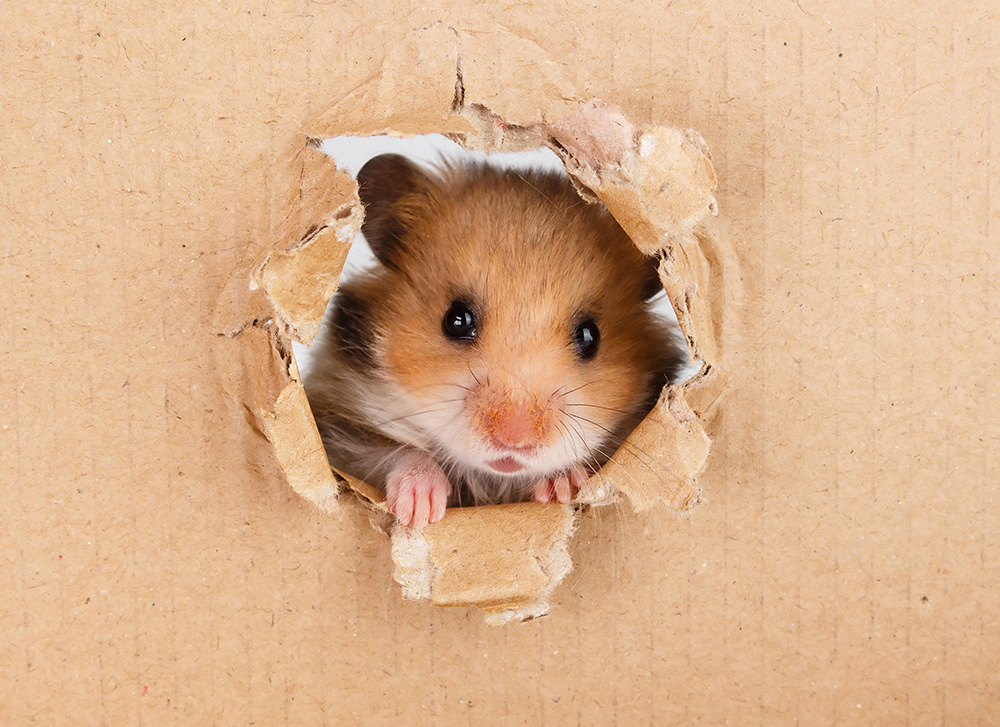
Cardboard maze
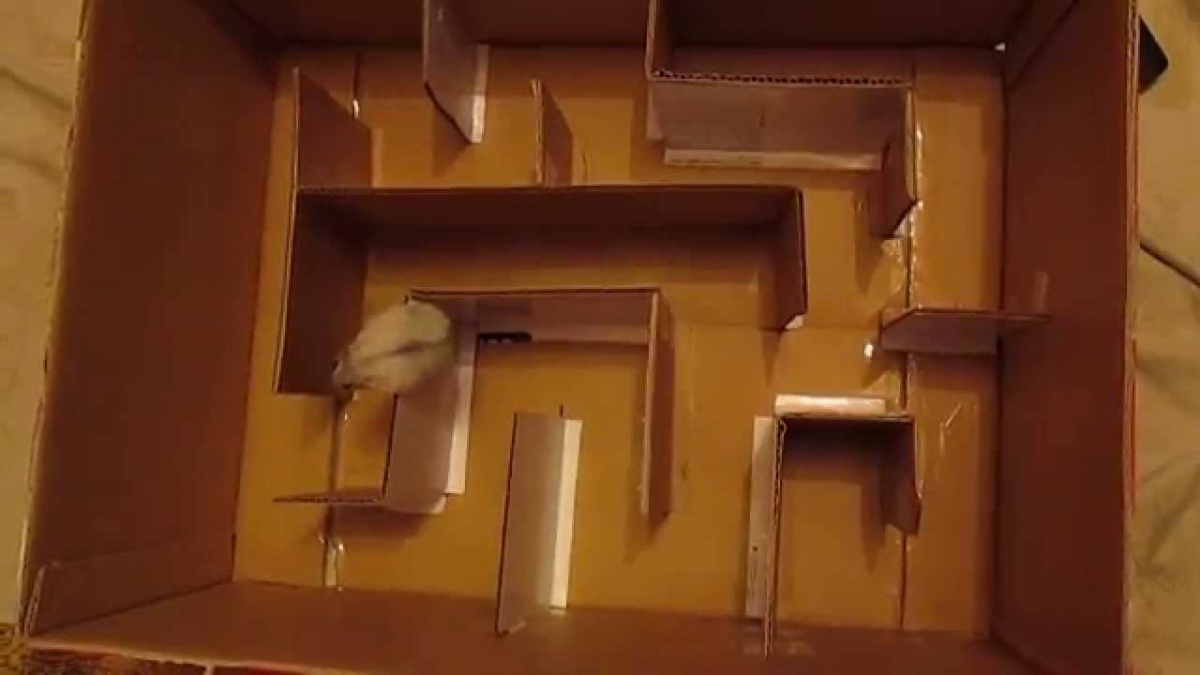
This material is well suited for constructing the structure. It's affordable and easy to use. Even children can make this cardboard craft. It's important to plan the maze's layout and dimensions in advance.
To make things easier, you can use a cardboard box as a template. In this case, you only need to make the interior partitions and obstacles. The box should be 20-30 cm high, and the wider and longer it is, the more fun it will be for your hamster to explore.
For work you will need the following materials:
- carton,
- cardboard,
- pencil,
- ruler,
- a stationery knife or scissors,
- double-sided tape or glue gun.
Master class:
- Draw a labyrinth diagram with a pencil on the bottom of the box, along the lines of which future elements will be attached.
- Create interior partitions. Using scissors or a utility knife, cut 15 cm high walls out of cardboard. Some should have holes punched in them for tunnels.
- Install the partitions. Glue the cardboard walls of the maze to the lines on the bottom of the box using double-sided tape or a hot glue gun. You can attach walls that match the width of the box, after punching holes in them for entry and exit. Alternatively, you can make the partitions out of small pieces of cardboard in any order you like.
- If desired, attach tunnels (rollers from toilet paper or foil).
- Add additional elements. In areas free from partitions, install a running wheel and bridges. The latter can be made using cardboard or popsicle sticks.
- If you want to decorate the entertainment complex: cover the walls with colored paper, draw windows and doors with markers.
Don't leave your hamster unattended in a cardboard maze. After exploring to its heart's content, it might chew through the cardboard and attempt an escape.
Plywood structure
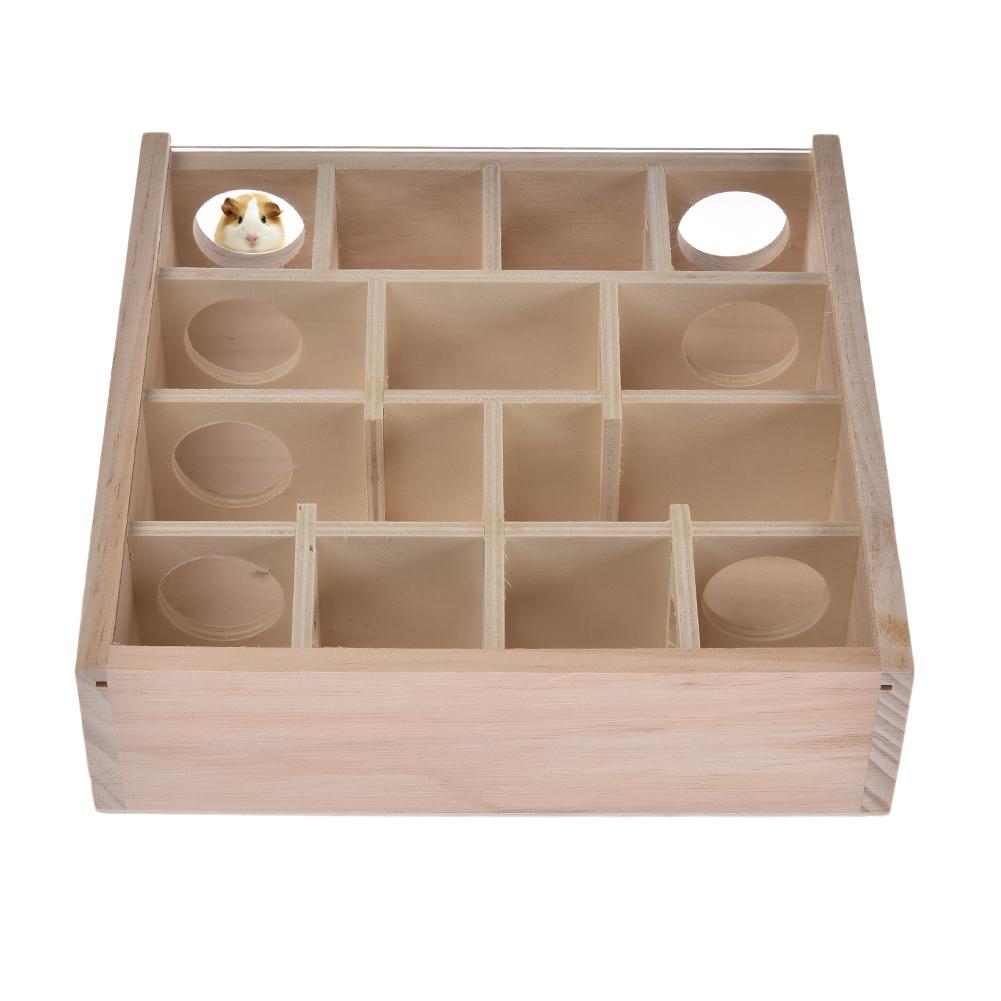
Building a plywood maze takes more time than constructing one made from other materials, but the results are worth it. It will last much longer than its counterparts.
To make the structure you will need:
- plywood,
- ruler,
- pencil,
- electric jigsaw,
- PVA glue.
Master class:
- Make a box out of plywood. Cut out the bottom to the desired size and four walls 15–20 cm high. Coat the edges of the base with PVA glue and attach the walls to it.
- Prepare 3-4 long internal partitions. Their length should correspond to the width of the box. Punch round holes at one or two ends of each wall to allow the hamster to crawl through.
- Make 11–14 small partitions, which are installed between the long walls and perpendicular to them. Holes should also be made in them.
- Sand down sharp edges of parts using fine sandpaper.
- Form the labyrinth. Apply PVA glue to the edge of the partition and press it against the base of the box. Repeat with the remaining walls.
- Excess glue on the plywood should be blotted with a napkin.
- The structure can be covered with a sheet of plexiglass, leaving a small gap for air to pass through. This will prevent the hamster from escaping.
Tunnel made of plastic bottles
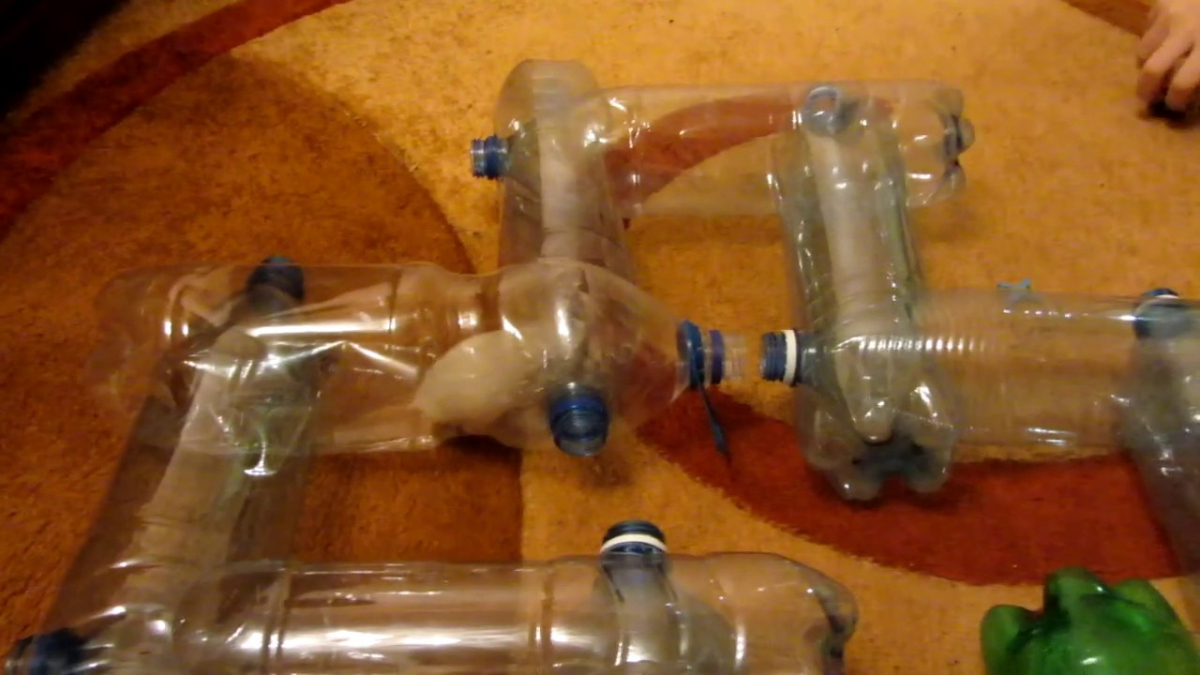
Hamsters love enclosed spaces, similar to burrows. Therefore, plastic bottles are ideal for making a maze. Moreover, this material is affordable and safe. You just can’t use containers from household chemicals, so as not to harm your pet’s health.
To work you need:
- plastic bottles of any capacity,
- stationery knife,
- scissors,
- insulating tape,
- scotch.
Master class:
- Wash and dry the bottles thoroughly, remove the labels.
- Take one container and make two holes on opposite sides. The larger hole should be equal to the diameter of the bottle, and the smaller one should be equal to its neck. To do this, use a knife to make a cross in the side of the bottle, then finish the job with scissors.
- Cut a hole near the neck of the second container. It should be large enough for the hamster to pass through freely. Wrap the openings with electrical tape to prevent the rodent from injuring its paws while running.
- For the second container, unscrew the cap and insert the bottle neck through the large hole, then through the small one. Then screw it back on.
- Extend the tunnel to the desired size in a similar manner. If desired, you can also create several spacious areas using five-liter bottles. One area can be for the running wheel, a second for the water bottle and food bowl, and a third for a sand container or toys. And of course, don't forget to cut an entrance hole for the hamster.
A rodent can remain in such a labyrinth all day long. All you need to do is poke a few holes in each bottle with an awl. This will ensure fresh air, which is essential for a pet spending long periods in a confined space.
What else can you make a labyrinth from?
With a little imagination, you can find a variety of materials in your home that can be used to build an entertainment center for your pet.
From a toy construction set
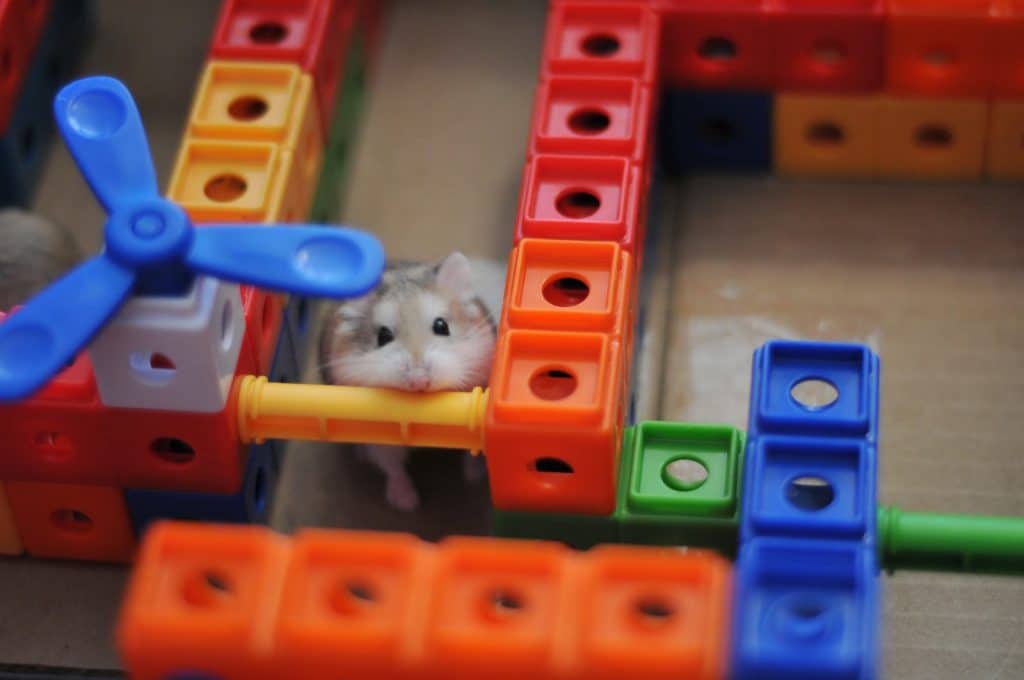
Hamsters most often appear in homes with children. This means there's a toy construction set available, which can be used to create a colorful playroom for your pet. This building material offers a wide range of possibilities. You can build an entire maze-like town with streets, towers, arches, bridges, and walkways with second floors. Small plastic toys make a wonderful addition to the structure.
One of the advantages of a maze made from construction kits is the ability to quickly change the route. In a matter of seconds, you can rearrange several pieces, and the hamster will have to re-plan the optimal route. Stimulating mental activity will benefit the animal.
From plumbing pipes
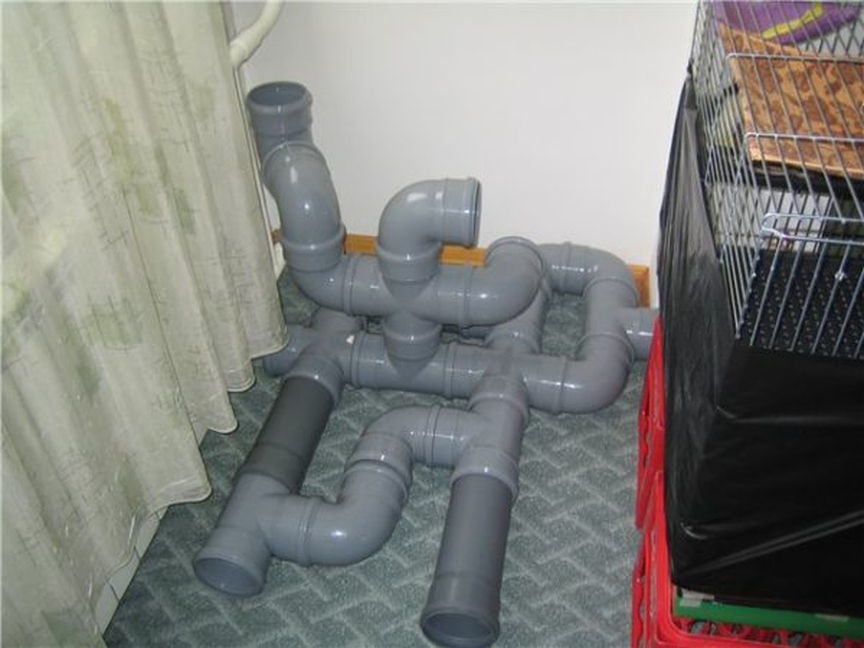
Of all the maze options, this one is considered the most expensive. But if you have any spare plumbing pipes left over after renovations, they can be used to entertain your beloved pet.
Modern products are made of non-toxic plastic, making them safe for animals. The pipes are threaded and easy to disassemble and reassemble. The design can be upgraded at any time.
Transparent tubes allow you to watch the hamster's wanderings, which is very exciting. But pets themselves prefer dark tunnels, just like in the wild. To please both pet and owner, you can combine two types of plumbing pipes in a design.
From books
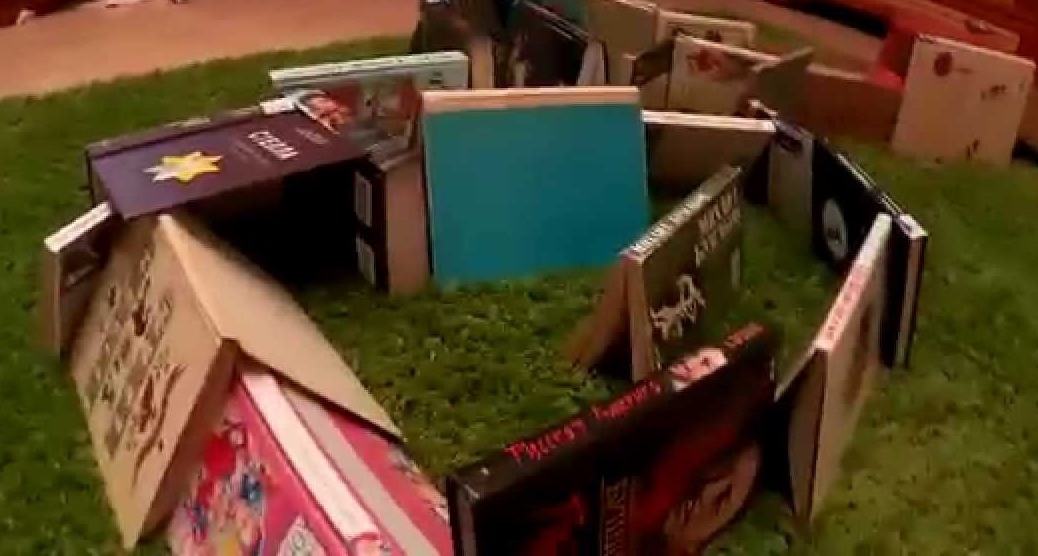
Old books are also suitable for creating a maze. To do this, place them spine-side up. The books can be used to create running paths with a width of 5–10 cm. It's also a good idea to enclose the maze with books to prevent the pets from wandering off.
Children love to organize hamster races in these book forts. Participants are released from their cages and watched to see who reaches the finish line first. A treat awaits the winner at the end.
When making a hamster maze, it's also fun to combine different materials. For example, combine cardboard or plywood with plumbing pipes, or a children's construction set with books.
You don't need to spend money to keep your hamster happy and healthy. All you need is imagination and simple materials that everyone has. Besides, a handmade craft is always more valuable.