Guinea pig owners often need to determine the sex of their pet, especially when it comes to newborns. This is necessary to choose a suitable name, purchase a specific sex, or avoid breeding when introducing one guinea pig to another. It's also important to separate males from their mothers promptly.
Even if you buy a guinea pig from a breeder, a pet store, or from an ad, don't blindly trust the seller's assurances that it's a male or female—it's best to double-check everything first. This can be done not only by a veterinarian but also by anyone—all you need is some knowledge of guinea pig anatomy and behavior.
Content
Distinctive sexual characteristics of adult guinea pigs
When it comes to guinea pig physiology, there are 5 anatomical features that can help you distinguish between males and females:
- distance from the genitals to the anus,
- shape of the genitals,
- nipple size
- anal sac,
- weight of the animal.
Genital shape
Determination by the shape and position of the genitals is considered the most accurate method. All other methods should be considered only as auxiliary.
To visually determine the animal's sex by the shape of its genitals, wait until it's at least two weeks old and then examine it. Before doing this, be sure to wash your hands thoroughly and choose a comfortable surface to prevent the pig from injuring itself if it falls or struggles. The floor or a low stool will work well. For comfort, use a blanket or towel. Offering the pig a treat during the examination will distract it.
The animal should be held carefully but firmly, as these pets are often skittish and may struggle to hold. Turn the guinea pig over so that its abdomen is clearly visible. Hold the animal by the back and try not to prolong the examination, as guinea pigs do not like to lie on their backs for long periods.
Never shake the pig or squeeze it too hard.
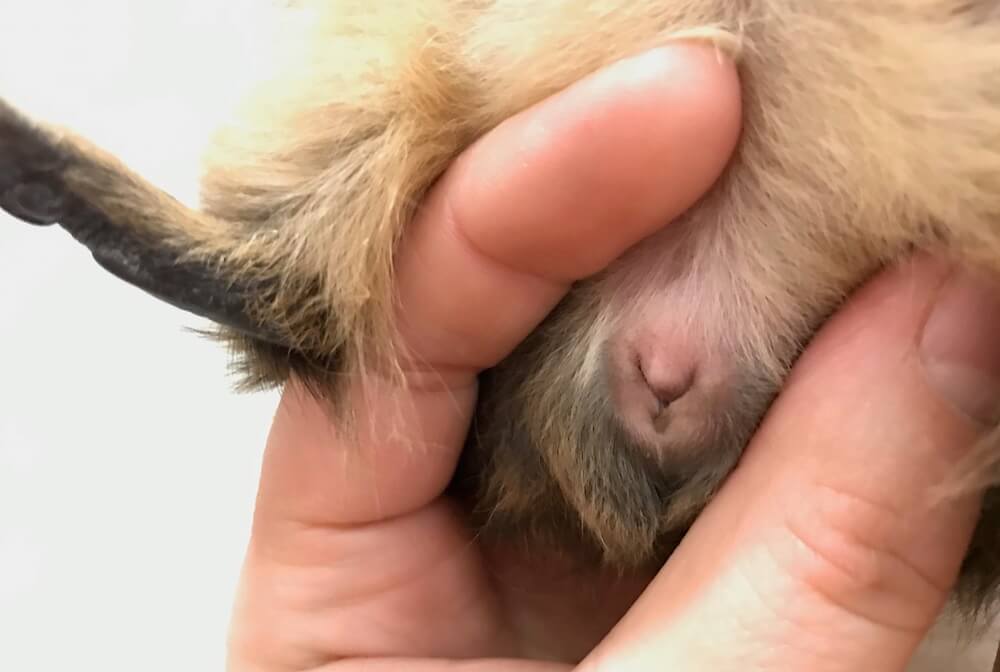
Feel the genital opening and gently spread it with your fingers. Typically, females have slightly swollen genitals, and the genital area itself resembles a vertical slit, or a V- or Y-shape. The vulva does not protrude above the skin; they are flush.
In male guinea pigs, the genitals are a small point with a slightly protruding penis. This will be more prominent if you press lightly on the skin above the genital opening. The testicles are located at the edges, but in young males, they are not always palpable. The urethra is located in the center of this area, and the foreskin has a slight curve at the edges.
The scrotum of male guinea pigs is very large for such a small animal. Therefore, it is located not between the anus and penis, as in most other animals, but under the skin in the same area. This anatomical feature of males causes the anal area and genitals to appear convex. If you grasp one of these convexities, you can feel the testicle—it is not fixed in the scrotum but can move under the skin and even retract into the abdominal cavity. However, it is not always possible to palpate the testicle—sometimes, when frightened, the male withdraws it too deeply. Therefore, it is important to examine the animal when it is relaxed.
Determining the sex of a guinea pig by its genitals is much easier if you have several animals to compare.
Read also about Keeping guinea pigs at home.
Distance from the genitals to the anus
Guinea pigs have a brown or gray vertical opening beneath their genitals—the anus. The distance from it to the anus can also help determine the animal's sex. In females, this distance is shorter (almost nonexistent), while in males, it's longer.
Fecal pocket
Another characteristic of male guinea pigs is the fecal pouch. This is a small opening between the testicles where a special lubricant is constantly produced. Males use it to mark their territory: they press against and rub against surfaces to leave the lubricant. On the inside of the pouch are glands that secrete fluid, visible if the pouches are turned inside out.
In an adult animal, the fecal pocket can be easily seen, but in newborns this is problematic.
Guinea pig size
Like most other animals, male guinea pigs are larger than females. Females typically weigh no more than 1 kg, while males can reach 1.3-1.5 kg. However, as with everything, there are exceptions to this rule.
Nipples
Females typically have larger and more prominent nipples than males. This is easy to notice when examining an adult animal. Guinea pig nipples are pink and easily palpated. Males have less prominent, gray-brown nipples that are much more difficult to detect.
You can determine the sex this way by comparing several pets.
How to determine the sex of a baby guinea pig
An animal should be at least 2-3 weeks old for an examination. Examinations at a younger age are pointless and even dangerous, as the mother may then refuse to feed her pups—a possible reaction to foreign odors on the skin and fur. Furthermore, young guinea pigs have poor thermoregulation, which poses a risk of hypothermia. Therefore, it is recommended to refrain from examinations for at least the first 2 weeks of life. However, if necessary, it is important to do everything carefully and quickly.
The smaller the animal, the more difficult it is to determine its sex with 100% accuracy. Sometimes even professional breeders and veterinarians make mistakes when dealing with newborn pets. However, there's no point in delaying, as guinea pigs reach sexual maturity at six weeks of age. If they aren't separated by then, uncontrolled breeding will begin. Therefore, it's optimal to determine sex no earlier than three weeks of age and no later than six weeks of age.
The optimal method for sexing a guinea pig is by the shape of the genitals and the distance from the genitals to the anus. All other methods are not informative for young guinea pigs. We discussed how to examine the animal in detail in the previous section.
The main differences between male and female guinea pigs
Apart from the physiological differences between males and females, things are not so simple with guinea pigs – the younger the animals, the more similar they are, but there are some differences.
External signs:
- Wider head, cheekbones and forehead in males.
- The presence of a waist-like structure in the female.
- Difference in weight (males are larger).
- More pronounced nipples in mature females.
Another way to determine sex is by the animal's droppings. In males, these are a closed arc with a groove, while in females, they are without a groove.
There are other characteristics, too. For example, an adult female goes into heat approximately twice a month, lasting two days. During this time, her genitals enlarge (they can now be seen without palpation), and the animal itself emits a pungent odor reminiscent of urine.
Behavioral characteristics include males being more sociable and active, suffering from loneliness, being less fearful of people, and spending more time with their owner. If you have two or more males, they may fight and squabble.
Female guinea pigs are not as sociable, inquisitive, or talkative, but they are more affectionate. While they are more timid, they are more accepting of newcomers.
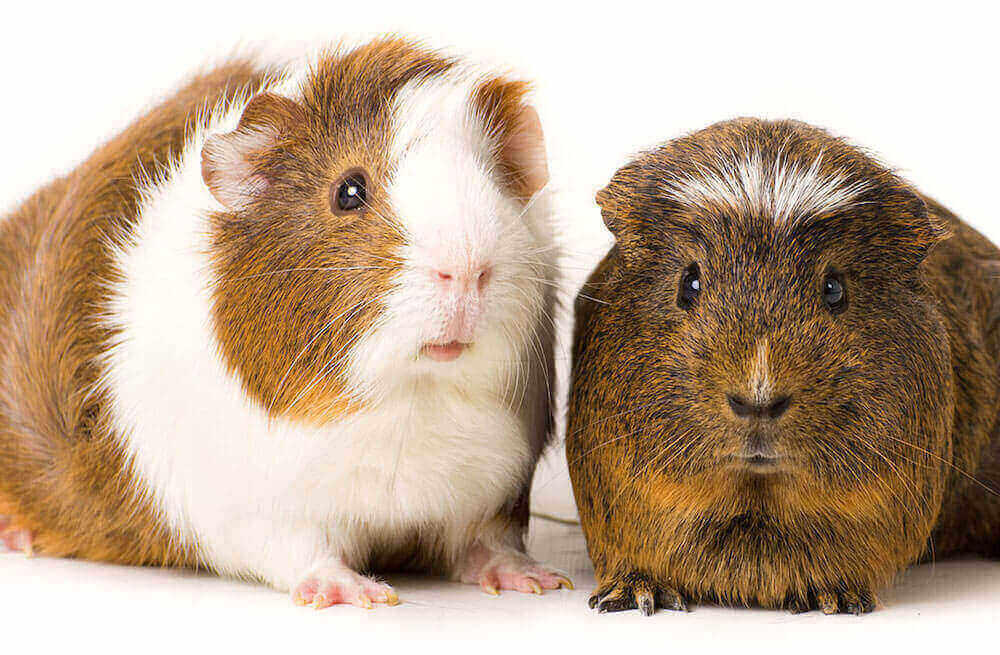
Brief conclusions on how to distinguish a female guinea pig from a male one
Determining the sex of a guinea pig at an early age can be challenging, but it's easy with an adult animal. The most reliable method is sexing by genitals. This is easiest for those who have several animals to compare, or who have experience with guinea pigs and are familiar with their characteristics.
If the guinea pig is sexually mature, you can easily tell whether it's a boy or a girl by its size, behavior, and external sexual characteristics (nipples, fecal pocket, etc.). This can be done without examining the genitals. The smaller the guinea pig, the more difficult it is to determine its sex, and at ages under 2-3 weeks, even veterinarians can't.
Read also: breeds of guinea pigs.