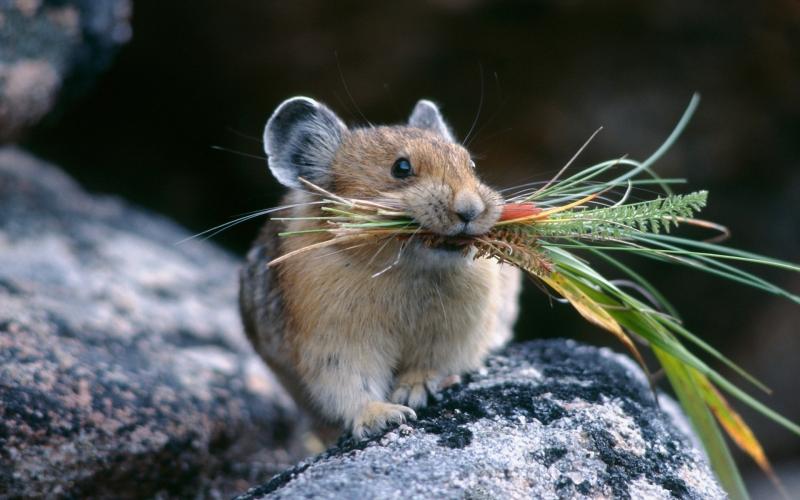
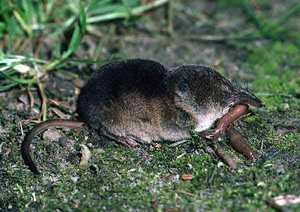
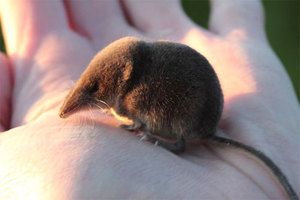
 Those who have never seen a shrew might mistake it for a common mouse. This is not surprising, as it has the same fur color and a long tail. However, there are some differences: the shrew's snout is different from that of a mouse, and it has an elongated proboscis at the end.
Moreover, it is impossible to call a mouse and a shrew close relatives, since the former represents the rodent family, and the latter belongs to the class of insectivorous mammals.
Habitat
What makes this animal stand out is its very small size. This is why they are usually classified as to the smallest predators on the planetThose who have encountered shrews frequently are familiar with their aggressive nature, which explains their nickname, "little devil." The shrew genus includes approximately 300 species, which can be divided into two families:
- white-toothed (with white teeth);
- shrews (with dark colored teeth).
Among the most common representatives of the family, the following species are worth highlighting:
- tiny shrew;
- dwarf white-toothed shrew;
- water shrew, etc.
You can meet these miniature animals almost anywhere in any part of the globe, as they thrive in areas with different climates.
Their habitat is extremely diverse: shrews live in South America, Colombia, the United States, and Russia. The only places you won't find them are in the polar regions and Australia.
In our country, this family is represented by 20 species. The most common of these is the common shrew. This animal has a very small body, which can reach 3-18 cm in length.
Characteristics
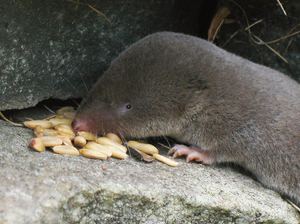 The shrew's fur is thick and short, and brown. Its teeth are sharp, and its muzzle is elongated, adorned with a flexible proboscis. It uses this proboscis to find food: it easily loosens and digs the soil with it. On its sides, the shrew has special glands that secrete a persistent odor, which is necessary for protection from enemies.
Shrews have a keen sense of touch and smell, but their vision is less good. They remain active year-round: with the arrival of spring, they begin to forage through the leaves, searching for food, and with the onset of winter cold, they also search for food under the snow. Females give birth once or twice a year, with one to ten young at a time. They breed most often during the warmer months of spring and summer. Shrews have a short lifespan—no more than 18 months.
Where does it occur?
Shrews are terrestrial animals that are accustomed to inhabiting in places with dense vegetation and gardens so that they have a soft bed of last year's leaves on which to sleep comfortably.
When building a home for themselves, these animals typically make it shallow. But they usually find an empty house abandoned by its owner and live there. They often make their home in rotten trees, often with a cozy crevice or hollow. Shrews sleep during the day and hunt at night. Each animal has its own home range. Sometimes these ranges converge in certain places, but an animal will never enter another's territory. Doing so is considered a taboo.
They are very meticulous about their diet and will not allow anyone to hunt on their property. However, if a strange shrew happens to enter their territory, the owner will engage in combat with the intruder. The fight often ends with the death of one of the animals. Shrews rarely allow anyone to take their prey, so these animals are prepared to defend their food even from lizards and mice.
Shrews are very prudent creaturesAfter the animal eats insects in one area, it begins to search for them in another, giving the previous one time to replenish its food supply.
Nutrition
 Shrews are designed to have a constantly functioning digestive system. Therefore, they are almost constantly forced to forage for food, taking only short breaks to rest. This explains their unique lifestyle. For them, the day is divided into two parts: hunting and sleeping. Each animal lives its own day. For some, it's divided into 10 intervals, while for others, it includes 78. In other words, the animal will have to go to sleep and wake up 78 times a day to forage for food.
Shrews require a very large amount of feedThey must constantly maintain a certain body temperature and always have a reserve of energy. This is only possible through the constant process of digestion, which inevitably produces heat. Therefore, they must consume large quantities of food. Sometimes, in a single day, shrews can consume an amount of food that can exceed their own body weight.
Lack of food is very dangerous for the life of a shrew: if in the summer they can survive without food for no more than 8-10 hours, then in the winter it is enough to remain without food for more than 3 hours for the death of the shrew.
Nutrition at different times of the year
Diet of shrews quite diverseIt all depends on what time of year she gets her food.
- In spring and summer, it feeds primarily on insects: mole crickets, worms, slugs, caterpillars, and woodlice. If the animal hasn't eaten for a while, it may act like a predator and try to catch small rodents like mice. Water shrews feed on small fish and frogs;
- In winter, finding food for shrews isn't easy. The bare ground no longer holds as much food as in summer. They have to break through the snow to reach the soil, searching for insects. Shrews can also eat plant seeds. Given the scarcity of food available in winter, only the most resilient and active survive until spring.
Benefits and harms
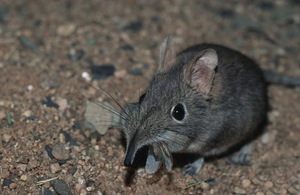 Some might consider the shrew a worthless animal, but in reality this is not the case. For humans, this the animal can be very useful.
In search of food, shrews loosen the soil in gardens and vegetable patches, which they do very well thanks to their unique trunk-like nose.
During so-called "plowing," the soil is saturated with oxygen and simultaneously cleared of harmful insects and larvae. But if you're accustomed to beautiful lawns, shrews will certainly cause you quite a bit of trouble due to the constant burrows you'll encounter on your property.
Shrews are incredibly useful creatures because they can reach many harmful insects in places that other insectivores and birds cannot reach. It's easy for them find pests under rocks, under the snow and in the depths of burrows.
When first encountered, these animals appear to be quite cute and fluffy creatures, incapable of harming humans. However, if you try to catch one, they can bite, which can cause severe pain. Therefore, if you encounter a shrew on your property, forget about catching or handling it.
Conclusion
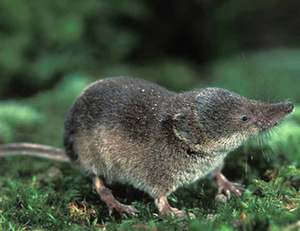 Shrews are known only to specialists, but ordinary gardeners are almost unfamiliar with them because it's practically impossible to see these animals during the day. Many don't even know they exist: if they do encounter one, they'll be can easily mistake it for an ordinary mouseThis is understandable, given the many similarities between them. However, shrews can still be distinguished by the presence of a proboscis-like nose.
Even if you encounter this creature on your property, don't try to drive it away. It's a very useful creature that will help maintain order in your yard. This little creature is practically constantly searching for food, scouring the soil for various harmful insects and larvae, thus doing one of the most difficult jobs for you.