 The jaguar is a carnivorous mammal of the feline family, a member of the panthera genus (of which there are four), native to the Americas. In the wild, it is the third-largest animal in size, surpassed only by the tiger and the lion. This cat is the most powerful and largest in the Western Hemisphere.
Habitat and characteristics of jaguars
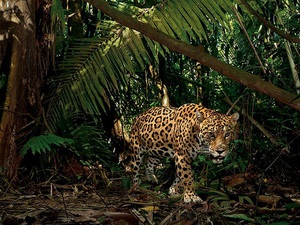 These enormous cats inhabit the grasslands and forests of tropical South and Central America, but can also inhabit the desert. They can also be seen in the state of Arizona, located in the southern part of the North American continent.
Some scientists are confident that jaguars inhabited the planet 2 million years ago, their relatives spread across Asia, Europe, and AfricaHowever, DNA analysis showed that the first jaguar appeared 285,000–515,000 years ago, later than fossil evidence suggests.
The characteristics of the "black panther" are as follows:
- The body reaches a length of 120-195 cm.
- Tail up to a meter.
- Height - 76 cm.
- The average body weight is from 56 to 96 kg.
- Pregnancy lasts 91-111 days.
- The female becomes sexually mature at two to three years, the male at three to four years.
- A litter usually consists of 2-3 kittens, sometimes 1 or 4. The kittens remain with their mother until they are 6 weeks old. They then remain with her until they establish a hunting territory.
- The animal's lifespan in the wild is 12 years, in captivity - up to 28.
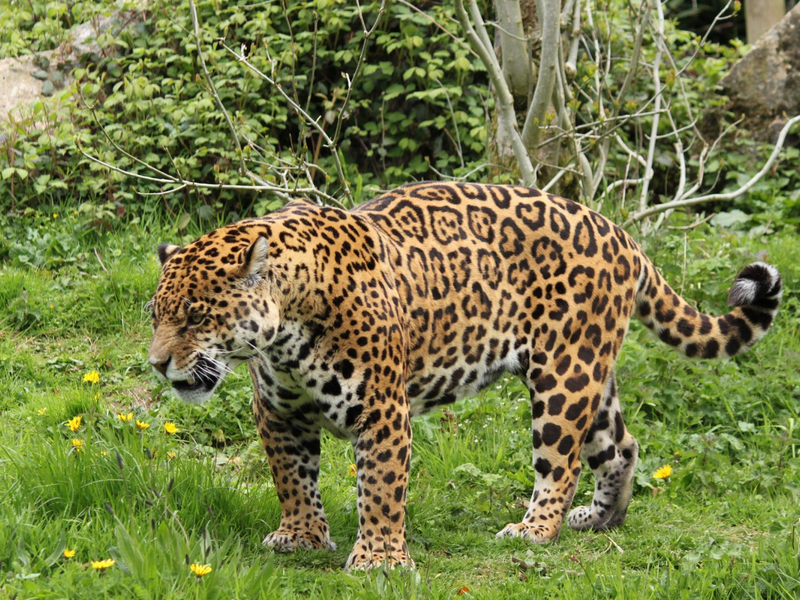
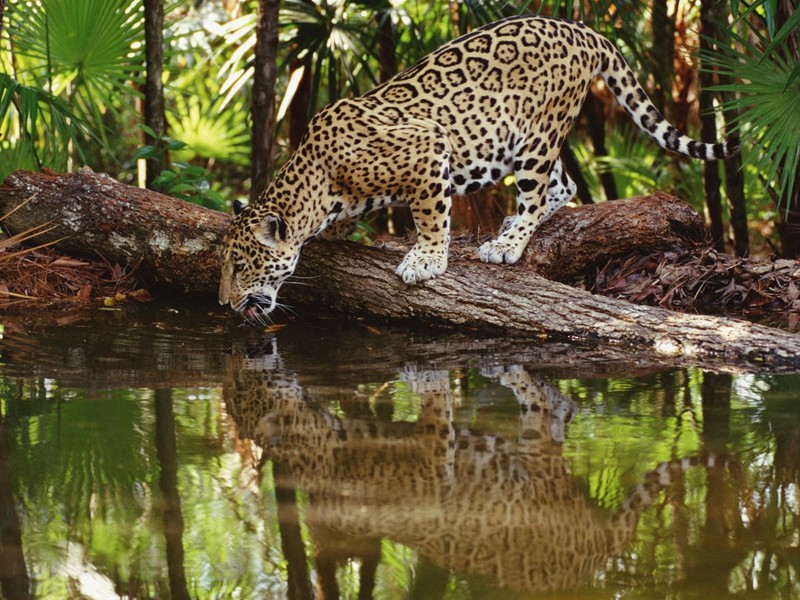
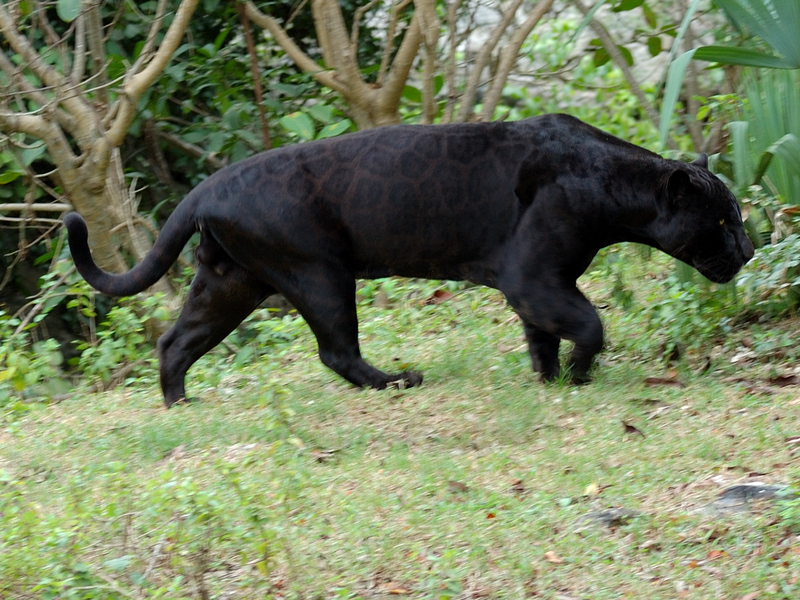
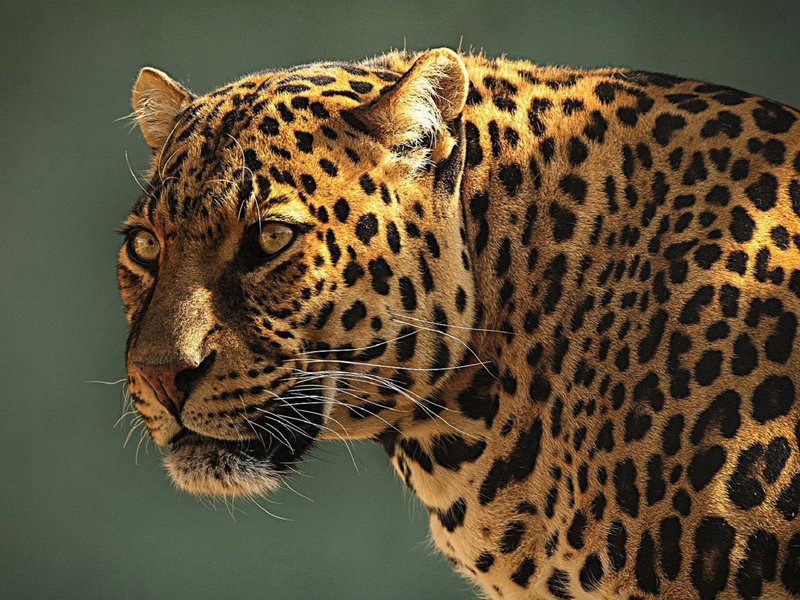
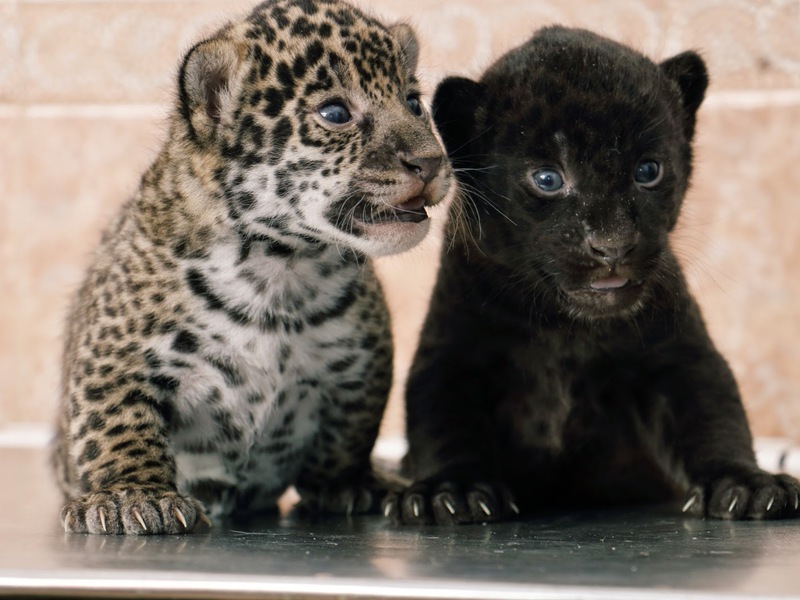
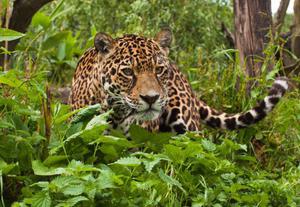
What kind of panther is this? How is it different from others? The jaguar, a photo of which can be seen on our website, looks like a leopard, but more muscular and powerfulIts legs are relatively short, but massive, and its chest is powerful.
It can be distinguished from other felines by the spots on its skin, which are located in the center of the rosette. This animal is similar to a tiger in its habitat preferences and behavior. The big cat has the strongest jaws among his entire family.
The jaguar is known as an excellent swimmer. It prefers habitats near bodies of water. It prefers to live along rivers and in periodically flooded forests and shrublands. It is almost impossible to see it in open spaces, as it prefers the shaded conditions of tropical forests.
The animal's coat coloration makes it invisible while hunting. It's perfect camouflage, difficult to spot between patches of light and shadow. Distinctive spots are located on the sides and back, while the inner legs, belly, throat, and chin are typically white.
A distinctive feature of the jaguar of different subspecies, despite the different coloring, is the presence black spot in the corner of the mouth and dark spots with white or yellow speckles behind the ear on the back.
These animals were revered by Native Americans, including the ancient Mayans and Aztecs. The Indians believed that the jaguar possessed hypnotic powers, rendering its victims unable to move. The ancient Mayans, meanwhile, considered the animal a symbol of the power of the gods.
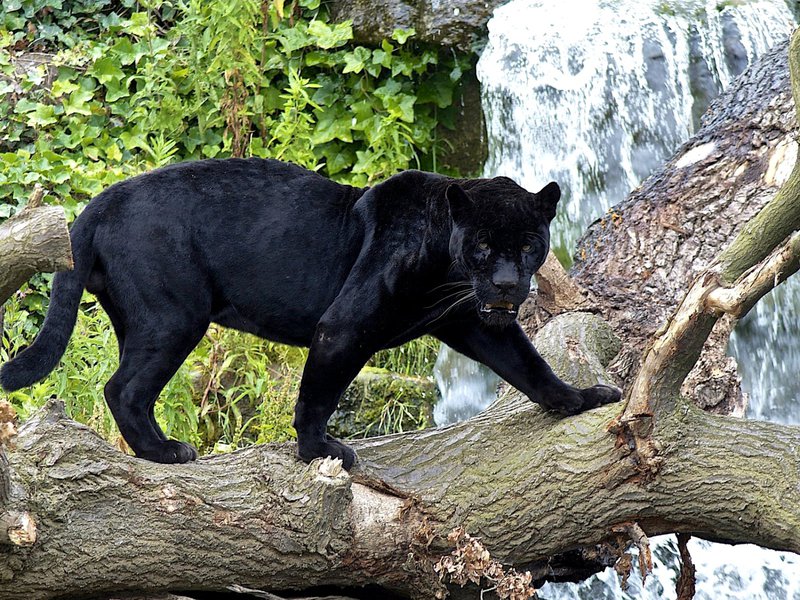
In nature, sometimes dark or all-black jaguars, they are often called "Black Panthers." Similar specimens can be seen in leopards. The dark coloring of these felines is due to the large amount of melanin (pigment).
How jaguars hunt
 Although the jaguar is a skilled tree climber, it eats its prey on the ground rather than hiding it in the treetops from other predators, like the leopard. It prefers to hunt at night.
When attacking, the jaguar tries to kill with a single, precise blow from its powerful jaws, as it is unable to pursue its prey for long, as it quickly runs out of breath, although it can demonstrate its sprinting abilities over short distances. Therefore, it is better for it to kill immediately. knock the victim out cold, for this purpose it uses the tactics of a surprise attack from ambush.
Each animal has its own hunting territory of up to 80 square kilometers. It is used for hunting large mammals, such as tapir, calibara, bakerIf unsuccessful, they may switch to smaller animals, as well as birds, reptiles, and fish, which they catch with their front paw, like a bear.
After hunting, the jaguar drags the killed prey to a safe place, hides the remains in the ground or simply throws it away. They will never touch carrion. These large cats are capable of attacking people, but this happens extremely rarely, only if they are threatened or hungry. They observe people more out of curiosity.
Characteristics of the Black Panthers
 The jaguar has the strongest and most powerful jaws of all felines;
- live alone for most of the year, like tigers;
- During the mating season, which lasts from August to September, males compete to get a female;
- Newborn kittens weigh approximately 0.8 kg;
- the second name of the jaguar is "black panther";
- Jaguars are almost impossible to train;
- in zoo conditions these animals live two to three times longer than in the wild;
- have offspring every two years.
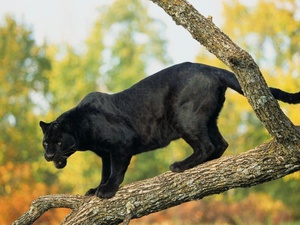 The jaguar has the strongest and most powerful jaws of all felines;
These animals are almost completely exterminated across most of their habitat. This is due to poaching, shooting by herders, and the transfer of these big cats from their natural habitats to other regions.
The jaguar is protected in most countries and listed in the International Red BookHowever, limited jaguar hunting is permitted in Mexico, Brazil, and some other countries.
In Bolivia, they're even shot for trophies. This is all sad, because this beautiful predatory cat is one of the most beautiful animals inhabiting our planet, and humans have a responsibility to preserve its population in the wild.