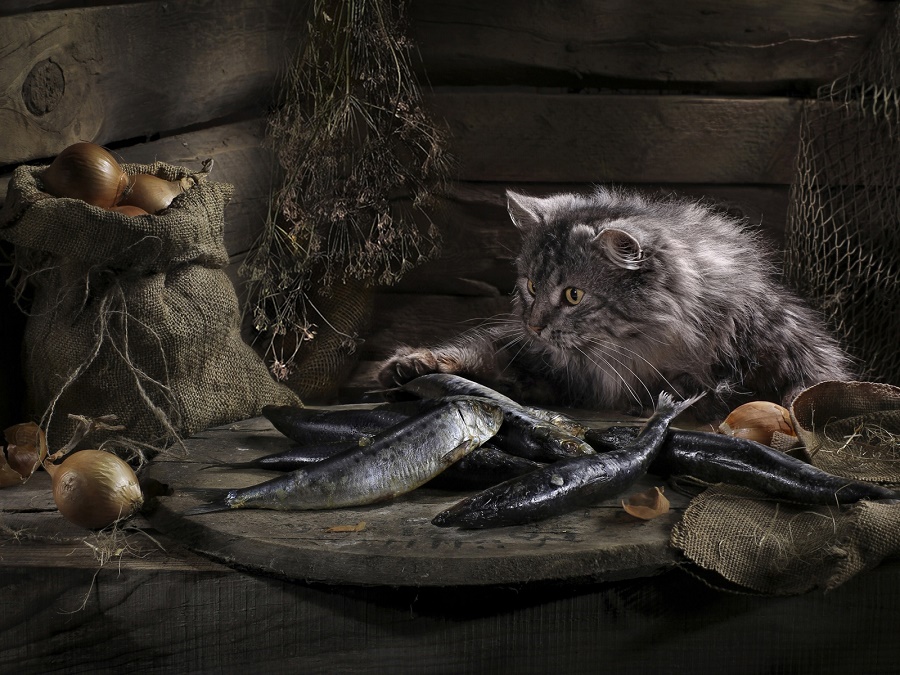
If your cat looks at a salted fish with inspired eyes, don't give in to its provocation. The fact is, there are clear restrictions on cats' consumption of salty foods.
Why is salt dangerous for cats?
If a cat eats too much salty food, the electrolyte levels in its body increase sharply, and all cells stop functioning properly. The kidneys are particularly affected, as they need to filter out excess salt.
If a cat regularly consumes too much salt, it can lead to sand buildup in the urinary tract and the development of urolithiasis. Without timely treatment and proper diet, the ureters become completely blocked, leading to toxicosis and, ultimately, a painful death.
Can cats eat salted fish?
Cats should not eat fish at all, especially salted fish, as it already contains too many minerals, particularly phosphorus, which can cause urolithiasis.
For example, 100 grams of salted herring contains approximately 4 grams of salt, meaning that just 0.5 grams of this fish contains the daily requirement. Given that this element is abundant in regular foods, a piece of salted fish could cause poisoning.
Signs of salt poisoning in your pet
The main signs of poisoning are:
- vomiting, loss of appetite;
- convulsions;
- lethargic state;
- dehydration, diarrhea;
- thirst;
- frequent urination;
- blindness;
- unsteady gait;
- death.
If your cat exhibits these symptoms after eating a salty meal, take it to the vet immediately. They'll administer an IV to help restore the body's water and salt balance, and if necessary, flush the urinary tract. Without treatment, your cat's condition is likely to worsen.
Foods high in sodium chloride, phosphorus, magnesium, and calcium can quickly lead to urinary obstruction and general intoxication. Therefore, avoid feeding your cat fish or adding salt to the food you prepare for them. If you don't have time to cook, it's better to buy high-quality prepared foods, preferably super-premium.