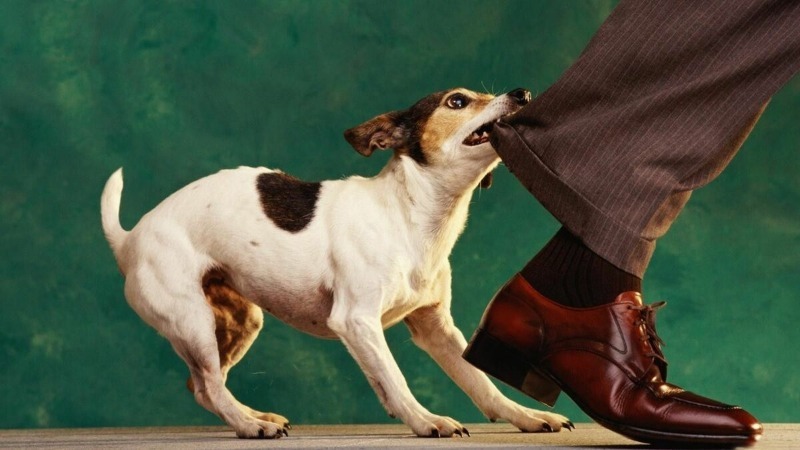
Many dog owners face the unfortunate situation of their pet lunging at passing cars and passersby while out for a walk. Not only is this behavior unsightly, it poses a danger to both the dog and those around them. That's why it's important to break your dog of this bad habit as soon as possible.
The commands "no" and "no"
It's no coincidence that these two commands are among the first to be learned, as they allow the owner to easily control the pet's behavior, including outdoors.
As soon as you see that your dog is about to rush at moving vehicles or people passing by, command him loudly and clearly: “No!”
If the dog ignores the command, repeat the command louder and with a threatening tone. This is usually enough to dissuade the animal from attacking a person or car. However, if the dog refuses to obey, you can reinforce the restraining command with a loud clap.
However, some particularly stubborn dogs are immune to shouting, and in these cases, professional trainers recommend resorting to physical force. To do this, scoop up a handful of very small pebbles, small enough to hit the dog without causing any serious harm, and throw them at the disobedient dog from a few steps away, while loudly shouting "No!" A threatening tone and gentle blows with the small pebbles, as well as their clatter on the pavement, will likely make your dog more docile and obedient.
Some dog owners replace "no" with the command "no." Dog trainers advise against this, but if a dog has been trained to perceive the command "no" as a general prohibition, then it should be used, not the command "no."
Generally, "no" means that an animal is forbidden from picking something up from the ground, or it's used to force a dog to spit out something it's holding in its mouth. This is how it differs from "no," which prohibits any undesirable action.
Use a leash
Don't let your dog off the leash on busy streets. This will allow you to control your pet's behavior even if the dog ignores commands or hasn't yet been trained to do so.
As soon as you notice that your dog is about to rush towards a passing vehicle or a stranger, immediately give it the command "Heel!" and after a couple of seconds, if the animal does not obey, sharply tug on the leash.
Hunting dogs, including all terriers, must be walked exclusively on a leash, even if they have been trained to obey all basic commands. These dogs have an innate instinct to chase moving objects, and no amount of training will stop them from chasing people or moving vehicles.
Distract your pet
It is easier to prevent a conflict or dangerous situation for your pet than to punish him for his misdeed later.
To prevent your dog from lashing out at passersby or passing cars, try engaging it in something more interesting during walks, such as a favorite game or training session.
If your dog tries to attack a stranger or a car, try to get it away from there as quickly as possible, and then distract it with a game or repeating commands.
If your pet does the right thing, don't forget to reward him.
When a dog, upon hearing a no-go command, stops attacking people or vehicles and approaches you, do not scold it under any circumstances. No matter how irritated the owner may be by their pet's inappropriate behavior, they should always remember that if a dog behaves correctly, it should not be punished.
Instead, praise your pet for obedience and reward it with play or petting. Just be sure to take the animal away from crowds or moving vehicles first.
Don't reward your dog with a treat in this case, otherwise it will think that you are praising it for attacking strangers and cars.
If you constantly monitor your pet's behavior, teach it commands promptly, and distract it with more interesting activities during walks, it will naturally avoid chasing vehicles or attacking passersby. Furthermore, never let your dog off-leash in the city, and if possible, walk away from busy roads and crowded areas.