Having a pet in the house is not only a joy, but also a great responsibility. If a dog is unruly, aggressive, and constantly misbehaving, you can blame the breed and its innate character all you want, but in the end, the pet's bad behavior is the person's fault. And here are 8 pieces of evidence to prove it.
The dog doesn't know what good is
Dogs, like humans, don't have an innate sense of right and wrong. Owners must train their pets, teach them commands, and teach them appropriate behavior in various situations.
Puppies are like little children who need to be taught good manners. Some breeds have particular training requirements, so it's best to consult with a specialist.
If possible, it is better to attend several classes where you will be taught and explained the basics of training your particular pet.
Otherwise, the animal will be guided solely by its natural instincts and desires.
The owner does not give the dog the necessary exercise
Dogs are active animals. Most breeds require regular and fairly intense exercise.
If you keep your pet within the four walls of a cramped apartment, and walks are short and leisurely, the dog will accumulate a lot of unspent energy.
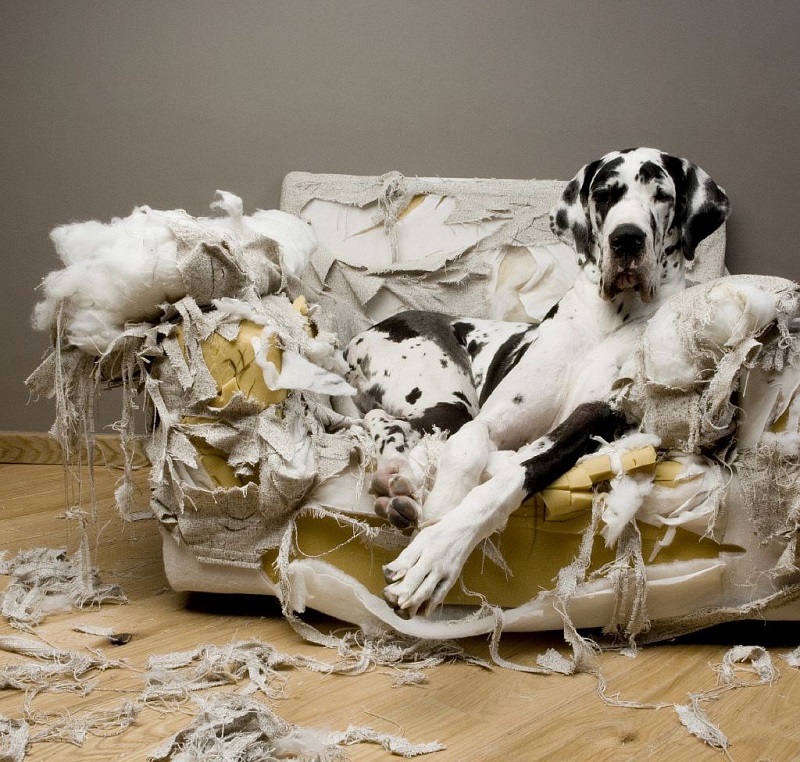
Don't be surprised if she howls and barks loudly, destroys the apartment or ruins things, trying to get outside.
The dog was not protected from dangers as a puppy
A puppy is like a child who needs to be protected from all harm—injuries, loud, frightening sounds, strangers, etc. If your dog encounters danger as a puppy, it may develop a phobia that will last a lifetime.
This may be the reason for an adult pet's bad behavior. They may react inappropriately to certain people, vehicles, equipment, noises and pops, other animals, and so on.
Not enough mental stimulation
A puppy won't grow into a smart dog on its own. Once you've decided to get a pet, be prepared to constantly engage with it and train its brain. This can be achieved through games, training, and teaching it commands.
Like a child, a pet needs your help to learn how to think and behave appropriately in certain situations. Even simple conversations with a dog can stimulate their mental activity.
The owner does not monitor the dog's health
Animals can't speak. They can't tell you when they're feeling unwell or where it hurts.
In this case, the pet may become capricious and aggressive. Again, the lion's share of the blame lies with the owner, who doesn't properly care for the dog's health.
Contradictory environment
There may be some dissonance in the family's approach to training the dog. One allows everything, while the other forbids everything.
One constantly cuddles the pet, while the other remains aloof. One reacts calmly to the dog's antics, while the other yells and may even resort to physical punishment.
In such a conflicting environment, the dog is constantly confused and simply doesn't know what to do. It's important for all family members to agree on and adhere to a unified strategy for training the pet.
Drastic changes in lifestyle
Like humans, dogs are susceptible to stress. They can be confused by a move, the arrival of a new pet or small child, noisy renovations at a neighbor's, and much more.
A pet may react inappropriately to an unusual and unfamiliar situation. If the owner doesn't help the dog cope with stress and adapt to the new environment, it would be foolish to expect the animal to behave well.
Poor socialization
If the owner, having taken a puppy into the house, did not take care of its socialization, it is logical that the animal will be afraid of its relatives or show aggression towards them.
If a dog grows up within four walls, if he is walked on the lawn next to the house, and not in the park where dog owners usually gather, he simply will not know that there are other animals in the world besides him.
When meeting them, he will become confused and unsure how to behave. This can also lead to stress and inappropriate behavior in the pet.