 Experienced hunters have likely encountered a wild boar in the forest, hunting it. They are found not only in forests but also in desert areas. What is this animal, where does it live, and what does it look like? We'll discuss this in this article and learn many interesting facts about the life of this wild animal.
The boar animal and its description
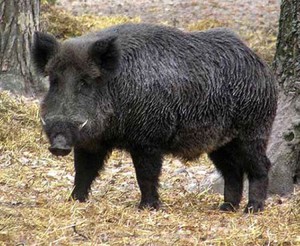 The boar is the ancestor of the domestic pig. This mammal belongs to the order Artiodactyla, suborder Suidae, and the genus of boars in the pig family. The animal also has other names: boar; wild boar; wild pig.
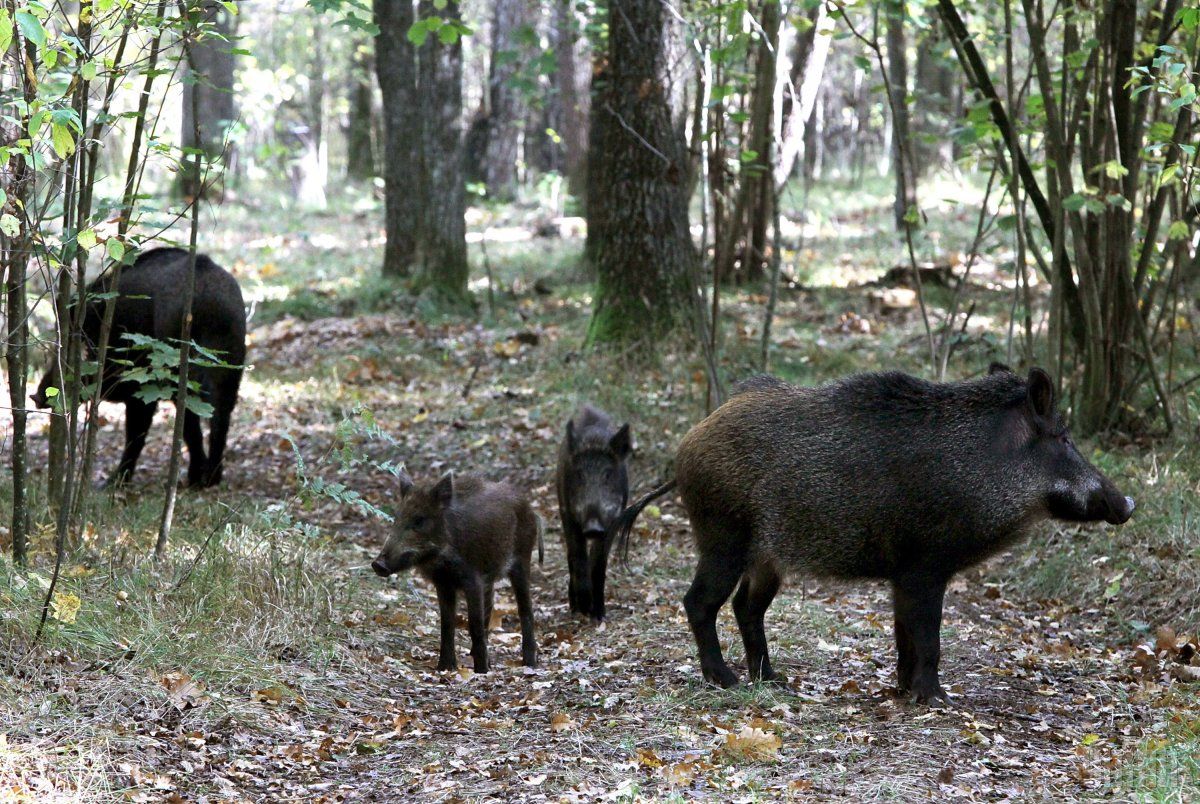
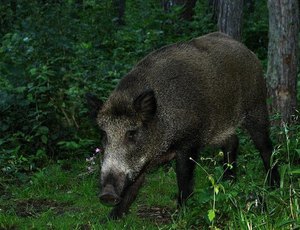
Although the wild boar descended from the domestic pig, it differs in appearance from the domestic animal. It has more dense and short body, its legs are thicker and taller. Its head is taller and thinner, and its ears are also longer and pointed. Moreover, the ears are erect, unlike those of a domestic pig.
The boar is constantly the lower canines are growingIn males, they are more developed than in females, larger, and protrude from the mouth. The thick bristles on the back form a mane-like structure. It rises like a crest when the boar is aggressive. In cold weather, underfur grows beneath the bristles.
The bristles on the body have black-brown color With a reddish tint. The undercoat is brownish-gray, creating an overall coloration of gray-brown-black tones. The rest of the body—the legs, tail, and muzzle—are black. The color of the animal depends on its habitat; it can be black or very light, almost whitish. Such specimens are found in the area of Lake Balkhash.
The animal's height at the withers is up to 1 meter and the body length is up to 175 cm. The average weight of a wild boar is usually about 100 kg, but larger animals weighing up to 150–200 kg are also found. In Eastern Europe, these animals can weigh up to 275 kg, and in Manchuria and Primorye, up to 0.5 tons.
Females are smaller than males, their height at the withers is up to 90 cm and maximum can weigh up to 160 kgTheir lifespan is typically 14 years, but in captivity they can live longer, up to 20 years, when the area becomes protected.
Habitat
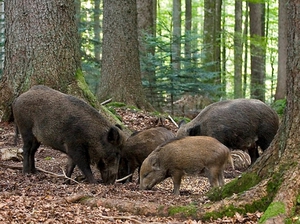 These animals prefer to inhabit forested areas and marshy terrain. Wild boars live throughout Europe to the Scandinavian Peninsula. They also inhabit Asia and the northern part of Transbaikalia, the Far East, in the south of Siberia.
Wild boars live in Argentina as well in Central and North AmericaWild boars inhabited North Africa, but hunting them was too popular, so they were almost exterminated.
These animals can live in a wide variety of places on our planet, even in tropical forests and deserts. In Europe, wild boars prefer to inhabit oak and beech forests. There are many marshy areas, fields, and meadows there. In Central Asia, wild boars prefer to settle in deciduous and spruce forests, as well as in walnut and fruit groves.
Boars cannot stay in one place for a long time, therefore migrate in search of foodWild boars seek habitats with abundant crops or growing food sources. In Europe, the largest population is in Sweden, with over 1,000 individuals.
Behavior and nutrition
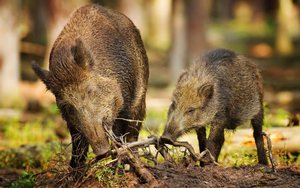 Males have a different lifestyle from females. Males prefer solitude and live alone. Females gather in groups with their cubs, which can total up to 50 individuals. Males join the group only during the mating season.
Wild boars hunt for food in the morning or evening. At night and during the day, they prefer to rest quietly. These animals have keen hearing and a keen sense of smell. Their vision is rather poor, so they rely more on their other senses.
Boars love to eat plant foodsThey are constantly searching for new and fresh food. Thanks to their well-developed tusks, boars dig into the ground and unearth the following:
- roots;
- plant bulbs;
- tubers.
Wild boars also like to eat other types of vegetation:
- Berries.
- Fruits.
- Nuts.
In spring and summer, animals enjoy eating:
- Young grass.
- Leaves of shrubs and trees.
- By shoots.
Since wild boars eat not only plant food, they also feed food of animal origin using:
- bird eggs;
- snake;
- frogs;
- fish;
- insects;
- worms.
Adults also attack larger prey of animal origin, such as lambs or young deer, and do not disdain carrion.
Wild boars are excellent swimmers; they have excellent swimming skills and can cover large distances in water. The animal can easily swim across rivers or lakes.o. Despite their large weight, wild boars run fast., therefore they are considered dangerous enemies for many animals.
Reproduction of wild boars and females
 The average lifespan of a wild boar is 10–12 years. The rutting season occurs from September to December. Males develop a protective subcutaneous armor—the muscle is 2–3 cm thick.
It's located on the sides and serves as protection from attacks by enemies. It also helps protect against the fangs of rivals during the mating season when competing for a female. During this period, they accumulate additional fat.
During the mating season, there is a competition among males. constant struggle for femalesDuring this period, they lose weight and strength. Numerous wounds appear on their bodies, but it's worth it, as a male can obtain up to eight females for mating.
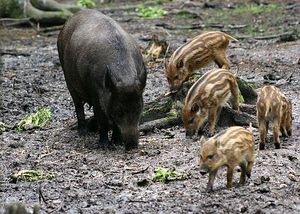
The female carries the cubs for about 115 days, they appear in April 2-3 pigletsThis number is only seen in females giving birth for the first time; later, she gives birth to 4–5 cubs.
There have been cases where a sow has given birth to 10–12 piglets. The offspring always remain with the mother, who nurses them for approximately 3.5 months. Females reach sexual maturity at 18 months, and males at 5–6 years.
People have hunted wild boars for a long time, so the main enemy of this animal is man. Basically hunting is carried out for the animal's skin, although its meat is considered very tasty and nutritious.