 In the recent past, the bison was considered the rightful ruler of the North American continent. It is the American relative of the European bison. This animal belongs to the order Artiodactyla, the family Bovidae. It is considered one of the largest herd animals. Bison are divided into two species:
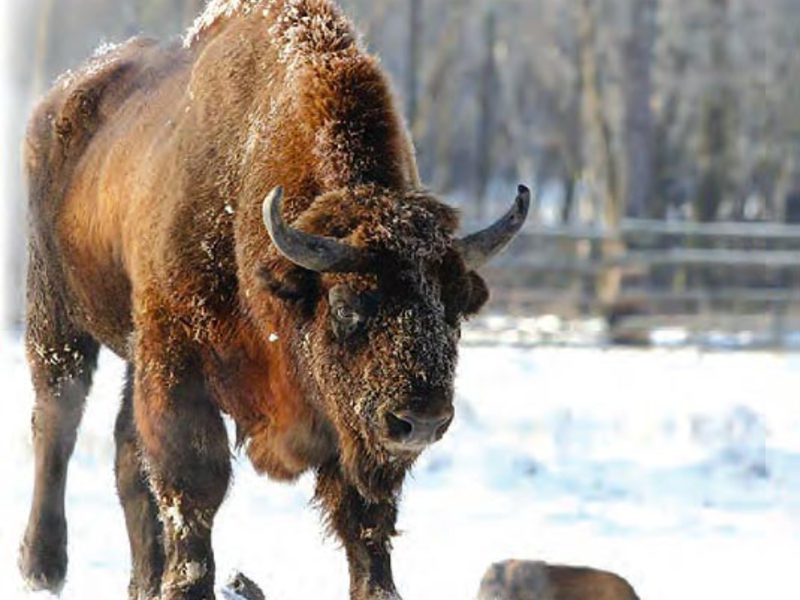
- European bison;
- American bison.
Unfortunately, today the population of both animal species has been almost completely destroyed by humans, and these majestic creatures have to fight for survivalThis is due to the fact that they were hunted to extinction in the late 19th and early 20th centuries. This species was gradually driven out of its habitat.
However, ecologists are currently devoting considerable effort to restoring the Eurasian bison population. It is known that 40 animals (Canadian wood bison) were brought to Yakutia. Thus, efforts are underway to restore the species in Siberia.
Appearance
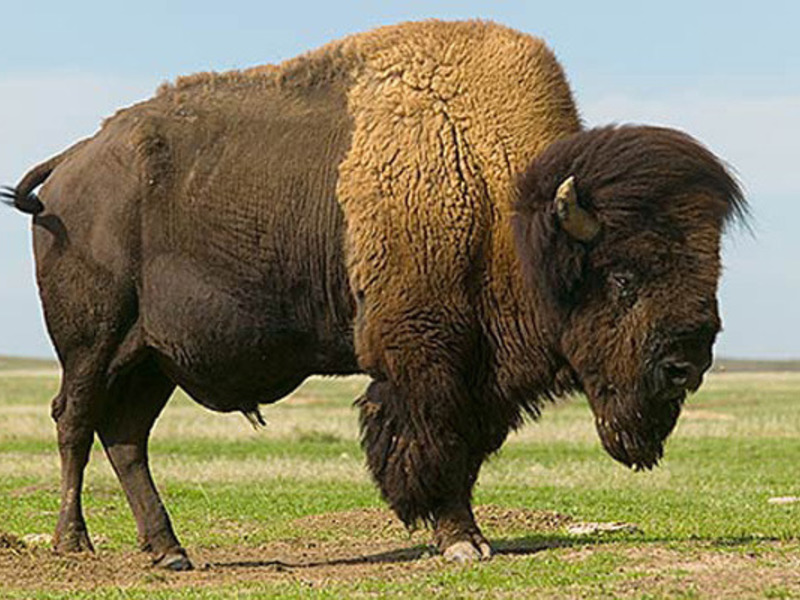
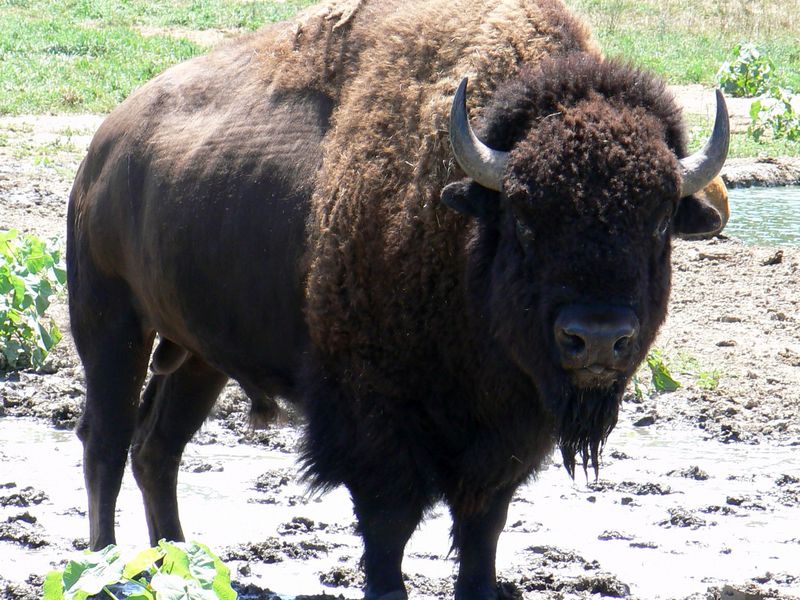
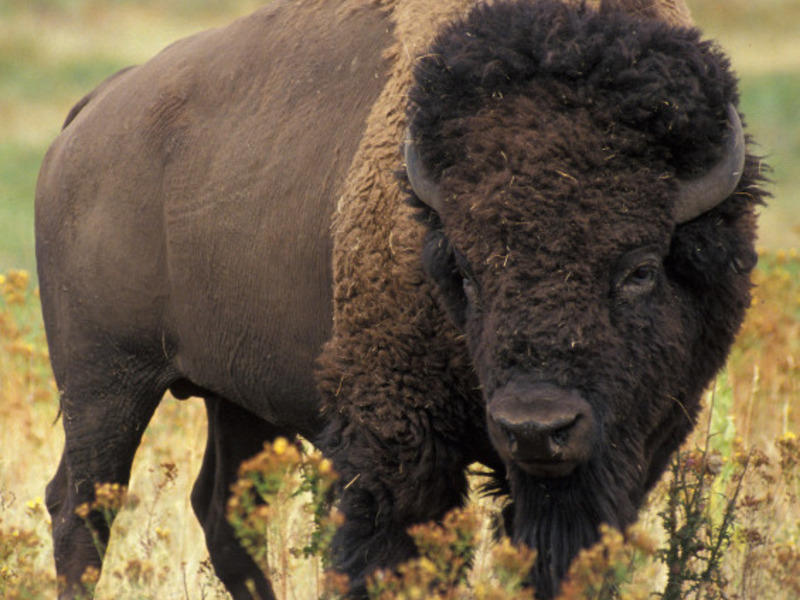
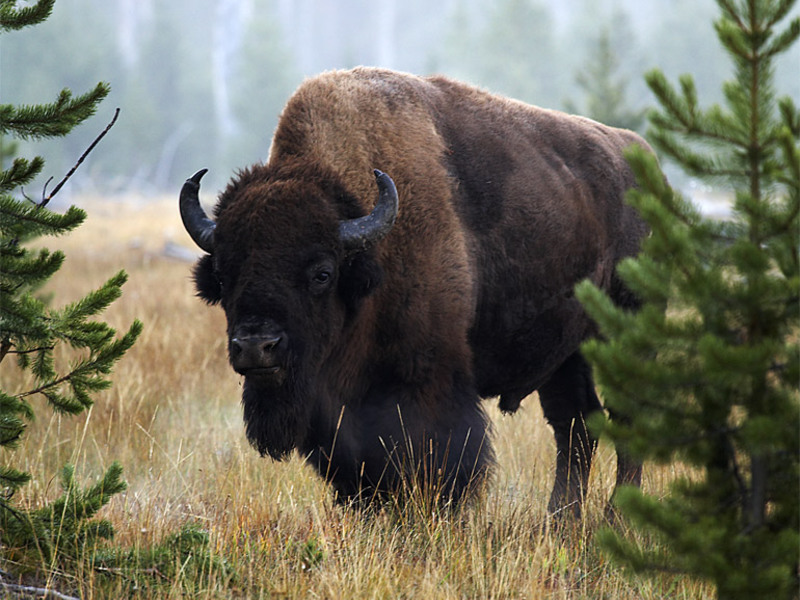
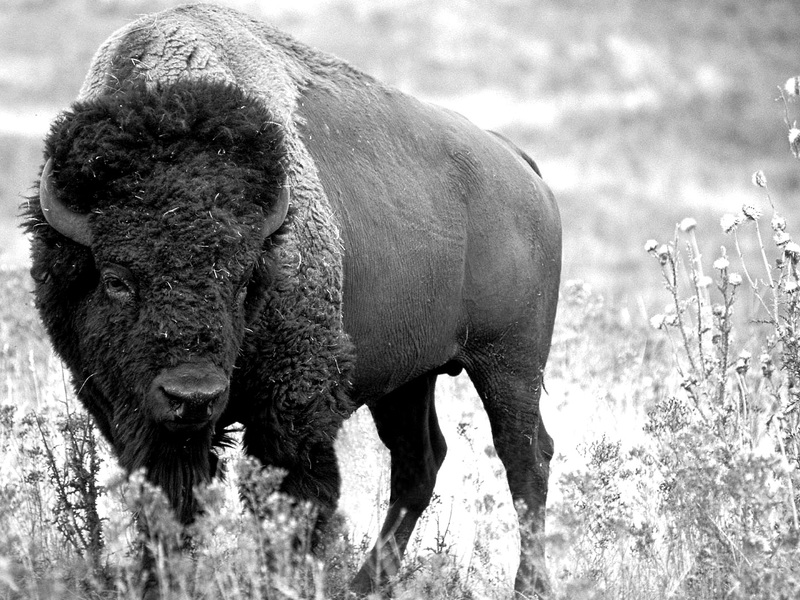
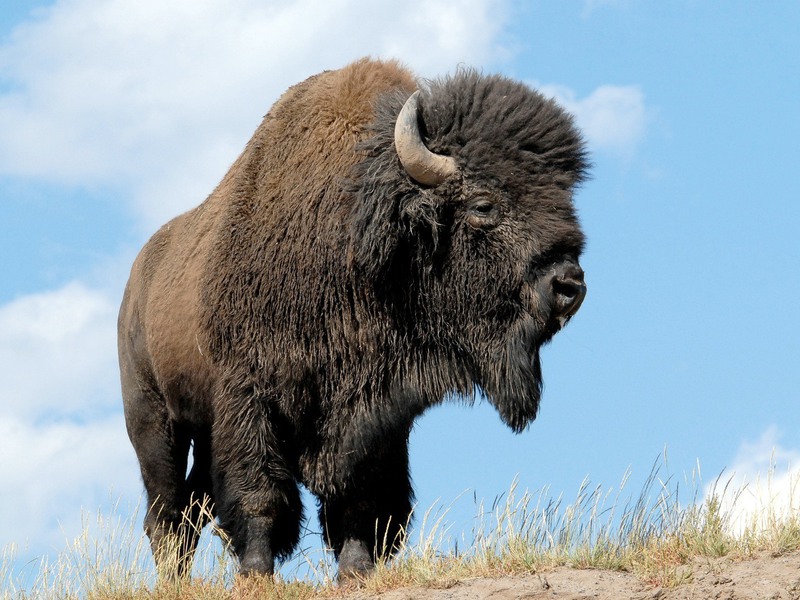
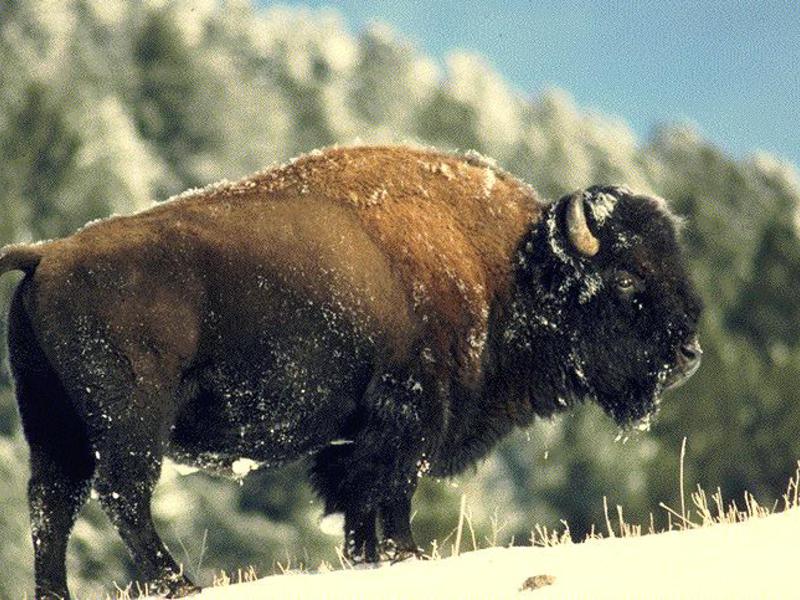
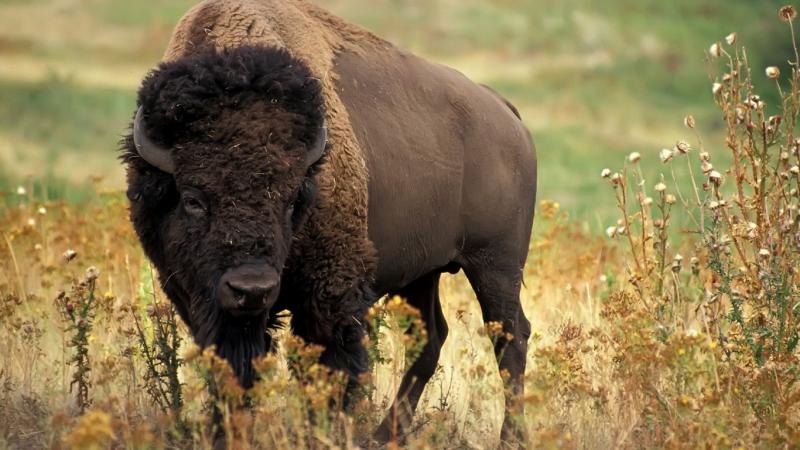
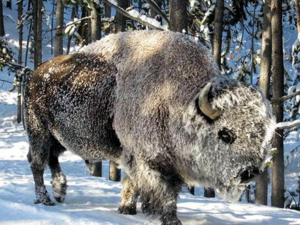 The bison is an animal of great size and strength. Numerous photos can be found online. Judging by them, the bison is certainly a powerful animal with a massive body. The body length can reach up to three meters, and the height up to two meters. The tail length varies from 30 to 60 cm. Bison fur long, shaggy and thickShe helps him not to be afraid of severe frosts.
In summer, the animal sheds its fur, and clumps of fur separate from its hide. The color of the fur on the neck and body varies. The neck is usually blackish-brown, while the rest of the fur covering the body is grayish-brown. Bison have a large head and a thick neck. Short ears and curved horns are located on the head.
The back is strong, with the front section being particularly well developed. The hump is also located here. Bulls' hooves are not very large, but they are very strong.
Males are always larger than females and their the weight can reach 1.5 tonsTheir lifespan in the wild is no more than 20 years. However, in captivity, individuals can live up to 30 years. Humans are not the only threat to these animals. Their main predators are wolves, bears, and cougars. They sometimes pose a threat to young animals, as well as sick and elderly animals.
Behavioral features
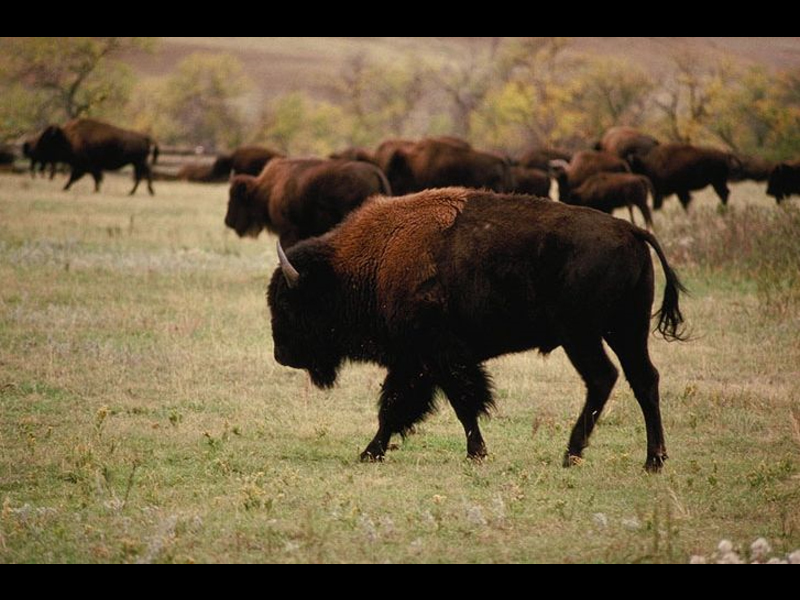
As mentioned above, bison are herd animals. These herds are often mixed, containing mothers, newborns, young, and several mature males. Even solitary males have been known to form herds. A herd can contain thousands of animals.
Looking at photos of these animals, it might seem like they have trouble moving due to their massive bodies. But that's not true at all. Ta-tanka (as the Sioux Indians call them) excellent runnerHe is capable of:
- easily cover huge distances;
- gallop at a speed of 60 km/h;
- jump over obstacles;
- cross rivers calmly.
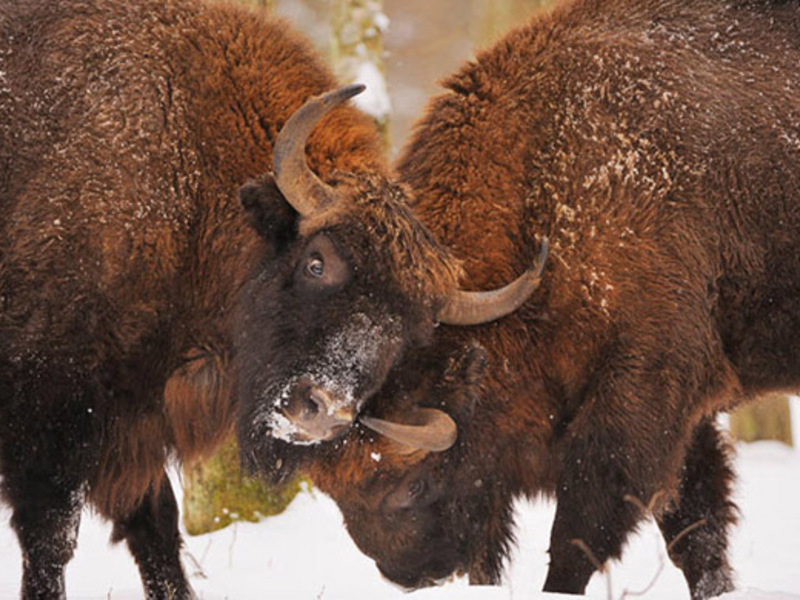
Bison are naturally strong and unpredictable, and they are also skilled fighters. When threatened, they charge toward their opponents with their horns lowered, ready to strike without the slightest hesitation. Every spring and into early fall, the bulls compete for supremacy. This is a fascinating process. The males stand facing each other, their heads bowed to the ground. Before attacking, they they roar loudly and paw the ground with their hoovesThen, rushing forward, they clash head-on. Each male thus attempts to knock down his opponent, either by plunging his horn into it or gouging its side. Such fights are full of injuries, and the injured animal often dies. The winner of such a fight leads the herd of females.
Habitat
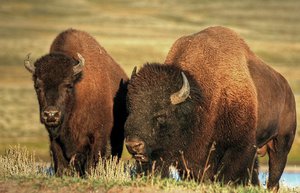 By some estimates, there were over 600 million bison here by the 18th century. Enormous herds of bison roamed the prairies. They were found across the North American mainland, from the Mississippi Valley to the Rocky Mountains, as well as from the northern borders of Mexico to AlaskaThe cold autumn caused animals to migrate to the southern plains, a distance often hundreds of kilometers from their summer pastures.
A herd of thousands intuitively chose the shortest route, and the main criterion for any route was a watering hole. With the arrival of spring, the animals returned north. During migration, the bison herd often became an obstacle to train and river steamboat traffic.
Where do they live now?
Today, the majority of these animals are found in North America. The Missouri River region is also home to bison. Adults and calves form isolated herds. These animals can only be found in areas with dense vegetation. Their usual habitats are:
- flat areas;
- prairies;
- sparse forests;
- forests
Although bison were nearly exterminated during the Wild West, today national conservation programs are successfully operating to save these animals. They are now found in North American parks and reserves. there are almost 400 thousand headsThey are now completely absent from the wild, but the main result has been achieved: this majestic animal has been saved from extinction and is now protected! This will allow the bison population to increase further over time.