The general public rarely asks about the truth about forest animals. Their stereotypical knowledge is based primarily on children's fairy tales, in which all foxes are cunning and hares are cowardly prey, doomed to die at the first attack of a predator. However, these false claims and myths are not supported by scientific research in the field of zoology.
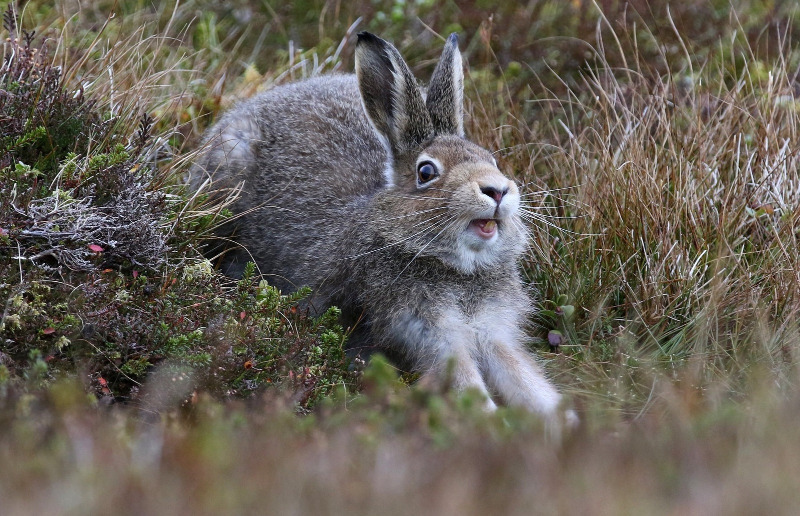
Is it true that hares are cowardly?
The cowardice of the hare is a common childhood tale, and this quality is undeservedly attributed to it. This forest animal is actually distinguished by its cunning and intelligence: it is so adept at covering its tracks that it can confuse any predator. It also displays incredible endurance, remaining hidden until the very end, even when a wild animal is already quite close.
Corresponding Member of the International Pedagogical Academy and Doctor of Biological Sciences Marat Migranov asserts that hares are truly brave. If a fight with a predator cannot be avoided, the animal begins to desperately fight back with its claws and powerful hind legs, kicking its prey. In self-defense, it can even leap onto the back of any wild animal, cling with its claws, and begin kicking as hard as any horse. And although it has no fangs, it is no stranger to using its sharp incisors.
Any hunter can confirm that even after catching a hare, it's extremely difficult to control. It screams desperately, struggles, strikes with its hind legs, and bites. Many avid hunters have observed hares, when attacked by birds of prey (eagles or eagle owls), fall on their backs and begin kicking with their hind legs with such force that they rip open the attacker's chest and rip open the abdomen. There have also been cases where "cowards" raised near dogs completely adopted their habits and attacked other animals without any fear.
Is it true that hares love carrots and cabbage?
Hares are vegetarians, although this is debatable. Like any forest animal, they need salt, which is why hunters have often seen gnawed elk antlers and battered partridges in the forest, not removed from traps in time.
Incidentally, luring with salt is one method of hunting animals. The soil or snow in the prey's habitat is soaked in a salt solution.
However, hares' main diet consists of grass, young shoots, tree bark, berries, tubers, and occasionally agricultural crops. And contrary to popular belief, they aren't big fans of cabbage and carrots. They prefer potatoes, beets, and grains.
Moreover, the animals don't have any particular food preferences. This is as much of a myth as the "mouse and a piece of cheese" myth. Hares readily eat everything that grows in the forest (sorrel, mushrooms, berries, sedge, herbaceous bulbs, wormwood, and so on), including poisonous plants (buttercups, larkspur).
Do all hares change their grey skin to white?
The common myth that all hares shed their gray coats for winter is also untrue. This shedding process is associated with normal molting. Sometimes, the hare's coat becomes pure white even before the snow falls. However, the characteristic white coloration is typical of a species known as the mountain hare. The hairs on its fur are hollow and completely colorless, but they scatter light beautifully and appear white.
But hares don't change their color at all. By winter, their fur becomes longer and thicker on their belly, chest, and limbs. This helps prevent internal colds. Northern hares' fur lightens slightly in winter, but doesn't change its basic color. Their southern counterparts' fur remains completely dark.
Is it true that hares jump very high and run fast?
Hares are distinguished by their elongated hind limbs, which act as a spring when jumping and pushing off the ground while running. Even their spines have special attachments that are part of this mechanism. Therefore, a hare can be compared to a living spring, which, when jumping uphill, can, using the movement of its hind legs and spine, propel itself as well as any bird and to quite a considerable height.
Fast running is also a major advantage for this animal. The hare can gallop for several kilometers non-stop at 50 kilometers per hour, performing incredible looping turns along the way.
Do all hares have long ears?
The length of the ears of "slanted" hares depends directly on their variety. However, it has been established that all hares' ears cannot be shorter than half the length of their heads.
The hearing organs differ only in shape: in some species the tips of the ears are rounded, in others they are more pointed.