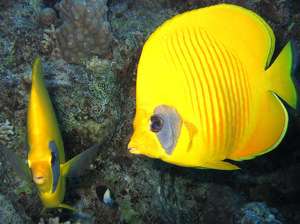
The world's oceans have been studied for a long time. However, their depths remain a mystery to humanity, as do their inhabitants. Despite this, people still manage to capture unusual aquatic life.
Dumbo the Octopus
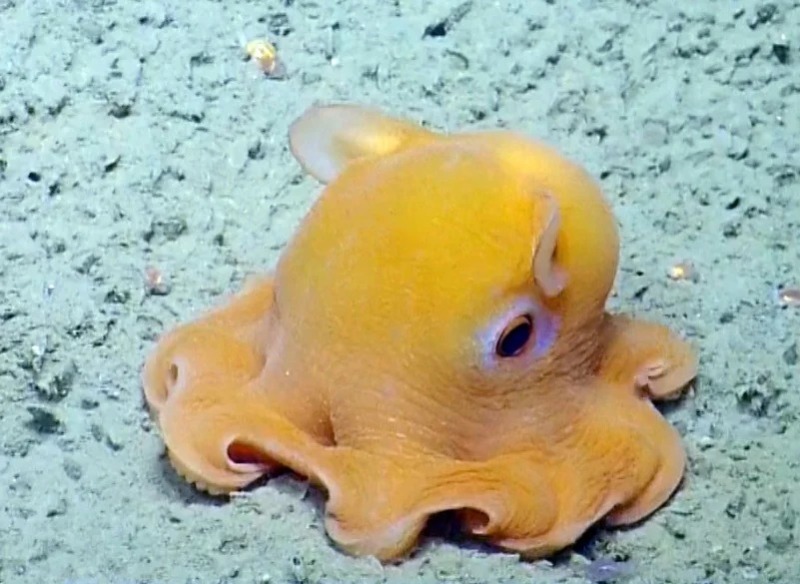
The octopus got its name from its resemblance to the Disney cartoon character Dumbo. Its fins resemble an elephant's ears—they're as large relative to its body as those of the cartoon character. These "ears" help it swim. Eight small limbs also help it do this.
Despite its cute appearance, the dumbo octopus is a predator. It catches prey at high speed, then grasps its food with its fins and swallows it whole. The dumbo octopus lives in the Pacific and Atlantic oceans at depths ranging from 100 to 7,000 meters.
Short-snouted pipistrelle
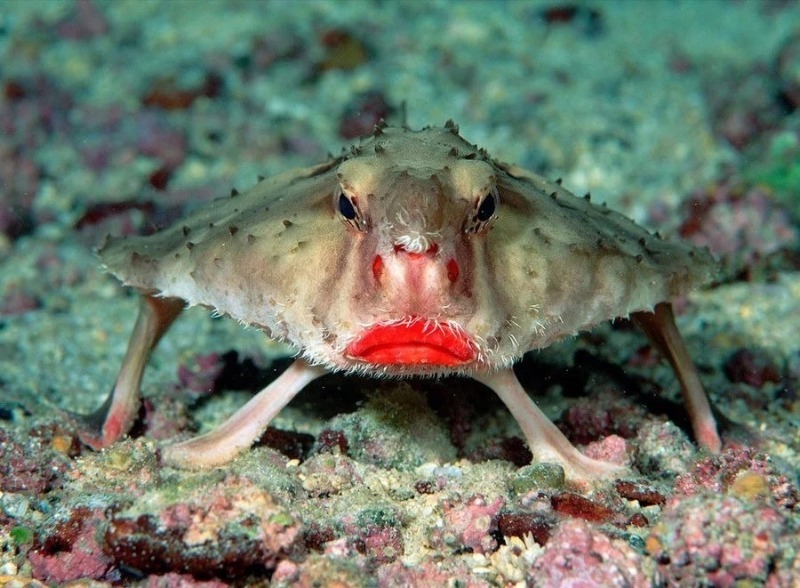
Many call this animal the funniest inhabitant of the deep sea. The batfish itself cannot swim, living at depths of 200 to 1,000 meters. It spends most of its time in one place, but sometimes walks along the bottom on its small fins.
It has a flat body with small spines and bright red lips. Its shell protects it from predators—penetrating this armor requires incredibly strong jaws.
It attracts prey with a special growth. The fish has a small fishing rod with a scented bait at the end.
Blue Angel
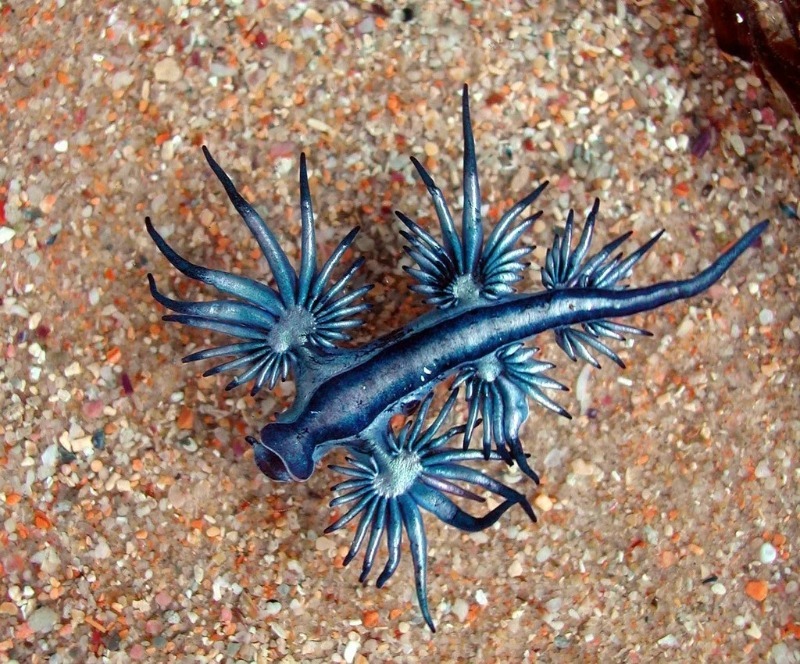
This tiny mollusk gets its name from its coloring and the way it "floats" on the surface of the water. While swimming belly-up and searching for prey, the blue angelfish swallows an air bubble, making it lighter and preventing it from sinking.
Its special coloration allows it to protect itself—it's invisible to both birds of prey from above and aquatic predators from below. The mollusk reaches 5-8 cm in length.
On its sides, it has cerata—finger-like projections where digestion occurs. Despite its small size, the blue angelfish is a predator.
Giant squids
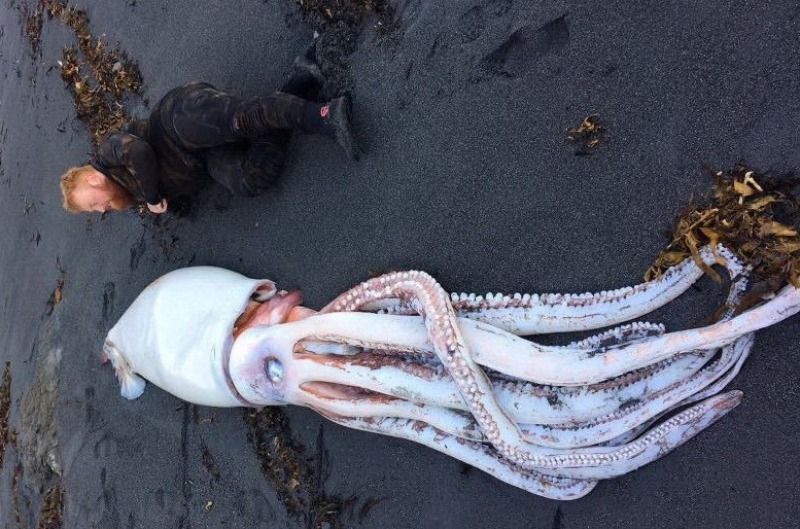
Back in the 19th century, the largest squid was named Architeuthis. Its study began in 1861, when sailors brought a dead animal ashore.
When hunting, the squid is highly aggressive and fast. The longest recorded length of one of these creatures reached 16.5 meters. However, smaller specimens, typically 10-14 meters in length, are most commonly encountered.
Females of these squid are larger. They can reach 275 kg in weight, while males weigh only 150 kg. Scientists believe that in the depths beyond human reach, individuals up to 50 meters long—similar to the legendary Kraken—live. These squid feed on other squid and other deep-sea fish.
Atoll Jellyfish
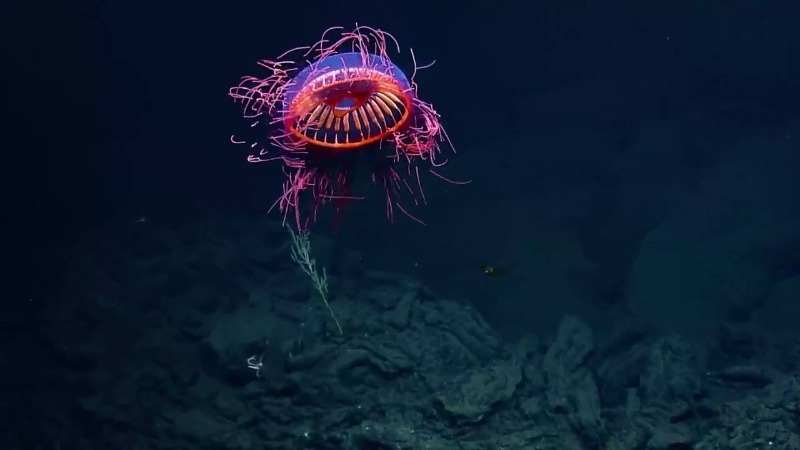
This jellyfish lives where sunlight doesn't penetrate—at depths of 700 to 5,000 meters. When it senses danger, it begins to glow with a bright red light called bioluminescence. This process breaks down a protein called luciferin in its body, causing the glow. This attracts large predators.
However, they don't eat the jellyfish, but its enemies—those who have caused Atolla trouble. Other jellyfish emit a glow when attacking their prey. Only Atolla does this for protection. This blood-red inhabitant of the seas and oceans never rises to the surface, so people have no reason to fear it.
Sponge harp
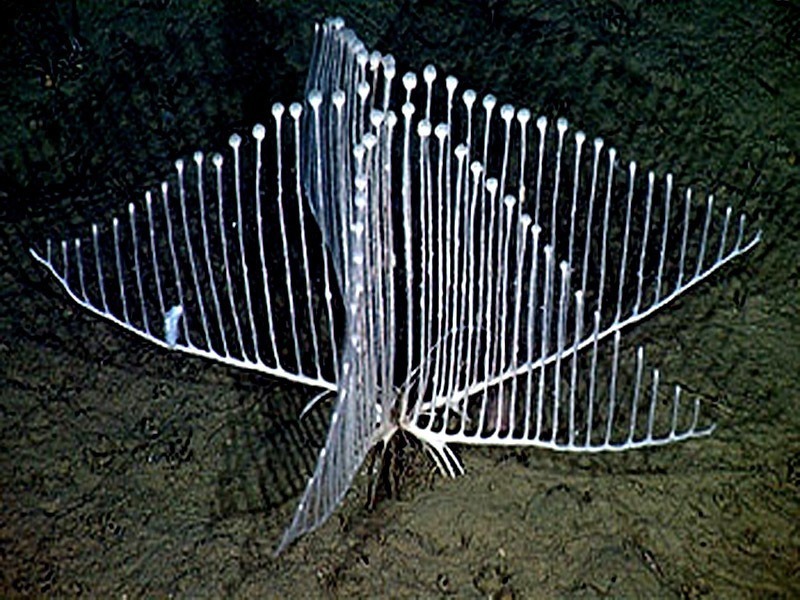
This sponge got its name from its resemblance to a musical instrument, a harp. This deep-sea creature was first discovered on the northern coast of California.
Contrary to popular belief that sponges feed on bacteria, the harp sponge is a predator. It lures small crustaceans with hooks located at the tips of its appendages. Once the prey is caught, or rather, attached to these hooks, the sponge immediately wraps a thin film around it and begins to slowly eat.
The more lobes the sponge has, the more prey it can catch. The harp sponge lives at depths of 3-3.5 kilometers.
Yeti Crab
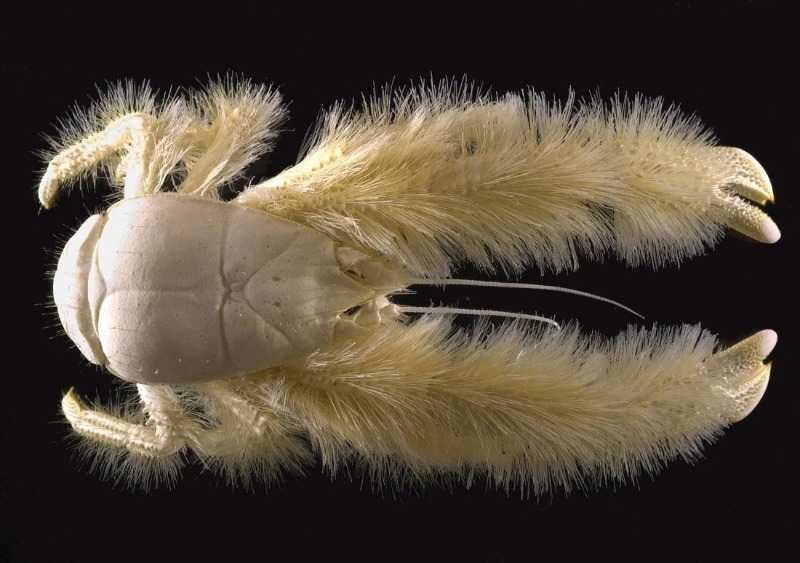
The yeti crab is white and covered in fur of the same color. These characteristics give it its name. This crab lives in cold water at extreme depths, where light does not penetrate. Because of this, the animal is completely blind.
The crab grows tiny bacteria on its claws. Since this creature has not yet been fully studied, scientists' opinions on these microorganisms differ. Some believe the crab uses them to purify the water around it, while others believe it eats them.
The meat of this crab tastes like rotten eggs, so it is not eaten, and if it is caught, it is given to scientists for study.
Leafy Sea Dragon
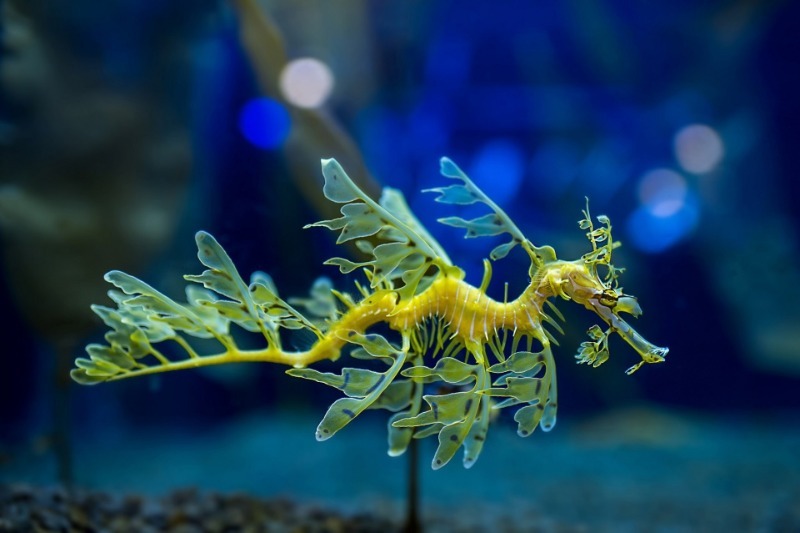
This creature's entire body is covered in "leaves." This feature protects it from predators, making it invisible against the seascape. However, these growths don't aid in locomotion—that's accomplished only by two small fins located on its back and chest.
The dragon is a predator. It feeds by swallowing its prey whole. These unusual creatures can be found in the shallow waters of warm seas. Another unique feature of the leafy sea dragon is that it is the males who bear and care for their young.
Squid-pig
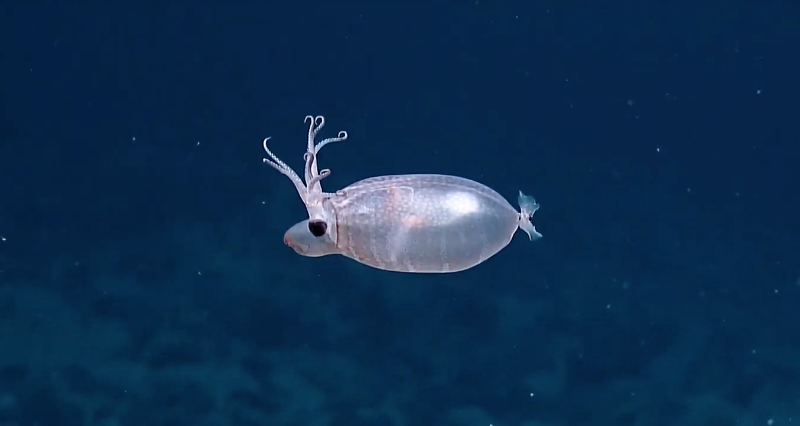
This squid got its name because its appearance resembles the cartoon character Piglet. Its completely transparent body is covered with strange pigment spots.
Luminescent organs are located around the eyes. The squid swims upside down at depths of 100 meters. Because of this, its tentacles resemble a ponytail.
Salps
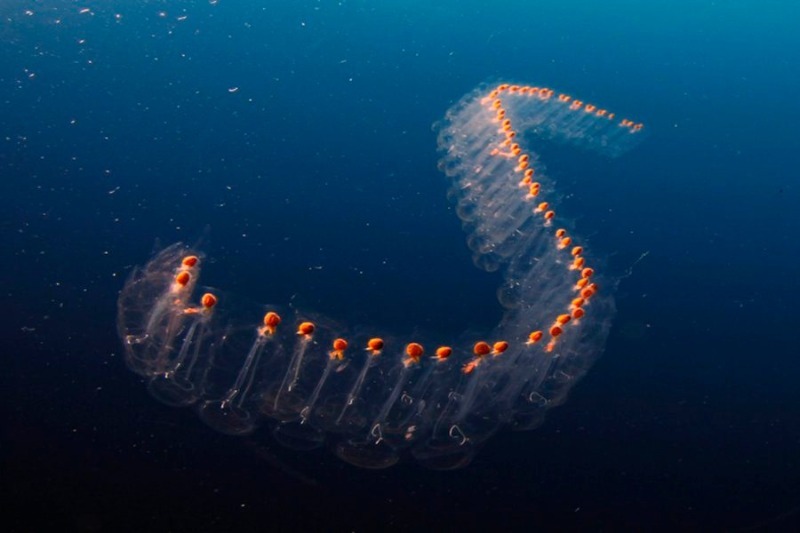
These marine creatures have all their internal organs visible due to their transparent shell. The animals form long chains that can be broken by a single small wave. However, this does not harm the fish.
These barrel-shaped creatures can glow. Salps live at depths of several hundred meters in all oceans, except, of course, the Arctic Ocean. These animals feed primarily on plankton through a small mouth.
The ocean depths have always remained a mystery to humans. But thanks to various modern technologies, humans can delve ever deeper in search of new species.