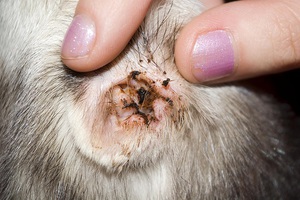
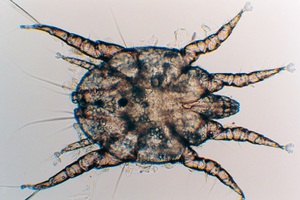
 Otodectosis (ear mite) is a parasitic skin disease of carnivores, including dogs. Otodektes cynotis is the Latin name for this genus of mite, which infests the inner surface of the auricle. It can burrow into the ear canal and lodge near the eardrum.
What is the danger?
Cases spontaneous recovery from ear mite infestation has not been observed, so you can't expect it to resolve on its own. Delayed treatment or failure to follow doctor's recommendations leads to complications and a chronic phase.
- If left untreated, the dermatosis can develop into severe pathologies, both allergic and general. This occurs because the integrity of the skin and its protective properties are compromised by otodectosis.
- The dog's appearance suffers - with ears infested with mites, it does not look aesthetically pleasing.
- Ear mites are transmitted to other animals, such as dogs and cats, through close contact or through grooming items, bedding, rugs, and furniture.
 Humans who come into contact with an infected dog may experience an allergic reaction to ear mite bites. The itchy rash does not require treatment and will resolve on its own once the mite is removed.
- Ear mites don't have a clear seasonal pattern; infection can occur at any time of year. Peak incidence occurs during the warmer months. During the winter months, the number of cases decreases.
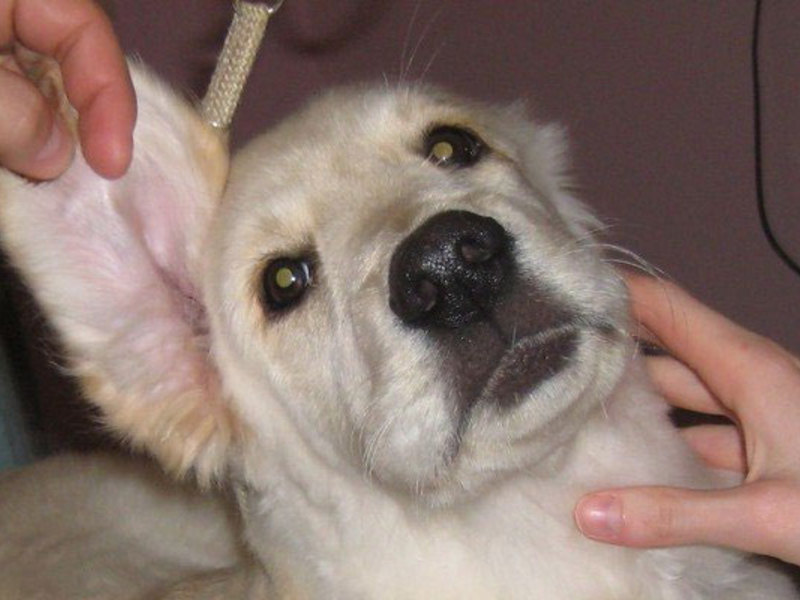
- Puppies and dogs with weakened immune systems are at greater risk of developing ear mites.
 Humans who come into contact with an infected dog may experience an allergic reaction to ear mite bites. The itchy rash does not require treatment and will resolve on its own once the mite is removed.
What's happening
Ear Ticks use their powerful chelicerae jaws to destroy the surface of the epidermis. and feed on secreted tissue fluid and lymph.
Otodectosis is divided into three stages:
- mild - itching, redness of the skin of the ear canal lasts 4-5 days, crusts occupy a quarter of the ear area;
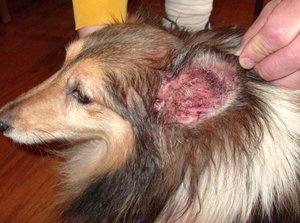
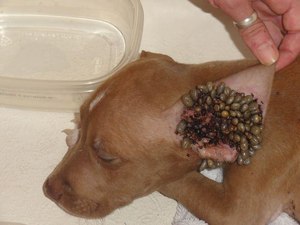
- medium - brown crusts spread over half of the auricle, exudate with an unpleasant odor is released from the ear, local body temperature rises;
- severe - the dog is in a depressed state, there is severe scratching of the muzzle and submandibular area, purulent discharge appears, and there is difficulty chewing food.
Launched the disease leads to otitis, inflammation and perforation of the eardrum, hearing loss. In severe cases, surgery is required. Hematomas and wounds in the ear area are common. In chronic cases, inflammation of the external auditory canal spreads to the tissues of the middle and inner ear, and from there to the meninges. As a result, the dog may die from meningitis.

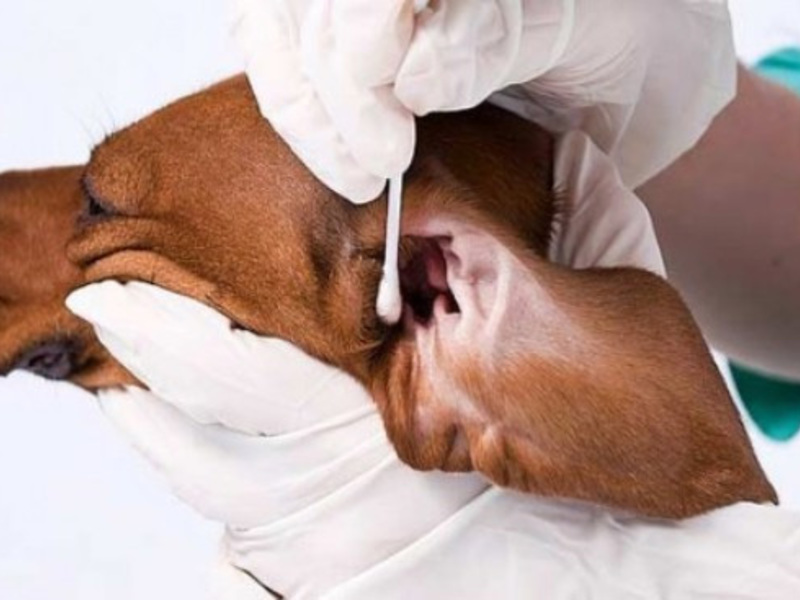
How is the diagnosis made?
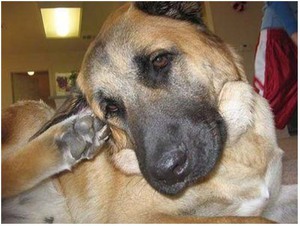
If the dog shakes its head or rubs against surfaces, scratches its ears with its claws, so you should be prepared for an unpleasant diagnosis. Otodectosis should not be confused with a common ear infection, which causes less discharge.
The basis for determining the disease is:
- unusual and restless behavior of the dog;
- contact with a sick animal;
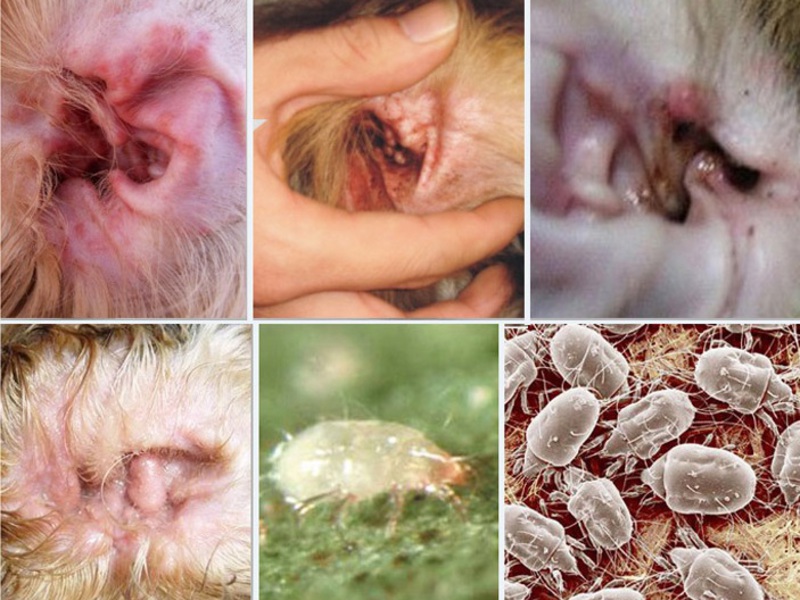
- The first symptoms of ear mite infestation are discharge from the ears, brown crusts and abrasions, and redness of the inner surface of the ear;
- Laboratory tests - mites, their eggs and waste products are detected in skin scrapings under a microscope.
 unusual and restless behavior of the dog;
How find out at home whether your dog is sickIf you can't see a doctor, collect discharge from the ears and place it on a white sheet of paper. Dark specks are visible in ear mite infections. These are waste products from the mites. If there is no inflammation or fever, you can begin self-treatment.
Treatment and prevention
First of all, a dog infected with a tick should be isolated from other animals during treatment until complete recovery. It is important to clean the auricle very well. and the ear canal, otherwise the mites will survive and treatment will be ineffective. Using a cotton swab soaked in chlorhexidine, thoroughly rinse both ears.
How to treat at home
Use tick-repellent medications strictly according to the instructions. Home treatment includes:
- complete treatment of the dog with Butox, Neostomosan, or a similar preparation by spraying or bathing the animal;
- thorough cleaning of the ear canal from secretions and crusts;
- treating the ear inside and outside with an acaricide - amitrazine, aurican or neostomosan in strict accordance with the instructions;
- The treatment is carried out twice with an interval of 5–7 days.
 complete treatment of the dog with Butox, Neostomosan, or a similar preparation by spraying or bathing the animal;
Medicines for treatment
Tick treatments produced in the form of aerosols, ear drops, ointmentsVeterinary pharmacies and pet stores offer a wide range of insectoacaricidal medications that quickly relieve symptoms of the disease.
- Ear drops Surolan, Oricin, Bars, Demos, Aurikan have anti-inflammatory, bactericidal, and anesthetic effects.
- Ear cleaning lotions (Otodin, Epi-otic) are used to remove crusts and scabs before applying medication, which promotes rapid recovery.
- Aerosols and sprays are very convenient to use—Acaromectin, Anti-Fly Spray, Ivermectin Spray, and Acrosol. These products are used to treat the inner ear.
- Advocate (drops on the withers) is applied to the dog's dry, intact skin for treatment and prevention. It is applied once, and the treatment course is repeated after one month.
- Ointments and gels (Amidel gel, sulfur-tar ointment, birch tar, Oridermil) have anti-inflammatory, bactericidal, and analgesic properties. The product is applied to the affected ear surface.
- Injectable solutions - otodectin, ivermectin have a strong antiparasitic effect.
 Treatment of complicated cases is carried out with systemic antimicrobial drugs. These medications are administered to the sick dog subcutaneously or intramuscularly. However, these agents are highly toxic, so treatment should only be carried out under the supervision of a veterinarian. After the symptoms disappear, the ears are treated with acaricidal agents for prevention.
When working with acricides comply with personal protective equipment — the dog is treated in a ventilated area, ensuring that the medication does not come into contact with the mucous membranes of the animal or person.
Prevention
Dogs should not come into contact with sick animals. It's important to ensure (especially in the summer at the dacha) that they roam freely as little as possible.
Before treatment, to prevent re-infection, All animals must be treated with acaricides — tick control products in the form of powders and sprays for topical use. Shampoos with insecticidal and acaricidal properties are available at pet stores.
Disinsection (tick control) must be carried out in all areas., where the sick dog was located.