 Most of us have four-legged friends in our homes. For lonely people, having a pet in the house can sometimes become the meaning of life. If a cat is unwell, all care associated with it becomes a matter of vital importance, as any illness can cost your pet its life.
Today we'll talk about a dangerous disease called otodectosis, which is caused by the scabies mite.
Content
How does tick infestation occur?
Infection of a pet occurs through contact with a sick animal, so if there are animals in the house other than a cat or dog, preventive measures must be taken To disinfect all animals in the house. This applies not only to our smaller brothers. Dishes and bedding can also be a source of infection.
Who is susceptible to the disease?
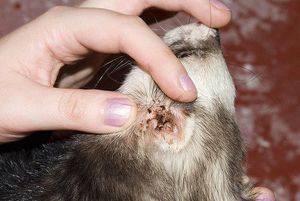
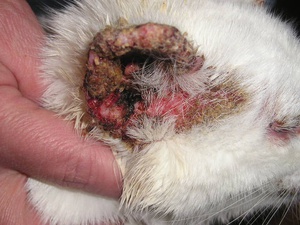 Ear mites most commonly affect kittens aged one and a half months or cats up to one year old. They are easily detected by examining the cat's ears. The first sign of the disease is a grainy black coating in the kitten's ears.This is clearly demonstrated in the photo of the animal. The plaque gets its color from a mixture of earwax, the animal's blood, and the tick's own biochemical secretions. The disease is quite dangerous, as it not only causes inflammation of the middle ear but also affects the skin.
In advanced cases, internal organs are affected and the body's resistance decreases. This disease also occurs in adult cats., but it's usually mild, as the body has developed a strong immunity to infections. Among domestic animals, not only cats but also dogs are susceptible. If you have an infected animal in the house, it's advisable to isolate it from other four-legged companions. In the wild, this disease occurs in raccoons and foxes.
The main symptoms of the disease
 The animal becomes restless. Constant itching in the ear area makes the cat aggressive and nervous.
- Trying to relieve the constant itching, the animal shakes its head, turning its head slightly to the side.
- In the areas where the tick is located, due to the fact that the vessels are filled with blood, swelling occurs.
- Scratching the ears in any way possible leads to the formation of open scratches and wounds, which allow infection to enter. The ears become inflamed, fester, and the itching becomes even more intense.
- Brown scabs appear on the ears.
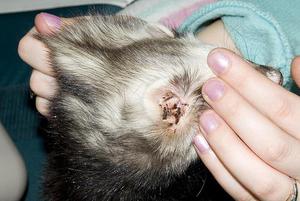 The animal becomes restless. Constant itching in the ear area makes the cat aggressive and nervous.
The liquid discharge dries, mixing with the mites' waste products, and over time, the ear canal becomes coated with a crust. If prompt action is not taken, a plug forms in the ears. The cat loses hearing, becomes lethargic, and refuses to eat.
If any of the above symptoms are present, you should immediately contact your veterinarian before the disease becomes advanced. With complications, the cat's eardrum may burst., and the animal will lose its hearing. The tick will first penetrate the middle ear, then the inner ear. The meninges will become infected. This results in periodic nervous seizures, which usually result in death.
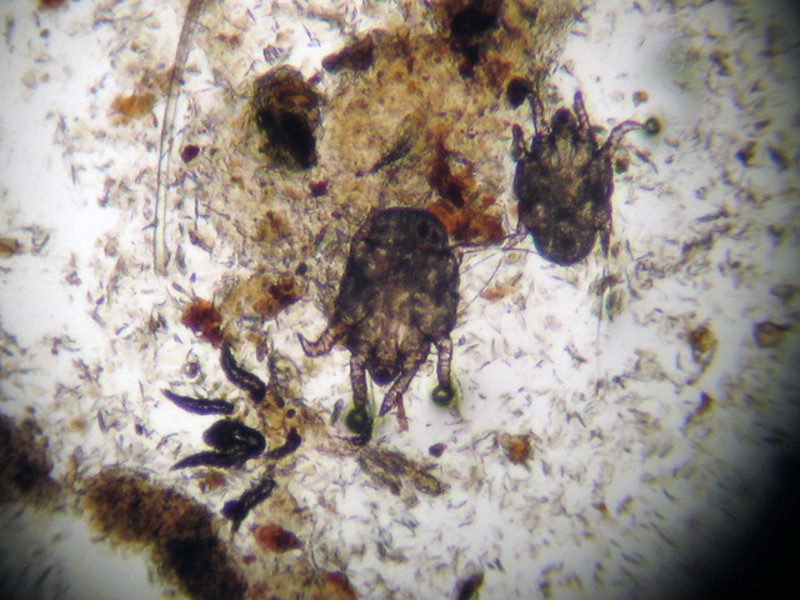
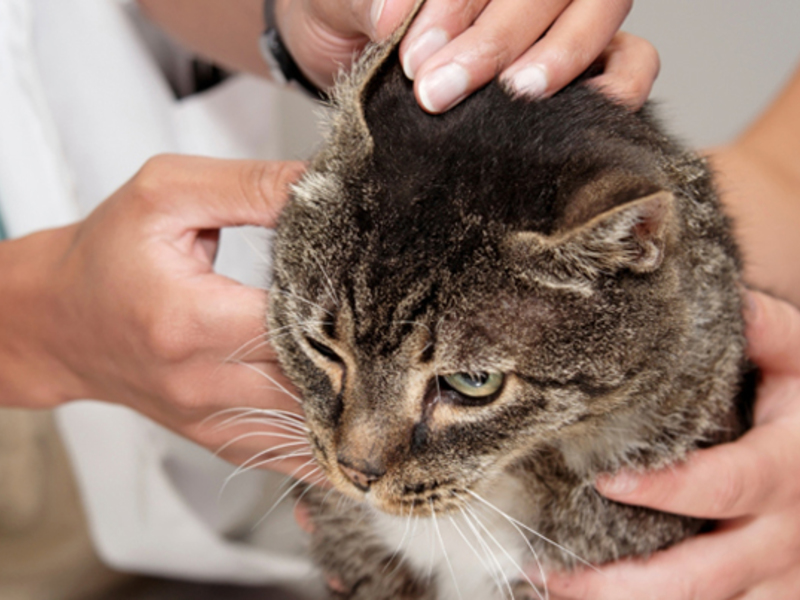
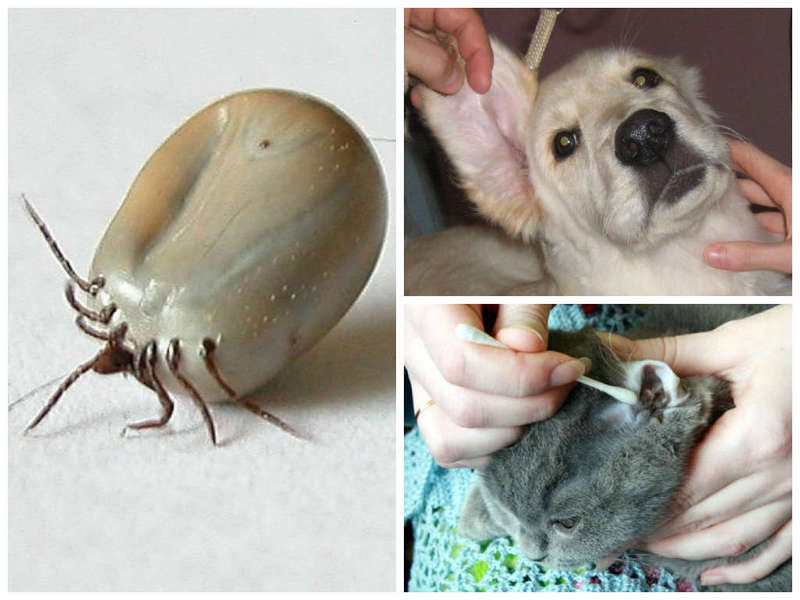
In the late stages of the disease, a bacterial infection may develop, which can become the main cause of death of the animal.
To prevent this from happening, the cat owner must regularly inspect their pet's ears and clean them once a week. it's easier to prevent disease, rather than treat it. After all, you see your pet's suffering and torment. If the disease ends in death, not everyone can cope with it easily.
How to clean your ears
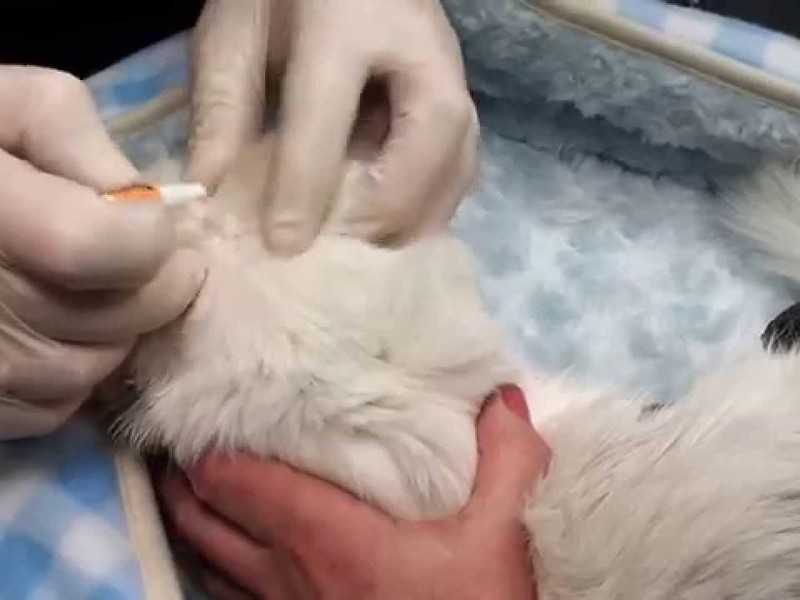
 You can clean your cat's ears using regular green tea. Washing the ears with a natural antiseptic won't cause any harm. For this you need to brew some green tea in a cup Let it steep. Cool and strain the infusion. Next, use a dropper or a small syringe without a needle to apply the solution to your ear, rinsing it out. Continue massaging the area near the outer ear to help the green tea penetrate the ear canal. The infusion will soften accumulated dirt in your ears, and you can easily wipe the outer ear and clean the ear canal with a cotton swab.
What to do if your cat has ear mites
If your pet has become infected, you can treat the animal yourself at home. However, Treatment can only be started once a veterinarian has performed a microscopic examination of the ear discharge and made an accurate diagnosis.In any other case, self-administration of medications may provoke other ear diseases or worsen the condition.
Today, veterinary medicine has developed a multitude of medications capable of combating ear mites. All that remains is to choose the right one. depending on the severity of the disease and your financial capabilities. Tick-repelling medications can be divided into the following groups:
- Aerosols (based on Acrodex, Dermatozol, and Cyodrin). The advantage of this product is that it can be sprayed near the ear, 5 cm away from the ear canal. This allows the medication particles to reach the desired location automatically.
- Ointments (Phenothiazine, dicresyl emulsion, Nicochloran).
- Drops (Bars, Amitrazin, Anandin+, Otoferonol, Frontline, Tsipam). Drops are used for eardrum and hearing aid damage. The medication has a detrimental effect on parasites.
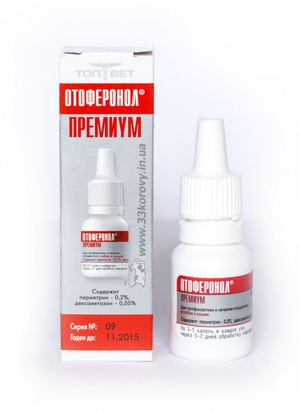 Aerosols (based on Acrodex, Dermatozol, and Cyodrin). The advantage of this product is that it can be sprayed near the ear, 5 cm away from the ear canal. This allows the medication particles to reach the desired location automatically.
And this is far from a complete list of medications that can rid an animal of ticks.
After prescribing medications for ear mites, it is necessary to begin treatment. The course of treatment for an animal usually lasts from three to four weeks.Why this particular time? The medications used for treatment are detrimental to the parasites and ineffective at killing their eggs. Stronger medications are certainly possible, but this could negatively impact your pet's health.
 For treatment to be considered complete, the animal must undergo treatment until the eggs hatch into independent individuals. Therefore, they must be destroyed before the parasites can lay more eggs. The parasite's complete life cycle is 28 days. Therefore, treatment must be continued for four weeks.
How to use ear mite treatment for cats
- Before each instillation, it is essential to clean the affected area. To do this, clean the ears with a cotton swab soaked in a 2% camphor alcohol solution or hydrogen peroxide. A specially formulated lotion for cleaning the auricles is suitable for removing purulent discharge and dry crusts.
- If the animal cannot shake out the dirt on its own, take a cotton swab and carefully remove the plaque from the inner surface of the ear opening.
- The medicine is dropped into the cat's ear. To quickly reach the affected area, the ear is massaged in a circular motion near the base.
- Ear drops and treatments should be applied strictly according to the instructions or as prescribed by a doctor. After completing the treatment course, an earwax test should be performed to check for parasites. If the microscopic examination is positive, treatment should be continued until the microscopic examination is negative.
 The medicine is dropped into the cat's ear. To quickly reach the affected area, the ear is massaged in a circular motion near the base.
After treating an animal, it is essential to carry out preventative measures, such as wet cleaning of the premises, to prevent ticks from being removed from the sick cat and moving to another animal.
Traditional methods of treatment
For more gentle treatment, cats use folk methods. The products are used both for independent treatment and in complex therapy. in combination with medications.
- Garlic is a powerful antiseptic, so it's used to get rid of ticks. To do this, it's first steeped in oil. Homemade sunflower, olive, or almond oil is used. Place two drops in each ear once a day.
- Celandine juice is an indispensable remedy for tick control. Grind the plant's stems and leaves in a meat grinder. Place two drops in each ear twice daily.
- The inside of the ears is treated with a specially prepared solution based on an alcohol solution of iodine and glycerin in a 1:4 ratio. If the areas around the ears are heavily scratched, they are thoroughly lubricated with Konkov's sulfur ointment.
 Celandine juice is an indispensable remedy for tick control. Grind the plant's stems and leaves in a meat grinder. Place two drops in each ear twice daily.
To keep your cat happy and healthy, don't forget to take preventative measures. Treat your cat's most frequented areas with sprays and bleach, and wash bedding and rugs frequently. Monitor the composition and nutritional normsCats should receive adequate amounts of essential minerals and vitamins. A weak immune system is the primary cause of tick infestation and spread. Immunity can be boosted with immunomodulatory medications such as Polivak, Gamavit, or echinacea.
Keep your pet healthyregular checkups will help, ear cleaning, special insecticidal agents that must be regularly and promptly applied to the pet's fur.
Remember, at the first symptoms of the disease, don't delay your visit to the veterinarianA visit to him won't be in vain. In any case, the specialist will give you the necessary recommendations for caring for your four-legged friend.