 Viral enteritis is one of the most common diseases in dogs. This group of infectious diseases is characterized by intestinal inflammation. However, the disease progresses rapidly and affects the kidneys, liver, heart, and other organs. Enteritis affects animals of any age, but most often affects puppies between two and twelve weeks of age. Since severe symptoms and delayed treatment can lead to death, every owner should be aware of the signs of this disease, its treatment, and preventative measures.
Content
Types and signs of enteritis in dogs
Depending on the pathogen, enteritis is divided into coronavirus and parvovirusThe infection was first recorded in Russia in 1980. Animals with no immunity to enteritis often died. This disease primarily affected puppies between 2 and 10 months of age. Although many methods have been developed for the prevention and treatment of enteritis, this insidious disease remains poorly understood.
Coronavirus enteritis in dogs
This milder form of enteritis has an incubation period of up to 5 days and can occur in either acute or mild forms.
Acute form develops quickly and has the following symptoms:
- minor abdominal pain;
- rare vomiting and diarrhea;
- the dog may refuse food, but maintain a drinking regime;
- the pet becomes lethargic and weak.
A secondary infection often accompanies the acute form. This form primarily kills weakened puppies. Adult dogs recover successfully.
Mild coronavirus enteritis may be asymptomatic. In some cases, pets may experience loss of appetite and lethargy. Their temperature does not rise. Their condition usually improves within a few days.
Parvovirus in dogs
Parvovirus infection is divided into three types:
- cardiac;
- intestinal;
- mixed.
Cardiac parvovirus occurs in very young puppies, which are under 9 weeks of age. Its symptoms include:
 Refusal to eat.
- Lethargy.
- Drowsiness.
- A rumbling sound that can be heard in the distance.
- There is usually no diarrhea, and severe abdominal pain is not observed upon palpation.
- The heart muscle is affected, which leads to the animal breathing quietly and unnoticeably, or, conversely, to severe shortness of breath.
- The dog's mucous membranes become bluish and pale.
- All extremities are cold.
- The pet has a weak pulse.
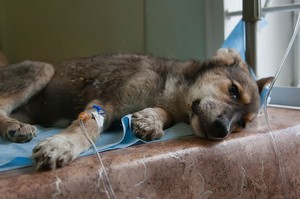 Refusal to eat.
Intestinal form of enteritis It also primarily affects puppies and is characterized by the following symptoms:
- Refusal of food.
- Lethargy.
- Elevated temperature, which may not be present for the first 2-3 days.
- First of all, multiple foamy and viscous vomiting appears.
- This is followed by watery, loose stools characterized by a putrid odor. After a few days, blood appears in the stool.
- The dog experiences severe abdominal pain, and when touched, the pet begins to whine and tuck its tail.
The main problem with the development of the intestinal form of parvovirus is dehydration of the dog's body, which can die within two to three days after the onset of the disease.
In the mixed form of parvovirus enteritis, the heart muscle and intestines are affected. It most often develops in puppies born to unvaccinated bitches and in weakened dogs with rotavirus and adenovirus infections.
Treating enteritis in dogs at home
First of all, a puppy with symptoms of infection should be move away from other animalsHowever, such quarantine does not guarantee that other dogs have not become infected. In any case, the sick pet should be kept in a separate room.
Antibiotics and immune drugs
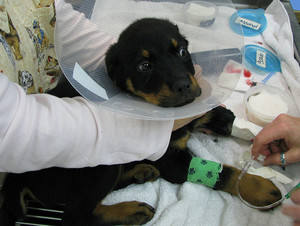 Treatment should begin with the administration of medications that will boost the dog's immunity. Immunofan and Fosprenil are used for this purpose by injection.
Immunofan is a veterinary drug specifically designed for the treatment and prevention of enteritis. This immune-boosting drug helps the body fight viral infections. It can be used both for a sick dog and as a preventative measure for a healthy pet. It can be administered intramuscularly or subcutaneously 2-3 times a day, 1 ml.
Fosprenil is intended for the treatment of various viral diseases in animals. It is used for the treatment and prevention of enteritis. The dose administered intramuscularly or subcutaneously is 1 ml per kilogram of the puppy's weight. A sick dog is treated with Fosprenil for 3-5 days. Injections are stopped only when the pet shows signs of recovery. For healthy puppies, 2-3 injections are sufficient for prophylaxis.
Immunofan and Fosprenil have no contraindications, so even if the puppy is not sick, they will not cause harm.
If the dog has not been vaccinated, then along with the above-described medications for their treatment Gixan or Globcan serum is addedThese immune preparations are intended for the treatment and prevention of enteritis. They dramatically boost immunity, but are only effective for 10-14 days. If the puppy is healthy when the serum is administered, the preparation will prevent it from becoming ill. If the dog has already become infected, the serum will alleviate the illness during the incubation period.
The downside of hyxane and globcan is that they neutralize the effects of vaccinations. Therefore, if the dog has been previously vaccinated, it will need to be revaccinated after the serum is administered. Therefore, it is recommended to administer these medications only when you are absolutely certain the puppy has enteritis.
Treatment of a sick pet with serum depends on the dog's condition. The medications are administered at 12-24 hour intervals, one dose 1-3 times daily. For prophylaxis, the serum is administered once.
After treating the dog with antiviral and immune drugs, nothing further is done until the first symptoms of the disease appear. Quite often, the pet's stool changes soon afterward. It becomes watery, bloody-brown, with pink mucus and a "rotten" odor. Antibiotics are needed to treat it.
Experts recommend using cefazolin in powder form. It is packaged in 1-gram doses, which are diluted in 4 ml of novocaine. The resulting solution is administered intramuscularly, 1 ml at a time, twice daily. The treatment course is 5 days. This dosage is suitable for puppies aged 6-10 weeks. In any case, consult a specialist before administering this antibiotic. Even if the dog shows improvement after the first injection, it is necessary to complete the entire course of medication.
Supportive therapy
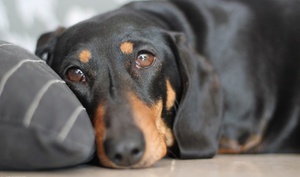 In the treatment of enteritis, a very effective drug is Gamavit, which contains various vitamins, microelements, amino acidsIt is administered subcutaneously, 2 ml once daily. If the puppy's condition is severe, 5% ascorbic acid and B vitamins are added.
Vitamin C is administered intramuscularly twice daily, 0.5 ml at a time. Vitamins B1, B6, and B12 should be alternated. For example, B1 in the morning, B6 in the evening, B12 in the morning, and so on. Each dose is administered intramuscularly, 0.5 ml at a time.
If a puppy is vomiting, Cerucal, administered intramuscularly at a dose of 0.3 ml four times daily, can help alleviate the condition. Giving tablets to a dog in this condition is pointless.
Since parvovirus enteritis causes inflammation in the intestines, puppies often have stomach painsNo-shpa (0.3 ml intramuscularly twice a day) will help relieve pain.
For bloody diarrhea, dogs are given injections of the hemostatic drug Vikasol. Sirepar is used to support the liver. During enteritis, cardiac support is crucial. Sulfacamphocaine injections are given for this purpose. All medications are administered according to the instructions and doctor's recommendations.
The list of medications for treating enteritis is quite extensive. If the disease is severe, the dog may be given up to 10 injections at a time. If the pet is feeling well, then you can limit yourself to:
- sulfacamphacaine;
- gamavit;
- cefazolin;
- whey;
- no-shpa.
Of course, it's a shame to give your pet injections, but medications are truly necessary. If possible, your dog can be given IVs that combine some medications.
How to combat dehydration?
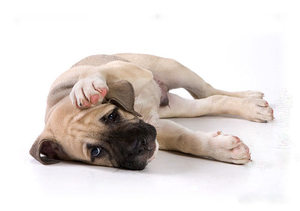 Since dogs with parvovirus enteritis suffer from diarrhea and vomiting, they often become dehydrated very quickly. Therefore, it is very important to ensure that your puppy drinks as much water as possible. If he refuses to drink, then water will need to be administered through injections or IVs.
It's best to take your pet to the veterinarian, who can administer an IV. However, this isn't always possible, so you'll have to manage the problem yourself at home.
You'll need to buy an IV line and saline solution at the pharmacy. At home, you'll need to make a makeshift stand out of a mop or something similar, to which you can attach a bottle of solution. All that's left to do is insert the needle into the dog's vein and adjust the flow rate. Since not everyone is skilled at administering intravenous injections, in a pinch, the fluid can be administered subcutaneously. To do this, insert the needle into a fold of loose skin at the withers.
The amount and rate of fluid administration directly depends on the puppy's condition. If the puppy appears well, administering 150-200 ml of solution over 40-60 minutes will be sufficient.
A dog's severe condition with parvovirus can be recognize by the following signs:
- dry mucous membranes;
- the skin stretches over the muzzle;
- eyes are deeply sunken;
- the skin loses its elasticity.
In this case, it is recommended to keep the IV drip running all day. The fluid should drip slowly, gradually nourishing the body. The saline solution should be changed throughout the day with a 5% glucose solution. For a 1.5-month-old puppy, 50 ml of glucose twice daily is sufficient.
Possible complications
Even timely treatment and a mild case of enteritis do not guarantee that the infection will resolve without complications. Quite often, after an illness, dogs the following consequences remain:
- Puppies who have had the disease before 9 weeks of age may develop myocarditis, a heart disease. In some cases, adult dogs also suffer from it.
- Bitches may become infertile for life or for a few months.
- After 2-3 weeks, polyps may be found in the pet's oral cavity, which are removed surgically.
- Puppies that have recovered from the disease grow poorly and lag behind in development.
- The dog may develop lameness that resolves within a few months or persists for life.
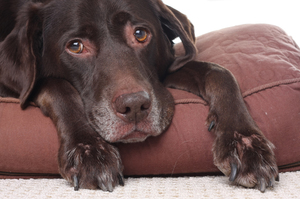 Puppies who have had the disease before 9 weeks of age may develop myocarditis, a heart disease. In some cases, adult dogs also suffer from it.
With full treatment and a mild form of the disease complications usually resolve within a year.
Prevention of enteritis
The only way to prevent a dog from becoming infected with the virus is with a vaccine. Currently, puppies are vaccinated at two to three months of age to prevent the infectious disease. Adult dogs should be vaccinated annually. To save your pet's life, be sure to vaccinate him against enteritis.
Since enteritis is a very serious disease and can even lead to death, your pet should be taken to the veterinarian at the first sign of symptoms. Only a prompt diagnosis, prompt assistance, and proper treatment can save your pet's life.