Did you know there are worms that can live in a dog's heart? If not, we recommend reading this article. Today we'll talk about heartworm disease, a dangerous helminthic disease that causes irreversible damage to the lungs and heart of animals. The worms are only 1.3 mm in diameter but can grow up to 40 cm in length. A dog's body can harbor up to 250 of them at once![1] Adult heartworms can fill blood vessels and cause blockages, which can be fatal for the animal.
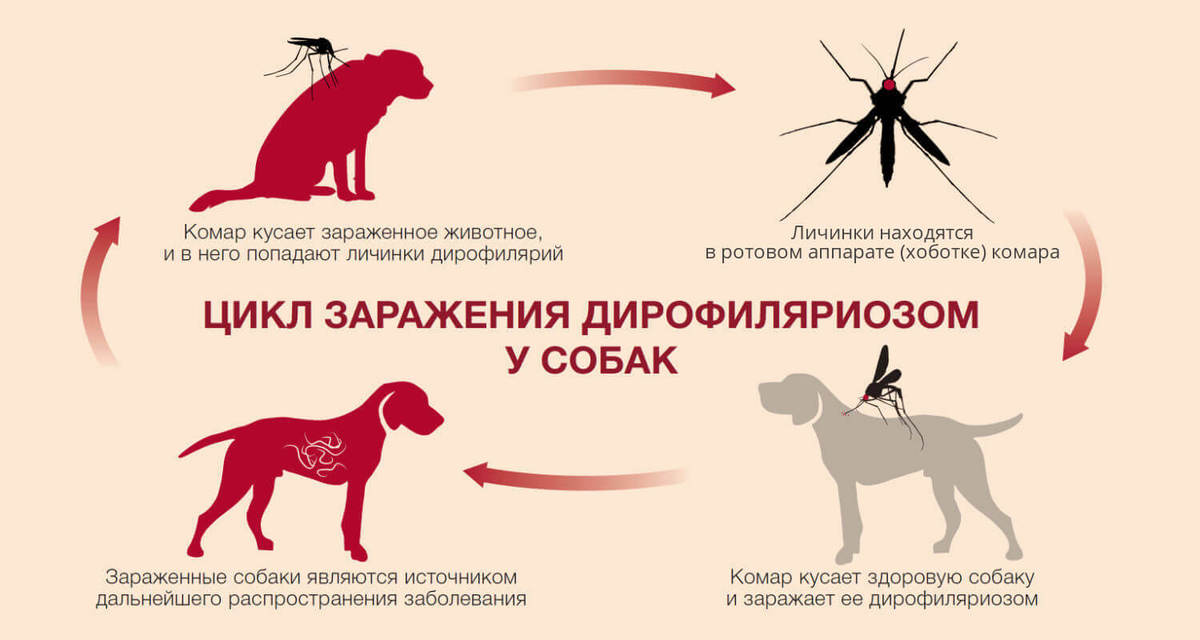
The life cycle of dirofilariasis
Mosquitoes transmit heartworm disease. When a mosquito bites, it infects the animal with worm larvae, which then lodge in the dog's cardiovascular system. During the bite, the infected larvae enter the dog's body and remain in the skin and muscles for 2-3 months, developing to a certain stage. The mature larvae then travel through the bloodstream to the heart, where they become adults.
Signs of dirofilariasis
There are two types of dirofilariasis: subcutaneous and cardiopulmonary.
The main symptom of the subcutaneous form is itching and subcutaneous nodules that cause no discomfort to the dog. This symptom can be confused with other diseases, and the animal may not receive prompt treatment.
The signs of the cardiopulmonary form are quite obvious:
- fatigue after games or running;
- lethargy;
- Heavy breathing;
- Dyspnea;
- Cough;
- Fainting;
- An increase in abdominal volume due to the accumulation of fluid in it.
These symptoms are also associated with cardiovascular dysfunction due to the presence of a large number of parasites. In this case, an immediate examination by a veterinarian is necessary.
Prevention and treatment
To prevent infection, the American Heartworm Society uses moxidectin-based medications in its recommendations for the diagnosis, prevention, and treatment of heartworm disease. These medications are available in Russia under the trade name Advocate.®The drug is produced by one of the leading companies in veterinary medicine, Bayer (Germany). Lawyer® acts on heartworm larvae[2], stopping their development into an adult parasite.
Take care of your dog's heart!