 Helminthiasis is a common helminthic disease in the animal kingdom. During this disease, parasitic worms (helminths) and their larvae infest the internal environment of the affected animal. Humans and cats, which have lived together since ancient times, are equally susceptible to helminth infestations.
The clinical manifestations of the disease result from disruption and damage to the functioning of multiple organs. Therefore Animals need to be treated in a timely manner, since a sick four-legged friend suffers not only himself and requires the help of his owner, but also members of the family where the cat lives can be affected.
In the article Let's look at the most common types of parasites In animals, we'll explore the signs of disease, and also answer one of the most frequently asked questions: how to treat worms in cats and what parasites look like.
Content
Methods of infection
The most common form of infection in any pet is oral. If a cat is allowed to roam freely, this type can realized while eating caught infected birds or rodents, grass, drinking water from dirty ponds and puddles, found spoiled or raw fish and meat, contact with contaminated feces, and so on.
Transdermal and intrauterine lesions are also likely.
Symptoms of worm infestation in cats
 Many common helminthiasis infections share a similar clinical picture. First, the symptoms of feline worms affect the animal's digestive system and general well-being.
During helminthiasis, the owner pays attention to the consumption of obviously inedible products (taste transformation - parerexia), complete loss or decrease of appetiteSignificant weight loss in cats. The animal is physically inactive, apathetic, and weakened. The coat is dull, faded, shaggy, and tattered. Lacrimation, scleral irritation, and mucous membrane icterus are present. Vomiting, nausea, abdominal distension, abnormal peristalsis, anal itching, and the presence of blood in the mucus or feces are characteristic. Dead or living worms (or parts thereof) may be visually detected in the anal area. During examination, a veterinarian will detect an enlarged liver.
It's important to note that there's simply no single, universal anti-worming pill for cats. The most effective medications and products are those that target multiple parasites.
The most common worms in cats, prevention and treatment
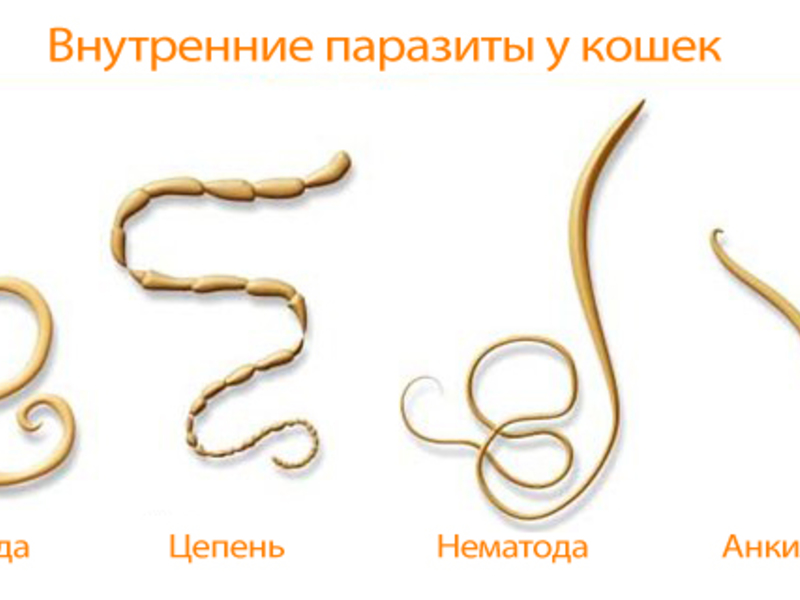
Three main groups of intestinal helminths are most commonly found in domestic cats. All of these varieties are infectious to humans.
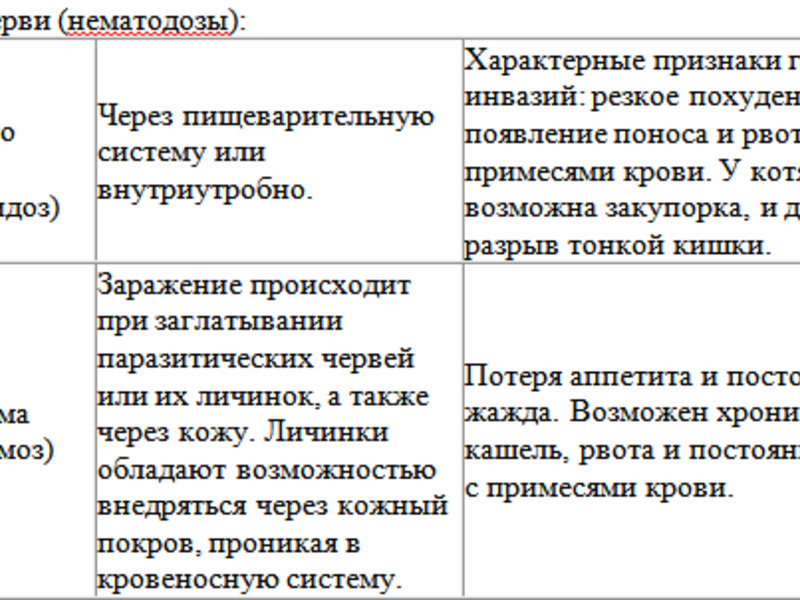
Roundworms nematodosis
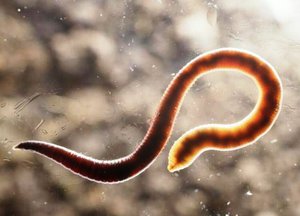
Ascariasis. The causative agents are white, long (up to 12–27 cm) worms. The most common route of infection is in utero, on days 41–43 of pregnancy. Oral infection is also possible. Parasitizes in the pancreas, bile ducts, and small intestine. Larval maturation takes up to 3 weeks. Larvae can migrate via the bloodstream to the spleen, liver, and lungs. From the lungs, they may migrate to the respiratory system, then to the oral cavity, where they are re-ingested.
Ascariasis symptoms. Initially, the host notices a cough, rash, and itching in the nasal area. This is the effect of an allergic reaction to the presence of a parasiteSubsequently, weakness, apathy, fever, weight loss, nausea, hypoanorexia, diarrhea, and vomiting develop. Intestinal obstruction due to intestinal blockage by worm balls is likely.
Tests for this type of worms include an immunogram, microscopic analysis of feces, X-ray, and ultrasound.
The treatment is prescribed by a veterinarian, any is selected deworming medication for cats:
- levamisole - subcutaneously once 8 mg/kg;
- Pyrantel – a single oral dose of 6 mg/kg; contraindicated in cats with liver disease. There is also a type of deworming tablet for kittens;
 Piperatrine or piperazine according to the instructions. The most proven and oldest deworming medications for cats;
- Ivermectin - orally once a month 7 mcg/kg. There is an antihelminthic suspension for cats;
- Azipirin (praciquantel plus pyrantel) is a combined anthelmintic drug used according to the attached regimen.
 Piperatrine or piperazine according to the instructions. The most proven and oldest deworming medications for cats;
During treatment, allergic complications are possible, during which antihistamines are prescribed.
Ancylostomiasis. Small intestinal parasites with characteristic hooks in the oral capsule. There are several possible routes of infection. Larvae are transmitted percutaneously and orally. During oral infestation, hookworms immediately enter the intestinal lumen and develop there for 15–17 days.
During transdermal implantation, the larvae enter the bloodstream transported into the capillaries of the pulmonary circulation, then into the cat's bronchi and oral cavity, where they are swallowed and then enter the intestines. Their development takes 19–23 days.
Using hooks, hookworms attach to the intestinal wall and feed on the host's blood, secreting and synthesizing anticoagulants.
Distinctive symptoms of parasites in cats include the presence of blood in the stool, constipation or diarrhea, parerexia and hypoanorexia.
Detection - helminthological analysis of feces according to Fulleborn.
Getting rid of worms:
- droncit, praziquantel - once with feed: half a tablet per 6 kg of weight or 6 mg/kg of powder;
- Pyrantel—half a tablet per 6 kg of body weight once. There is a variety called deworming tablets for kittens;
- rintal febantel - every day, course dosage 0.03 g/kg with feed, single - 0.01 g/kg;
- panacur fenbendazole - every day, course dosage 125 mg/kg, single dose - 25 mg/kg.
Tapeworms (cestodiasis)
Diphyllobothriasis. The parasite is a broad tapeworm. Infection occurs during ingestion.
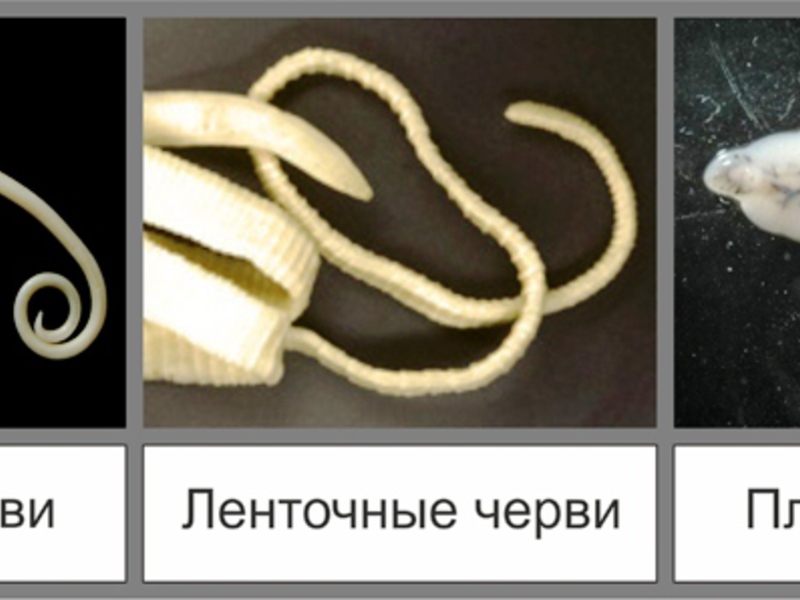
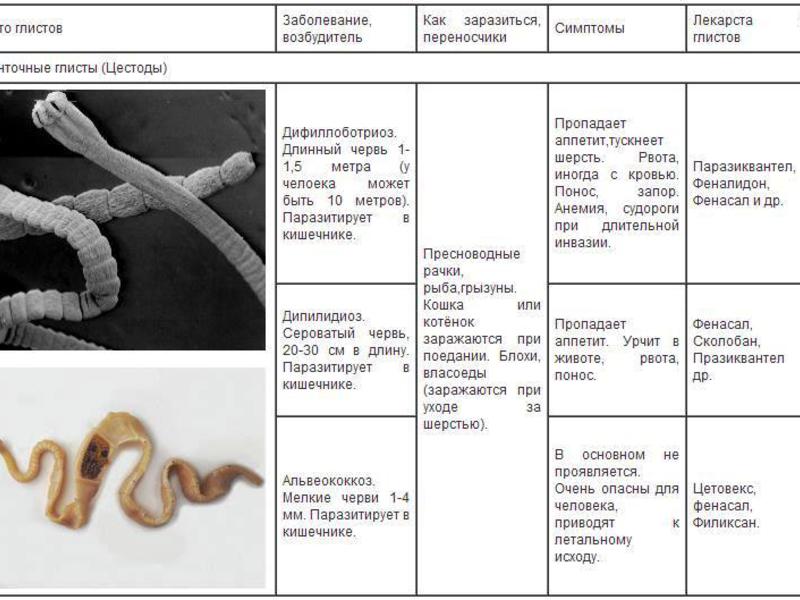
Feed raw fish to animals. Larval development period is 14–24 days. Adult worms live in a cat’s body for 22–28 days.It provokes mechanical alteration of the intestinal mucosa, causing a delay in the transport of the food bolus and an inflammatory reaction.
Distinctive clinical manifestations: Nausea, general depression, fecal retention, diarrhea, or vomiting. Allergic reaction or intoxication The presence of worms is manifested by loss of appetite, fatigue, fever, swelling and skin rash.
Detection of worms - microscopy of feces for parasite eggs.
Treatment for worms:
- Fenaps paste - 0.5 mg/kg once before feeding;
- Azinox - one tablet per 11 kg of total weight;
- Scoloban bunamidine - twice a day, once every four days with meals. Single dose 27-4 mg/kg;
- Drontal tablets—one dose, four tablets per 1 kg of total weight. There is also a variety called deworming tablets for kittens;
- phenasal suspension - 1.3 g/kg once with food;
- droncit praziquantel - once with food at 6 mg/kg;
- Lopotol - once 110 mg/kg.
Dipylidiasis in cats. The parasite is a "cucumber" small intestinal tapeworm, pinkish or white in color, up to 75 cm in size. The main carriers of the worm are humans, cats and dogs, intermediate carriers — lice and flea larvae. The parasite eggs reach the invasive stage of development in the body of an adult flea and enter the intestines of the primary host when the cat ingests the infected insect.
The distinctive signs of parasites in cats are nervous excitement, anxiety, vomiting, loss of appetite, and exhaustion.
Determination of presence: coprological examination according to Fülleborn.
Treatment of worms:
- bunamidine - after 3 hours of fasting 26-31 mg/kg once;
- phenasal - 0.11–0.16 g/kg once;
- Rintal febantel - orally, every day, course dosage - 0.04 mg/kg, single dose - 0.02 g/kg. Quite an effective deworming agent for cats;
- Droncit praziquantel - one dose, 6 mg/kg. Used as drops against worms and fleas for cats;
- Mebendazole – with food, every day, course dose 125 mg/kg, single dose 42 mg/kg. There is an antihelminthic suspension for cats.
 bunamidine - after 3 hours of fasting 26-31 mg/kg once;
Flukes - trematodes
Opisthorchiasis. The parasite is a liver fluke, also known as the "cat fluke." Lives in pancreatic ducts, gallbladder, and liver. Larval infestation occurs through the consumption of raw fish.
Distinctive clinical manifestations in cats include apathy, lethargy, progressive weight loss, inhibition, yellowing of the mucous membranes or pallor, and other signs of helminthiasis.
Parasite detection: microscopic analysis of cat feces.
Treatment of worms:
- polytrem and ixichol - once, 0.3 g/kg and 0.16 g/kg with minced meat after twelve hours of fasting;
- Hexachloroparaxylene - once, 0.3-0.7 g/kg with a small amount of minced meat after a fourteen-hour fast.
Alariasis. A small intestinal parasite, transmitted orally through ingestion of tadpoles and frogs. The worm damages the intestinal wall mucosa with the formation of its atrophy and dystrophy.
 Distinctive clinical manifestations include disturbances of enteritis, food digestion, dysfunction of the digestive system in the form of diarrhea and accelerated peristalsis.
Diagnosis takes into account the symptoms of the disease and laboratory flotation tests of feces.
Treatment of worms:
- lopatol - 0.3 g/kg;
- phenasal - 0.3 g/kg;
- hydrobromide arecoline - 0.005 g/kg, once.
It should be noted that most modern drugs can be purchased as a separate method of use - Anti-worm drops for cats on the withersThis method of delivering anthelmintics has both its advantages and disadvantages.
What parasites are transmitted from cats to humans and how?
Having a pet, especially a cat, is almost a 100% guarantee that all family members, and especially, small children will be affected by wormsIf they don't follow certain rules, never kiss or let your cat lick your face. After petting your cat, even briefly on the back or head, you should wash your hands.
 Cats are quite clean, they spend almost all their free time washing themselves and licking their fur, but this neatness can lead to the fact that parasite eggs are distributed evenly throughout the entire coat From the tip of the nose to the tail. The tongue is the most dangerous and the biggest carrier of worms.
Of the 81 species of helminths that can infect cats, more than 35 species thrive in the human body, the most The most dangerous of them are toxascariasis, toxocariasis and dipylidiasisTherefore, make sure all family members, especially children, take personal hygiene seriously, and do not allow anyone to kiss the cat.
Parasite prevention in cats
Parasite prevention is carried out for both animals and each family member who has a cat. Parasite prevention in children is essential. Most often, this following normal rules of personal hygiene and residence, thoroughly washing fruits and vegetables, and properly cooking all other foods. In addition, it's necessary to periodically administer a preventative course of anthelmintic medication.
Prevention of parasites in cats in the form of medicinal preventive deworming is carried out:
- Twice every 6 months when kept freely;
- Twice every 12 months if kept at home without the possibility of walking the animal.
The owner also needs Do not allow your cat to eat rodents (caught rats and mice), raw fish, or meat. The animal's sleeping area, toys, litter box, and bowls must be thoroughly disinfected and cleaned.
Thus, despite the high probability of helminthic infection, You can easily keep your cat (and yourself) safe. To avoid these unpleasant situations, you just need to carefully monitor your pet's condition and follow simple hygiene and preventative measures.



 Irina Gorlova
  Alisa Novik
  Oksana
  Ekaterina Nazarova
4 comments