 The presence of worms in cats is dangerous to their health; specialists call this condition helminthiasis. The disease can progress differently depending on the type of worm infesting the cat's internal organs. Based on this, the following diseases are distinguished: nematodes, cestodes, and trematodes. These are caused by roundworms, tapeworms, and flatworms.
The appearance of these parasites in the animal's body leads to to damage to the intestines, liver, and gallbladder, and in some cases, muscles. In such situations, owners need to know the symptoms of worms in cats, as well as the steps to take to speed up the animal's recovery and prevent further such unpleasant situations.
Content
Danger to humans
The available data allow us to speak about the presence approximately 32 types of worms, which can be found equally often in humans and cats.
Types of worms in cats that are dangerous to humans:
- Opisthorchiasis. This type of helminth infests the liver, gallbladder, and pancreas.
- Diphyllobothriasis is caused by a cestode that inhabits the small intestine and can grow up to 10 meters in length.
- Toxocariasis and dipylidiasis are caused by roundworms that parasitize the intestines.
- Echinococcosis and alveococcosis are among the most dangerous diseases for humans. Once they enter the body, they begin parasitic activity in internal organs. Frequent contact with cats puts humans at risk of contracting roundworms, which can lead to the development of dangerous diseases such as echinococcosis and alveococcosis.
Worms in cats: symptoms and treatment
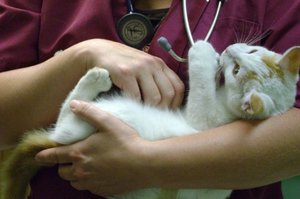 When worms appear in a cat's body, the symptoms of the disease may vary, as this is primarily determined by the degree of infestation of the cat with helminths. In other words, the symptoms of the diseasedepends on the number of worms in the body Animal. If the disease is just beginning, it can be very difficult to detect due to the lack of characteristic signs. However, a group of symptoms often suggests a cat is infected with worms:
- Depression, change in appetite, rapid weight loss, fatigue; in kittens, this manifests itself in delayed growth and development;
- the fur is constantly in a tousled state;
- When examining the mucous membranes, signs of jaundice can be detected, and an enlarged liver or anemia is also a characteristic sign;
- Disruption of the digestive system; diarrhea or signs of vomiting are observed periodically;
- Some animals have a cough;
- Formation of discharge from the eyes;
- Unpleasant burning sensation in the anal area;
- If the disease persists for a long time, symptoms of poisoning of the body are present in the form of leg paresis, cramps, etc.
- Abortion or early birth;
- The presence of mucus and blood clots in the animal's excrement.
Diagnostics
The suspicion of the presence of helminths in the body can only be excluded based on the results of a coprological examination Fecal testing to detect the presence of worm eggs is recommended. However, it's important to note that initial tests may yield negative results, but this doesn't necessarily mean the animal is free of parasites. Eggs may not be present in the feces due to the developmental characteristics of the worm. If the owner decides to test the animal early in the infestation, the body will contain immature worms that have not yet reached the stage where they can shed eggs. Therefore, such tests are often ineffective.
However, owners shouldn't become complacent if they receive false negative test results. In the future, stool samples should be collected at least 3-4 times a month. However, if you're not interested in obtaining detailed information about the helminths present in your pet's body, you can skip this test. The presence of worm segments or adult worms in the stool indicates that the animal is infected.
Prevention
Worms can enter a cat's body in various ways, so to prevent this a number of rules must be followed:
 You shouldn't feed your pet raw meat and fish; your cat should only be given well-cooked food.
- Deworming is recommended for cats every three months as a preventative measure. This is especially important for cats that frequently go for walks in the yard, parks, and other places. This procedure should also be performed two weeks before mating and 10 days before the due date.
- To prevent infestation, regular changes of litter and the contents of the cat litter tray are recommended; you also need to be attentive to the animal itself, which must be kept clean and disinfected from time to time;
- It's also necessary to disinfect areas where your cat frequently visits. This procedure is mandatory after preventative and therapeutic deworming;
- For preventative purposes, it is recommended to use medications against fleas, which can be carriers of worm eggs.
 You shouldn't feed your pet raw meat and fish; your cat should only be given well-cooked food.
Treatment
Today, pharmacies offer a wide range of medications that allow you to remove worms at home at any stage of their development, ensuring your pet's recovery in a short time. These medications are mostly are universal and can be used to combat any type of helminths: nematodes, cestodes, trematodes.
Medications available in pharmacies today differ from their previous counterparts in that they are less toxic. A wide selection of modern medications for treating cats for worms at home is available, including tablets, suspensions, and drops. The following medications have proven effective: Pratel, Prozicite, Drontal, Milbemax, and others.
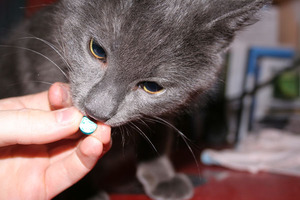
During treatment, strictly follow the instructions on the medication package: the prescribed dosage must be adhered to, and the medication must be administered in the morning on an empty stomach. There is no need to prepare the cat for the medication by performing a bowel cleanse, using laxatives, or placing the animal on a fasting diet. Initially, the tablet must be crushed, then add it to a small amount of food and mix well. If the cat refuses to eat the food, the medication must be administered orally.
To make this easy, secure the animal securely, tilt its head back, and place the medication in the mouth on the back of the tongue. This often causes excessive salivation, but there's no need to worry—it's a natural reaction. Make sure the cat swallows the entire dose, otherwise the desired effect cannot be guaranteed.
For the treatment to be effective, two full courses must be completed. with a break of 14 daysIn some cases, when the disease is advanced, it may take longer to eliminate a large number of helminths. The progress can be monitored using laboratory tests: for this purpose, stool samples are submitted for analysis to detect the presence of helminth larvae.
Treatment of pregnant cats
 To avoid any unwanted consequences, it is recommended to undergo a course of deworming treatment before pregnancy. Don't take the word of specialists—any medication has a certain degree of toxicity, and this may affect future offspring. However, even if this isn't done in a timely manner, it's still possible to give your cat medications that are indicated for such cases even after pregnancy. a certain group of drugs, which can be given to the animal in the first half of pregnancy (milbemax), as well as in the second (drontal).
Treatment of kittens
The presence of worms in a pregnant cat's body increases the risk of her kittens becoming infected while they are still in the womb or after birth. If this happens, don't rush to the pharmacy to buy deworming medication. It's best to consult a veterinarian first, as not all medications are equally safe for kittens.
When determining the dosage, use the animal's weight as a guide. Incorrect dosage can lead to serious consequences, including death. The following medications are considered quite effective: Milbemax, Drontal, Prazicide Suspension, DirofeKittens can be treated no earlier than when they are 10 days old.
Conclusion
 Cats are considered pets only conditionally, as many of them enjoy frequent walks, sometimes spending entire days outdoors. This can have adverse effects on their health. After spending time in the most unfamiliar places, a cat can contract various parasites, especially worms. Even if your pet isn't prone to frequent outdoor activities, they can still become infected with helminths at home. This can happen if you feed them raw fish and meat, or if you neglect to keep the house clean, especially in areas frequented by the cat.
An effective measure to prevent the appearance of worms in the body is deworming, which, if carried out regularly reduces the likelihood of infectionBut even if this happens, there's no need to panic. Today, there are many effective medications that, if administered promptly, can rid your pet of any type of worm.
Naturally, you shouldn't try to remove parasites at home. It's often difficult for owners to find the right deworming medication, so don't waste time and take your pet to the veterinarian at the first sign of a worm infestation.



 Rita Rakeeva
  Evgeniya Kruchinina
  Olga Filatova
3 comments