 While caring for their pets meticulously and meticulously, monitoring their health, many owners are convinced they can't possibly have parasites. However, according to statistics, over 50% of domestic dogs are infected with worms. This is because it's extremely difficult to avoid helminth infections, not only outdoors but even at home, as parasite eggs are present virtually everywhere. They can be found on shoes, plants, in the air, water, and soil. Therefore, even a lap dog can become infected. To recognize and treat the disease promptly, every owner should be aware of the symptoms and signs of a helminth infestation in their pet.
Content
Signs of worms in dogs and puppies
Quite often, parasites can live in the body for a long time and not to show oneself in any waySometimes symptoms similar to other diseases may appear, leading to treatment for a completely different illness. Such situations can delay detection, which can have detrimental effects on the dog or puppy. Therefore, the animal should be examined by a veterinarian periodically and dewormed regularly.
In some cases, you can recognize on your own that your pet is infected with worms. typical symptoms Signs that a puppy or dog has worms include:
 Gastrointestinal problems. These include digestive upset, increased or decreased appetite, constipation or diarrhea, vomiting, and unusual food cravings. Your pet may begin to overeat, but at the same time, their weight decreases.
- Change in the dog's behavior, which becomes inactive and lethargic.
- The animal's coat becomes ruffled, coarse, and dull. Dandruff, eczema, and dermatitis may develop.
- The pet's feces contain mucus, blood, parasites or their larvae.
- The dog's belly, especially that of puppies, becomes swollen and hard, revealing protruding ribs.
- The pet tries to "ride" on the back of its body, because it has severe itching of the anus.
- Difficulty swallowing and hiccups after eating.
- Whitish mucous membranes and general anemia.
- Failure to thrive in puppies.
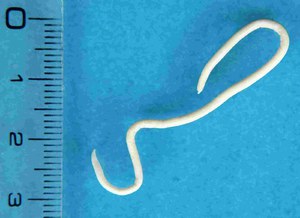 Gastrointestinal problems. These include digestive upset, increased or decreased appetite, constipation or diarrhea, vomiting, and unusual food cravings. Your pet may begin to overeat, but at the same time, their weight decreases.
If the dog is not treated, it will soon she will start vomiting worms, and intestinal obstruction may occur, often resulting in the death of the animal. Therefore, if your pet experiences any of the above symptoms, you should immediately consult a veterinarian.
Types of parasites in dogs
Three groups of helminths are distinguished in puppies and adult dogs. These include:
- cestodes (tapedia);
- trematodes (flukes);
- nematodes (roundworms).
All of them have different degrees of danger and locations, but they have the same negative impact on the animal’s body.
The impact of parasites on a dog's health
 Penetrating into the blood vessels, worms are carried throughout the body through the blood and are retained in various organsAs a result, the integrity of their tissues is disrupted, and vital processes are impaired.
Pathogenic microflora penetrates through injured tissues, which is why dogs infected with parasites often suffer from various infectious diseases.
Once in the intestines, the worms use their piercing and cutting apparatus to injure the mucous membrane, thereby causing inflammation and bleeding.
By feeding on their host's food, blood, and lymph, worms deprive dogs and puppies of essential nutrients and vital energy. Therefore, the infestation is accompanied by metabolic disorders, vitamin deficiency, and weight loss.
By multiplying, helminths can create a blockage in the intestines, which often leads to a rupture of the digestive organ.
In addition to the fact that helminth toxins have a detrimental effect on the functioning of many organsThey also have a negative impact on the nervous system. As a result, dogs may experience alternating periods of excitement and depression, hormonal imbalances, metabolic disturbances, and changes in the respiratory system.
Based on their location, all parasites are conventionally divided into intestinal, cardiac, liver and lung.
Intestinal worms
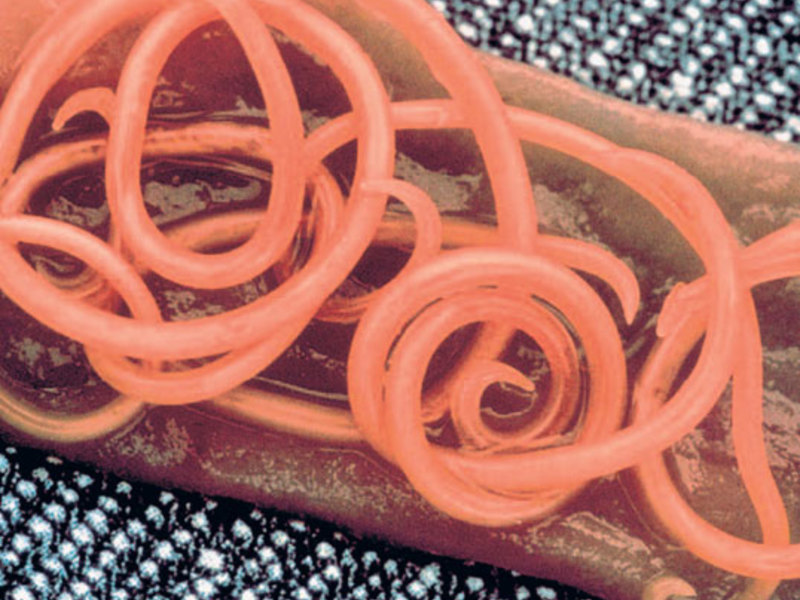
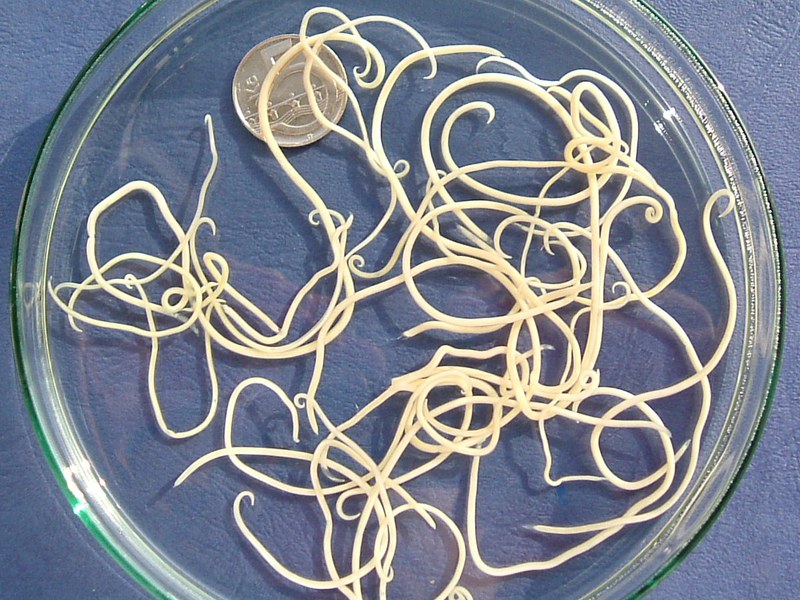
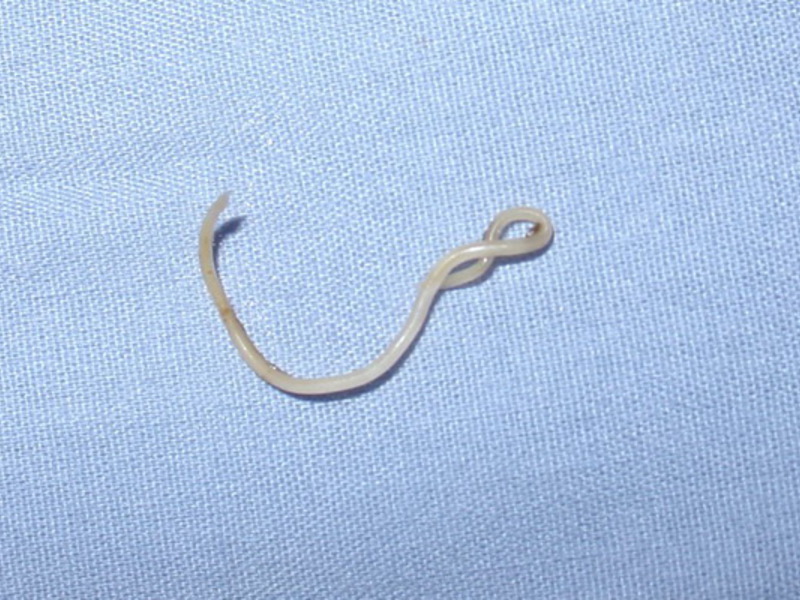
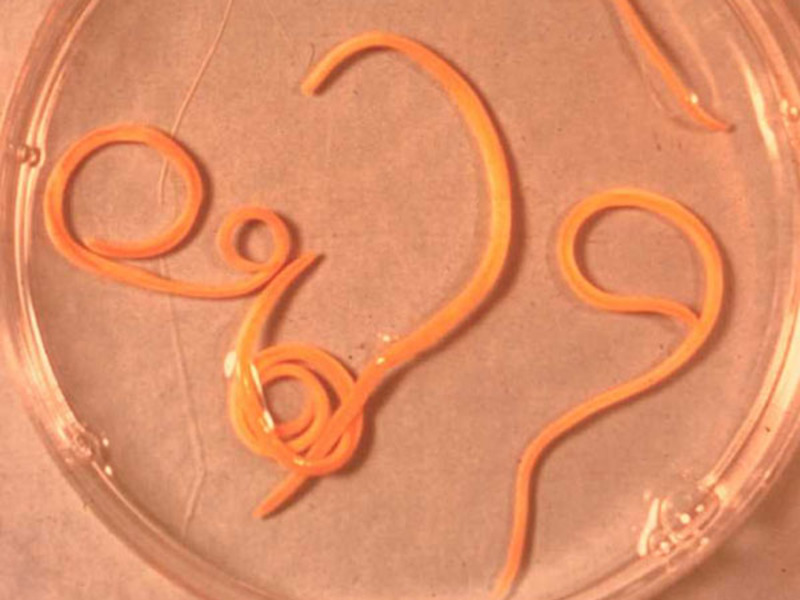
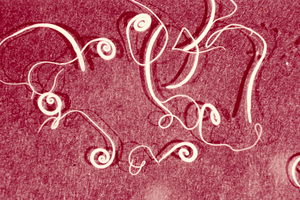 Toxocara worms, which can be seen in the photo, are most common in dogs and puppies. The larva hatches from a swallowed egg in the animal's intestines, then enters a blood vessel, travels to the lungs, and is coughed back into the mouth. A second swallow of the parasite larva remains in the intestines, where it develops into a sexually mature male or female.
The symptoms of intestinal helminthiasis depend not only on the severity of the infection, but also on the dog's age. Puppies are the most vulnerable to intestinal worm infestations. They are practically completely refuse food, and begin to lag behind in growth and development. They develop discharge from the eyes and a bloated abdomen.
All dogs with intestinal parasites experience constipation and diarrhea, pale mucous membranes, loss of appetite, and intestinal colic. Worms can be found in various stages of development, as dogs act as a source of infection and can reinfect themselves.
Lung parasites
The nematode krenozome, which can infect dogs, is quite rare, since to become infected, the animal must eat a land mollusc, which is almost impossible to encounter on city streets.
However, it's still important to know the symptoms of the disease just in case. If you acquire a lung parasite from an animal The following symptoms may occur:
- persistent cough;
- runny nose and sneezing;
- bronchitis;
- deterioration of coat condition;
- progressive emaciation;
- anemia.
It is impossible to cure cough and bronchitis with symptomatic medications and antibiotics.
Liver helminths
Along with raw fish, a dog can ingest opisthorchiasis, or liver fluke, which will parasitize the bile ducts of the liver. An affected pet will lose weight, and its fur will become ruffled and dull. If the disease is left untreated, fluid will accumulate in the abdomen, and the liver will become tender and enlarged upon palpation.
Heart parasites
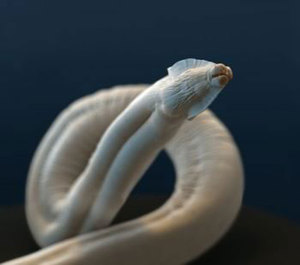 This type of worm deserves special attention, since such an invasion is quite severe. Infection occurs through a mosquito bite., which injects the helminth into the animal's bloodstream. This results in the transmissible disease dirofilariasis.
Developing in the blood vessels and the right atrium, sexually mature worms clog them, which inevitably leads to the death of the animal.
Signs of heartworm in dogs:
- dry, debilitating cough;
- difficulty breathing;
- dyspnea;
- arrhythmia, slow pulse, swelling and other signs of heart failure;
- general weakness;
- pica;
- convulsions;
- exhaustion.
Parasites living in dogs' hearts can be transmitted to humans. However, they don't reach sexual maturity in our bodies, which is still not a pleasant experience.
Treatment of worms in puppies and dogs
Anthelmintics are prescribed to animals only after a diagnosis has been made, which is determined in the laboratory. For this The stool is examined for worm eggs.In some cases, parasites are excreted in the feces, and then their type can be identified independently.
It's best not to give deworming medications intended for humans to dogs or puppies. These should be purchased from pet stores on the recommendation of a veterinarian.
Puppies are most often infected with the nematode Toxocara caris, for which experts recommend using Drontal Genior. This sweet suspension is administered into the puppy's mouth with a syringe. Other medications used to deworm puppies include:
- Trianthelm;
- Caniquantel;
- Prantel;
- Prazitel;
- Troncil;
- Prazicide.
For puppies up to one month old the drugs are purchased in the form of a suspension, and dogs older than one month are given antiparasitic tablets.
Adult pets are treated with broad-spectrum medications. Your vet may prescribe Azinox Plus, Drontal Plus, and others. Since long-term use of the same medication can lead to addiction, it's recommended to alternate them.
Milbemax is a deworming tablet that you can prescribe to your dog yourself. This medication can be used against all types of helminths, especially before your pet's annual vaccination. Since animals infected with worms have weakened immune systems, they must be treated before vaccination.
Milbemax is a universal drug, as it contains a chemical that affects not only cestodes and nematodes, but also their larvae.
Milbemax is given to the dog in the morning before meals for 7-14 daysThe course of treatment depends on the parasite's biology. It is recommended to always examine your pet's feces to detect live or dead worms and determine the effectiveness of the treatment. Deworming is usually repeated according to the instructions.
How to deworm?
 Anthelmintic medications should be given to dogs in the morning, placed in ground meat or wrapped in sausage, meat, or a treat. If the pet refuses to take the medication, manually grasp its jaw, lift it up, and place the tablet deep on the back of the tongue. For puppies, buy suspensions or crush the tablets into a powder, dilute them with water, and administer them with a syringe.
In some cases the dog you may feel unwell after taking the medicineYou should immediately give her Enterosgel or another absorbent and consult a veterinarian.
Almost all modern medications break down worms partially or completely. Therefore, live or dead parasites may not be visible in animal feces. It's essential to observe your pet closely during deworming. Sometimes, it may be necessary to help them deworm, which can be done with a laxative or an enema.
Prevention of worms
Preventing worms in dogs and puppies is crucial, as it's easier and cheaper to prevent than to treat. Deworming is necessary starting at two weeks of age. There are special medications available for this purpose, including Drontal Plus for puppies and Prazicin. Experts recommend deworming dogs every three months.
However, worm prevention isn't just about deworming. It's also important to keep your pet away from unfamiliar dogs and ensure they're well-groomed when out for walks. didn't pick anything up from the ground and didn't drink from puddles.
Since raw meat, fish, unwashed vegetables, berries, and fruits are potential sources of parasite infestation, care should be taken to properly prepare them. Meat can be frozen for 2-3 days or scalded with boiling water. Fish should be boiled thoroughly, and vegetables, fruits, and berries should be thoroughly washed.
Since helminthiasis is dangerous for dogs and a very serious disease, it is important to know its symptoms in order to detect and treat your pet in a timely manner. And if you do it correctly carry out all preventive measures and show attention and care for your dog's health, then your pet will always look good, play happily and bring you only joy.






 Olya
Olya
1 comment