 Hair loss in cats is not uncommon, but that doesn't mean you can rest easy and avoid consulting a specialist. Hair loss can be caused by natural factors (such as shedding) or it can be the first sign of a medical condition.
Content
Why does my cat lose hair?
When faced with such a problem, the first thing you should do is find out the cause of bald spots.
Natural hair loss
Hair loss in cats may not be related to the presence of certain diseases.
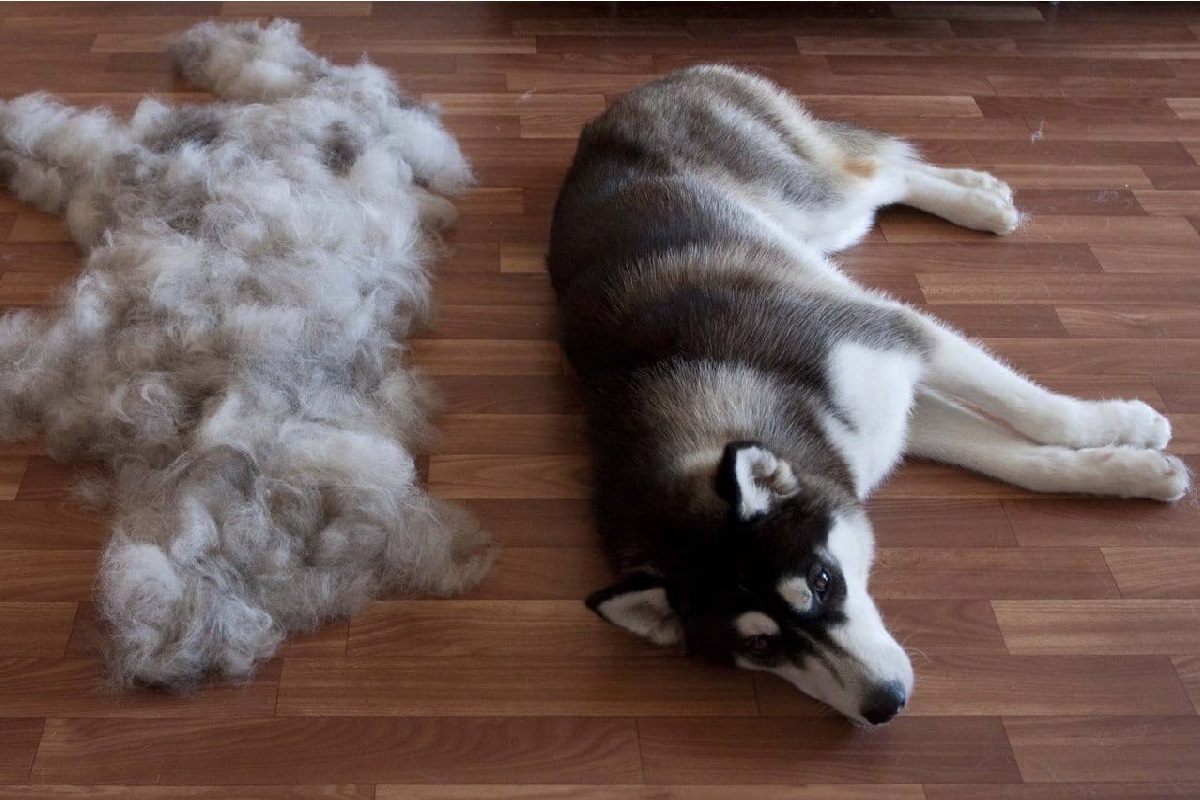
 MoltingIf your cat's fur starts to fall out in clumps, but its nose is moist, its eyes are clear, and its skin color is unchanged, there's no need to worry. In this case, the cat's hair loss is due to natural causes—seasonal shedding. During shedding, the animal behaves completely calmly and experiences no discomfort. Although the fur falls out in clumps, bald spots are usually not observed. In a city apartment, the shedding process can last for about three months. During this period, more than ever, it's crucial to monitor your cat's diet and provide it with a balanced diet that promotes active hair growth. Your cat's diet should include more natural foods containing vitamins and minerals.
- Facial alopeciaThis condition is not related to any medical condition and is characterized by natural hair loss between the eyes and ears. Facial alopecia in cats typically appears between 14 and 20 months of age and resolves by the time the animal reaches three years of age.
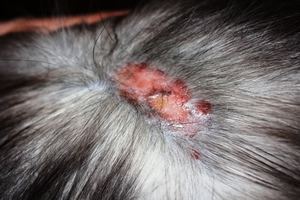 MoltingIf your cat's fur starts to fall out in clumps, but its nose is moist, its eyes are clear, and its skin color is unchanged, there's no need to worry. In this case, the cat's hair loss is due to natural causes—seasonal shedding. During shedding, the animal behaves completely calmly and experiences no discomfort. Although the fur falls out in clumps, bald spots are usually not observed. In a city apartment, the shedding process can last for about three months. During this period, more than ever, it's crucial to monitor your cat's diet and provide it with a balanced diet that promotes active hair growth. Your cat's diet should include more natural foods containing vitamins and minerals.
Factors that cause hair loss in cats
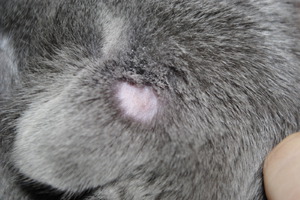 Unbalanced dietIf a cat's diet is improper, it will experience increased hair loss on its back, neck, and tail. The rest of the body's coat will become dull. Over time, the affected areas become inflamed, flaky, and intensely itchy. All these symptoms can occur when feeding salty, spicy, and fatty foods, as well as sausages. Introducing large amounts of whole milk into the diet can also trigger hair loss.
Not everyone knows that cats have quite delicate digestive systemAnd sometimes, when feeding their pet from the common table, owners suddenly begin to genuinely wonder why their pet is having health problems when the fish was fresh, the sausage was delicious, and they were given plenty of milk... So what should they do?
It's worth mentioning here that in the wild, cats don't eat fried (or boiled) fish, sausage, or other "human" foods. If you want to ensure your pet receives the full range of nutrients it needs, the best option is to feed them a high-quality, ready-to-eat food.
Have you finally decided to feed your pet natural food? You need to create an appropriate diet, in which offal and cereals should be combinedSometimes you should add low-fat cottage cheese and eggs, fish, and lean meat. Do not add salt!
Feeding cats familiar human foods with various spices and flavorings is strictly contraindicated. This type of diet causes an unpleasant reaction, accompanied by hair loss. Medically, this is called dermatitis.
In this case, you should first consult a veterinarian, who will help you develop a personalized diet for your pet and prescribe the necessary anti-allergy medications and vitamin supplements. If metabolic disorders are chronic, your cat may require more serious treatment.
- Hormonal disordersThese disorders occur due to excessive use of medications that inhibit libido. Hormonal imbalances can cause clumps of hair loss. Obesity or, conversely, sudden weight loss, as well as frequent urination, can be observed. The pet may lose its appetite, become apathetic, and
- AllergyHair loss in cats can be caused by an allergic reaction to certain foods. This type of hair loss is symmetrical, the affected areas of the skin become red and intensely itchy, and the ears become inflamed.
- GranulomaIt occurs as a reaction to suture thread, plants (such as foxtail), etc. Granulomas can also be caused by infection. Hard nodules of varying sizes appear on the body; if the reaction is caused by foreign bodies, the nodules may be moist. Hair loss, secondary infections, and ulcers are possible. Diagnosis involves a biopsy, as well as surgical removal of foreign bodies.
- Skin mite infestationThe first signs of a skin mite infestation are bald spots on the cat's face, front paws, and ears, along with dullness of the fur. The cat experiences discomfort, manifested by skin rashes, itching, and inflammation in the infected areas.
- LiceSome types of lice also infect cats. Symptoms include coarse fur and hair loss, itching, and crusty skin.
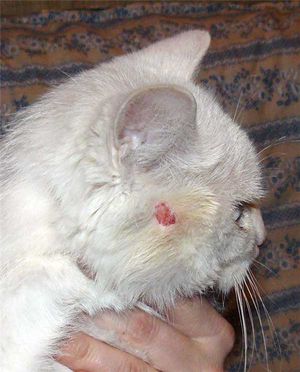 Hormonal disordersThese disorders occur due to excessive use of medications that inhibit libido. Hormonal imbalances can cause clumps of hair loss. Obesity or, conversely, sudden weight loss, as well as frequent urination, can be observed. The pet may lose its appetite, become apathetic, and
In addition to the above-mentioned reasons, an animal's hair may fall out due to the development of certain diseases.
Skin diseases in cats
Dermatitis in cats can have various causes. It can be caused not only by an unbalanced diet but also by certain chemicals (for example, polish or furniture cleaner used in the home). Allergic reactions can also occur to pollen, synthetic materials, dust, and other allergens. Hair loss is accompanied by redness, itching, and the appearance of small bumps on the skin's surface.
Possible skin lesions in cats and what to do about them
Hair loss and skin disorders can be caused by the appearance of certain irritants:
- Fungal skin lesionsSmall bald spots appear on a cat's body, which later merge into large, inflammatory lesions. The bald spots, containing scales, are rounded. If you notice such growths on your pet, you can confidently assume it has a fungal infection or ringworm. Do not attempt to treat your pet yourself. Fungal skin infections pose a danger to people who come into contact with the sick cat. Only a specialist can prescribe a comprehensive course of treatment after conducting examinations.
- SeborrheaA distinction is made between primary (hereditary) and secondary (resulting from parasitic infestation and other diseases). The cat's skin has an unpleasant odor and becomes oily and inflamed. Intense hair loss is observed in various areas of the body. The disease is diagnosed by taking blood samples, skin scrapings, and determining the underlying cause.
- DemodicosisThe infection can be generalized or localized. The first form occurs in cats with a weakened immune system. It is characterized by reddened skin, dry scales, and hair loss. Itching is also common.
- Erythema multiformeIt can be caused by cancer or other diseases. It also occurs in cases of hypersensitivity to medications or infections. Signs include frequent blisters in the armpits, groin, around the ears and mouth, and hair loss. Fever, depression, and ulcers are sometimes observed.
- Apocrine sweat gland cystsThis is a relatively rare disease in cats. It manifests as single, smooth blisters (sometimes bluish in color), usually watery. It most often appears on the limbs, neck, and head.
- Sebaceous adenitisThis disease is extremely rare in cats and is characterized by the appearance of rounded, crusted, and scaly areas on the neck, ears, and head. The disease is diagnosed by clinical signs and a skin biopsy. Treatment requires antiseborrheic shampoos and fatty acid supplements. More severe cases require the use of rethyroids and steroids.
- Solar dermatosisThis is a skin reaction to sunlight. It is more common in cats with white ears. It is characterized by reddening of the skin, flaking of the ears and nose, and hair loss. Later, crusts and ulcers develop.
- Symmetrical alopeciaThis condition is quite rare, and its causes are unknown. It is characterized by symmetrical hair loss in the groin, abdominal area, and on the back of the thighs. There is no itching, and the hairs are easily plucked out. It is diagnosed by skin biopsy. Other tests are also performed to rule out other causes.
- FolliculitisAn infectious lesion of the hair follicles. It most often appears on the neck, head, and face. The disease is characterized by the development of pustules within the hair follicles, which, when open, can lead to crusting. Itching and hair loss may occur. Diagnosis is made by skin scrapings, cultures, and biopsies. The underlying disease, which may be feline immunodeficiency virus (FIV) or an allergy, is also determined.
- Injection-induced alopeciaHair loss in the area where the medication was injected. Skin thickening and ulceration are possible.
- Psychogenic alopeciaCats are quite sensitive to all sorts of external changes, which can cause psychogenic alopecia. Under stress, the animal begins to chew out its own fur. Bald spots most often appear on the forelimbs, abdomen, thighs, back, and groin. The animal's own skin damage can continue until psychological balance is restored. Ulcers and erosions appear on the affected areas.
- Alopecia areata (Alopecia areata). This is an autoimmune disorder characterized by hair loss in certain areas, especially the neck, scalp, and body. There is no itching.
- Congenital hypothyroidismKittens are born with little or no fur. By the end of the fourth month, the sparse hairs present at birth disappear completely.
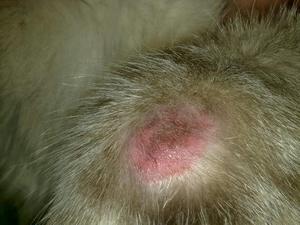 Sebaceous adenitisThis disease is extremely rare in cats and is characterized by the appearance of rounded, crusted, and scaly areas on the neck, ears, and head. The disease is diagnosed by clinical signs and a skin biopsy. Treatment requires antiseborrheic shampoos and fatty acid supplements. More severe cases require the use of rethyroids and steroids.
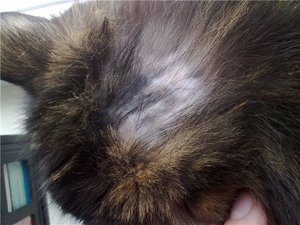 Psychogenic alopeciaCats are quite sensitive to all sorts of external changes, which can cause psychogenic alopecia. Under stress, the animal begins to chew out its own fur. Bald spots most often appear on the forelimbs, abdomen, thighs, back, and groin. The animal's own skin damage can continue until psychological balance is restored. Ulcers and erosions appear on the affected areas.
You shouldn't try to determine the cause of your cat's hair loss on your own, as the same symptoms can be signs of different diseases.
So, follow the feeding and care guidelines for your pet, keep your cat up-to-date on vaccinations against all skin diseases, and take your cat to the vet regularly. Only then will you be able to avoid potential problems and have a healthy, happy, and loving furry friend by your side.