 Pets bring joy to the home, but they require constant care and attention. Our beloved pets sometimes get sick, and during these times, they need special attention. If you have a cat, most owners have likely encountered the problem of watery eyes.
In this situation, it's best to take your cat to the vet to determine the cause. Why are my cat's eyes watering, and what can I do at home to help?
Tearing of the eyes
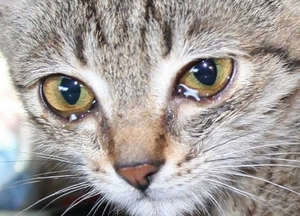
Cats often experience watery eyes, and there are various reasons for this. This problem can affect both adult cats and young kittens. You can find out the cause with the help of a veterinarian.He will tell you why your cat's eyes are watering, how to treat it properly, and what remedies are needed to help your pet recover. According to experts, there are many causes of eye discharge in cats. Almost all of them are caused by an eye or eyeball disease. There are several possible causes:
- Conjunctivitis or inflammation of the conjunctiva appears due to pathological conditions of the cat's body and is expressed in the form of symptoms; viral conjunctivitis can be caused by refusal of vaccination or its untimely administration;
- lacrimation often appears against the background of a cold;
- Discharge in cats may be due to intestinal parasites;
 an allergic reaction, and the allergen can be various substances - food, fluff; pollen, household chemicals, pet care products and others;
- trauma, bruises of the cat's eyes, mechanical irritation, presence of foreign bodies;
- radiation irritations;
- if gas gets into the conjunctival sac;
- Certain cat breeds are predisposed to tearing due to the anatomical structure of their eyes. For example, Sphynx cats have inverted eyelids, which can lead to irritation of the eyeball by the eyelashes.
- the entry of inflammatory processes from surrounding tissue into the eyeball;
- Cat eye diseases - eversion of the eyelids, blephoritis, keratitis, eyelid neoplasms and many others.
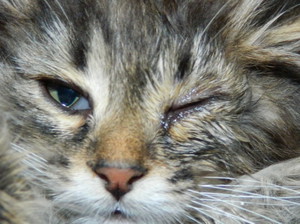 an allergic reaction, and the allergen can be various substances - food, fluff; pollen, household chemicals, pet care products and others;
Watery eyes - main symptoms
Depending on the cause, tearing in cats can manifest itself in different ways, ranging from mild to severe. Much depends on the severity of the condition. The most common symptoms of tearing in cats include:
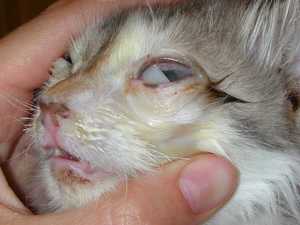
- slight swelling in the eye area with slight to moderate discharge;
- If tearing lasts too long, hair often falls out and for this reason dermatitis and eczema develop;
- liquid discharge from the cat's eye area may change from thin to thick;
- in the inner corners, the discharge eventually turns into a dried brown mass;
- in the corners you can see a channel of brown or red color;
- Because of the itching, cats may rub their eyes, which makes it even worse because the eye is injured;
- sometimes the conjunctiva swells very strongly, it turns red and can protrude beyond the eye;
- When the case is very advanced, the cat's temperature rises and the animal becomes photophobic, and the animal becomes depressed.
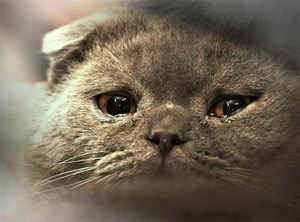 in the corners you can see a channel of brown or red color;
Depending on the severity of the disease and in the absence of treatment, these symptoms will only increase, causing the animal to experience pain. If lacrimation is persistent If the condition persists, it's best to consult a veterinarian. They'll examine your pet and determine the cause and prescribe treatment.
Why does a cat have watery eyes and how can you help at home?
A cat's tear production is a protective response to certain irritants. These can be internal or external. It's important to pay attention to this and address the issue. If your cat behaves calmly and shows no signs of anxiety If your kitten's behavior changes, then you should limit yourself to hygiene procedures. These should be performed regularly, especially when the kitten is still very young. They can't yet properly groom themselves, so they need help. Herbal remedies are suitable for this.
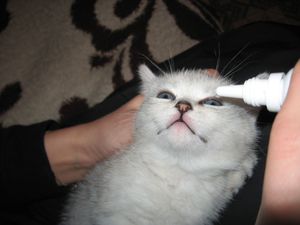 A diagnosis can be made by analyzing a conjunctival sac swab. The sample is sent to a laboratory, where the origin of the disease is determined. Based on the results they will determine the exact cause and prescribe treatmentIt is selected individually. Often, cat owners are unable to immediately visit a medical facility for procedures. In this case, they can provide care for their cat at home.
It is believed that all antiseptic solutions should be used for this purpose. For example, Furacilin is used as a 0.2% solution. If conjunctivitis is bactericidal, then other aqueous solutions should be used:
- Levomycetin;
- Sofradex;
- Kanamycin.
All of these remedies should be used 2-3 drops in both eyes 5 times a day. If antibiotic ointments are used, they should be applied to the eye area 3 times a day. If the swelling is severe and the animal experiences pain, a solution of hydrocortisone and novocaine should be used.
Often, for various reasons, foreign objects get into cats' eyes, which can cause a lot of discomfort and watery eyes. Before removing the object I need to give a pain-relieving injectionTo make the procedure easier for the animal, the eyelid is then folded back using tweezers and a cotton swab soaked in 8.5% sodium chloride solution, and the foreign object is removed.
If the animal continues to behave restlessly and the speck cannot be removed completely, then you need to contact a veterinarian. It may be necessary to remove the object surgically.Cats often experience watery eyes due to allergies. It's important to identify the irritant and remove it. In such cases, hormonal treatment is prescribed.
Folk remedies and prevention of lacrimation in cats
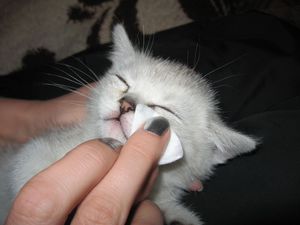 Folk remedies are used to treat watery eyes in cats. You can prepare a decoction with chamomile petalsRinse your eyes twice a day with a decoction prepared in a steam bath. You can also make a mild solution of potassium permanganate.
For purulent inflammation, decoctions of sage, calendula, and St. John's wort are very helpful. Compresses are made from the decoctions. apply to the eye area several times a dayBlack tea is excellent for rinsing the eyes. It's best not to use freshly brewed tea; let it steep before applying compresses.
To avoid eye problems, it's advisable to regularly pay attention to the mucous membranes of the eyes. Using cotton swabs soaked in herbal infusions, wash the eyes, eyelids, and surrounding area.
All these measures cannot be called primary, but only auxiliary, which can slightly alleviate the condition of a sick pet. Products containing antibiotics require special care.If symptoms of illness are detected and the animal is restless, it is best to take it to a specialist who can determine the cause of the watery eyes and prescribe treatment.