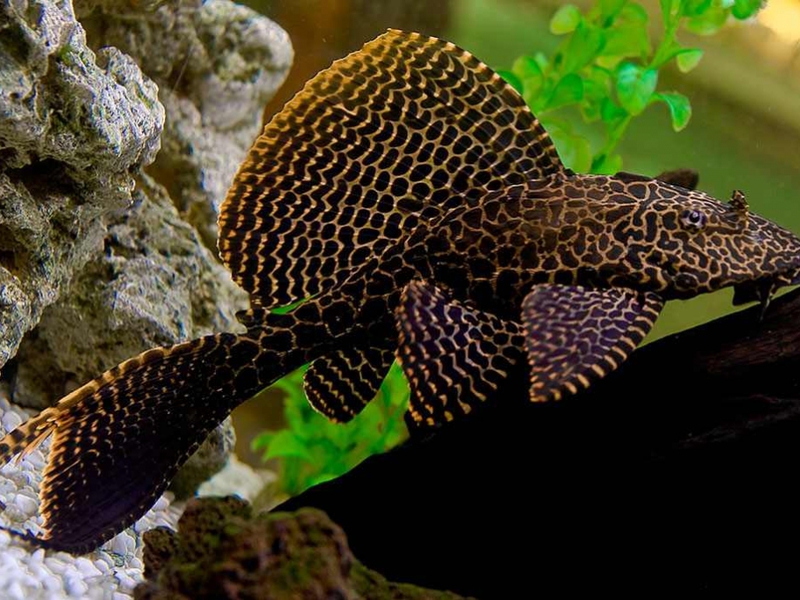
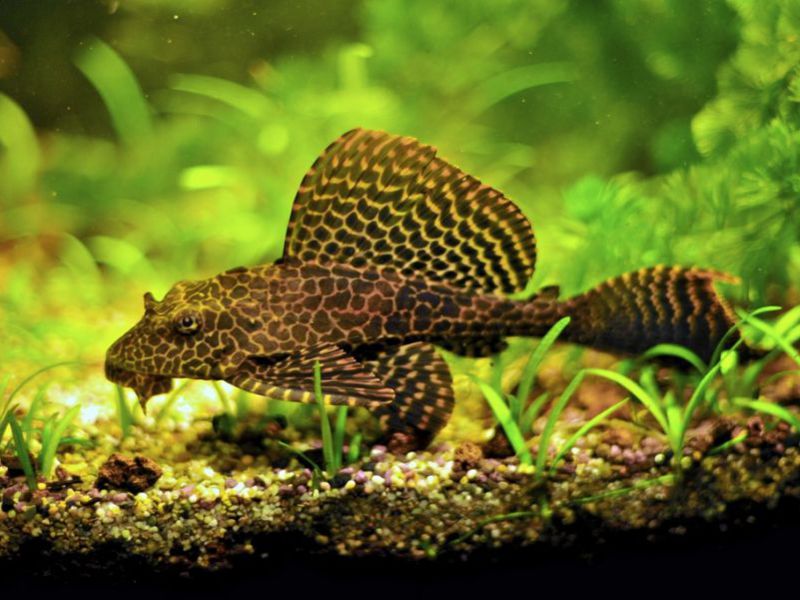
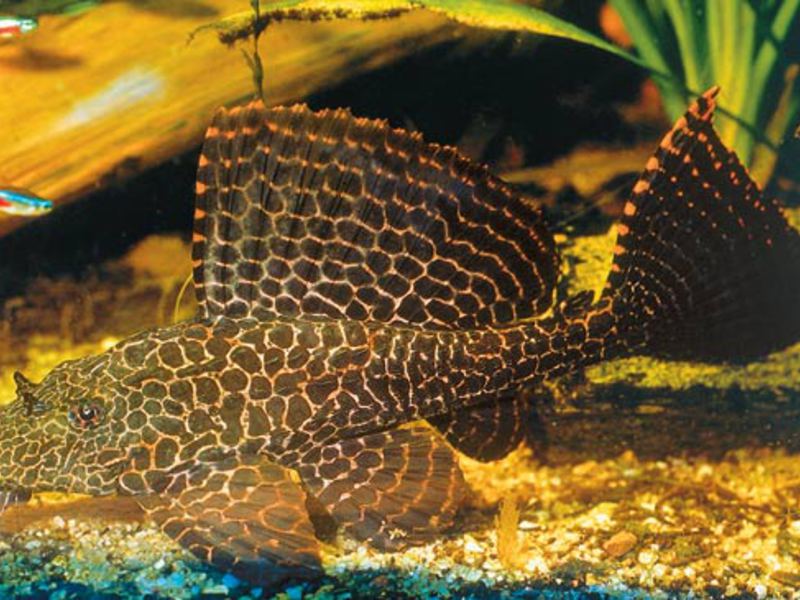
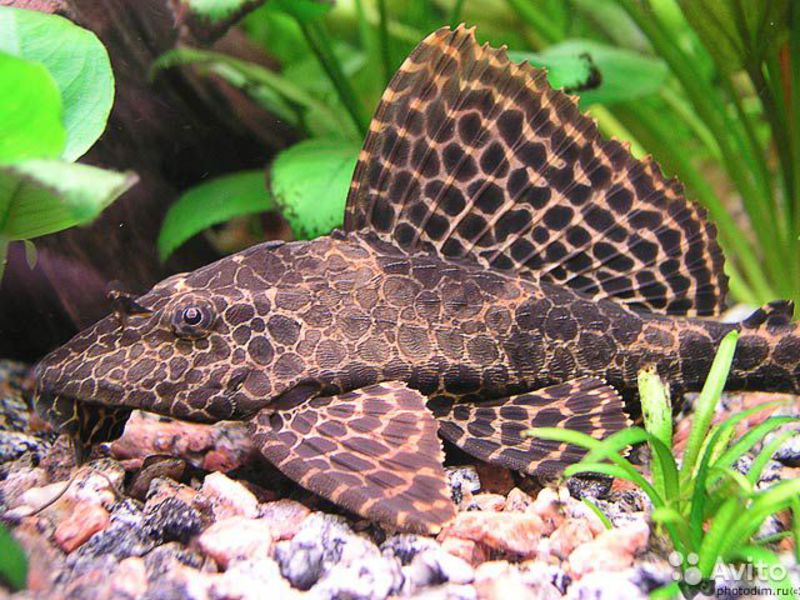
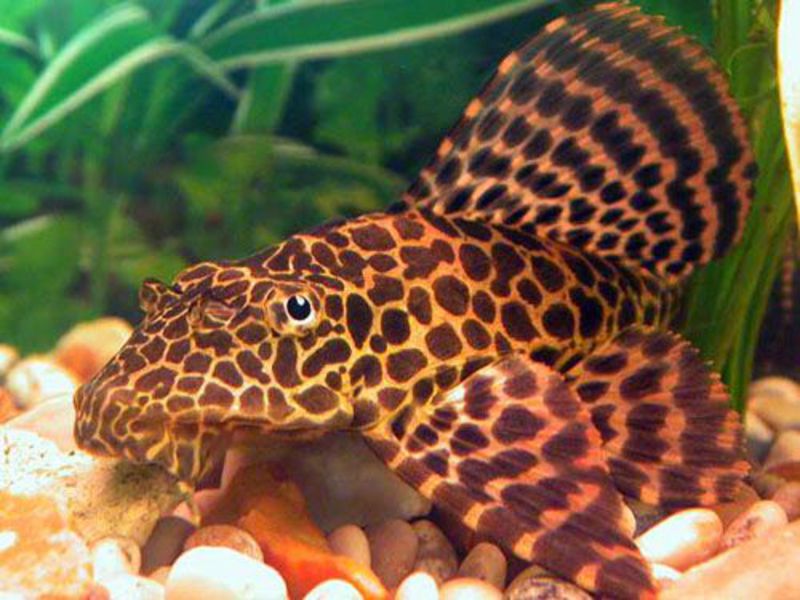
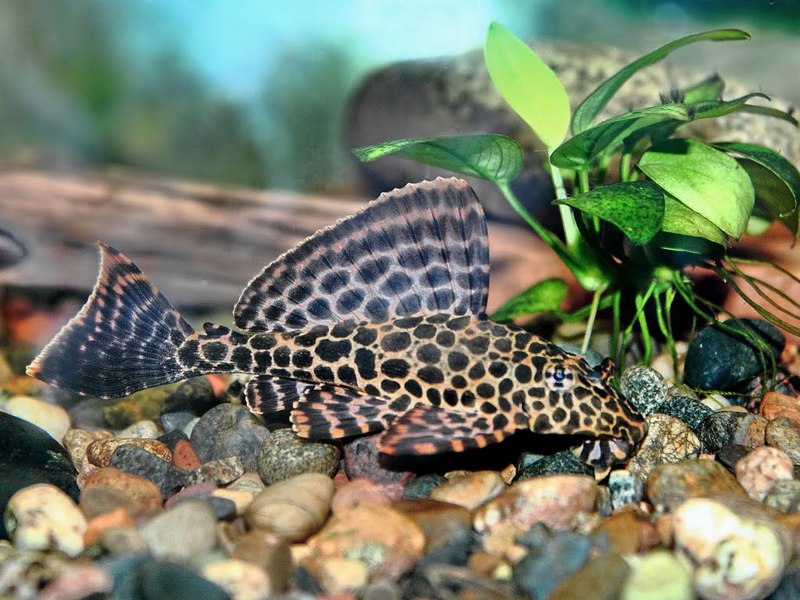
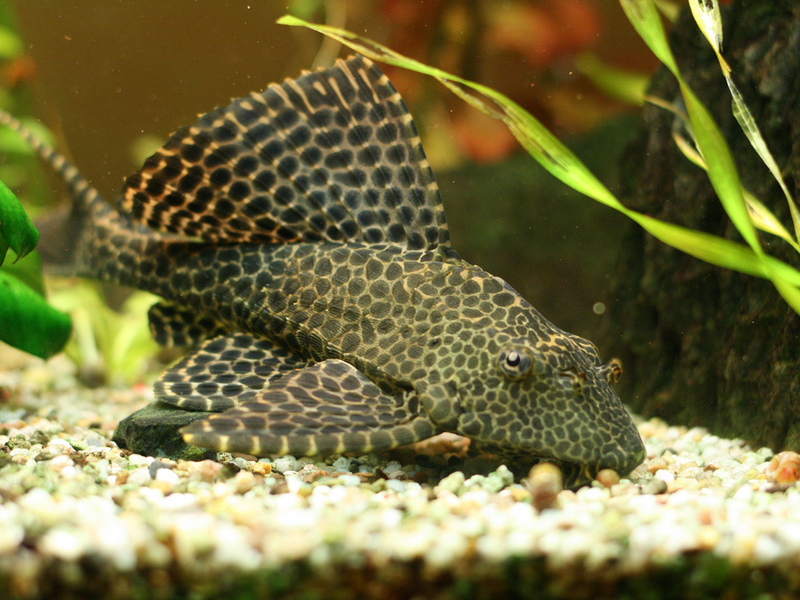
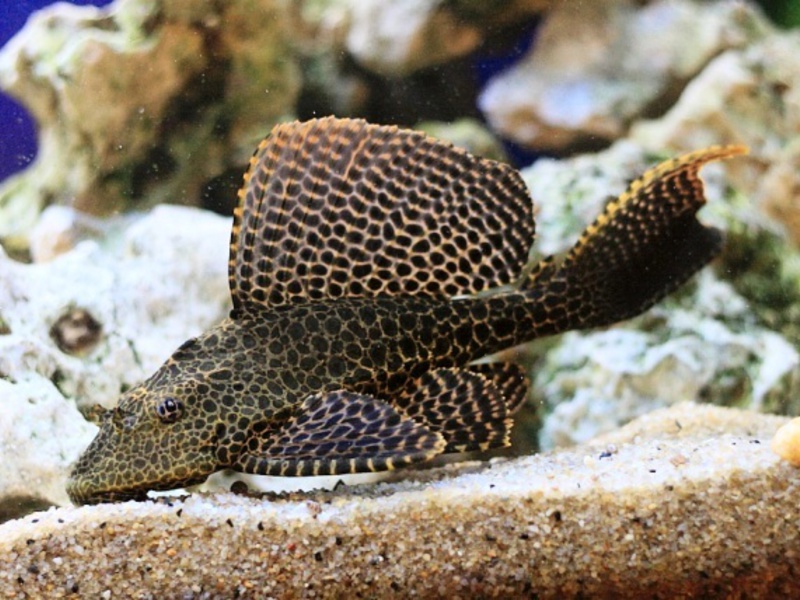
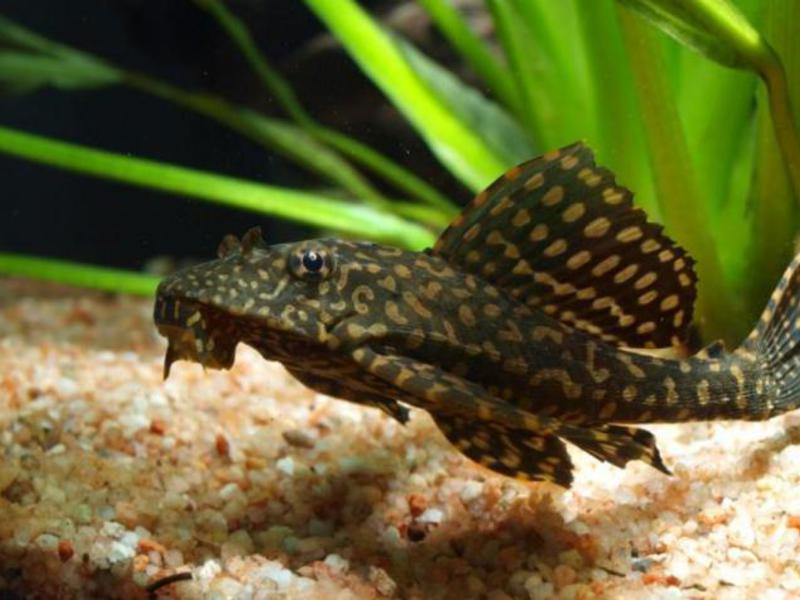
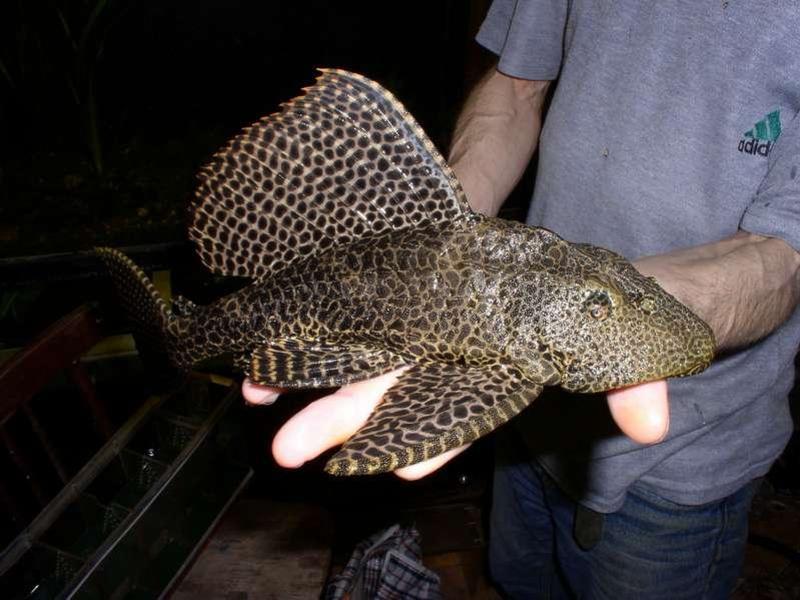
 The pterygoplichthys aquarium fish boasts a unique appearance and is easy to care for. This is the brocade catfish, also known by other names such as the leopard catfish, chainmail catfish, and brocade pterygoplichthys. Aquarists love this fish for its unusual appearance, vibrant coloration, and engaging behavior. This is why, despite its impressive size and voracious appetite, the brocade catfish is a very popular aquarium fish.
Description and photo of the brocade catfish
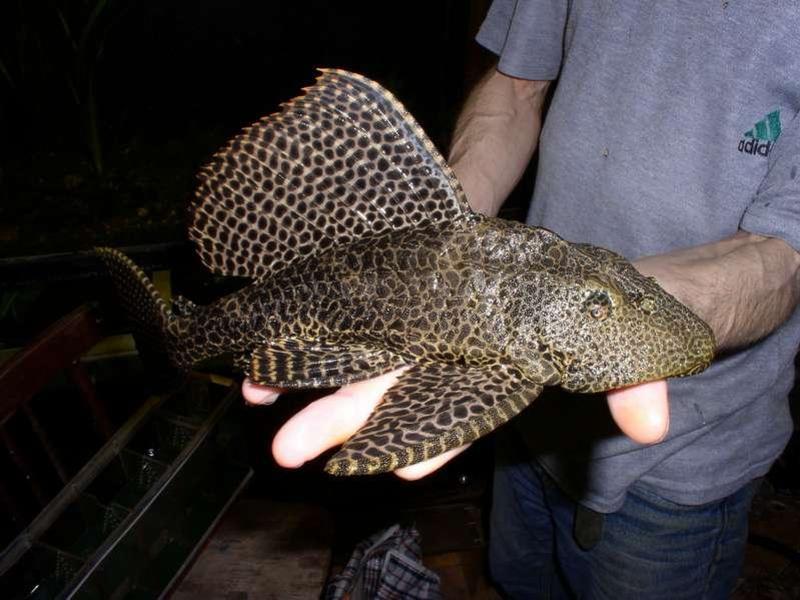
In nature, pterygoplichthys lives in the rivers of Peru and BrazilIt prefers weak currents, shallows, and areas with a lot of mud. During the rainy season, the fish is active and voracious. During the dry season, catfish hibernate in caves. In the wild, individuals grow up to 50 cm, feed on algae, and can live from 15 to 20 years.
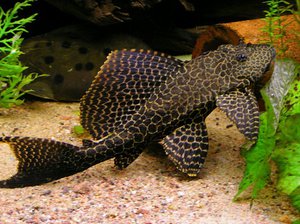
Appearance
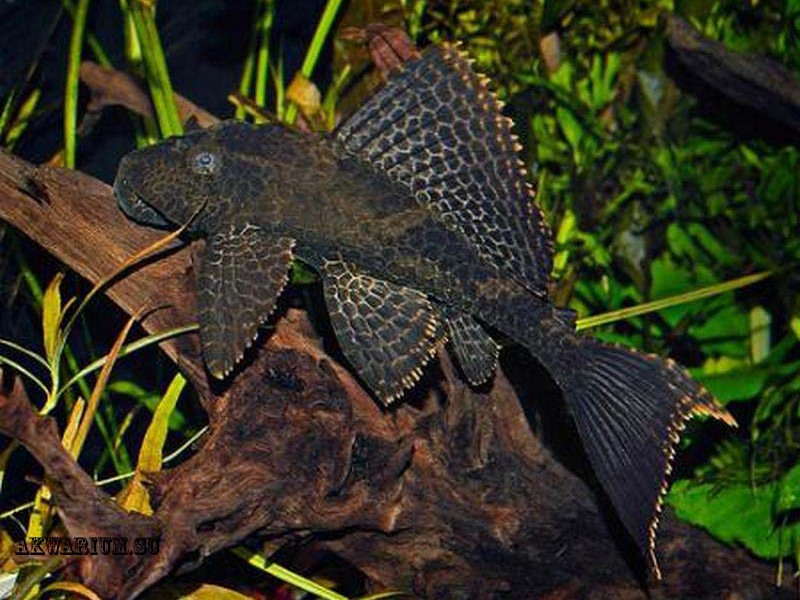
The brocade catfish is distinguished by:
 elongated, flattened body at the top;
- big head;
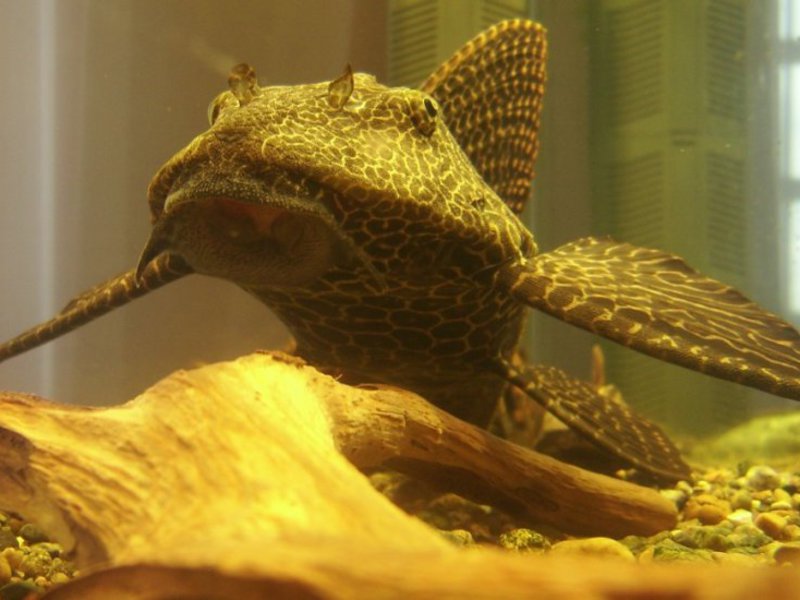
- small eyes located high on the head;
- with a mustache near the mouth;
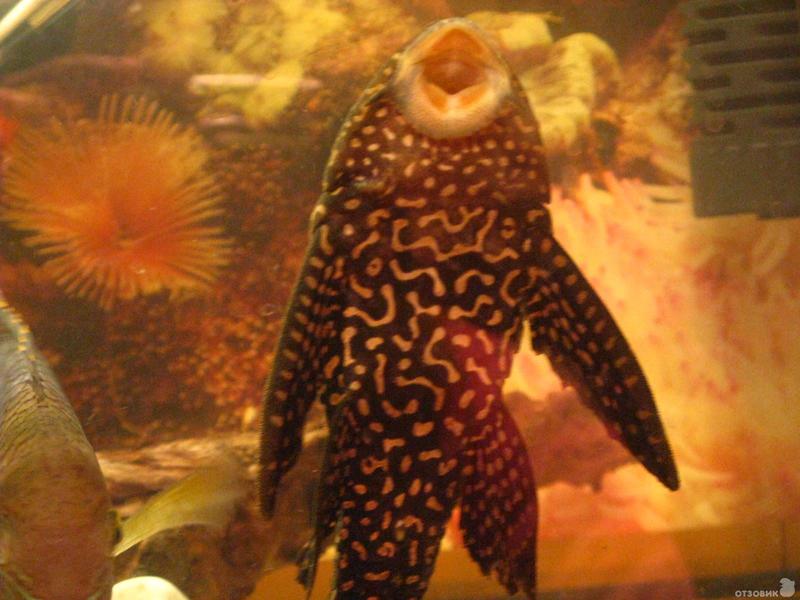
- strong suction cups in the mouth, with the help of which the fish attach themselves to the glass of the aquarium;
- bony plates all over the body except the lower abdomen;
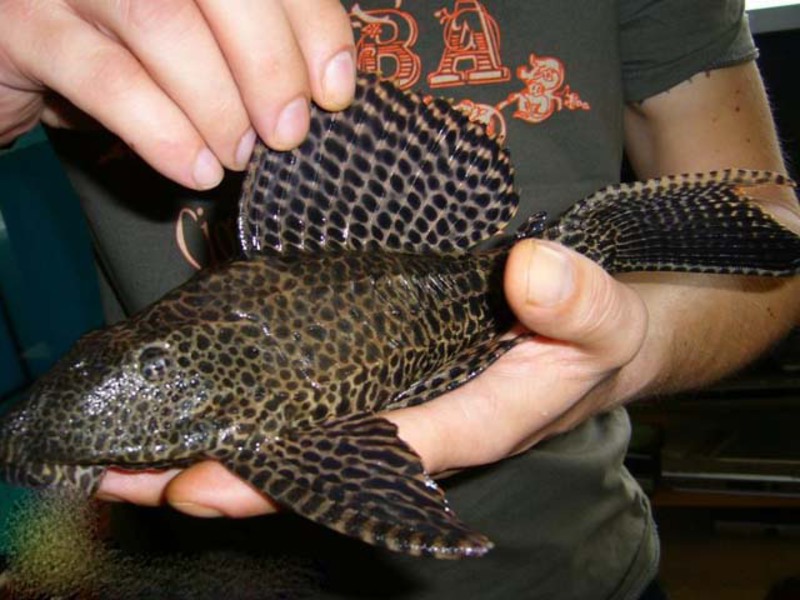
- a beautiful high dorsal fin in the form of a sail, which consists of 12 or 13 rays;
- lush forms of pelvic and pectoral fins;
- large tail fin.
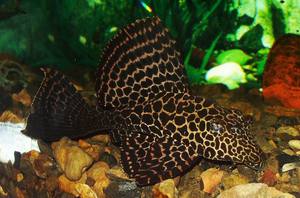 elongated, flattened body at the top;
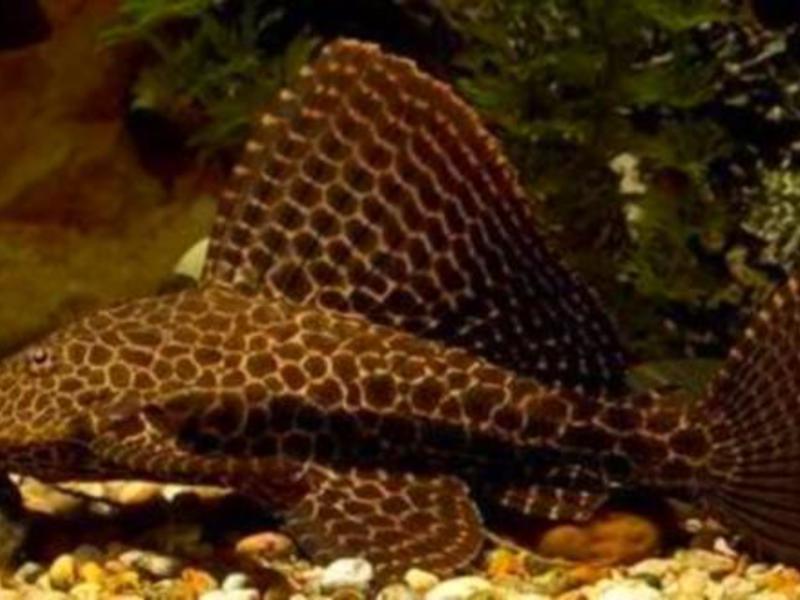
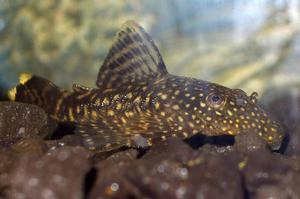
The pterygoplichthys's coloring is very unique. It's composed of individual spots and resembles a leopard print. This resemblance is achieved by the yellow border that surrounds each spot. The color of the pattern can vary from brown to blackIt covers not only the body but also the head and fins. With age, the spots become smaller and smaller, and by old age they may disappear completely.
Furthermore, brocade catfish have unique vision. They can look forward and backward, but due to the specific structure of their eyes, they cannot see what's happening above.
Behavior
All chainmail catfish exhibit aggressive behavior. They spread their pectoral fins and fight with each other. In the wild, they make hissing sounds to ward off predators. To avoid being eaten, they extend their pectoral fins outward, making them appear larger.
The difference between a female and a male
The distinguishing feature of males is:
- bright color;
- dimensions;
- sharp spines on the pectoral fins;
- protruding genital papillae.
In mature females, the genital papillae are pressed against the body and are less brightly colored.
Brocade catfish: care and feeding
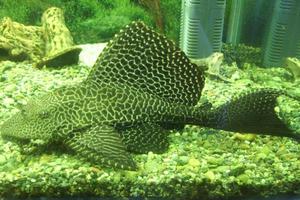 The pterygoplichthys is not fussy in its care, but due to its relatively large size, it requires an aquarium of at least 150 liters. The water should have medium hardness, a temperature of 22°C to 30°C, and a pH of 6.5 to 7.5. In a pond where brocade catfish live, it is recommended to change a quarter of the water every week.
It is recommended to create a natural environment for the fish in the aquarium. For this purpose, the bottom lined with river pebbles and stones, and the tank itself must be decorated with all sorts of caves and tunnels. Suitable plants include robust algae, such as Apogeton, Vallisneria, and Crytocorynes.
Brocade catfish prefer both plant-based and live food. Their diet must include algae, otherwise they will eat aquarium food. They thrive on cabbage, carrots, cucumbers, spinach, and other vegetables. Live food should include worms, chopped shrimp, tubifex, and bloodworms. Pterygoplichthys can also be fed various dry foods.
Since catfish spend the day in hiding places, it is recommended to feed them at night. As shelters driftwood should be used, which fish love to nibble on. They also suck on the walls of the aquarium. This helps improve their digestion.
Compatibility of Pterygoplichthys with other fish
Despite their impressive size, catfish can coexist with even smaller fish in the same aquarium. The key is to ensure the tank is filled with a variety of algae.
It's not recommended to house veiltail catfish with brocade catfish. This is because the catfish may attach themselves to the body or tail of a slow-moving tankmate, which can result in almost nothing remaining of the veiltail fins. Pterygoplichthys may also have problems with other cleaner fish that compete for food, such as Ancistrus and Gherinocheilus.
Reproduction
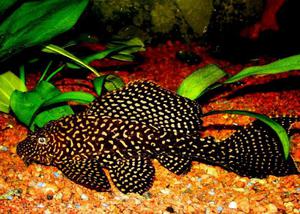 In natural conditions, this species of catfish lays eggs in a deep coastal burrow, which the male then guards for several days. Once the fry hatch, the males take full responsibility for their care.
It's practically impossible to create such large burrows in an artificial pond. Males and females are kept in the same aquarium not for procreation, but for the sake of a favorable habitat.
For commercial purposes, brocade catfish are bred on specialized farms that exist in Florida, Southeast Asia, and Australia. These farms create special artificial reservoirs with all the conditions suitable for breeding pterygoplichthys. Since there is a high demand for cleaner fish, this type of aquarium fish breeding brings in a good income for farm owners.
Diseases
The leopard catfish is a hardy fish and under favorable conditions practically never gets sickBut it can also be affected by one of the diseases typical for aquarium fish:
- Holes in the membrane fins of fish can occur when waste products accumulate in the aquarium.
- The lack of snags in the pond leads to digestive disorders in catfish.
- Ichthyophthirosis is a common aquarium disease caused by ciliates. These 30-micron parasites have numerous cilia on their bodies, which they use to move and ingest their prey. They burrow into the fish's gills, fins, and skin, where white spots eventually appear. Affected fish weaken, begin to float on the surface, and eventually die from suffocation. The disease is treated by raising the aquarium temperature to 30°C (86°F) or placing the affected fish in a saline solution.
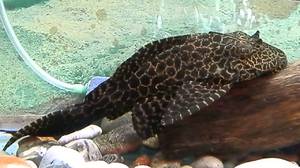 Holes in the membrane fins of fish can occur when waste products accumulate in the aquarium.
Because the catfish is brocaded leads a sedentary lifestyle, and emerges from its snags only at dusk, making it difficult to detect external signs of the disease. Many diseases manifest externally as discoloration of scales or their shedding, or bloody or purulent blisters.
However, it is easier to prevent disease than to treat it, so proper maintenance and care, as well as a comprehensive diet, will help prevent diseases in the pond's inhabitants.
With proper aquarium organization and care, the brocade catfish can survive in an artificial pond. up to 10 yearsDuring this time, the pterygoplichthys will be an excellent decoration for your aquarium.