People who keep an aquarium at home want to have beautiful and rare fish as pets. Some fish require special care, including the blue dolphin. To ensure this fish delights its owners with its beauty, it's important to understand its care requirements.
Content
Aquarium fish species "Blue Dolphin"
The blue dolphin (Cyrtocara moorii) is one of the largest cichlids. Cyrtocara moorii was first discovered and described in 1902 by Georges Albert Boulanger. Because this fish is quite feasible to keep in aquariums, it is not professionally collected. Aquarists began keeping individuals of this species in 1968.
The cirtocara muri has a large head with a round growth on its forehead. This protrusion makes the fish resemble a dolphin, hence its name.
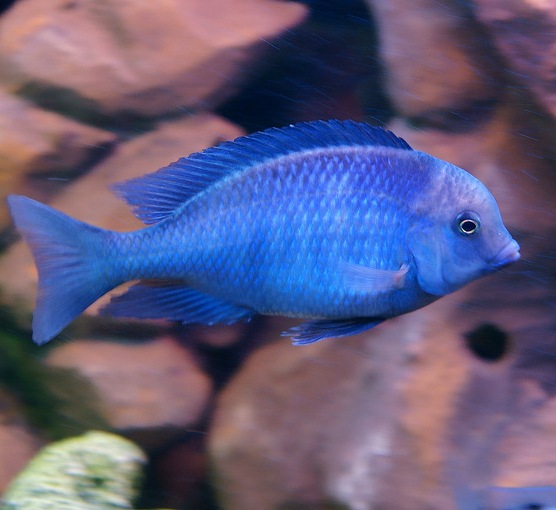
Blue dolphins can be kept even by non-professional aquarists.
This species is native to Africa (Lake Malawi). This fish is found in coastal areas in sandy areas, but at shallow depths (up to 15 meters). Blue dolphins also inhabit Lakes Victoria and Edward. The main criteria for choosing a natural habitat are clean and warm water, harmless neighbors, and the presence of spawning sites.
The blue dolphin fish has an elongated body, flattened laterally. The eyes are large and mobile, and the lips are thick. Adult males have long anal fins and a two-lobed caudal fin. The dorsal and pectoral fins are small.
The fatty growth on the forehead makes the Cirtocara muri's head appear larger. This makes it easy to distinguish adults from juveniles. Juveniles are grayish-blue in color, with dark stripes on their sides and large dark spots near the tail and on the belly. Adults have a more saturated body color (velvety blue). When aroused, the male turns dark blue. His forehead also turns yellow, and dark blue stripes appear on his side. The fins of adult fish are blue.
Video: Blue dolphin in an aquarium
Sexual differences, behavior and character
Males are larger than females, but they can only be distinguished by size when they are adults. If all the fish were roughly the same size as fry, by the age of one year, the males will be slightly larger than the females. The male's forehead will be larger, and the color will be more intense. Furthermore, the females will retain subtle stripes on their sides, while the male's fins will become larger and darker. The largest blue dolphin can reach up to a quarter of a meter (but this depends on the size of the aquarium).
These fish live up to 15 years. The blue dolphin becomes sexually mature at one year of age (at which time its length reaches 13 centimeters).
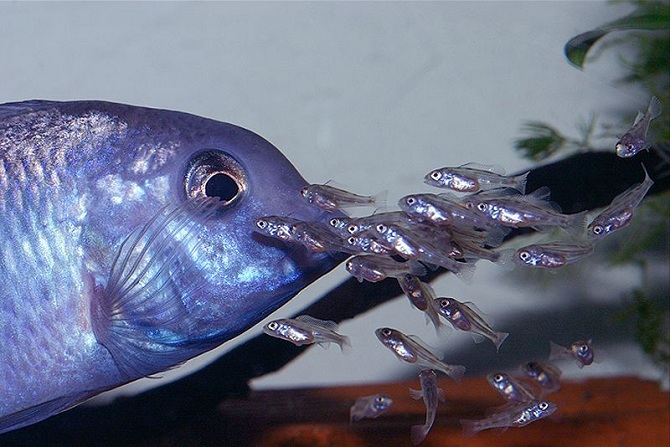
Blue dolphin fry are grey-blue in colour
Cichlids are generally shy and timid, so they tend to be quite quiet. They are moderately aggressive with other fish. Hostility may be shown toward other males or more aggressive fish.
Cirtocara muri are polygamous. Families of these fish can consist of several individuals (one male and several females). Some aquarium hobbyists call such schools harems. Each male can keep up to six females in his "harem." Therefore, if an aquarist wants to breed blue dolphins, they should purchase 10-15 fry and raise them together. Once they reach about 15 centimeters in size, males and females can be distinguished.
Dolphins are calm, peaceful fish! They only show their temperament during spawning (but that's normal), after which they all live harmoniously. For every 2-3 males, you need 5-6 females. One (the strongest) will do the work, and over time, another will take over.
Maintenance and care
Beginner aquarium keepers can easily keep blue dolphins. The key is to change the water frequently; at least half the volume should be replaced once a week.

Large aquariums look beautiful in the interior
The blue dolphin requires a large, spacious aquarium (it will feel uncomfortable in a shallow one). Some purchase tanks up to 300 liters specifically for this fish. The aquarium should have a sandy substrate (Cirtocara muri love to dig in the sand) and various hiding places (grottoes, driftwood, etc.). It also needs plenty of space for free swimming. If owners want to add algae, they should choose hard-leaved or strongly rooted varieties:
- cryptocoryne;

Cryptocoryne has long, wide, sword-shaped leaves.
- Vallisneria;
Vallisneria spiralis is an easy-to-grow plant that looks beautiful in an aquarium thanks to its ribbon-like leaves fluttering in the water; fish love to hide in the thickets of this plant.
- Anubias;
Anubias has wide, short leaves (they resemble lilac leaves in shape), and the plant has a thick rhizome.
- fern (on the rocks);
Ferns thrive in home aquariums.
- limnophile.
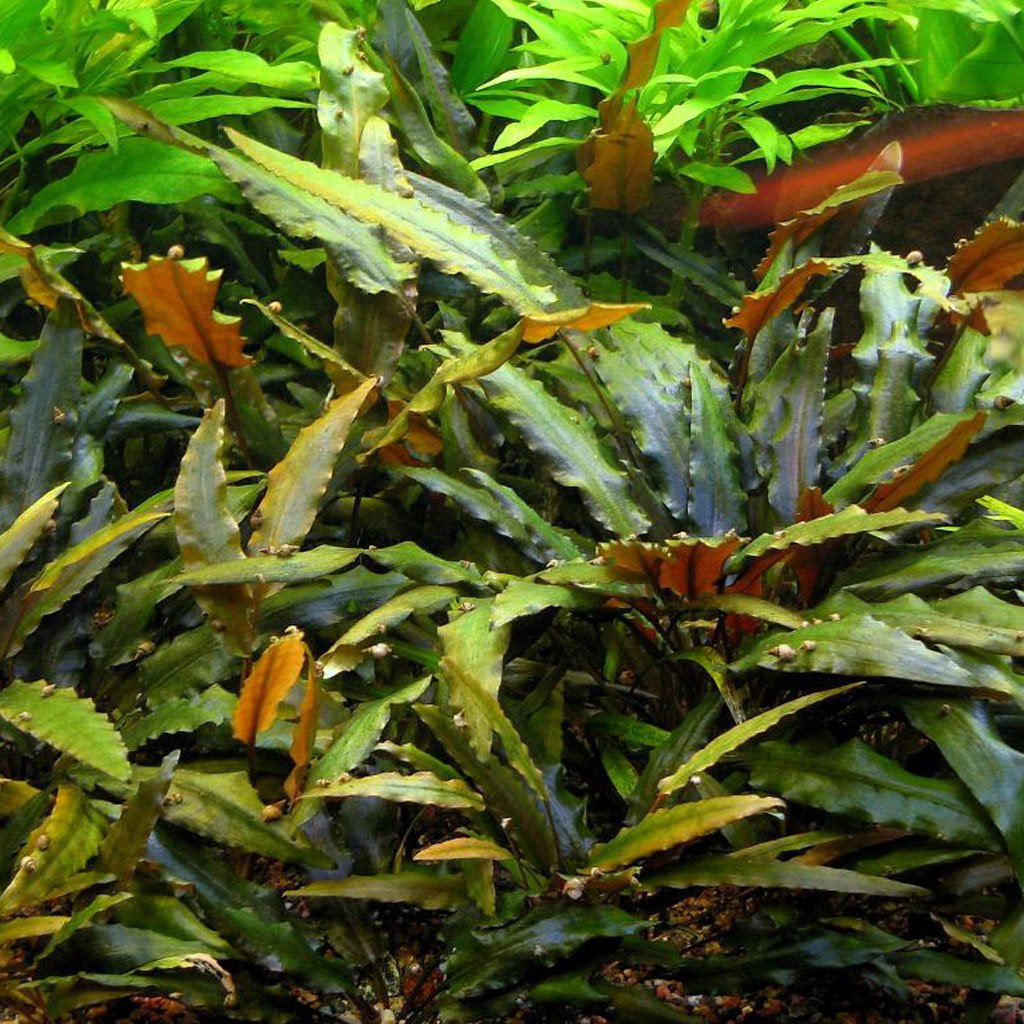
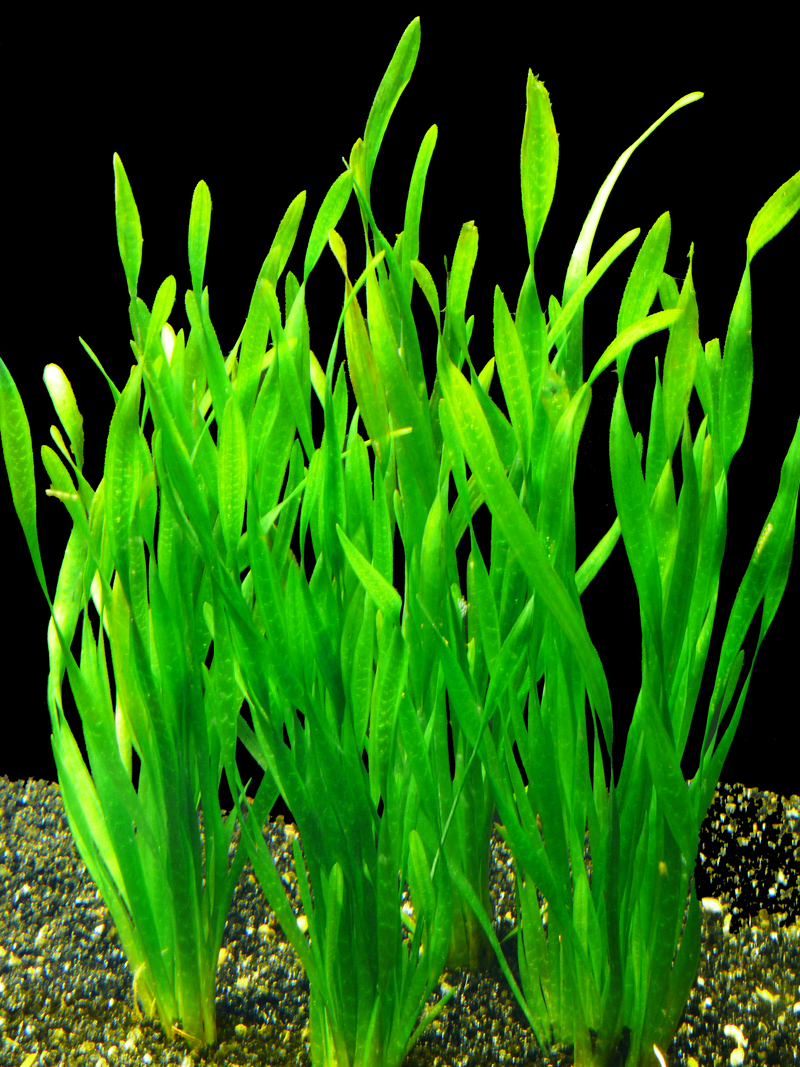
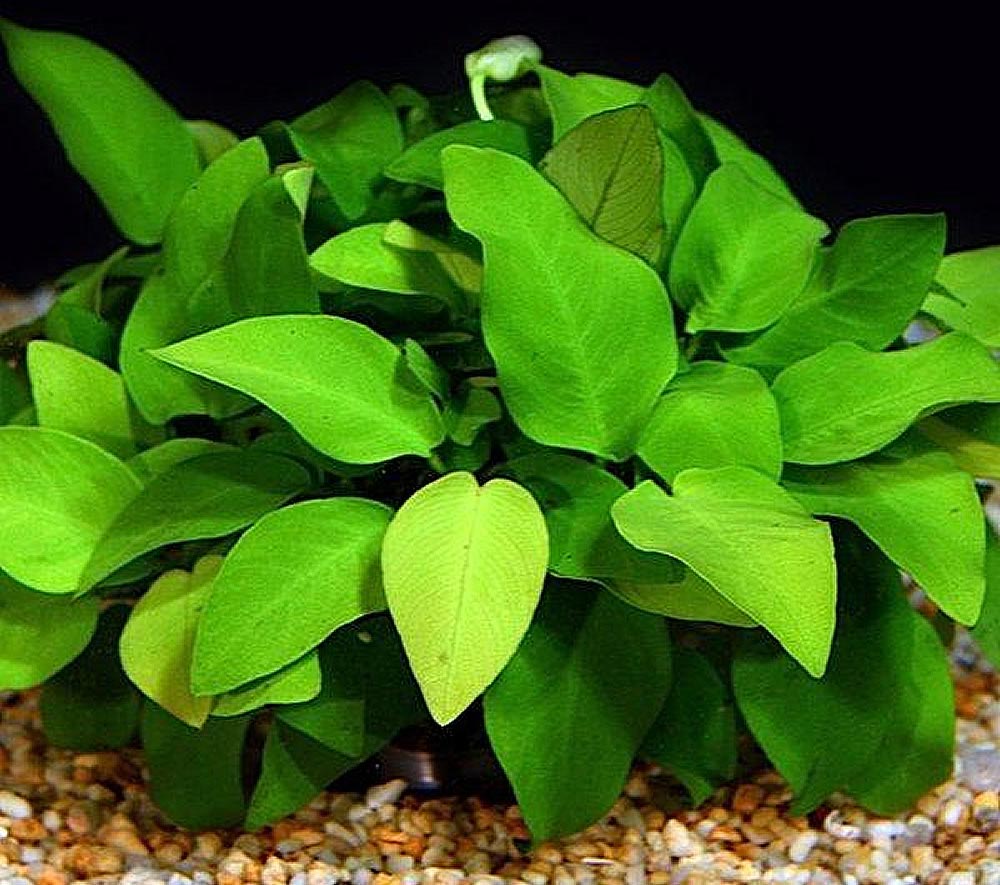
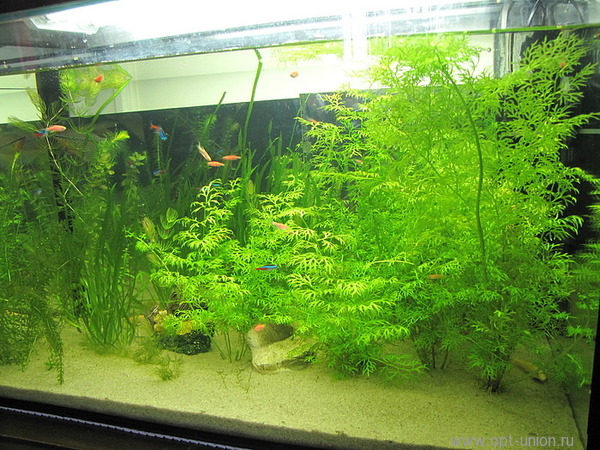
Potted plants are best because fish will pull out small and light plants.
Floating artificial seaweed is ideal for aquarium dolphins. You can safely let the fish toss it around because these plants have no roots and won't cloud the water with sand.
Water hardness should be 7.2–8.5 dGH, and alkalinity 10–18 dKH. These values are as close to natural as possible. Therefore, if the aquarium water is too soft, you can harden it yourself, for example, by adding coral chips to the sand. Lighting should be good and bright. Cichlids love light, and the aquarium owner will enjoy the neat, neon sheen of their scales.
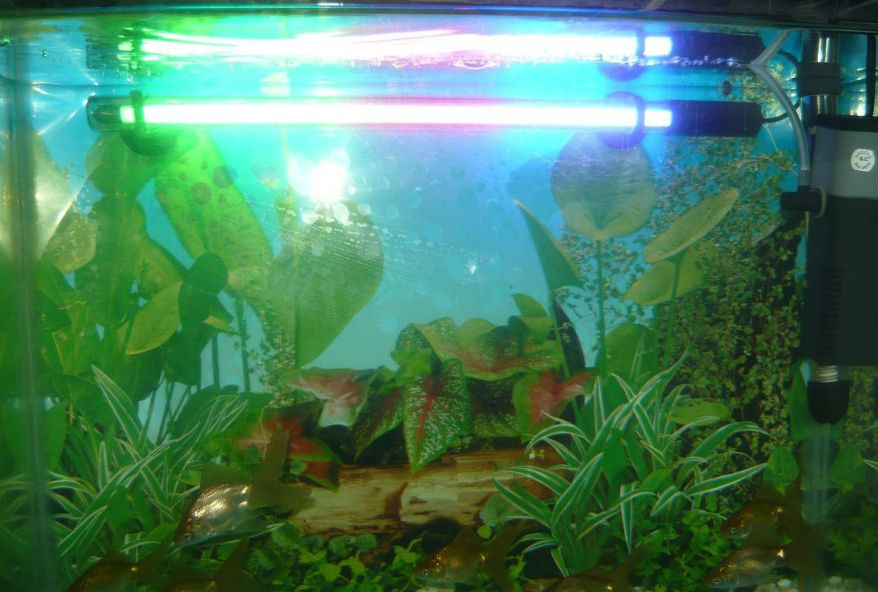
Lamps of different wattages can be found at any pet store (you can choose the one that suits your size and shape)
Blue dolphin fish thrive in water temperatures of 24–28 degrees Celsius (75–82 degrees Fahrenheit) (this temperature is normal for Lake Malawi). Aeration (artificial air supply) should be strong, as blue dolphins prefer a clean and clear environment. Therefore, filtration is also important. Up to half the aquarium's water volume should be changed weekly.
Feeding rules
The most important thing in feeding aquarium fish is variety. Cichlids shouldn't be fed the same diet; their diet should include both dry and live foods. Pet stores sell special cichlid foods. These may include vitamins and supplements to enhance the fish's color.
Any exotic pet owner should remember a little trick: avoid dry foods sold loose, as this will prevent them from missing their expiration date. Always keep the food in a sealed container to prevent unwanted flora from developing. It's also important to monitor your pet's diet according to the storage instructions. Don't forget to supplement your fish's diet with frozen or plant-based foods. The food should be high in protein (tubifex or brine shrimp are good choices).
In the wild, blue dolphins are predators. In an aquarium, they can be fed small fish, but it's important to ensure the food is disease-free. Blue dolphins can become ill if they contract an infection.
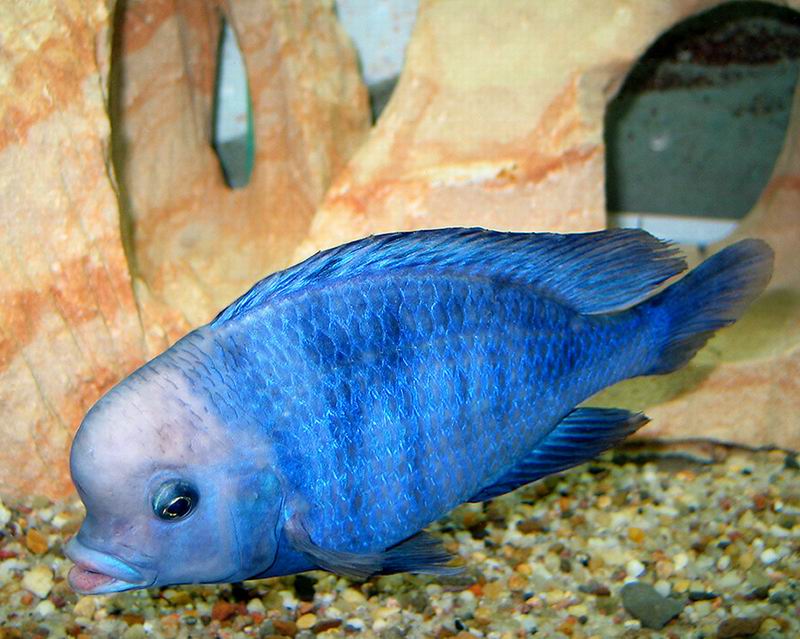
Dolphin fish can eat flake food (they then find any leftovers in the ground and eat them)
Some aquarists treat their pet fish with animal meat or minced meat. In reality, aquarium fish are unable to properly digest such food. And if you indulge your fish with such delicacies for a long time, the dolphin may become obese, leading to the degeneration of vital organs.
Compatibility with other fish
The blue dolphin is compatible with other cichlids (small, medium, and large), frontosas, barbs, and catfish. Other Malawi fish are ideal tankmates, but avoid keeping the blue dolphin in the same tank with mbunas (they are too aggressive and will cause conflicts). Blue dolphins can also coexist peacefully with Cichlasoma severum (false discus) cichlids. They also have a calm, peaceful nature.
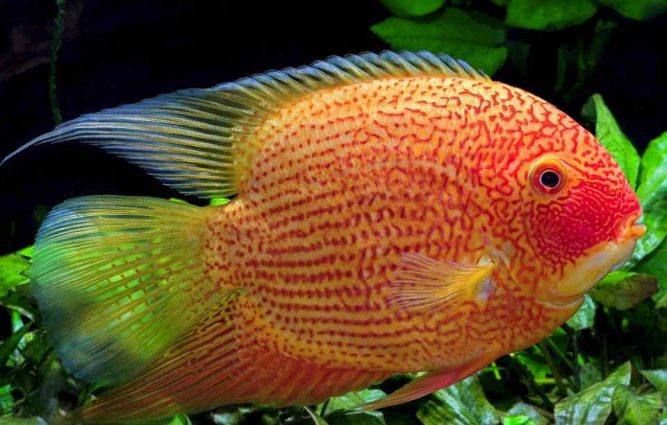
The bright orange cichlid fish harmonizes with the blue dolphin.
Reproduction of blue dolphins
When spawning time arrives, the male chooses a spot to lay his eggs. This could be a rock surface or a small depression in the ground. His brighter appearance attracts the female, luring her there, where she lays up to 90 eggs. The male then fertilizes the eggs. The female then takes them for incubation and carries them in her mouth for 2–3 weeks.
When the female lays eggs, care must be taken to ensure the fish are not disturbed. The aquarium should be in a quiet and peaceful location, and, of course, no one other than the spawning pair should be in it—the male will kill them, or the female will eat her eggs out of fear.
In fact, the duration of incubation period depends only on temperature conditions.
During spawning, the male guards his family. He won't allow other fish (even other male dolphins) near the eggs and fry. The female, however, becomes especially timid. There have been cases where she swallowed all the eggs out of fear.
Since the fish cannot feed normally, some aquarists try to remove the eggs and hatch them in a separate container, but this is not always possible; the fish may simply swallow the eggs.
When the fry hatch, the female hides her babies in her mouth (at night or when they are scared).
They begin to feed the fry with live dust, which is specially sold for feeding young fish.
If the blue dolphin is housed with other fish, the "harem" should be moved. If the cirtocar muri is housed with other hardy fish, you can separate them and leave the "harem" in its natural habitat. The pair will be timid and wary.
It is better not to count on a large number of offspring during the first spawning. To successfully add dolphins to the family, experience is required (both from the aquarium owners and the fish themselves).
Almost always, an inexperienced female can't stand the forced fasting and "teasing" of other feeding cichlids and swallows the eggs. The first mark almost never survives.
Video: Cyptocar muri behavior during spawning
The blue dolphin is an aquarium fish of the cichlid family. This species is native to Africa but is easy to breed in aquariums. They are peaceful, beautiful, and live for over 10 years. They make excellent pets.