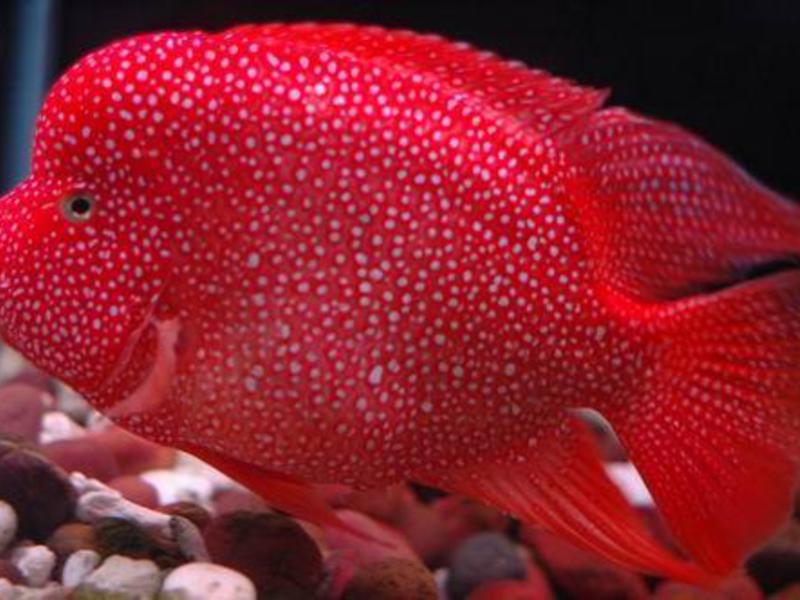
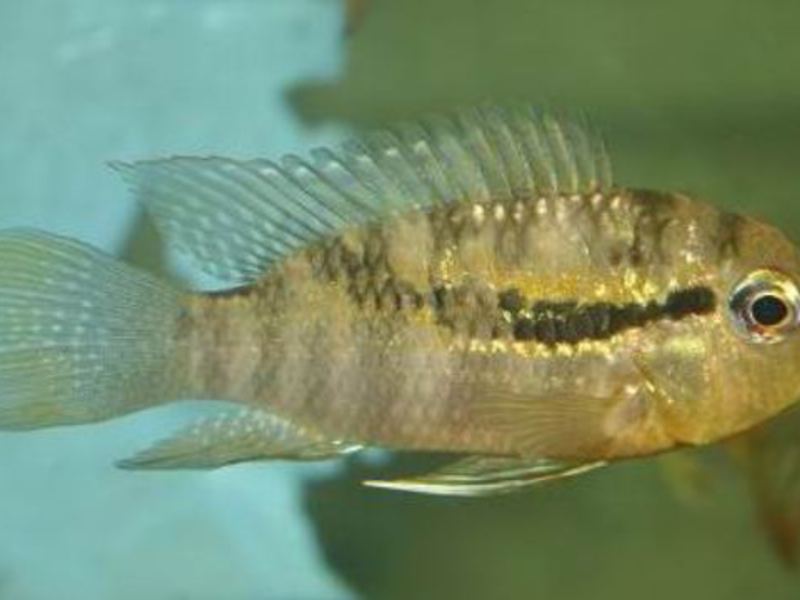
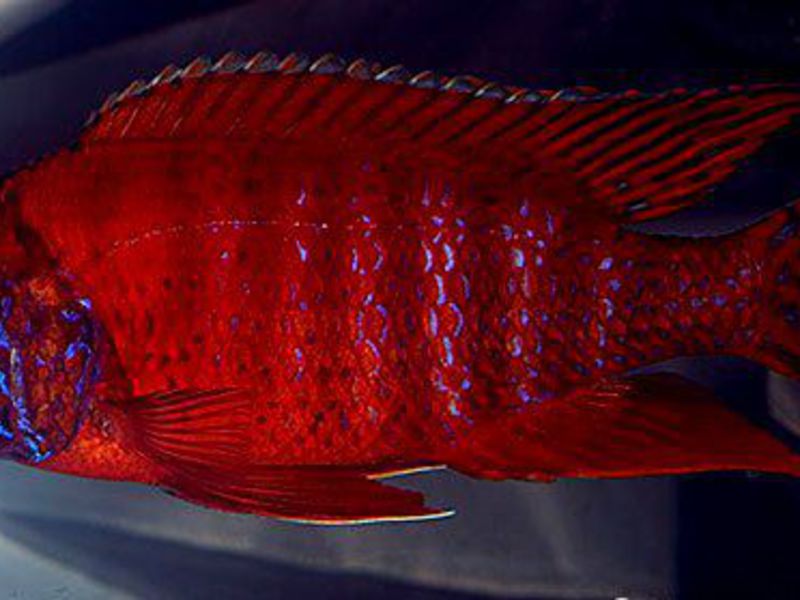
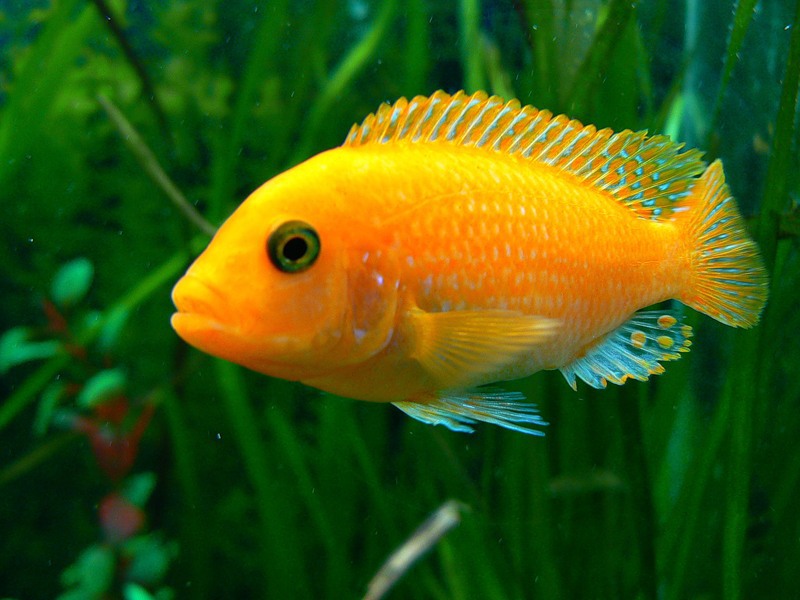
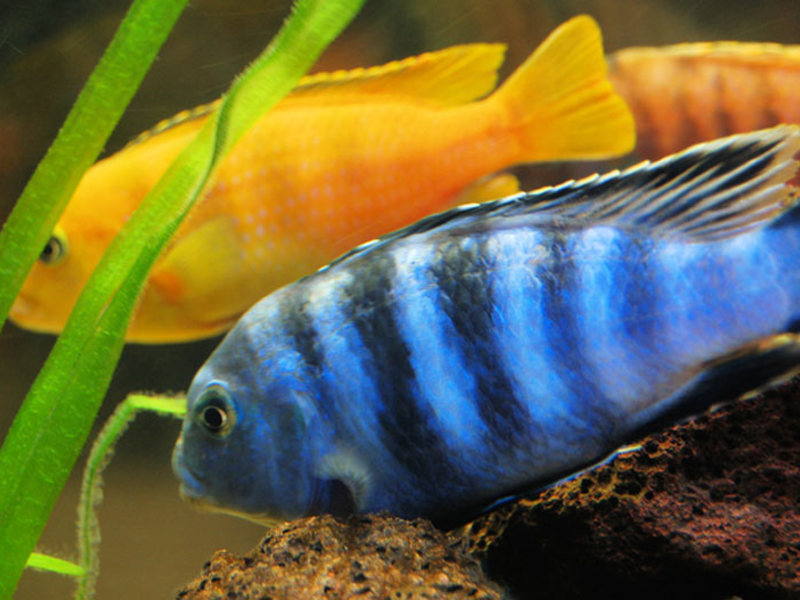
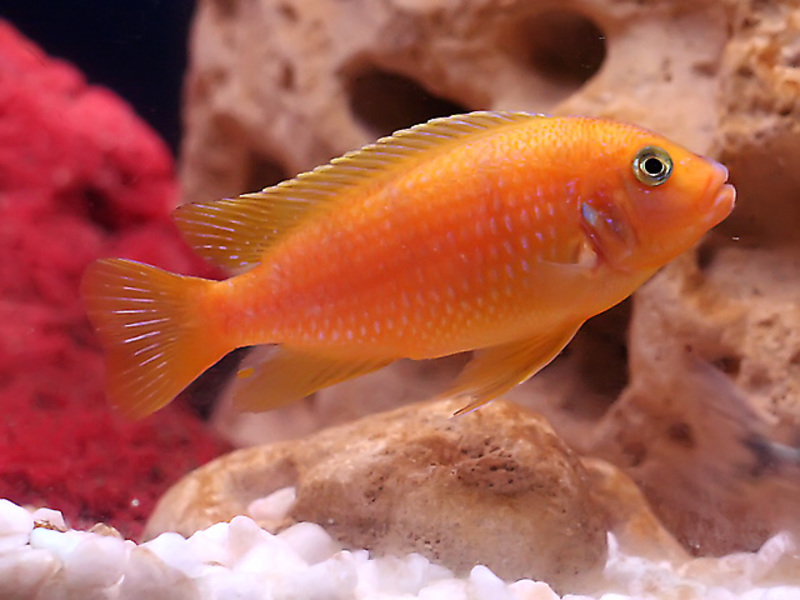
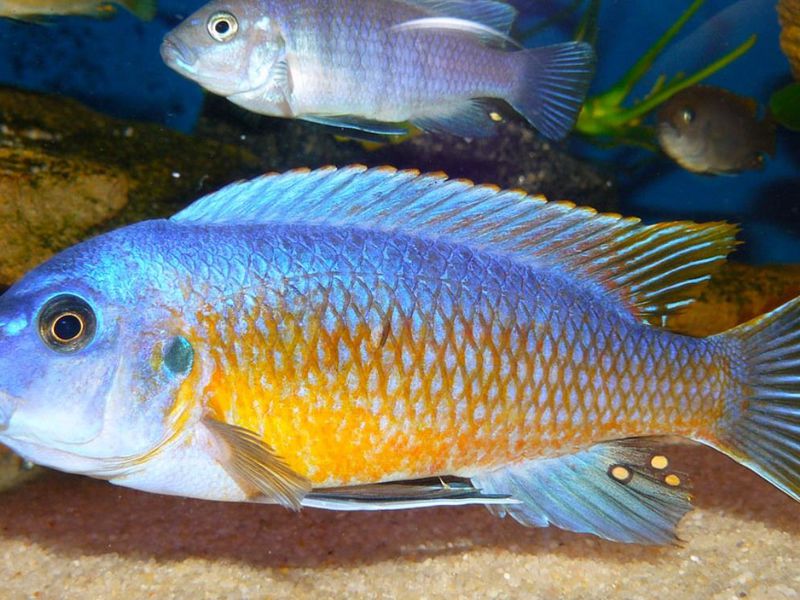
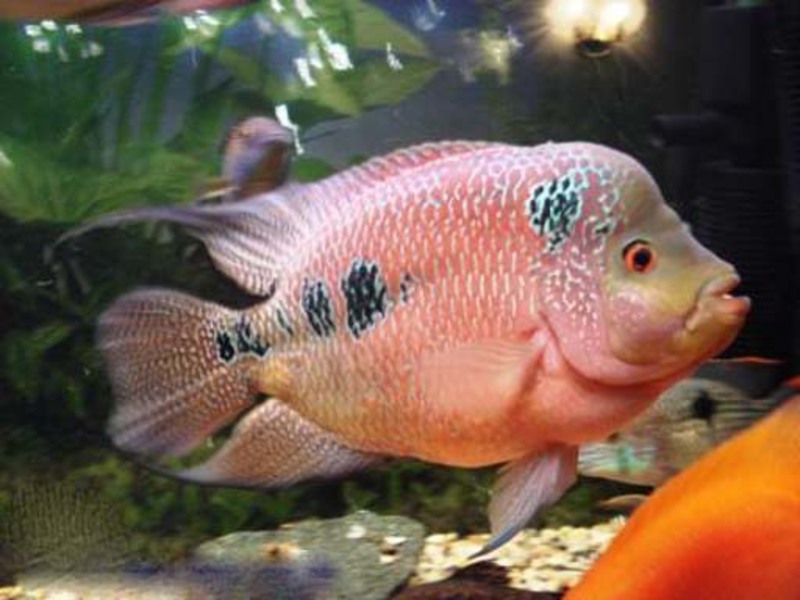
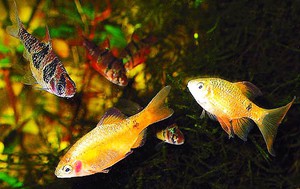
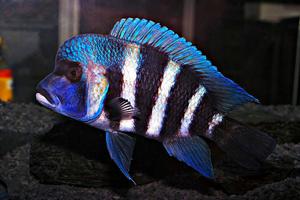
 Cichlids are aquarium fish belonging to the Cichlidae family (order Perciformes). Their ecological niches are very similar to those of perches. In addition to their diverse coloration and shape, they are also endowed with intelligence. Their hunting behavior suggests that they are much more intelligent than their fellow fish.
Cichlids are very stubborn in an aquarium and try to establish their own rules. Therefore, they should be kept separate from other fish.
Description of the fish's appearance
Family includes 1300 speciesIn the wild, these beautiful fish inhabit the waters of Asia, Africa, and South America. They range in length from 2 to 91 cm.
These fish are characterized by an oval (or, less commonly, round) body, which is slightly compressed laterally. The mouth is wide with ridged teeth. Males have a prominent forehead on their large heads. The dorsal and anal fins are slightly elongated, and the lateral line is incomplete. With proper care, these fish can live in an aquarium for quite a long time.
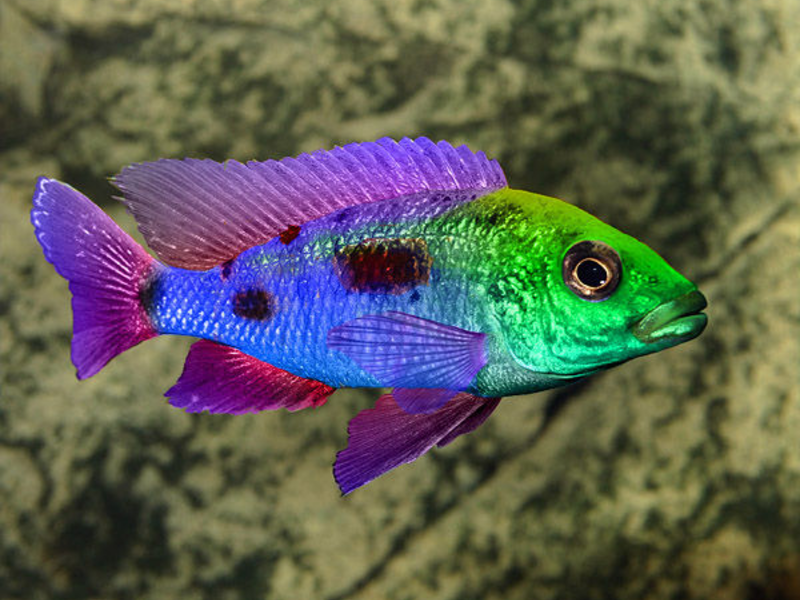
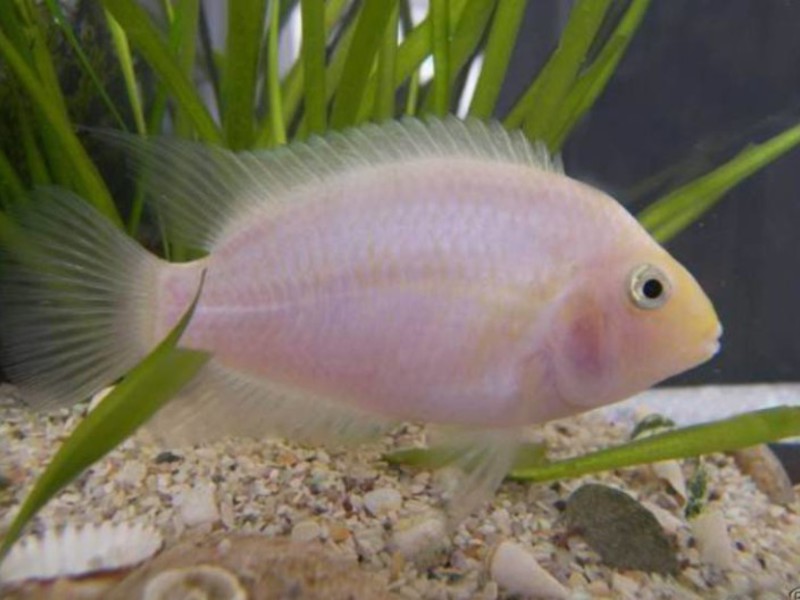
Artificially colored specimens in pink, purple, and green are also available. However, these dyes are chemically derived and will fade very quickly. Furthermore, the health of these fish will be significantly compromised.
Keeping cichlids
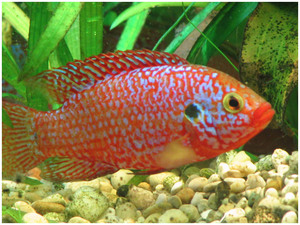 Adult cichlids require large aquariums (at least 200 liters). The water temperature should always be clean and oxygenated. should be 27-28 degrees S. The water must be aerated, filtered, and regularly topped up. A biofilter can be installed.
Cichlidariums are available for sale. These are special tanks for housing these fish. They are produced specifically for the geographical origin of individual fish species, their names, feeding habits, and breeding habits.
Aquarists prefer two types of tanks: for keeping large fish species and small ones that form paired communities.
There are species that have adapted to living in salt waters, although the majority of species lives in fresh water bodiesBut the water in these reservoirs can be anything: the nearly distilled water of South American rivers is home to discus and apistogramma fish. The alkaline water of Africa's lakes Tanganyika and Malawi provides a comfortable habitat for beautiful African cichlid species.
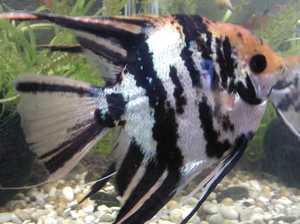
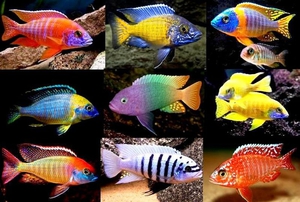
Breeders have developed and established a huge number of color variations under the names of angelfish, astronotus, and apistogramma. Yellow and orange parrots (hybrids) are very popular. They were created by crossing several species of American cyclids.
Rules for forming a paired community
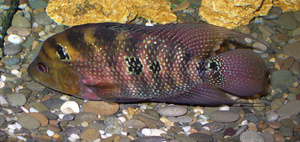 This is quite simple: buy five fry of each species. Keep them together until they form pairs naturally. It's best to remove any excess specimens.
These fish communities are sedentary and phlegmatic. Conflicts may arise only at the boundaries of their habitats, and very rarely.
When choosing fish that get along well with cichlids, you need to know that these fish should have equal to or slightly smaller in sizeTheir character must be combative so that they can fight back when attacked.
They should be introduced simultaneously, but be sure to consider the space available for each individual. This will help avoid competition for territory.
Furthermore, cichlids must always have sufficient food. Otherwise, they will prey on each other.
Caring for cichlids
The most important thing is to choose the right temperature for your fish. It should be close to their natural temperature. Fish sense changes in water temperature. Water temperature needs to be adjusted for each fish species. Discus are comfortable at 27 degrees C. Red-breasted Acara can survive at a water temperature of around 15 degrees C. The water should be necessarily saturated with oxygen.
Plants should have tough leaves and a strong root system, because cichlids will try to taste the plants.
The bottom should be covered with rocky substrate, preferably flat rocks. The aquarium's decor should resemble its natural habitat. You can use decorative ornaments to delimit the perimeter.
Food also needs to be selected for each fish species. They will eat dry and frozen food, as well as ground meat prepared just for them.
If your fish is herbivorous, don't feed them plant-based foods too often. They'll eat algae and ruin their appearance.
But for a balanced diet, cichlids need to be fed with food of both plant and animal origin.
Reproduction and breeding of cichlids
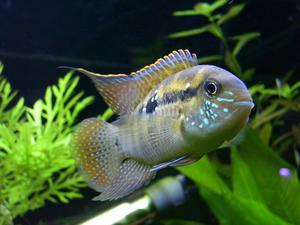 The mating habits of fish are very interesting. During this period change color to a more intense one.
But breeding aquarium fish can sometimes be challenging. It's not uncommon for a pair to live together for a long time and still fail to produce offspring. Cichlids therefore require additional stimuli: community selection, special feeding, and a combination of environmental factors.
Fish for spawning are transferred to separate containers. This applies to all species. However, this should only be done when they are fully prepared to spawn. Males can kill females that are not ready to breed.
Female eggs laid in sand pits Or on flat aquarium rocks. Some fish species incubate in their mouths. Both males and females do this. Parents always watch their offspring very carefully. They are very protective of their young.
Aquarium cichlids are considered to be caring parents. They are very aggressive in protecting their young. However, the fry should be moved to a separate aquarium before the adults fight.
Even the breeders begin to conflict during this period, since they will soon be spawning again.
If you want to breed more fry, the established pair should be placed in a separate spawning tank. Its volume should be at least 80 liters. The pairs should not be separated from each other, as cichlids are monogamous.
Description of fish species
The most common types are:
- cichlasomas;
- discus;
- angelfish.
American cichlids include:
- acars;
- letakary;
- uaru;
- krenitsykhly;
- Geophagus.
Names of African Cichlids:
- tilapia;
- spathodus;
- oreochromis;
- Spathodus.
Asian species include spotted etroplus and striped etroplus.
Compatibility of cichlids with other fish
These are the fighting ones, the most pugnacious and courageous fishBut there are also very timid ones among them, which can be kept with schooling and calm aquarium fish.
Aggressive fish should only be kept in a separate aquarium. Fish of the same family but with different temperaments and sizes should also not be kept in the same aquarium. Disagreements may arise with astronotus and botia.
Cichlids are generally incompatible with catfish, gouramis, guppies, platies, malinois, and swordtails.
These inhospitable fish are most open to their fellow cichlids. A school can be added, but it should be large, and the fish should be adults when the cichlid itself is still a fry. This will even out the size difference while they adjust.
Disease prevention
 Experienced fish keepers believe that most fish diseases described in scientific literature do not occur at all. This may be the case. But then it's necessary create appropriate conditions.
Don't allow even one fish to be stressed for long periods of time. Stress is the beginning of illness. You also shouldn't allow the aquarium inhabitants' immune systems to weaken.
It's essential to monitor the water's condition, changing it or topping it up regularly. Nitrite, ammonia, and pH levels should be checked. The water should also be tested for oxygen levels. City water is required. check for residual chlorine as well.
Water can trigger fish diseases, which can quickly lead to death. It's equally important to monitor for viral and bacterial infections. However, infections rarely wipe out aquatic life quickly. These diseases progress very slowly and affect most of the fish's body.
Therefore, it is necessary to constantly monitor the condition of your pets and, if necessary, move them to a separate habitat to protect the other fish from illness.