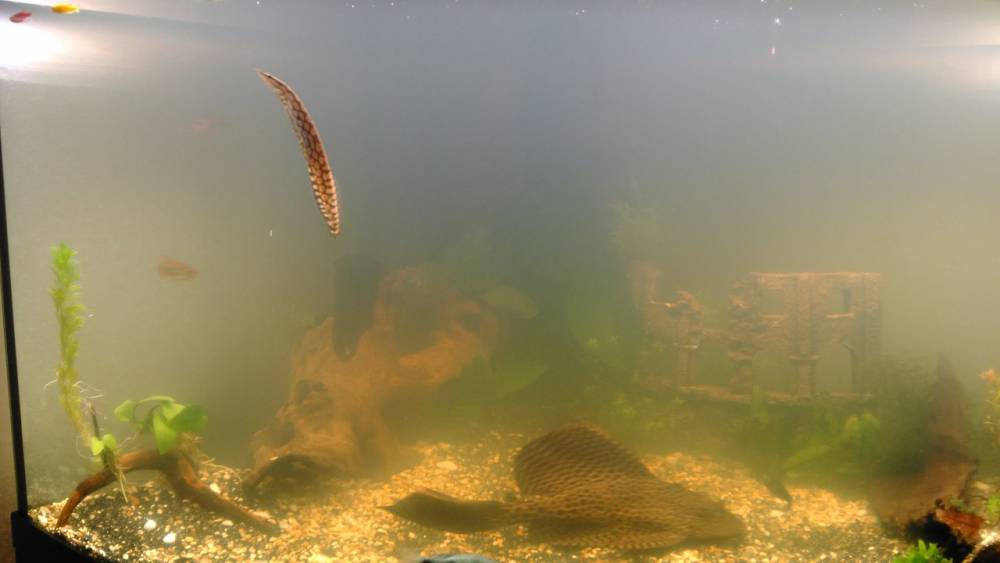
When purchasing an aquarium and stocking it with various fish, the owner naturally wants to enjoy a beautiful view. Aquarists often encounter a problem: cloudy water. Cloudiness not only spoils the aquarium's appearance but can also lead to the death of fish, so it's important to address the problem immediately. First, you need to determine the cause of the cloudy water.
Bacteria
If the cause is an excess of bacteria in the aquarium, the water will typically appear white and cloudy. Cloudy water often occurs in new aquariums. The initial setup of the entire system is associated with active bacterial growth. This process is completely natural and cannot be avoided.
- To avoid harming the pond's inhabitants, experienced aquarists recommend adding fish only on the second day. As soon as the aquarium is filled with water, bacteria begin to multiply, and the water becomes cloudy. This period should be allowed to pass. The pond will clear itself, as the bacteria will have nothing to feed on and will die. Once the bacteria are dead, the water balance will be restored. After this, you can safely add the fish to their new home.
- If fish are being moved from an old aquarium to a new one, you should take some water from the old one and add it to the new one. This will speed up the process of normalizing the aquatic environment. Adding new water to get rid of cloudiness will not solve the problem. After the water change, the bacterial proliferation process will restart, which will make it take longer to achieve results.
Priming
Another cause of cloudy water in an aquarium is poorly prepared substrate. Beginners often don't realize that before setting up an aquarium for the first time, the substrate, which is placed on the bottom, must be properly prepared. To avoid having to worry about how to get rid of dirty water later, thoroughly rinse the substrate beforehand, removing small particles and dust. One rinse may not be enough if there is a lot of dirt. Rinse until the water is completely clear and transparent.
Feed
If the fish food is the cause, the water will take on a red tint. This may be due to the use of low-quality food or too much of it being fed.
Overfeeding your fish will result in a large amount of food debris. These particles will gradually sink and accumulate on the bottom, causing rotting.
In this situation, turbid water poses a health risk to the pond's inhabitants. To avoid this problem, simply avoid overfeeding the fish. The amount of food should be calculated so that the fish consume it completely within 15 minutes.
Seaweed
Algae in an aquarium can also cloud the water. Their rapid growth causes the water to turn green, and the aquarium begins to resemble a small swamp. Some algae species are particularly prone to excessive growth, which can lead to rapid cloudiness and an unpleasant odor that persists even after restarting the entire system.
Excessive lighting and the presence of organic elements activate this entire process. The water loses its clarity. The aquarium may be exposed to either direct sunlight or excessive artificial light. A change of location can solve the problem. The aquarium should be placed in a darker area. If the green tint persists over time, there is likely a different cause.
Filter
The problem may lie in a malfunctioning filter, especially if the pond is home to a large number of fish. Poor filtration can cause waste products to accumulate in the aquarium, leading to toxicity and eventual death of the fish.
When planning an aquarium, it's important to choose the right size for the number of future inhabitants. Overcrowding is unacceptable. The calculations are easy. On average, 2 liters of water per 1 cm of fish body size is required. Since the fish will be small when first introduced and will soon grow, this should be taken into account and the size chosen should be sufficient for future use. If the number of fish doesn't match the tank's volume, even the highest-quality filtration system won't be able to prevent clouding.
In some cases, the filter may fail. A large accumulation of debris can clog it, making further purification of the pond impossible. In this case, the filter should be thoroughly cleaned, preferably replacing the filter media to improve filtration. After cleaning, the water should return to normal within a few days.
If eliminating the above-mentioned causes doesn't solve the problem, the cloudy water may be due to poor-quality aquarium decorations or improper or untimely maintenance. It's important to ensure that any elements placed in the aquarium are made of materials free of dyes and dissolving components. This will not only damage the appearance but can also lead to the death of the fish.