Verakol is a homeopathic remedy used to treat gastrointestinal conditions in cats. This medication has a complex composition and offers numerous advantages. Its advantages include the absence of contraindications and age restrictions, as well as its rapid onset of action. In rare cases of hypersensitivity reactions to Verakol, discontinue use and consult a specialist for appropriate therapy adjustments.
Composition and release form
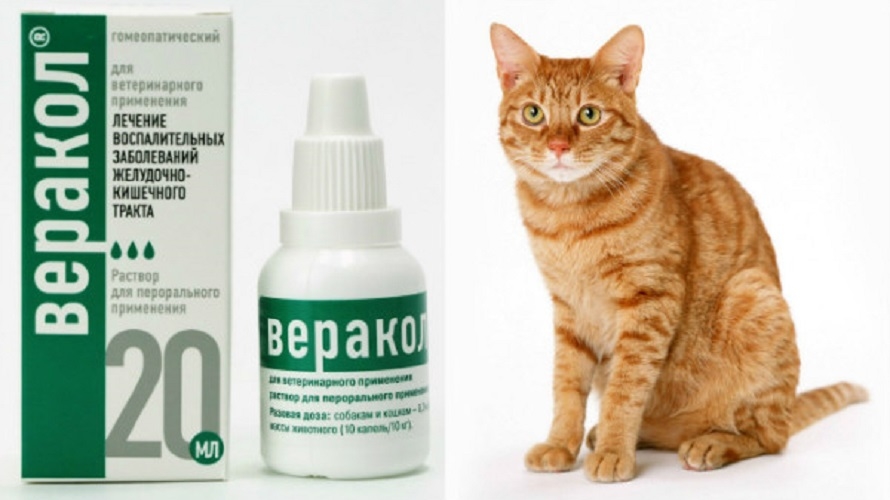
The undoubted advantage of Verakol is the variety of dosage forms
The homeopathic medicine Verakol contains a whole complex of components:
- White arsenic. In homeopathic doses, this toxic substance has a therapeutic effect. Its use helps eliminate pathogenic microflora and build the body's resistance to negative environmental influences.
- Bitter gourd. This substance has an antispasmodic effect and a pain-relieving effect. It helps the body resist the effects of toxins and forms a protective film on the intestinal mucosa, preventing irritation.
- Extract of peltate rhodophyllum. This natural substance promotes normal digestion. It effectively combats chronic diarrhea. It stimulates healing processes in cases of intestinal mucosal ulcers.
- White hellebore. The plant extract relieves spasms, normalizes intestinal peristalsis, and eliminates nausea and vomiting in animals. It also reduces salivation in cases of excessive salivation.
This complex composition determines the versatile action of Verakol.
The drug eliminates diarrhea, vomiting, and other symptoms of digestive disorders. It restores damaged intestinal mucosa and prevents infectious processes.
The components of the drug do not have an irritating effect.
Another advantage is that Verakol is suitable for long-term use, since none of its components can cause addiction.
Available in the following forms:
- Solution for injection. When used in this form, the medication enters the bloodstream immediately, where it is then transported to the site of inflammation or spasm. The solution is sold in glass vials with a capacity of 10 to 100 milliliters.
- Drops for oral administration. This form of release is preferable for those owners who, for some reason, cannot give their pet an injection.
- Solution for oral administration. It is packaged in polymer bottles equipped with a dropper pipette for more convenient dosing of the medication.
- Tablets for. This dosage form is packaged in polymer jars of 50 pieces.
Prescription of the drug
The use of the homeopathic medicine Verakol is indicated for the following diseases in cats:
- gastritis;
- intestinal spasms or colic;
- gastroenteritis;
- dyspeptic syndrome;
- poisoning;
- diarrhea, including chronic diarrhea.
As an adjuvant, the drug is indicated for use in the treatment of any disease accompanied by abdominal pain, as it is compatible with all medications.
Contraindications
To increase effectiveness, a specialist may recommend a combination of Verakol with other homeopathic remedies.
Verakol has no contraindications and can be used to treat young kittens, as well as elderly and severely weakened pets. Long-term, debilitating chronic diseases are also not a contraindication to Verakol.
Instructions for use
The duration of treatment with Verakol is usually determined by the veterinarian depending on the animal’s condition and the change in symptoms during therapy.
For the treatment of acute gastritis and gastroenteritis, the frequency of administration is two to three times daily. Duration of use is 5 days.
For the treatment of chronic gastritis and/or gastroenteritis, the recommended dosage is one to two times daily, depending on the severity of symptoms. In this case, the course of treatment is longer—2 to 4 weeks.
To relieve intestinal colic and flatulence, veterinarians also often prefer a combination of homeopathic remedies. In such cases, Verakol is administered two to three times a day for a treatment period of 5 to 6 days.
When treating an animal with poisoning, the medication should be administered one to three times daily, depending on the severity of the cat's condition. Treatment should continue until symptoms have completely resolved.
Dyspeptic syndrome, characterized by nausea, vomiting, and discomfort in the stomach and intestines, is treated with Verakol taken two to three times a day until the condition stabilizes.
Use of different release forms
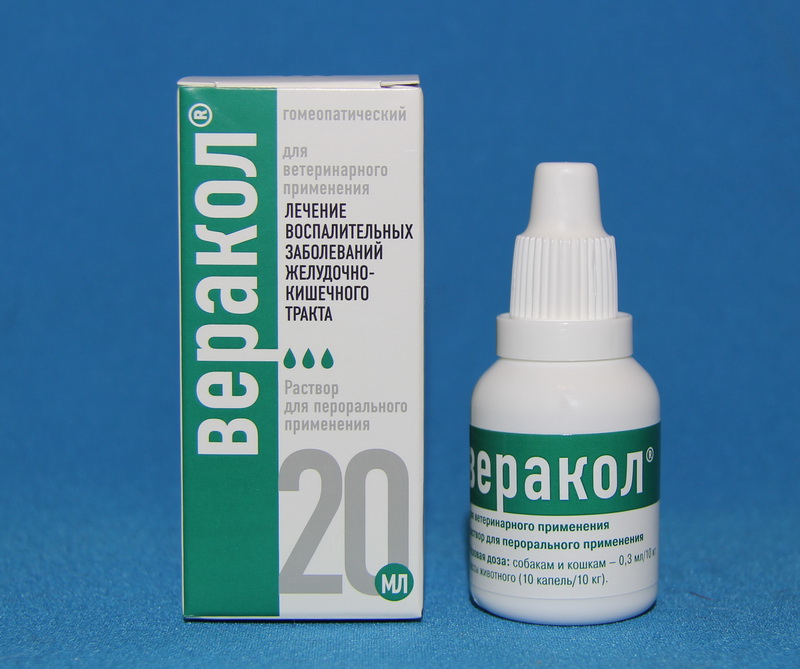
Verakol drops are administered to furry pets after mixing them with a small amount of water or the cat's usual food. The solution can also be applied directly to the back of the tongue or cheek area. It's important to supervise the animal to ensure it doesn't spit out the medication. A single dose of Verakol is calculated based on one drop per kilogram of the animal's weight.
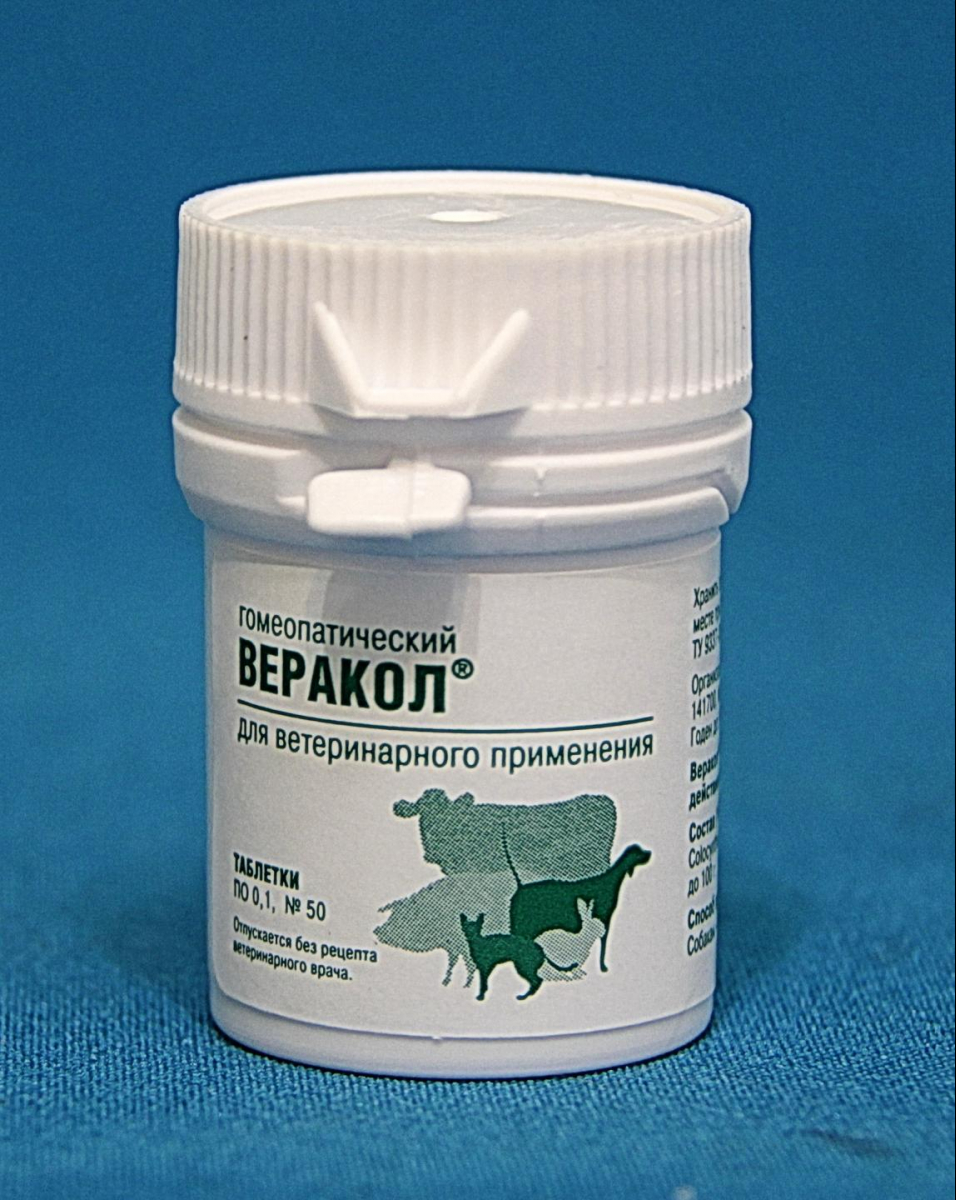
The tablets can also be mixed with food or force-fed. A single dose is one tablet, regardless of the cat's weight. For small kittens, we recommend halving the dose, giving half a tablet per dose.
Verakol injections are administered intramuscularly or subcutaneously. Experts recommend the latter option for pet owners who intend to treat their cats at home. To administer a subcutaneous injection, gently pull back a fold of skin on the withers, puncture it with the syringe needle, and inject the solution by pressing the plunger. These injections are well tolerated because the medication is painless. The dosage is 0.1 ml per kilogram of the pet's body weight.
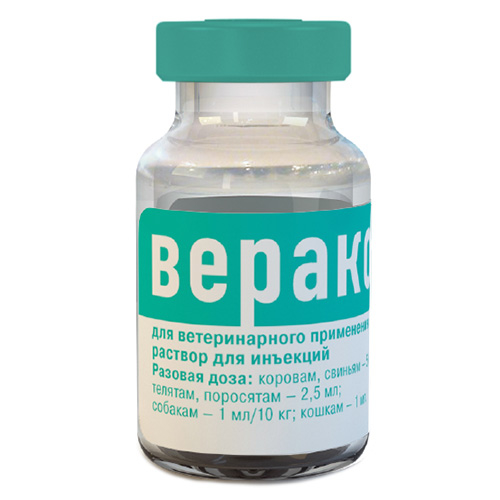
The minimum dosage is 0.5 ml. For certain conditions, specialists increase the single dose to one and a half milliliters.
Possible side effects
Although the homeopathic remedy contains microdoses of active ingredients, some animals experience hypersensitivity reactions to one of the ingredients. These reactions manifest as rashes, itching, and/or flaking of the skin. This situation requires discontinuing Verakol and adjusting the treatment regimen. If symptoms do not resolve spontaneously within a short period, the animal is recommended to take a dose of an antiallergic medication.
According to specialists, cases of intolerance to Verakol's components are quite rare. The drug is generally well-tolerated and does not cause side effects.
The homeopathic remedy Verakol combines well with any other medications, so it can be used in complex regimens simultaneously with antibiotics, painkillers, antitumor medications, and medications from other groups.