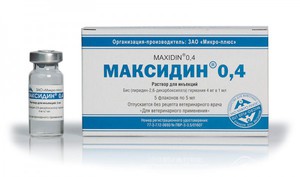
 Pets are often susceptible to viral diseases. To prevent health problems in pets, it's important to take preventative measures and, if illness occurs, promptly begin treatment. The veterinary drug Maxidin can help combat this problem. What is this medication, what are its properties, and how is it used?
Maxidin and its purpose
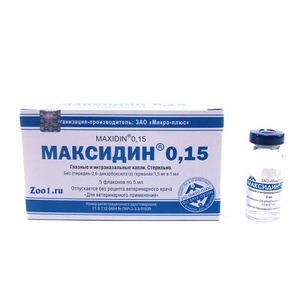
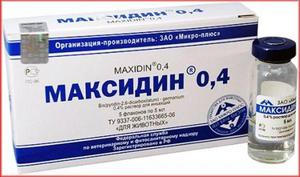
Maxidin is 0.15% eye drops A water-based antiviral solution for dogs and cats, and a 0.15% injection solution. It is available as a colorless, transparent, sterile liquid containing the active ingredient 0.4% and 0.15% BPDH. The product also contains the following excipients:
- sodium chloride;
- monoethanolamine.
This sterile solution is intended for ocular and nasal instillations, as well as for intramuscular injection. It belongs to the group of immunomodulatory drugs. It exhibits pronounced interferon-inducing and immunomodulatory activity. The drug stimulates cellular and humoral immunity in animals.
The main active ingredient is organometallic germaniumIt blocks the translation of viral proteins because it induces interferons. It increases the activity of effector cells in the immune system. Furthermore, it stimulates natural resistance.
The medicinal product Maxidin effectively stimulates the animal's immune system during the development of pathological processes and even after infectious diseases. Veterinarians actively prescribe Maxidin 0.4% for cats with the following conditions:
- calicivirus;
- pankleukopenia;
- rhinostracheitis.
In case of illness in dogs:
- parvovirus antheritis;
- plague of carnivores.
Instructions for use
The veterinary drug Maxidin enhances macrophage activity and oxidative metabolismThe medicine is intended for preventive purposes and treatment of diseases in cats and dogs:
- helminthiasis;
- parvovirus enteritis;
- carnivore plague;
- demodicosis;
- dermatitis.
The drug has the ability to restore skin and improve the condition of animal fur, as well as correct immunodeficiency conditions. The drug is excellent for the treatment of various forms of conjunctivitis:
- chronic;
- purulent;
- sharp;
- serous.
 It is also recommended to use it for rhinitis, allergic and infectious keratoconjunctivitis, initial stage cataracts, minor damage to the eyeball, pus discharge from the eyes, as well as for treating the animal’s oral cavity.
According to the instructions, the 0.15% product is recommended for use in the eyes and nose of cats and dogs, 2-3 times daily, 1-2 drops in each nostril or eye. Before applying the drops, clear the nasal cavity or conjunctiva. It is recommended to use a dropper. For lasting results, use the drops until the animal has fully recovered.
Subcutaneous and intramuscular A 0.4% solution of Maxidin is administered twice daily for 2-5 days. The recommended dose is 1.0 ml per 10 kg of body weight. This medication can be used in combination with other medications as part of a combination therapy.
Contraindications and side effects
Side effects and complications with proper use and correct dosage of Maxidin are generally not observed.
There are no established contraindications, but individual intolerance or hypersensitivity to the components of the veterinary drug Maxidin 0.15% is possible.
The medicine must not be used if the bottle is damaged or the solution is contains mechanical impuritiesIt is also not recommended to use the solution if it has changed color, become cloudy, or has expired. It is best to discard such bottles.
Preventive measures and storage conditions
 Handling Maxidin requires strict adherence to aseptic technique and personal hygiene. These are all consistent with the use of veterinary drugs. While using the product, do not drink, smoke, or eat. Wash your hands thoroughly with soap before and after use.
Those with hypersensitivity to any of the drug's components should avoid direct contact with the solution. If the solution accidentally comes into contact with the skin, it should be immediately removed. remove it with soap and waterIf the product comes into contact with a person's mucous membrane or causes an allergic reaction, it is best to seek medical attention immediately.
It is recommended to dispose of used vials immediately and not use them with other medications or for household purposes for health safety reasons.