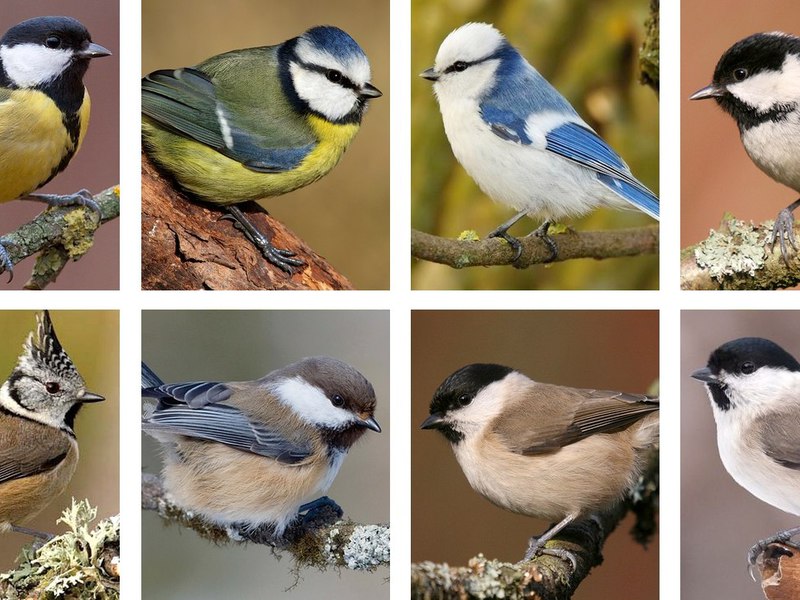
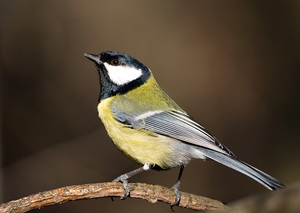
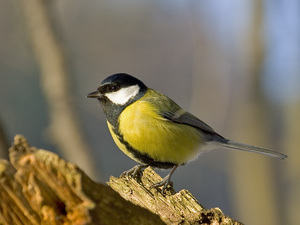
 The tit belongs to the order Passeriformes. The tit family includes the subspecies Long-tailed and Thick-billed Tits. There are over 100 species of birds worldwide classified as this genus. However, only the tit family is considered true birds.
These small, brightly colored birds can be seen almost everywhere in the Northern Hemisphere. In the summer, they live far from human habitation, and with the first frosts, they return closer to the feeders and abundant food. True tits are distinguished from other subspecies by common coloration and behavioral features.
These restless birds actually lead a fairly sedentary lifestyle. Each species prefers its own habitat. Blue tits and great tits nest in the mixed forests of central Russia. Coal tits prefer coniferous forests. And whiskered tits love reed beds along riverbanks.
Some species of tits never leave their nests. To protect themselves from enemies and find food, they unite in small flocks and flock to larger birds. But they can't be called friendly. Tits are friendly as long as they need protection. When competing for food, they become aggressive and can even kill smaller birds.
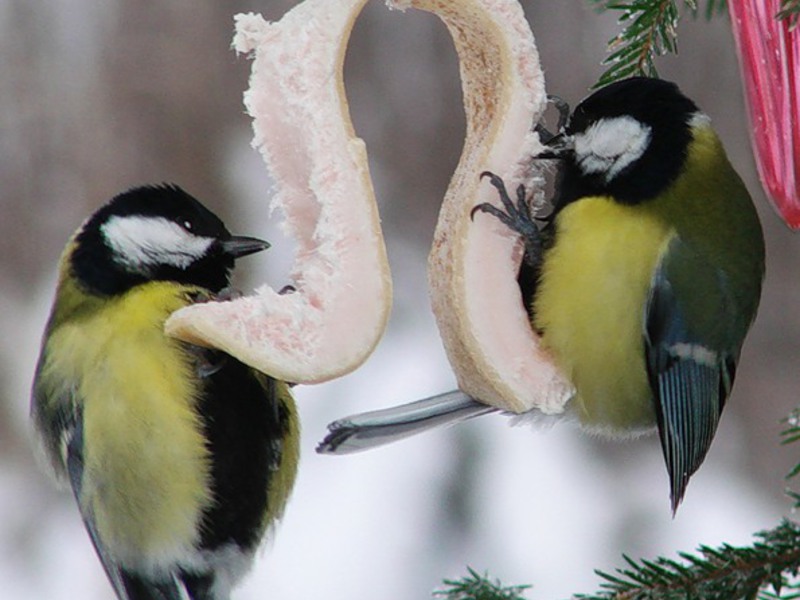
Tits are omnivorous birds. In summer, they feed on insects, in autumn on berries and small fruits, and in winter, they enjoy suet and bread from bird feeders.
The family's common name stems from the blue tit's song. The first mating calls of these charming birds can be heard in late winter. "Xin-sin" nests under windows in spring. Blue tits incubate their young two to three times a year. The polygamous parents share the brooding duties.
The following people live in Russia:
- Great tit
- Blue tit
- Moskovka
- Brown and gray tit
- Reedmez
Great tit
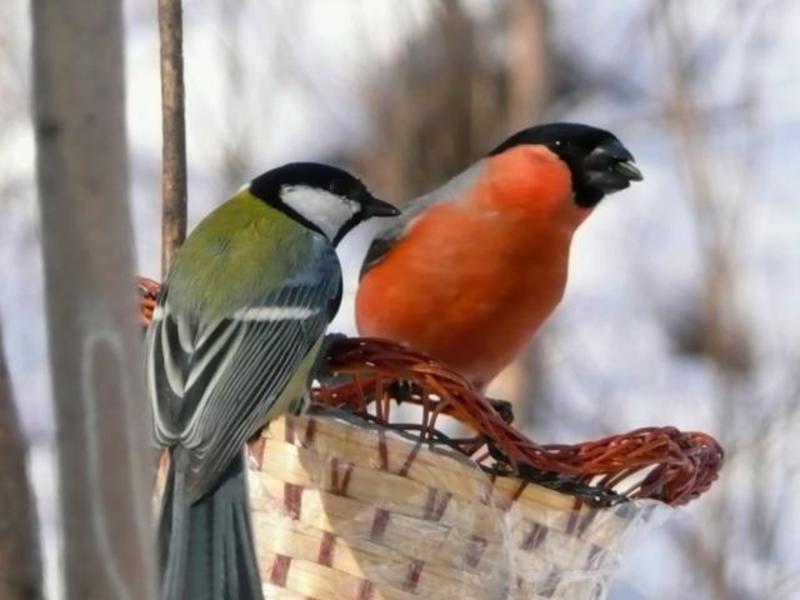
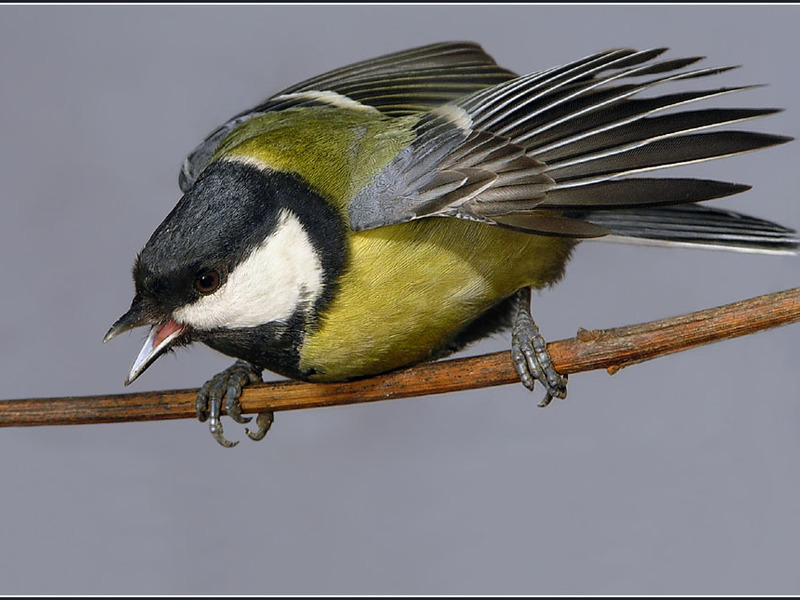
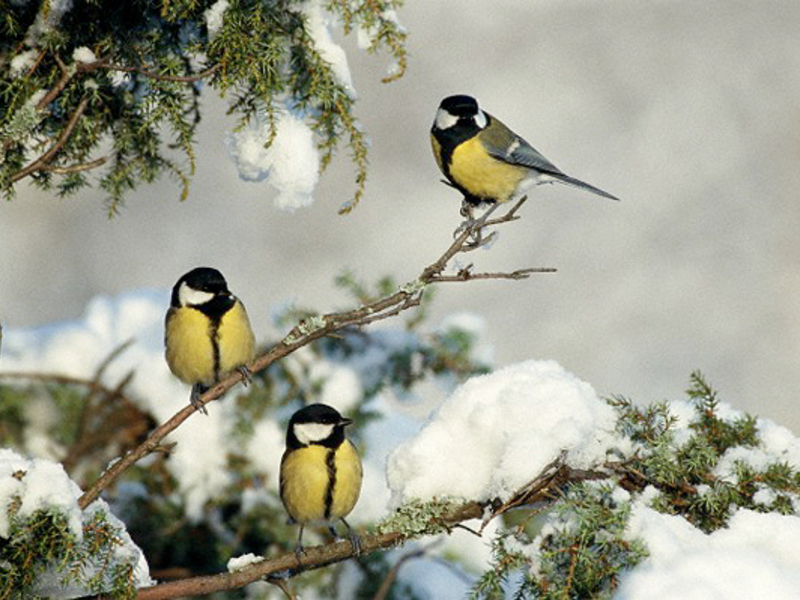
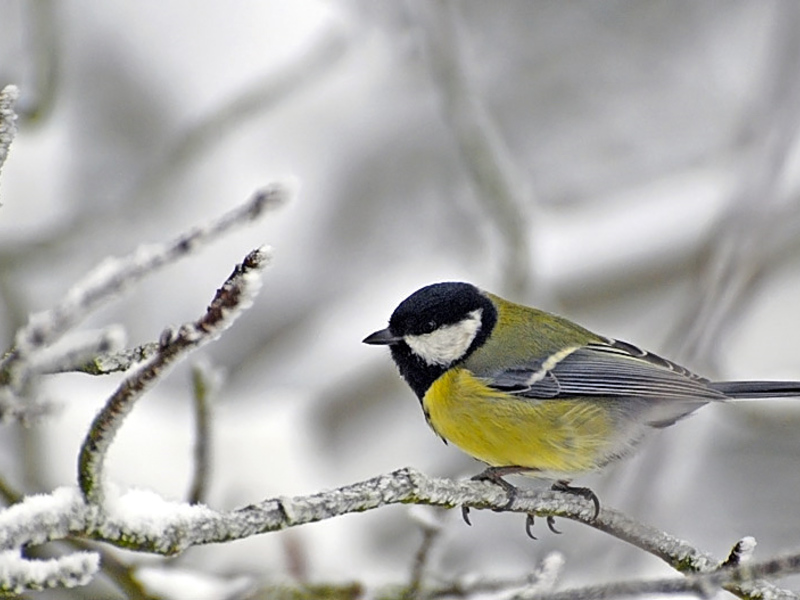
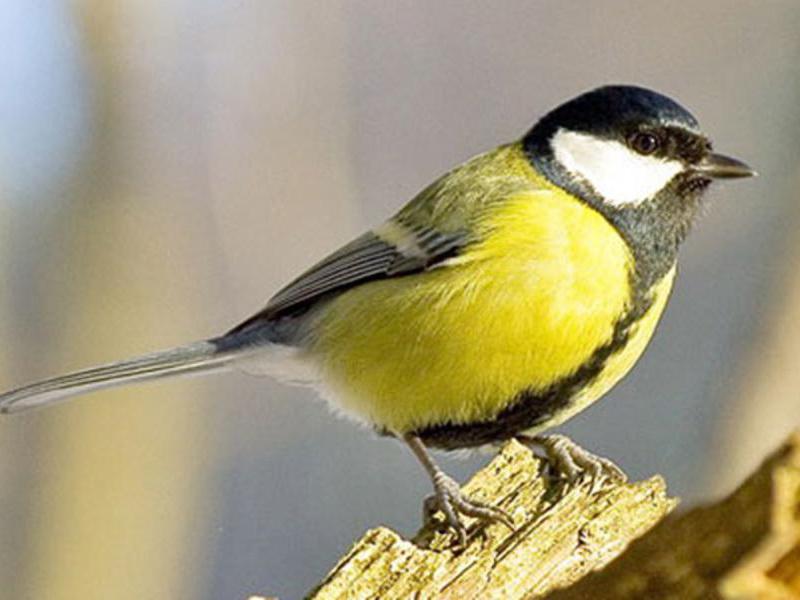
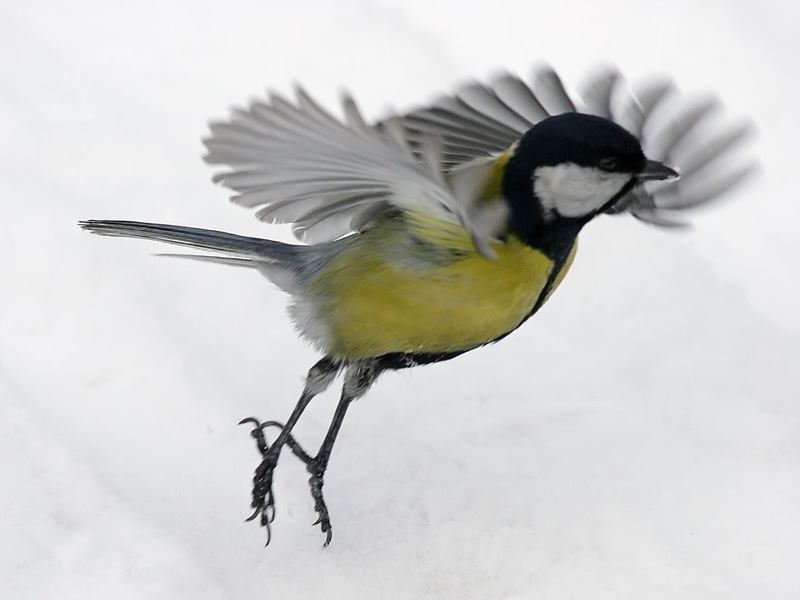
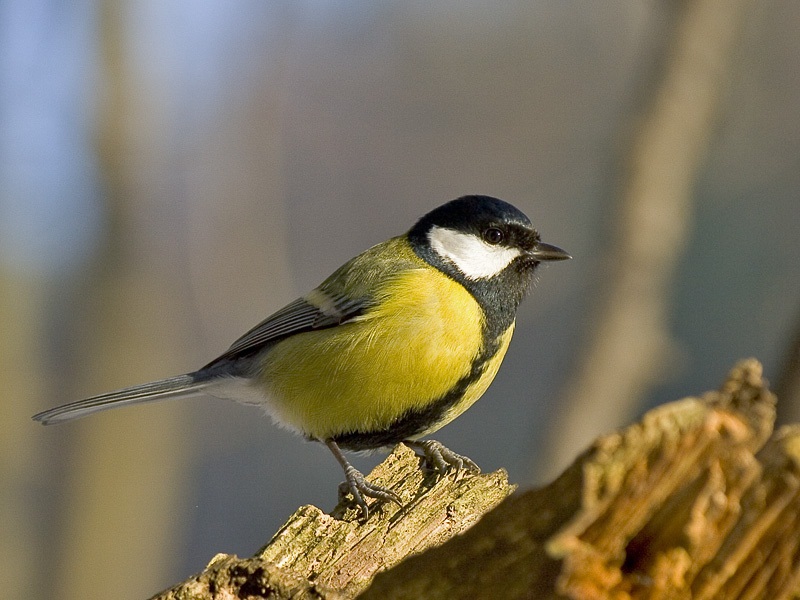
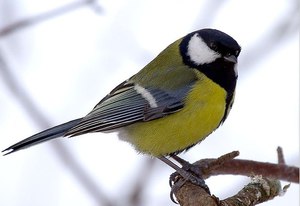
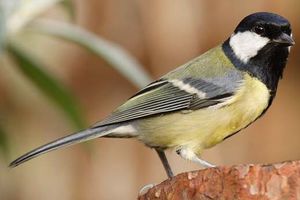
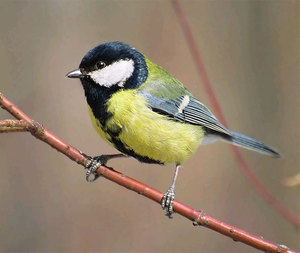 In central Russia, the Great Tit is most often encountered. This beautiful bird with a yellow belly is the largest of all tits. It can reach 16 cm in length and weigh up to 20 g. The photo shows the full plumage of this remarkable bird. It features a bluish tail and wings, a black head, throat, and stripe along the chest. White spots appear on the nape and cheeks.
The great tit is very a cheerful and active birdShe gets used to people quite quickly. Therefore, by pouring treats into her feeder, you can even observe her behavior from close range.
Blue tit
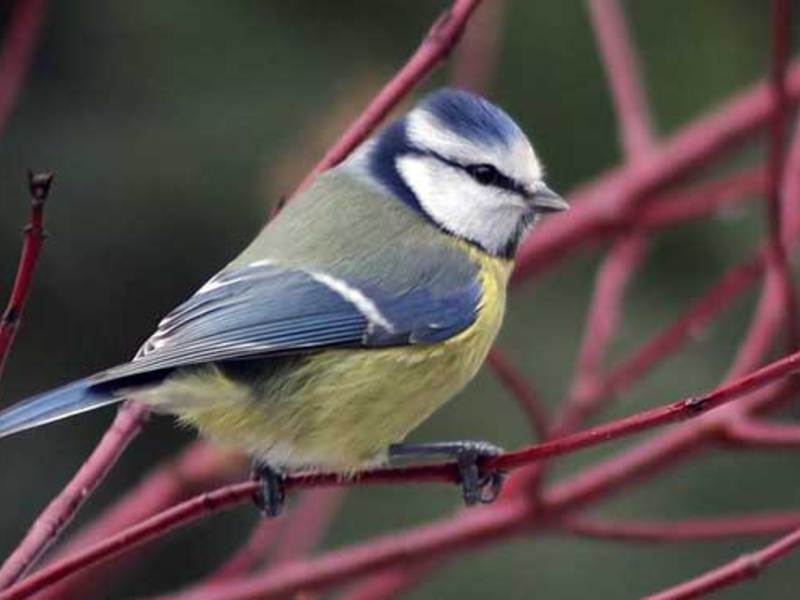
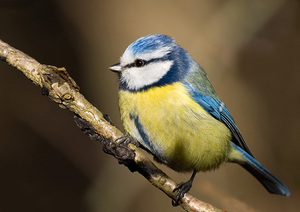
The blue tit is the most beautiful of its family. It is slightly smaller than the great tit. It can reach up to 14 cm in length and weigh 10-15 g. Of course, they share a family resemblance. However, the blue tit gets its name from its white cap with a blue spot on its head. Its coloring has more blue and olive-green hues. The age of the blue tit can be determined by the intensity of its coloring. Young birds are less vibrant than older members of this species.
Moskovka
Interestingly, these birds have a unique song. Keeping true Muscovy tits at home allows them to be used as teachers for small singing canaries. Bird song enthusiasts highly appreciate the "titmouse motifs" in the singing of overseas birds.
The Coal Tit, or Black Tit, is a relatively small creature. It has a black head and nape, whitish cheeks, and a large black bib on its chest. It has stripes on its wings and a distinctive white spot on the nape. This tit prefers coniferous forests. However, it is not averse to living in gardens and parks near human habitation when the chores of raising its young are over. The Coal Tit's favorite perch is in the tops of tall trees with a good view, further confirming the curiosity of these restless creatures.
These birds are popularly called Moscow birds, referring to this species' love for large cities and complete lack of fear of humans.
Crested tit
 Several species of tits are united by a common name due to the characteristic crest on their heads. Sometimes they are also called grenadiers.
These medium-sized, brownish-gray birds often form mixed flocks. Only severe frosts and a complete lack of food can drive these birds from their beloved coniferous forest. However, once they reach human habitation, they quickly return to people. If you feed these playful birds regularly and don't frighten them, you can train them to accept food even from your hand.
Brown and gray tit
These two subspecies of crested tits are most often found in European Russia, Belarus, Ukraine and the Caucasus. Coloration of males and females They differ little from each other. Even specialists have difficulty determining the sex of this species from a photograph.
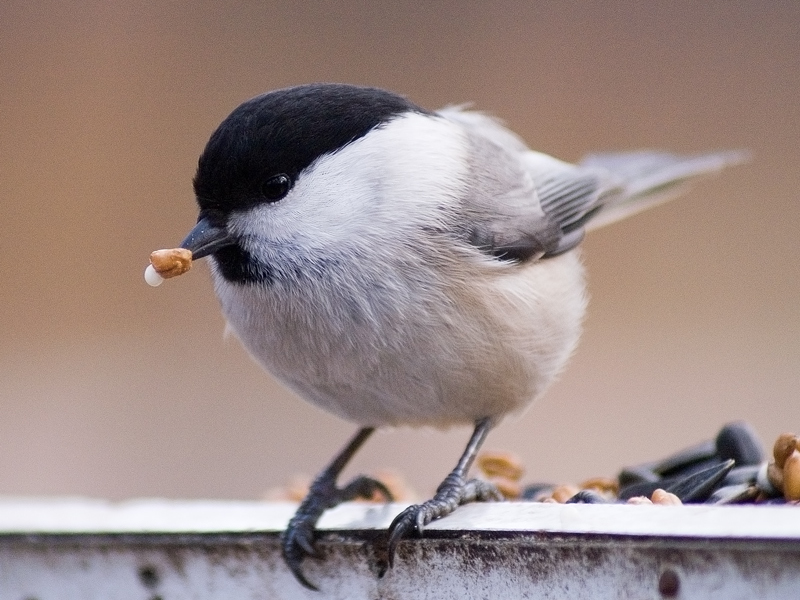
This is the most restless of all the titmice. It can't remain still for a minute. The chickadee's name comes from its distinctive song. Unlike its relatives, the chickadee actually pronounces "chiv-ge-ge," sometimes even sounding like a goose.
A black cap on the head, a brown-gray back of various shades and the same wings and tail, a light-brown chest and a black spot-beard distinguish the tit from other species of tits.
Penduline tit
 One of the few migratory subspecies of tits, the penduline tit flies away to warmer regions for the winterIt can be found in the Caucasus, southern Siberia, Japan and China.
The penduline tit's favorite nesting site is along the banks of rivers and lakes. It builds its nests on willow branches hanging over the water. This tiny bird, weighing only 10 grams, constructs enormous nests, disproportionately large for its size. The penduline tit's nest reaches 17 cm in height and over 10 cm in diameter. The nest is closed at the top and has a side entrance. The penduline tit collects building materials wherever it can find them. This includes dry grass, bird down, animal hair, and even flax, hemp, and nettle fibers.
Because of the interesting weaving of the nest, the penduline guinea pig is popularly known as sometimes called a weaverThe bird carefully camouflages its nest using willow and birch catkins and thin strips of birch bark. The nest, with walls up to 3 cm thick, lasts for several years.
The male penduline tit differs from the female in its brighter chestnut-brown coloration. This tit's head and bill are adorned with a distinctive black mask, which is also less vibrant in the female than in the male.
Like most birds, tits have difficulty finding food in winter. Their restlessness makes it difficult for them to remember all the food they've stored since summer. Severe frosts drive the birds out of the forest and closer to human habitation.
When you harvest berries from bushes in the fall, you can leave a small portion to feed your feathered friends. It's also easy to make feeders for little songsters. Unlike other birds, tits aren't afraid of swinging objects.Build a bird feeder You can use a regular milk carton with a hole cut in the side for entry. These feeders are easy to hang on tree branches in gardens and parks.
Tits are omnivores, so it's easy to provide them with food. Suitable for them:
- Sunflower seeds
- Any cooked porridge (buckwheat, rice, millet)
- Dry millet
- Breadcrumbs
- Pieces of unsalted lard and meat
- Frozen milk
A bird feeder placed near a window will allow you to observe the behavior of these interesting birds.