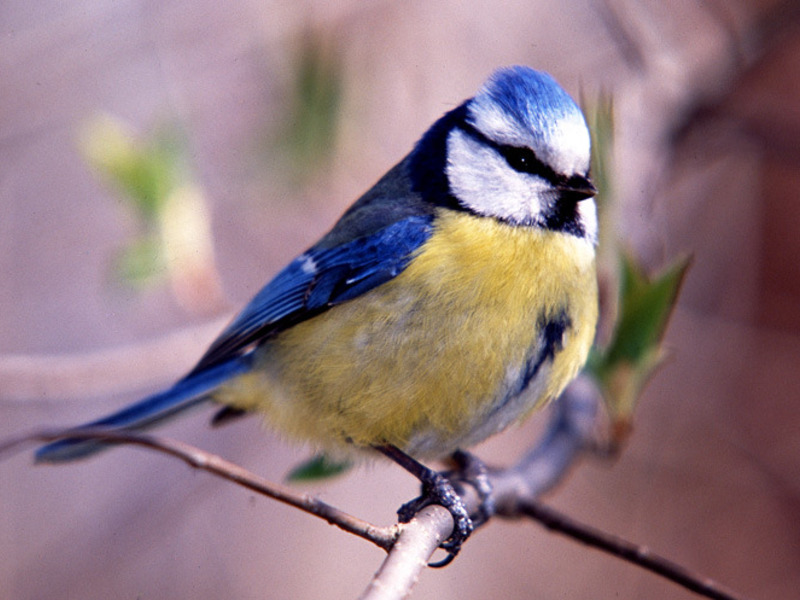
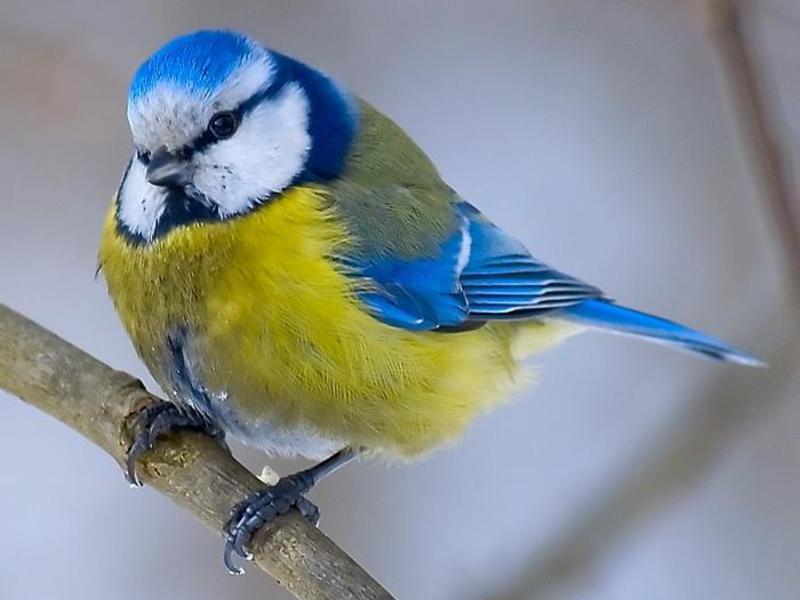
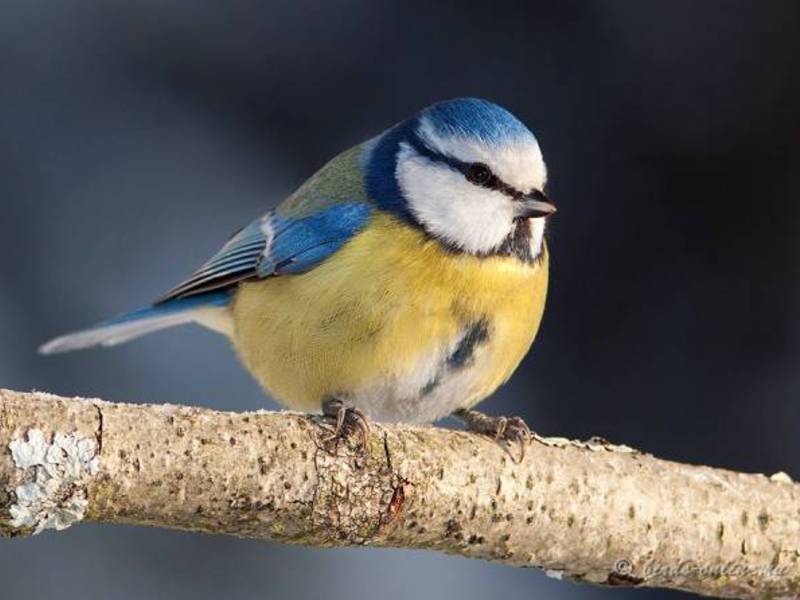
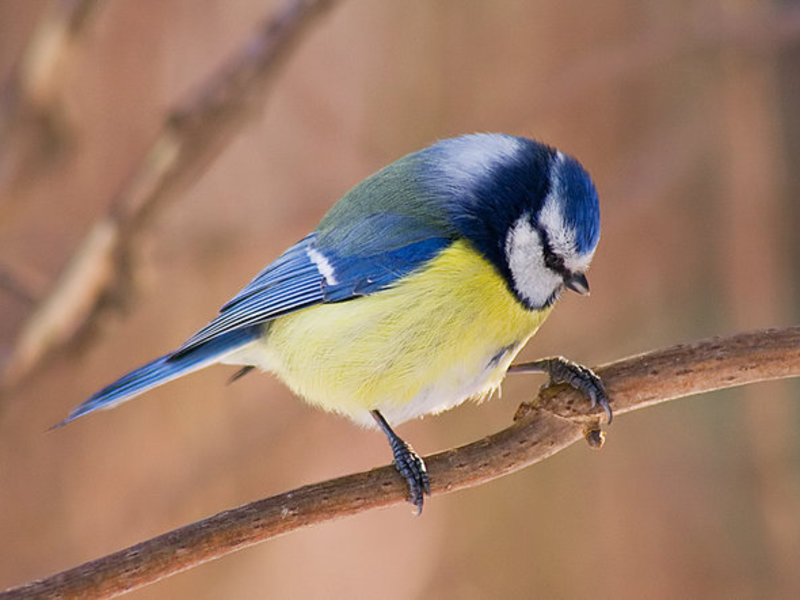
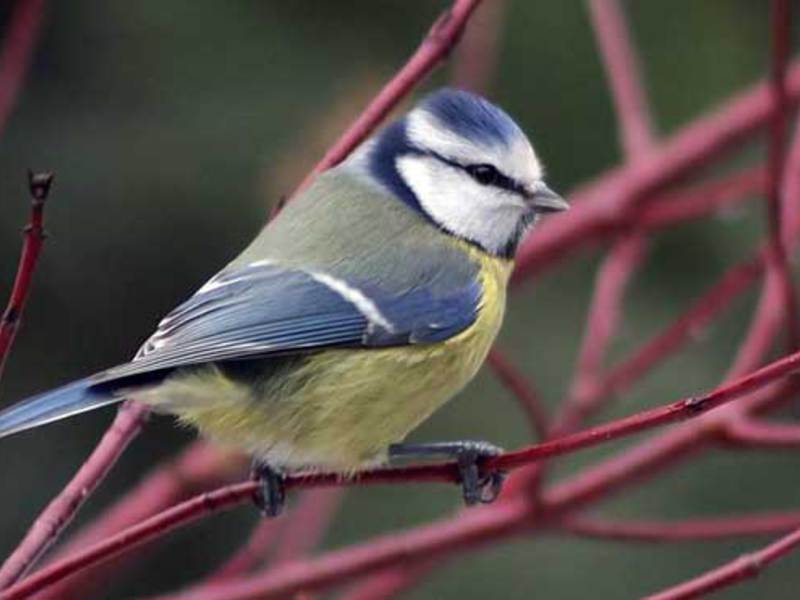
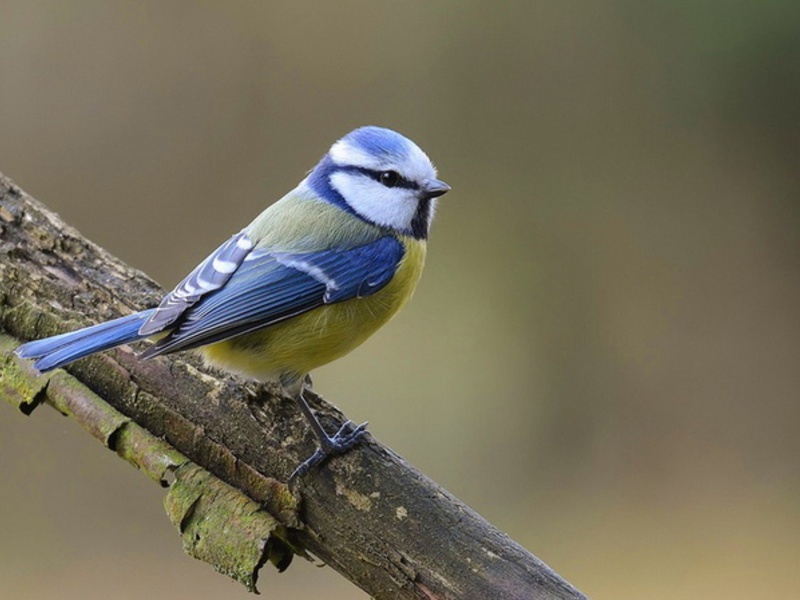
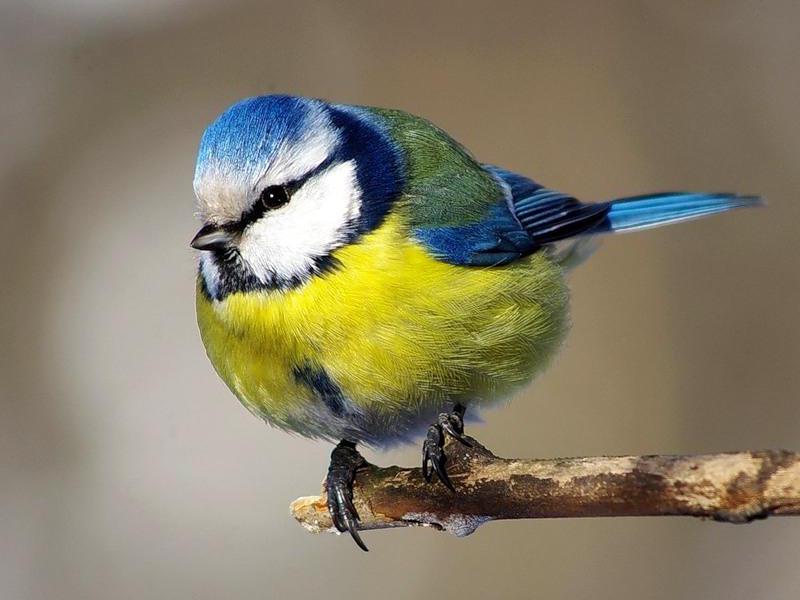
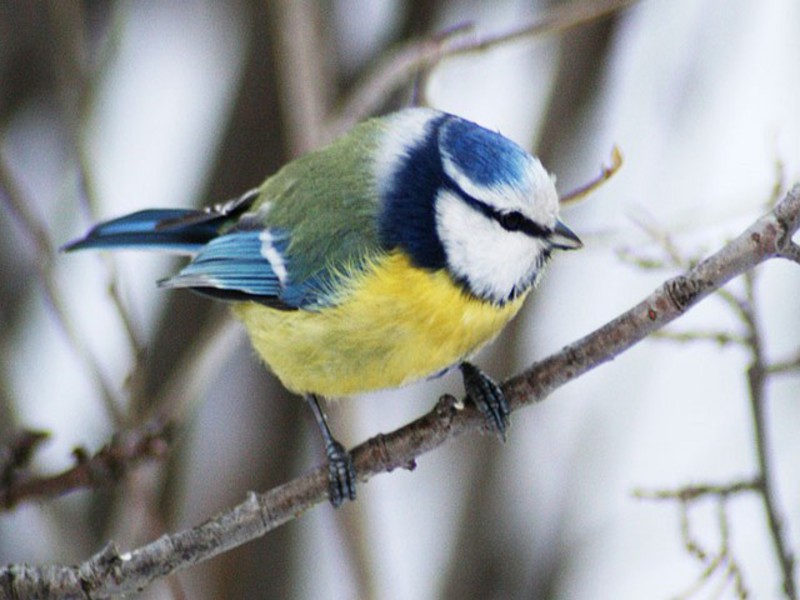
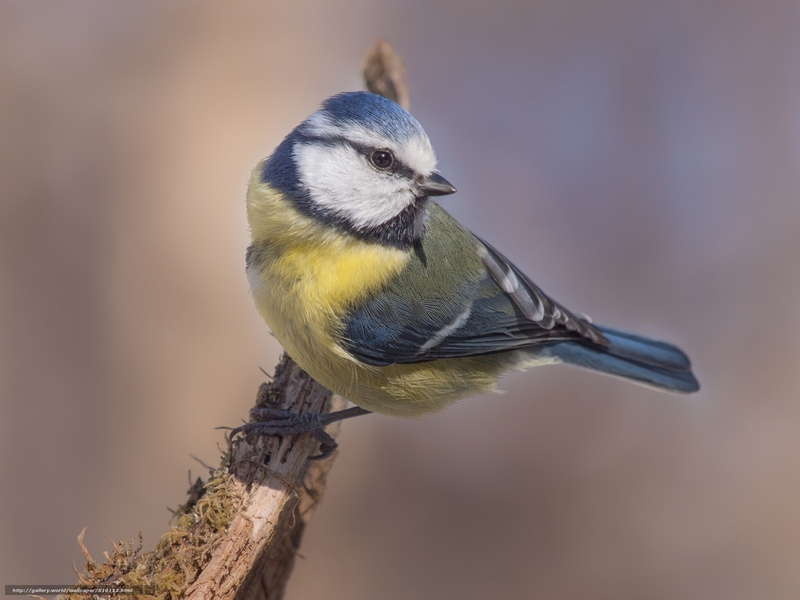
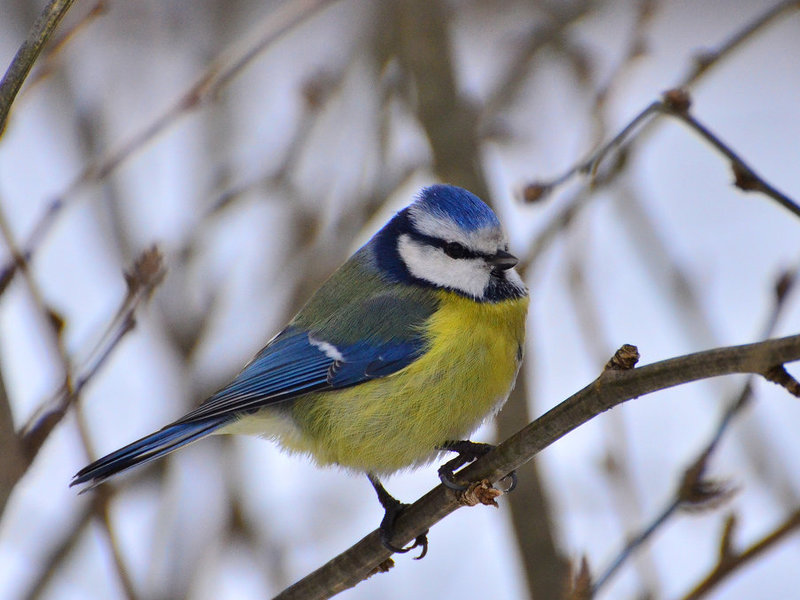
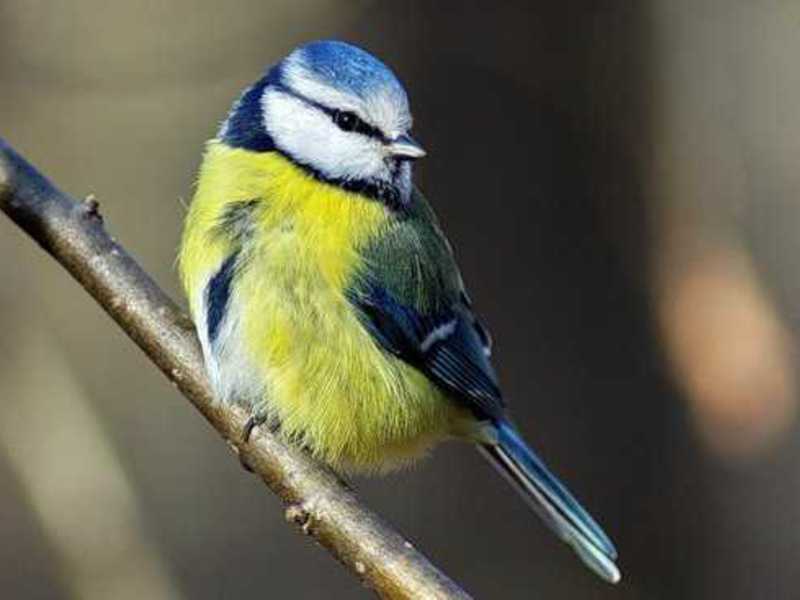
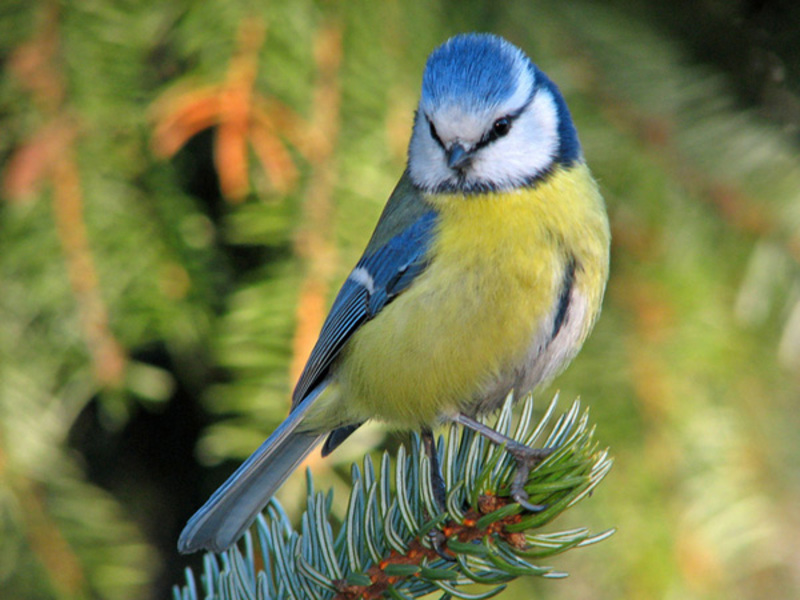
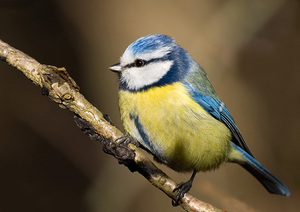
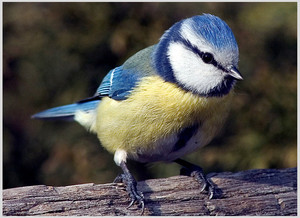
 The blue tit is one of the most common winged creatures in Europe. Its striking coloration (bright blue plumage and yellow breast) is sure to catch the eye of both passersby and avid explorers.
Blue tits are highly agile. They flit from branch to branch, flapping their wings rapidly and clinging tenaciously to thin twigs.
Adult males and females are identical in appearance. They have a relatively short tail, a thin bill, and strong legs, which allow them to securely perch on thin tree branches and peck at prey, or food (such as fat or seeds) prepared for them by people who want these birds to continue protecting their gardens from harmful insects.
Blue tit habitats
The most comfortable place for them is deciduous and mixed forests of Europe (mainly in its central part). Coniferous forests are much less attractive as permanent habitats for these birds. They can also thrive in urban areas, choosing parks or gardens.
The regional range of blue tits extends across southern Scandinavia, western Moscow and northern Africa.
Blue tits often form flocks with other birds and migrate with them in search of food. This also helps them avoid attacks by birds of prey.
Blue tit food
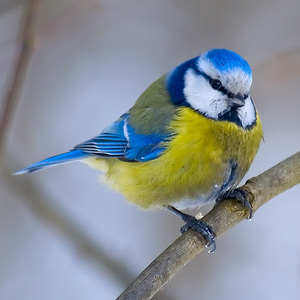 In the summer, these birds use insects as their main food, living on the leaves of trees, most often oakIn this way, they protect plants from the harmful effects of numerous pests, such as silkworm caterpillars and weevils. Therefore, settling, for example, in a garden, they can be of great benefit to its owner.
Blue tits also feed on spiders, butterflies and their eggs, caterpillars, and larvae, which they find on bushes or trees.
In autumn, blue tits switch to a plant-based diet, including wild elderberries, oak nuts, and rose hips. In winter, they feed on nuts and seeds (sunflower and poppy), and if the winter is particularly harsh, blue tits begin to explore tree bark in search of food.
How do blue tits reproduce?
In early spring, and sometimes even as late as late February, males begin searching for a suitable breeding site. small holes in the thickness of trees or the hollows of woodpeckers who have already abandoned them.
When the "future dad" finds a suitable spot, he begins to call the female to the spot with distinctive calls and a series of rapid wing beats. If she remains dissatisfied with the male's choice, he must return to the search for a suitable place to establish the "family nest." If the male's choice satisfies his mate, she actively begins to arrange their home, that is, it carries moss, dry grass, and other suitable materials there, and then presses them against the walls of the hollow with its chest to give the nest a cup-like shape. The surface lining of the hollow consists of feathers.
Once all preparations are complete, the female begins laying eggs, averaging 8-13. During this time, the "father" is busy defending their nest from any intruders. The egg incubation period lasts approximately 14 days.
During the season, blue tits manage to accomplish two clutches of eggs: The first one is in May, and the second one is in July.
During the first week after hatching, the male is solely responsible for foraging for food. During this time, the female is solely occupied with keeping the chicks warm and protected. After eight days, both parents begin sharing equally in foraging.
Scientific definition of the species
The first detailed description of the species occurred in the late 18th century, thanks to the work of Carl Linnaeus. It was then that these birds received their name—Parus caeruleus. At the same time, they were classified as part of the genus of tits.
Currently, ornithologists distinguish 16 subspecies of blue tits, which also are divided into two groups (which is determined by the habitat region and the variability of the species):
- caeruleus (habitat region - Europe and Asia);
- teneriffae (habitat region: northern Africa and the Canary Islands).
Interesting facts about blue tits
 During the cold season, blue tits often "swoop down" on bird feeders. In urban gardens, a pre-prepared net with nuts can feed up to 200 birds;
- Blue tits can peck out window putty, enter a living room and carry off a piece of wallpaper, which they will then use as material for lining their nests;
- One of the biggest threats to blue tits and their offspring is the weasel, which is fond of destroying their nests. Therefore, to protect themselves and their eggs, blue tits choose nest holes with the smallest possible entrance diameter;
- Over the past 30-40 years, ornithologists have recorded a decline in the blue tit population. They attribute this decline to the intensive logging of deciduous forests.
 During the cold season, blue tits often "swoop down" on bird feeders. In urban gardens, a pre-prepared net with nuts can feed up to 200 birds;