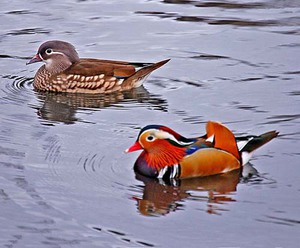
 The Mandarin duck is considered one of the most beautiful birds on the planet. It owes its name to its colorful plumage, as "mandarins" were once the name given to high-ranking and wealthy nobles in China who wore vibrant robes.
This representative of the genus of forest ducks also has other, outdated names: “Chinese duck” and “Mandarin duck”.
Description
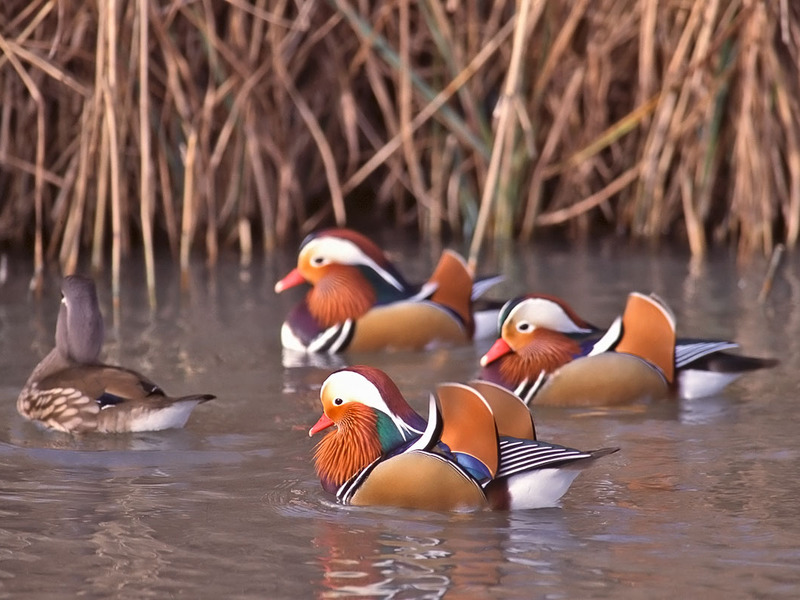
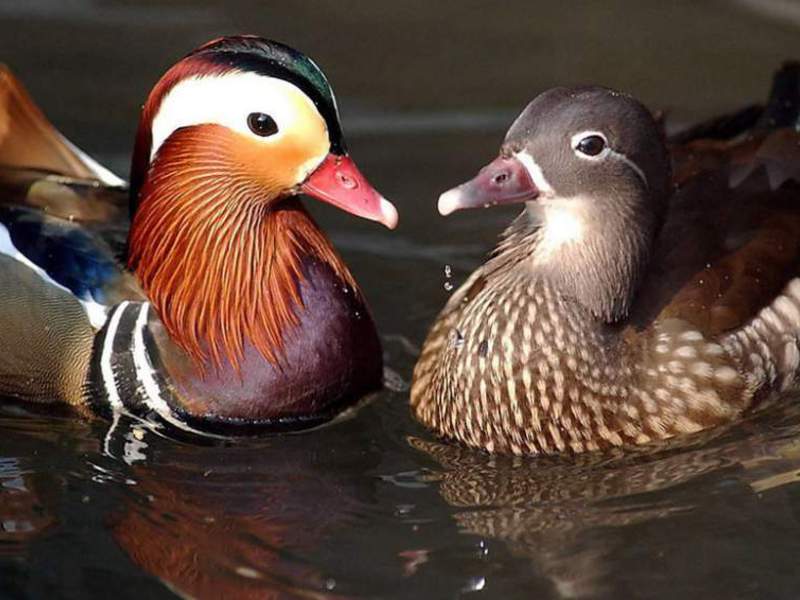
What does a Mandarin duck look like? This bird cannot boast of large dimensionsThis is a small duck, weighing only 0.4–0.7 kg. However, its plumage makes it visible from afar. The male is especially striking—his breeding plumage is so colorful and beautiful. The female mandarin duck has a simpler plumage, as she needs to incubate her chicks and avoid the attention of predators.
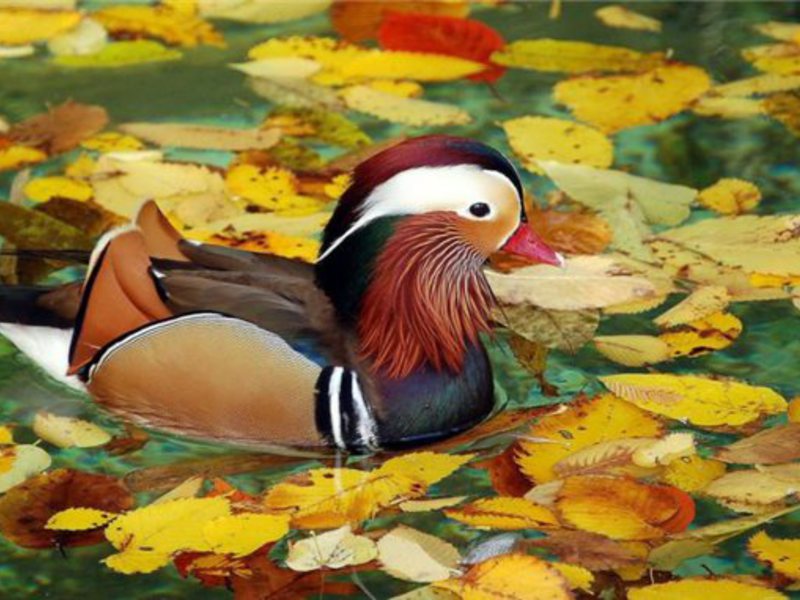
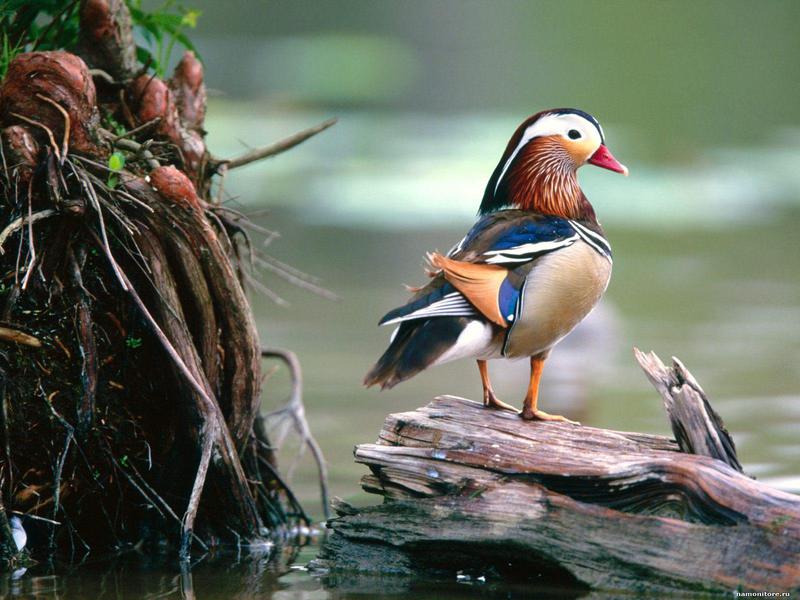
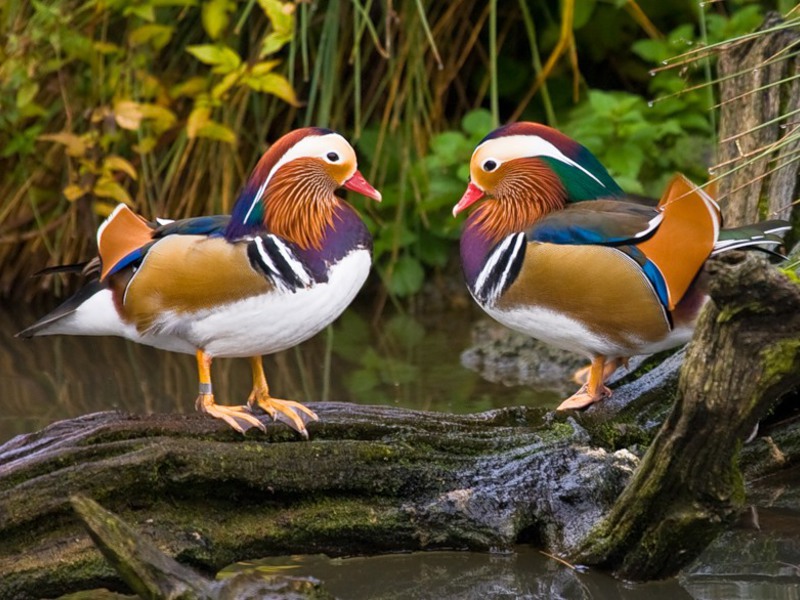
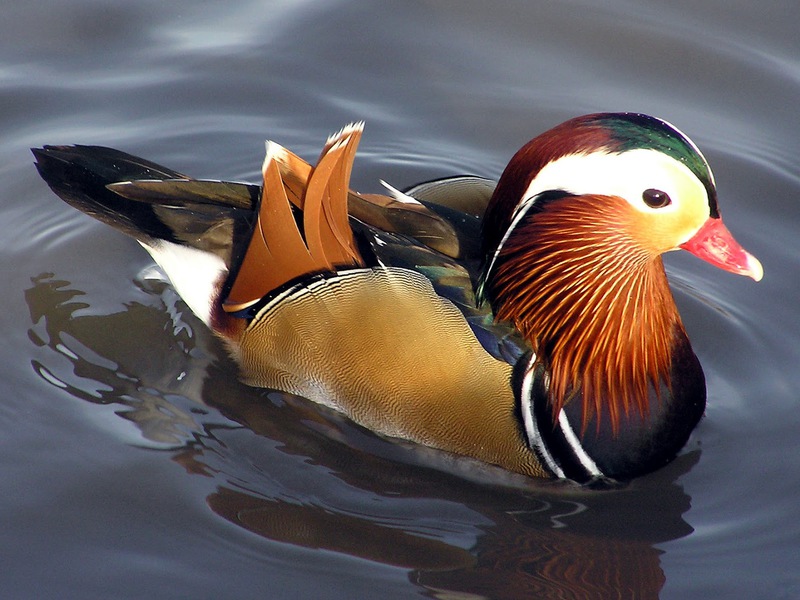
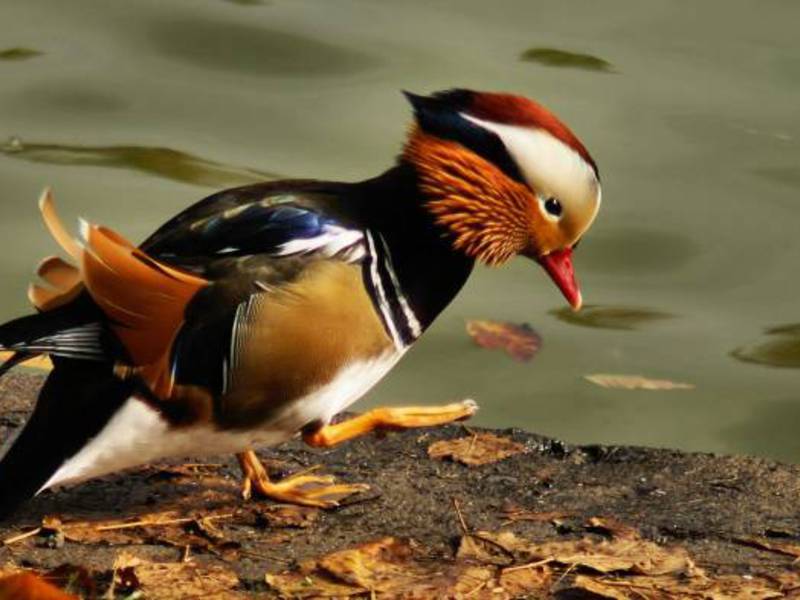
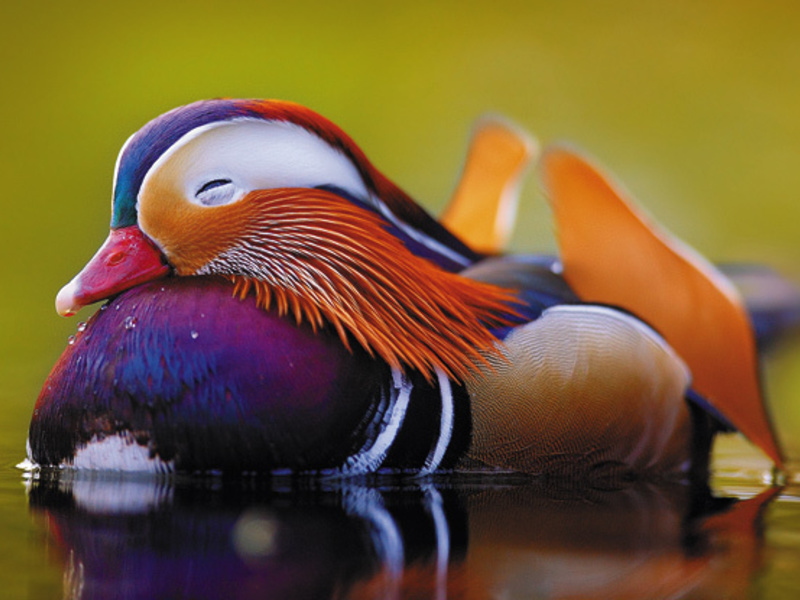
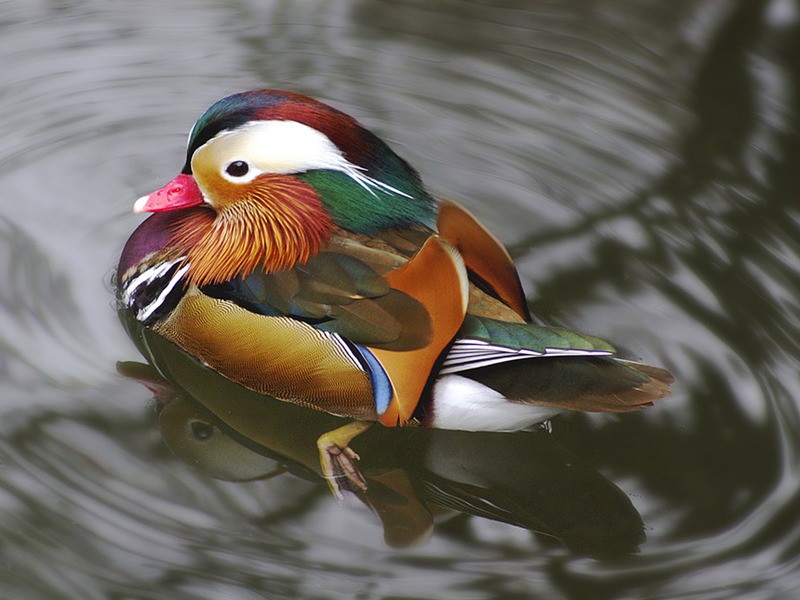
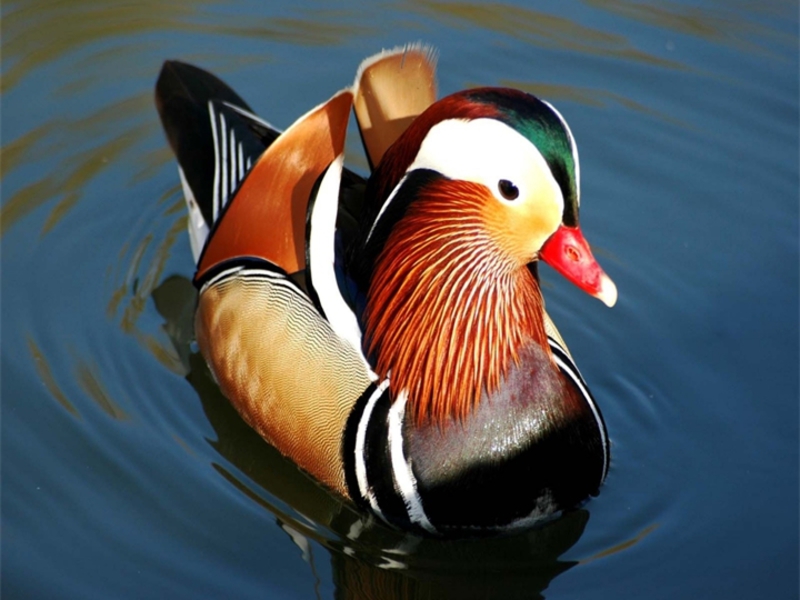
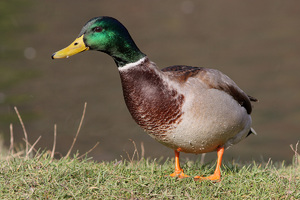
The mandarin duck's festive plumage is a whimsical yet harmonious blend of several vibrant colors. The bird has a purple breast, white underparts, a black uppertail, and feathers of red, green, blue, and orange on its head, back, and neck. A bright red bill and yellow legs complete this magnificent display.
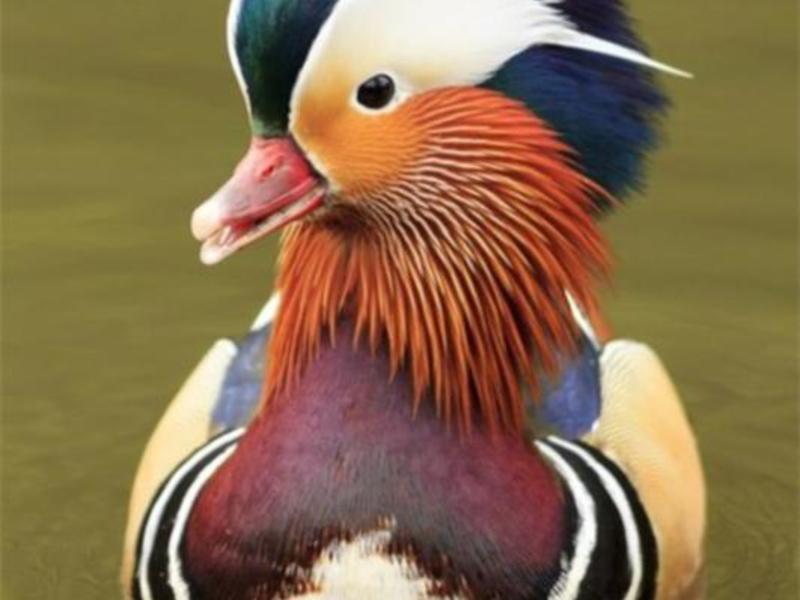
The drake's head appears large due to its crest and sideburns—these are formed by elongated feathers on its head and neck. Each wing has a single protruding orange feather. When the duck swims in the water, the feathers fold together, resembling a kind of saddle. After looking at photographs of the mandarin duck, it's hard to disagree with the idea that this is a the most beautiful duck on earth.
The female's coloring is less vibrant and exotic, more closely resembling natural colors: a brownish-brown back with a dappled pattern, a gray head, and an almost white underparts. The female has a small crest on her head.
It is also worth noting several notable features, inherent to tangerines:
 The male displays his breeding plumage for most of the year – from September to July.
- After the mating season is over, the drake changes his plumage and becomes similar to the female.
- The body weight of the male is slightly greater than that of the female.
- Birds, like other ducks, molt twice a year.
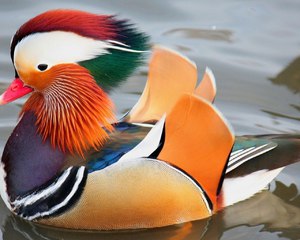 The male displays his breeding plumage for most of the year – from September to July.
Rarely, a completely white Mandarin duck can be found. It can be distinguished from other duck species by the prominent feathers on its wings, forming a saddle. "Albino" males have cream-colored patches in their plumage.
Where does it live?
The mandarin duck is native to China, Japan, and Korea. In Russia, these ducks can be found in the Khabarovsk and Primorsky Krais, as well as in the Amur and Sakhalin Oblasts.
In the northern parts of the bird's habitat lead a migratory lifestyleBy the end of September, they migrate from here to southern China or Japan. Mandarin ducks return to their nesting grounds in early spring, before the snow melts everywhere.
Behavior in the natural habitat
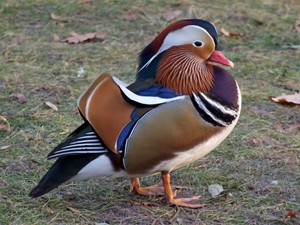 Mandarin ducks differ from other ducks not only in appearance. Instead of a characteristic quack, they produce sounds reminiscent of a soft whistle or squeak.
Another interesting feature of mandarin ducks: these birds, unlike other ducks, prefer to live in trees. They build their nesting holes 6-10 meters above the ground. Like all ducklings, mandarin ducklings immediately after birth try to learn how to swim. At their mother's command, they leave the nesting hole and leap from great heights, using their immature wings and webbed feet. the chicks are planning, trying to stop their fall, and successfully land unharmed.
The bird chooses mountain streams with branches hanging over the water, as well as riverine forests, for its habitat. Other favorite nesting sites include ponds littered with fallen trees.
Ducks are good swimmers, divers, and flyers. The mandarin duck rises easily, almost vertically, and its flight is fast and maneuverable. This bird loves to fly among trees; its small size and light weight allow it to easily leap from branch to branch. It dives only when absolutely necessary, when threatened.
Natural enemies of mandarin ducks include raccoon dogs, foxes, raccoons, birds of prey, and squirrels, which love to destroy the nests of small birds.
Nutrition
The mandarin duck feeds on vegetation and living creatures that live in the water.The duck's diet includes:
- acorns are a favorite delicacy of tangerines;
- nuts, berries, seeds, fruits of plants;
- frogs, small fish, insects and snails;
- cereals.
To feed on small grain shoots, the birds visit winter fields. In search of their beloved acorns, mandarin ducks nimbly climb oak trees and also find acorn seeds in water and on hillsides. In August and September, the ducks can be seen in rice and buckwheat fields, where the birds make forays in small flocks.
Reproduction
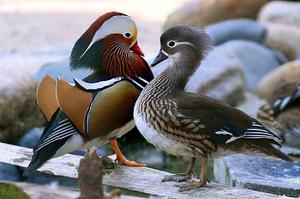 During the mating season, these birds engage in intense competition for females. Males enchant their chosen ones with the beauty and brightness of their plumage. By nature, This species of duck is monogamous., the couple remains faithful to each other throughout the season, until the next mating season.
Once a pair forms, the birds begin searching for suitable nesting sites. Because they are particularly fond of acorns, oak trees are the most common choice. If a hollow tree is unavailable, mandarin ducks build their nests in hard-to-reach places near water.
A mandarin duck typically lays 7-14 cream-colored eggs in a single clutch. The duckling incubates her chicks for a month. Mandarin ducks are devoted parents, raising their chicks all summer long, teaching them to fly and swim. Drake fathers are actively involved in this process. The ducklings eat well and grow quickly. After 40 days, the chicks are already capable of flight.
Under the protection of the Red Book
The global mandarin duck population numbers approximately 25,000 individuals, of which 15,000 live in Russia. The birds are listed in the Russian Red Data Book as a rare species.
Hunting mandarin ducks is prohibited by law.However, in the fall, they often fall prey to hunters, as the drakes, having shed their bright plumage, are difficult to distinguish from ordinary ducks. To save this beautiful waterfowl species, the hunting season must be postponed until the end of September, when most mandarin ducks leave Primorye for warmer climates.
Mandarin ducks are considered an ornamental breed. People enjoy raising them at home and using them to decorate ponds and parks. These birds thrive and breed in captivity, and they are easily tamed. All of this helps maintain the population of these charming ducks.
You can gaze at a photo of a Mandarin duck for a long time, marveling at the ingenuity of nature that created this little miracle. Incidentally, in Chinese philosophy, these birds are considered a symbol of family happiness. A pair of Mandarin ducks symbolizes a couple who remain faithful to each other throughout their lives.

 Milena
1 comment