 A backyard farm always offers plenty of poultry. But ducks, an excellent source of both meat and eggs, deserve special attention. Every homeowner considering keeping a duck ponders which breed to choose. The success of duck breeding depends on the correct breed selection.
First, you need to decide whether you need meat or egg-producing poultry for your home farm. Farmers often prefer breeds that produce a high amount of meat.
Content
Breeding ducks at home
It's well known that ducks are most often raised for their meat. It's very different from, for example, chicken meat. The following are some of the distinctive characteristics of duck meat:
- Their meat is much darker than that of other birds.
- Duck meat is fatty.
- Duck meat contains large fibers that are clearly visible.
- Rich taste.
But some farmers choose birds that lay a lot of eggs. It's known that they can't be used as food because they have a peculiar taste. But they are ideal for the food industry, for example, in mayonnaise production. Some backyard farmers breed these egg-laying breeds to use the eggs as hatching material.
Ducks can be raised on a farm to produce down, which can be used to make excellent pillows and blankets. Their droppings also make excellent fertilizer for garden beds.
Duck breeds
All breeds of ducks can be divided into three types:
- Meat.
- Egg-laying.
- Meat and egg.
This division is, of course, a bit arbitrary, since all these qualities are inherent in each duck: some are simply expressed more strongly, and others less so.
Meat-oriented duck breeds
Duck breeds of this type can often be found in householdsGourmets consider their meat juicier and more tender. The ducks themselves are quite prolific and grow very quickly. They are known to have a high vitality, but average egg production.
The most popular meat breeds are the following types of ducks:
 Beijing.
- White Moscow.
- Ukrainian gray.
- Black and white-breasted.
- Agidel.
- Rouen.
- Bashkir colored.
- Swedish Blue.
- Favorite blue.
 Beijing.
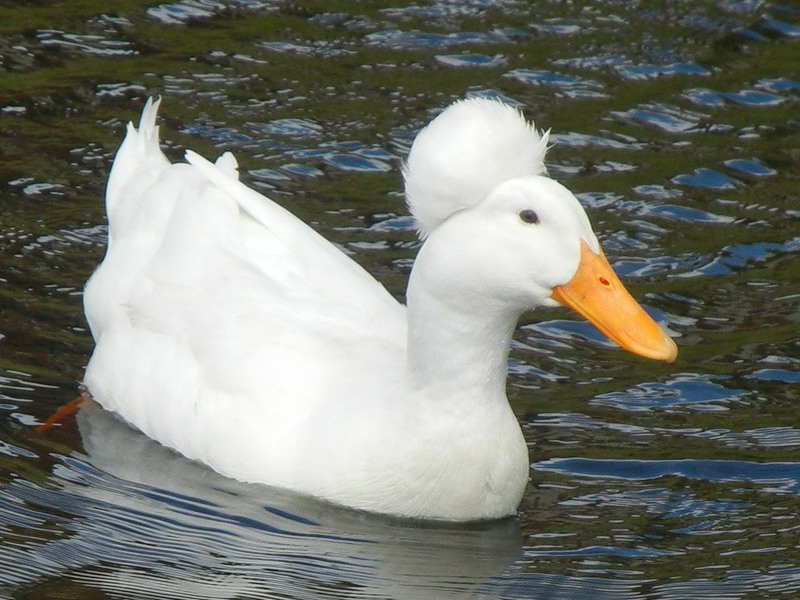
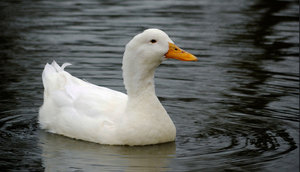
Of all the meat-producing breeds, the Pekin duck is the most common. This species is distinguished from other ducks by its broad and slightly long head, which ends in a bright orange beak. usually has white plumageRaising these ducklings is easy, as they grow and gain weight quickly, are quite hardy, and are not afraid of winter cold. A young duck weighs 2,500 grams at two months, while an adult male can weigh up to 4,000 grams. They produce a small number of eggs per year: approximately 85–90. Each egg weighs approximately 90 grams.
The Moscow White duck breed was created by crossing the Pekin duck with Khaki Campbell ducks. At 65 days old, a young duck of this breed weighs over 2 kilograms. If properly cared for, this duck will... You can get up to 120 eggs from each individual per year.
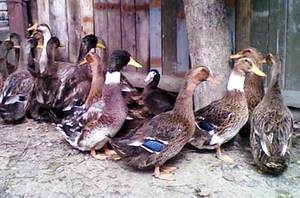 The Gray Ukrainian duck breed is easily distinguished by its appearance. They have well-developed muscles and a massive build, but their skeleton is rather thin. Their plumage is dense and abundant. The female weighs 3 kilograms, and the drake 4 kilograms. Egg production is 120 eggs.
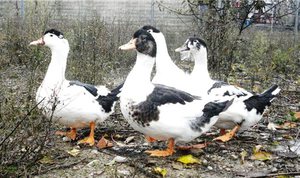
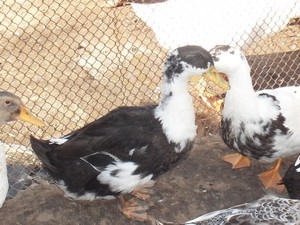
The Black and White-Breasted breed is the result of crossing Pekin, Black, and Ukrainian ducks. Black and White-Breasted ducks have a broad, long back that slopes slightly toward the tail. The chest is deep, and the body itself is slightly raised.
Agidel ducks are considered meat broilers. They can be raised indoors and on open pastures. This breed is a cross between the Super M, Indian Runner, and Blagovar breeds.
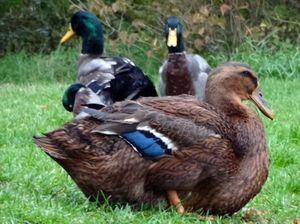
The Rouen breed was developed in France. Its massive body is perfectly matched by its calm nature. These individuals have a dark brown head, a light brown body, and dark orange limbs. If it's a male, the plumage around the head will be shiny and even have a slight green tint. Females weigh up to 3 kilograms, and males, 4 kilograms. Egg production: 90 pieces per year.
The Blagovarsky breeding farm developed a breed of colored ducks called the Bashkir duck. Mutant Pekin ducks were used. They adapt easily to any living conditions. Their carcasses are less fatty than other meat-producing breeds.
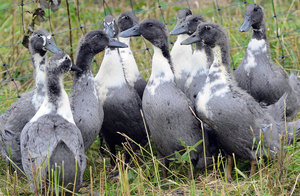 Swedish Blue is meat breed, which are common in Germany. Very trusting, they quickly become attached to their owners. A distinctive feature is their quick adaptation to cold weather, making them suitable for breeding even in the northernmost regions. They are easy to care for and easy to feed, making them easy and quick to fatten up.
With silvery-white plumage, this duck weighs approximately 3-4 kilograms. Its head is long and slightly oval. The bill is flat and yellow-green, although its tip is black. The back is fairly broad and long, without any protrusions, while the tail is straight and short. The wings are long, usually held tightly to the sides. The legs are orange.
The duck's long body also identifies the meat-oriented Favorit Goluboi breed, which owes its origins to the Blagovarsky breeding farm. Individuals of this breed have a large build and blue-gray plumage. The duck grows quickly and requires little care. Unlike other meat-oriented breeds, such as the Bashkir or Peking, the meat of this species is lean and has excellent flavor. Incidentally, This duck is also famous for its high egg production..
Young ducklings have a high vitality. In two months of life, a duck can gain 2.5 to 3.5 kilograms. An adult drake is much larger than the female, weighing 4 to 5.5 kilograms. The female, on the other hand, weighs 3–4 kilograms. Egg production is 140 eggs per year, with each egg weighing 85 grams.
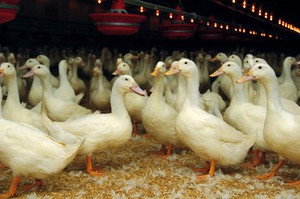 Currently, it is bred both in specialized farms, as they are very common in industrial production, and in home conditions.
All meat-producing breeds have their own characteristic traits, such as heavy weight and enormous size. Keeping these ducks is also profitable because they are very prolific. It's known that a single duck hen can produce around 50 ducks per year.
If you feed these ducks the right diet and ensure good living conditions, they will weigh 3 kilograms in just 1.5 to 2 months and be ready to be slaughtered for meat. Incidentally, raising ducks for meat production is profitable and inexpensive.
Egg-laying duck breeds
Many farms choose to raise and breed ducks that are primarily egg-laying. This is justified by the fact that the food industry often uses duck eggs.
It's well known that duck eggs are a staple in most Asian cuisines. Therefore, most egg-laying breeds were developed in this region. The Indian Runner holds the record among other breeds.
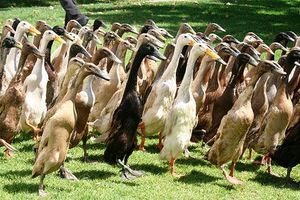 It is worth noting that ducks The Indian Runner breed was developed in Malaysia., but it didn't immediately catch on in Europe. This was due to many factors, but one of them was that members of this breed were susceptible to various infectious diseases. Therefore, their eggs often become sources of salmonella. In England, they decided to slightly modify this breed and crossbred it with individuals of a different breed. This gave rise to the mistaken belief that the Indian Runner originated in Great Britain.
An adult of this species weighs only 1.5–2 kilograms, but they are excellent egg layers. A duck can lay up to 350 eggs per year. Indian Runners are easy to care for: they can survive without water and are not afraid of light frosts or snow. Their appearance can be amusing, as they even bear a slight resemblance to penguins. Incidentally, this unusual appearance has led some to keep this breed of duck as a pet. This bird can also be used for meat, but more often, only the runners are chosen for this purpose. culled young animals.
Egg-laying ducks are smaller in size and weight than other breeds. However, they are rarely used for backyard breeding.
Meat and egg producing duck breeds
Meat and egg producing duck breeds are commonly raised in private households. Representatives of the general food species are considered to have high weight and good egg production.
All breeds of this type require little care, are easy to maintain, quickly adapt to any climate, and, most importantly, are resilient. The following poultry are considered meat and egg breeds:
- Orpington.
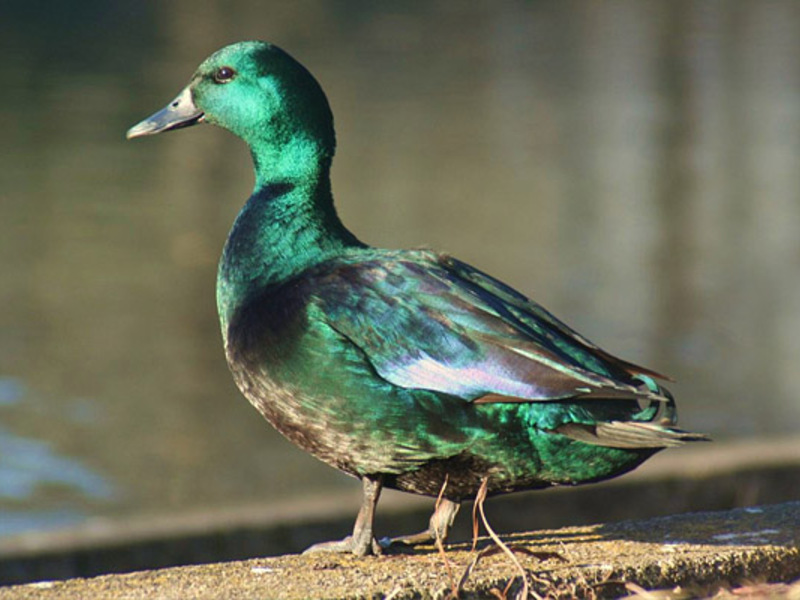
- Cayuga.
- Saxon.
- Khaki-Campbell.
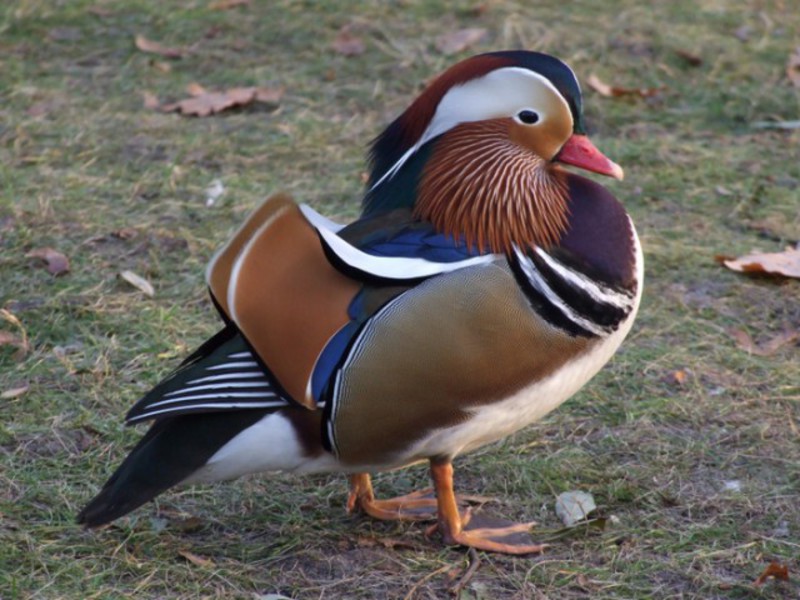
- Mirrored.
There are many other meat and egg breeds, which are also called crossbreeds.
 Orpingtons are a cross between Aylesbury, Cayuga, and Indian Runner ducks. They have reddish-yellow or fawn plumage. Males weigh approximately 2.5 to 3.5 kilograms, while females weigh 2.5 to 3.2 kilograms. This breed, however, not only produces good meat, but also lays up to 160 eggs per year.
Another meat-egg breed was brought to Russia from the American continent. Cayuga ducks are somewhat similar in color to black, but have a slight greenish tint with a metallic sheen. Some of this duck variety also have a bluish tint. A drake weighs 3.6 kilograms, while a female, which lays approximately 150 eggs per year, weighs 3.2 kilograms.
The Saxon duck breed was developed in Germany. Its duck representatives have multi-colored plumageThe body is slightly tilted forward and has a fairly regular shape.
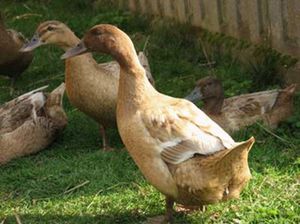 The Khaki Campbell breed is of English origin. An adult duck can weigh up to 3.5 kilograms, but lays 350 eggs per year. An egg weighs 85 grams. However, the Mirror breed produces the best eggs. They weigh 3.5 kilograms and lay 130 eggs per year.
It's worth noting that these meat-and-egg-producing ducks are ideal for home breeding, as they yield not only meat but also eggs. These ducks are very easy to care for and adapt easily to any living conditions.
Of course, you can keep a large number of ducks on your own farm, but it's always important to understand the breeds to choose the right one for your location, feeding, and living conditions. Taking all this into account, you can get a large amount of tasty and filling meat and a huge number of eggs.