 On farms and private farms, ducks are mostly raised for their tasty meat. Therefore, when choosing poultry, preference is given to meat-producing breeds with a high yield. This is why large, early-maturing Mulard ducks are quite popular among poultry farmers. While raising and keeping them isn't particularly difficult, there are some nuances. In this article, we'll discuss the proper raising and feeding of these birds, as well as the necessary conditions for their breeding.
Content
Mulard Ducks: Description, Photos, and Characteristics
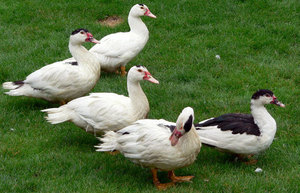 In an effort to produce large quantities of duck meat, breeders began crossing the Muscovy duck with Pekin, Rouen, and Orpingorde ducks. The result was a productive breed that, under proper care and good feeding, can gain over four kilograms of live weight in just one season.
The Mulard duck also has valuable fatty liver, which is used to make the dish Foie Gras. It differs significantly from goose and is highly valuedTo get fatty liver, the bird needs to be fed properly.
Mulard meat has a delicate taste without any specific odors, which distinguishes it from dry chicken meat and not very pleasant-tasting goose meat.
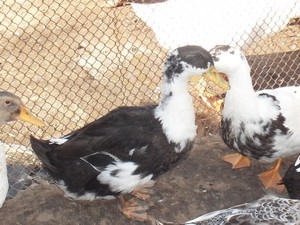
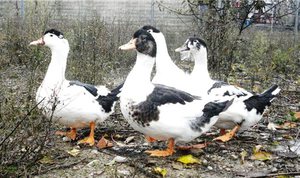
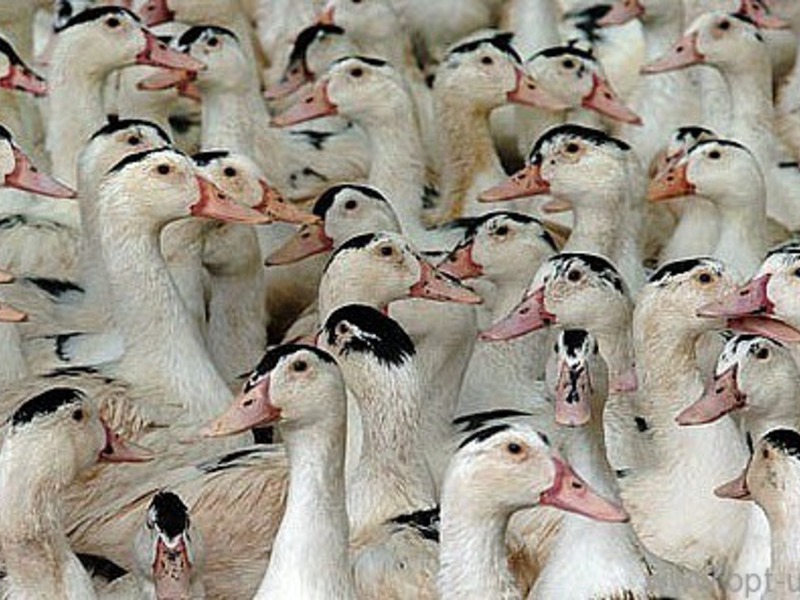
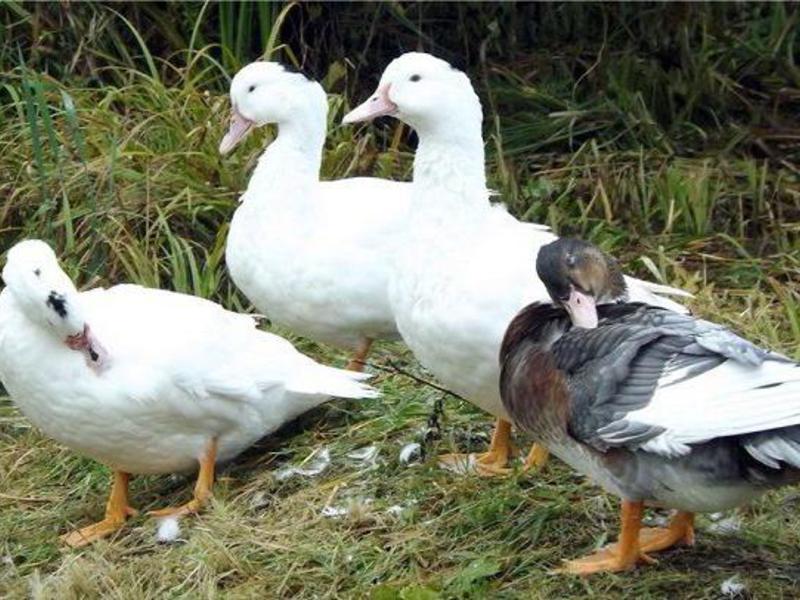
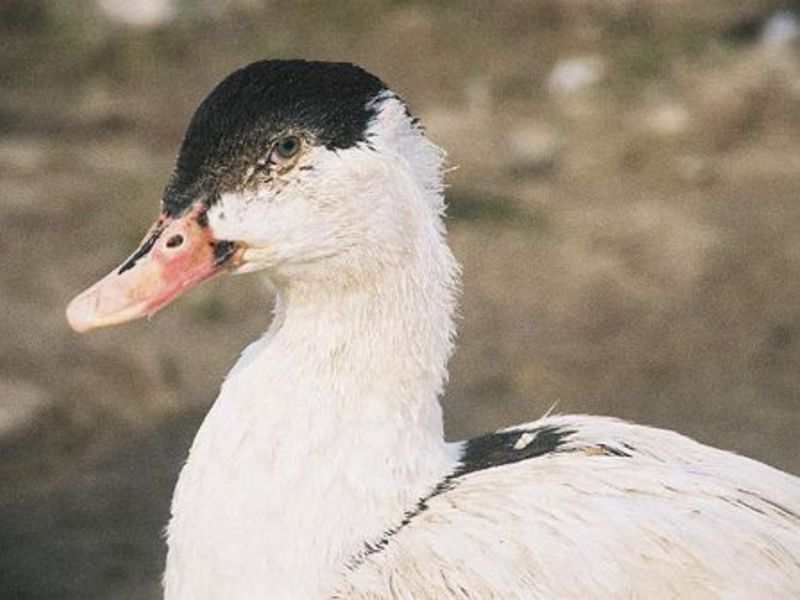
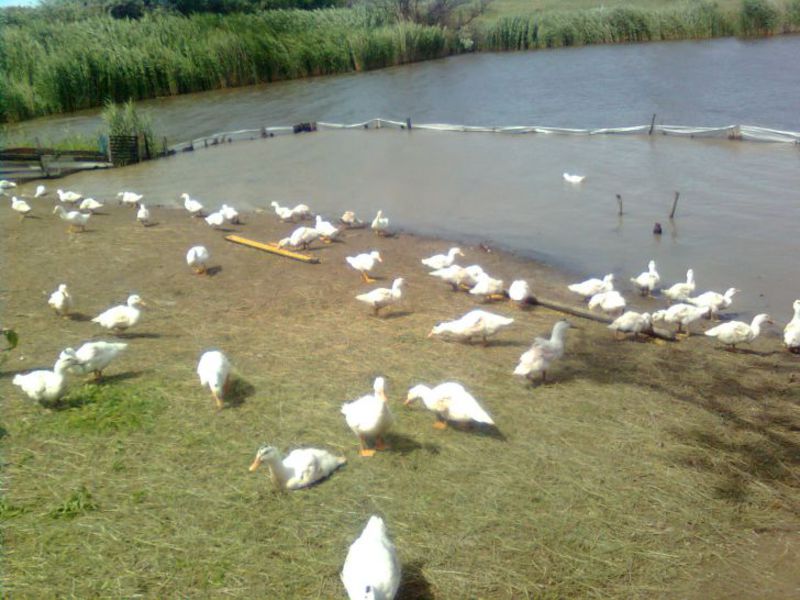
The bird is quite attractive in appearance and can have a variety of colors. This coloration depends on the breed with which the Muscovy duck was crossed. The classic coloring is white plumage with a black spot on the head. In appearance, ducks of this breed appear well-built and robust.
Mulards have one significant drawback: like many hybrid breeds, they are sterile. Therefore, it is not worth getting them specifically for breeding.Even if a drake mates with a female, it will only be an act of sexual desire. The resulting eggs will still be infertile.
Content Features
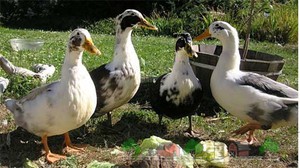 At home, Mulard ducks are kept in an enclosed coop with a yard. The coop must be safe and comfortable, ensuring the birds feel comfortable at night, as well as during rainy and cold weather. The coop and yard must be constructed according to the following standards:
- there must be at least one square meter of space per three individuals;
- Ducks will feel at ease in their free range if the yard is constructed at a rate of one square meter per bird.
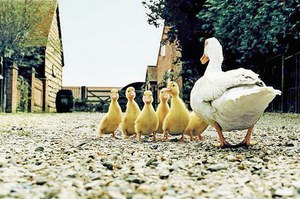
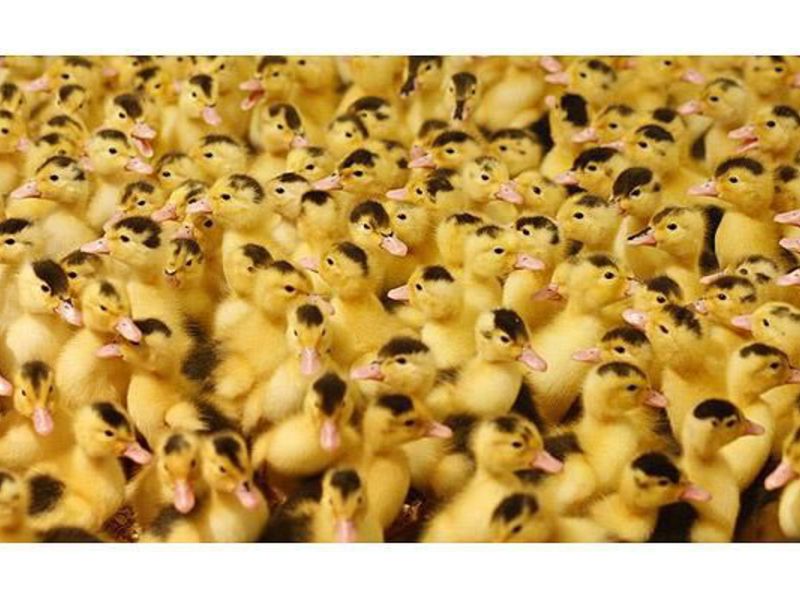
Ducklings are most demanding of the conditions of their keeping during the first week of life. At this time they It is necessary to provide a room with an air temperature of approximately 30C and plenty of lightTo achieve this, you can take them for a walk during the warmer months or use artificial lighting. Once the ducklings reach one week of age, the room temperature can be reduced to 17°C (62°F). During the first few days of the week, ducklings need bedding made of straw or hay. It must be soft. Avoid using wood scraps, which the ducklings might eat.
The room intended for growing Mulards must be completely closed and have no cracks. Birds must not be allowed to get wet by rain or blown awayTo ensure more natural light during poultry house construction, it is recommended to install windows facing south.
Feeders, waterers, and water containers for the ducks to bathe in are installed in the duck house. All containers must be securely fastened to prevent the birds from tipping them over.
If the property is fenced, there's no need to create a special fenced yard for Mulards. This is a relatively calm domestic breed that's unlikely to leave its habitat voluntarily.
Feeding Mulard Ducks
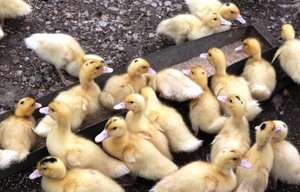 After acquiring ducklings, be prepared for the fact that at this age they are unable to feed themselves. Each little Mulard will need to be fed. On the very first day, the duckling should be given a weak solution of potassium permanganate to drink. Until the fifth day of life, they should be fed a boiled, chopped egg and porridge.
On the fifth day, greens are included in the chickens’ diet, and at two weeks of age, boiled potatoes. It is very important that there is always fresh water in the drinking bowls., as the breed consumes a large amount of fluid daily. This characteristic of Mulards has a positive effect on their health.
You can make feeding your young easier by using duckling formulas, which are available at specialty stores. For weak young birds, you can buy duckling vitamin supplements from veterinary pharmacies.
To prevent domestic ducks from suffering from digestive problems, special supplements are added to their diet. These supplements are not necessarily available for purchase at the store. It will be enough to put A separate feeder with crushed eggshells, limestone, shells, and chalk. Bone meal and grains will also help improve digestion.
When feeding adult Mulards, several types of products are used at once:
- Cereals such as oats and barley.
- Legumes.
- Corn.
- Cake from rapeseed, peanuts, cotton, soybeans.
- Fresh carrots, cabbage, yellow pumpkin, boiled potatoes.
- Any fresh green herbs, except poisonous ones. Ducks like nettles, alfalfa, and clover the most. They can also be fed aquatic plants.
- Fresh kitchen scraps, including fish and meat products, should be given in limited quantities.
- Only ducklings are allowed to eat dairy products. Adult ducks can only be fed low-fat cottage cheese.
During the summer, Mulards are fed at least four times a day. Wet and dry food is given twice a day. In addition, the birds It is recommended to feed grass constantly.
In winter, ducks should be fed twice a day. The first feeding should consist of dry food, while the second should consist of wet food and vegetables. Since birds need vitamins during winter, both feeds should be varied.
Raising Mulard ducks is cost-effective and practical until they are 60 days old. By this time, their live weight reaches 3.5-3.7 kg. If you decide to keep the birds longer, do so. It is recommended to wait at least another monthThis is because ducks begin to lose weight and molt at 70 days of age. Furthermore, carcasses of this age are very difficult to pluck.
Breeding Mulard Ducks at Home
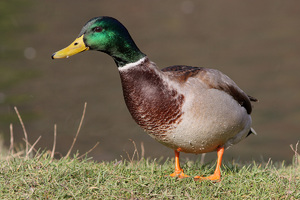
 To obtain this breed, cross a Muscovy duck with a Pekin or other domestic duck breed. In this case, an incubator is not necessary, as it is less productive than a broody hen.
To achieve a good result, you need to follow several rules:
- Mated birds must be at least six months old and no more than eleven months old. Otherwise, productivity will be reduced.
- The most favorable period for crossing is the end of April – mid-June.
- Birds should be kept in good conditions. Nutrition should be complete and varied..
- Do not house drakes and hens of the same breed in the same room. Males may mate with "their" hens, resulting in standard breeding.
The broody hen needs to be provided with good conditions. A nest needs to be built for her, in which there must be a bedding of strawIt is recommended to limit contact between other birds and the hen.
A maximum of fifteen eggs can be placed in a single nest. A water bottle, feeder, and container of water are placed near the broody hen. The ducklings will hatch in about a month.
Reviews
My mother has been keeping Mulard ducks for a long time and is very happy with them. They are calm and quiet birds that grow quickly. Currently, she has 40 gray ducks with short legs and 10 with long legs, each with black spots on their heads. When the ducklings were about a month and a half old, after swimming in a pond, they plucked out their spotted feathers, and now the spots are almost invisible. I don't even know if this is normal.
Another problem is that the birds are about two months old now, and they peck a lot. When we bought them, we heard that sulfur could be used to combat this problem. But it doesn't work for us. It turns out that the ducklings should have been given sulfur at two weeks of age. We gave the five-day-old chicks antibiotics and vitamins for three days immediately after we bought them. We don't know how to stop them from peck.
My neighbors keep Mulard ducks. And judging by their reviews, they're very happy. They say they grow quickly to incredible sizes. In fact, I've seen ducks of theirs that weighed 3,700 grams. That's not a duck anymore, it's a whole goose! The neighbors constantly trim the birds' beaks, which grow very quickly. If they start plucking, they throw colorful rags into the coop. The culprits are separated, and the plucked areas are smeared with tar. They also covered the light bulb in the coop with paint to make it darker.
In this review, I'd like to share how I feed my Mulards. They get up early and are hungry right away. So, to avoid having to get up with them, I try to feed them well the night before. I give them dense grain, which, in human terms, is a slow-release carbohydrate. Automatic feeders are very convenient. You can make them yourself or buy them at a veterinary store. They work like automatic waterers. It's also best to feed ducks using an automatic waterer, as they like to practically crawl into it. A waterer with a small perch will prevent the water from getting too dirty. Birds are very pushy, so feeders and waterers need to be securely fastened. Otherwise, they'll spill, scatter, and trample everything.