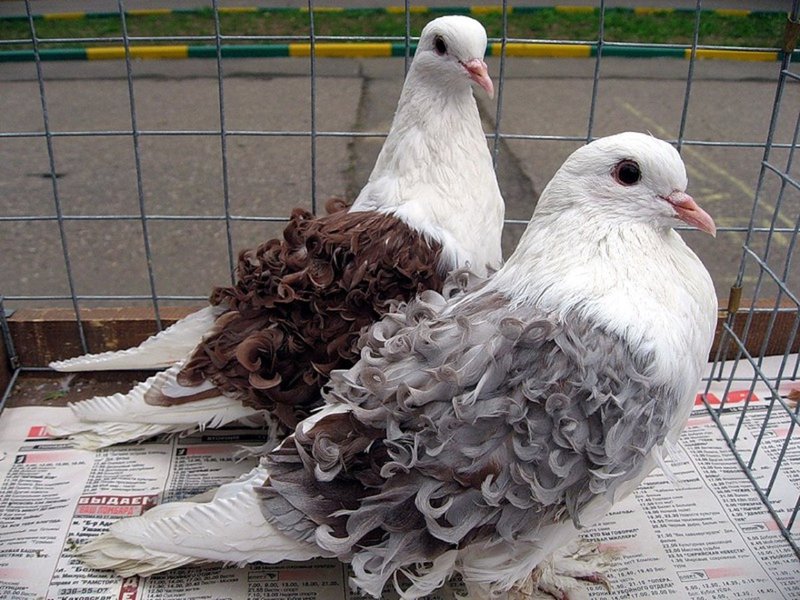
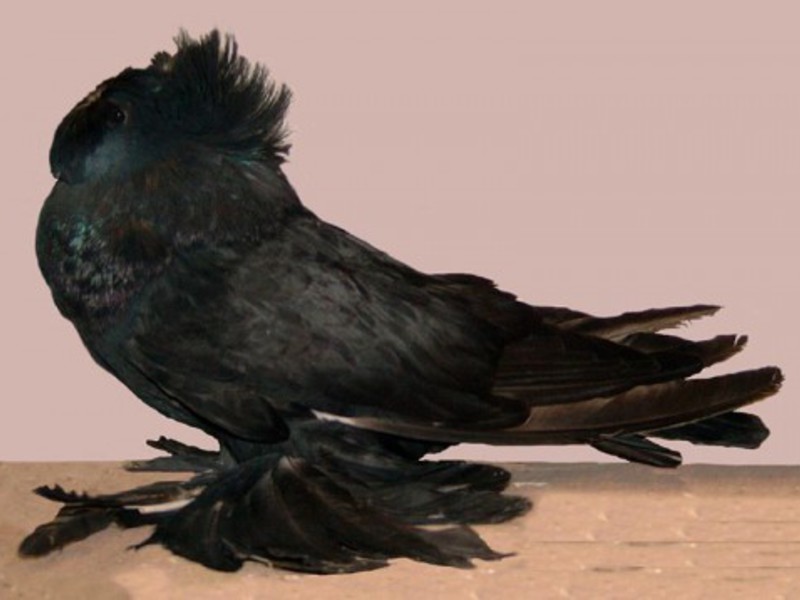
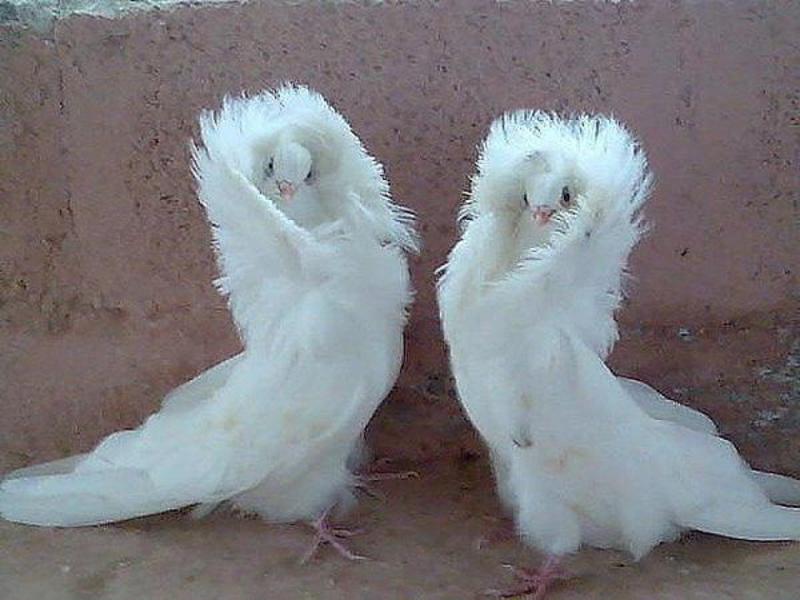
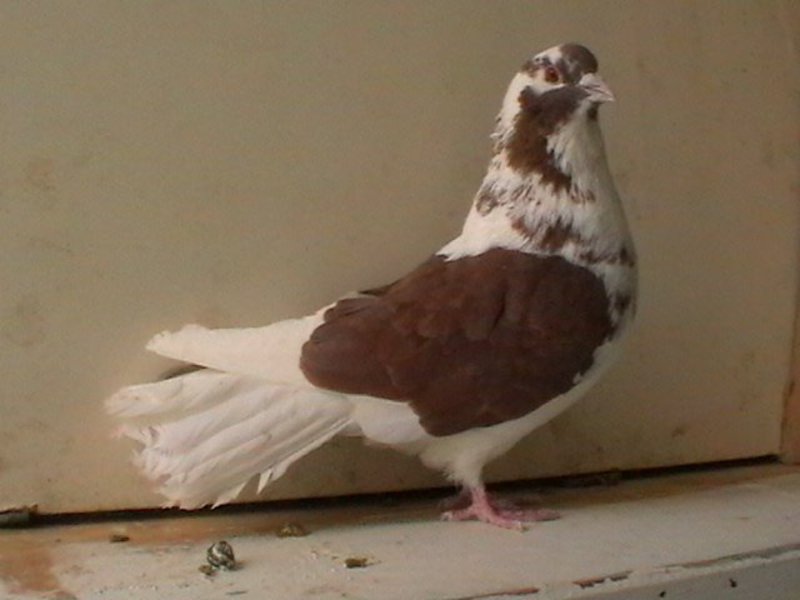
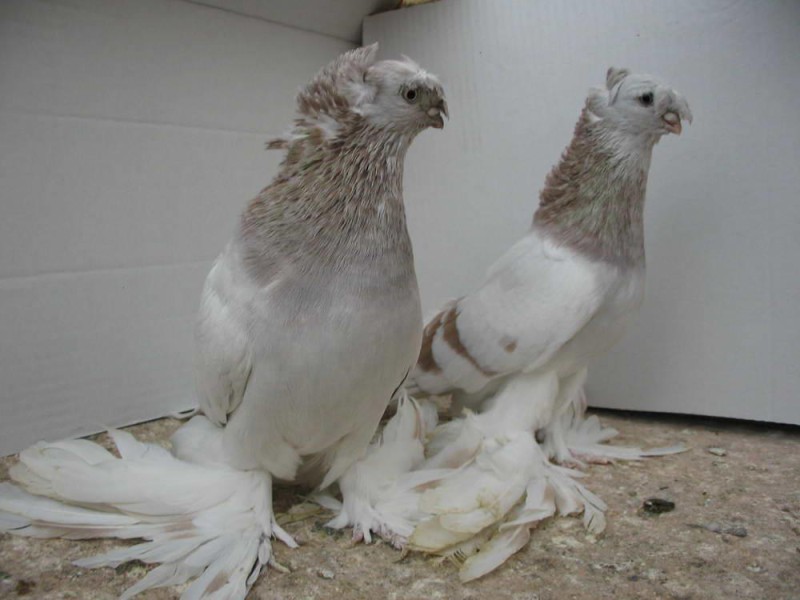
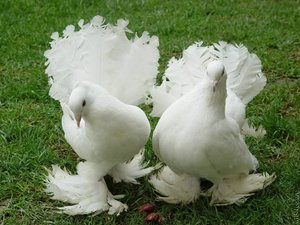
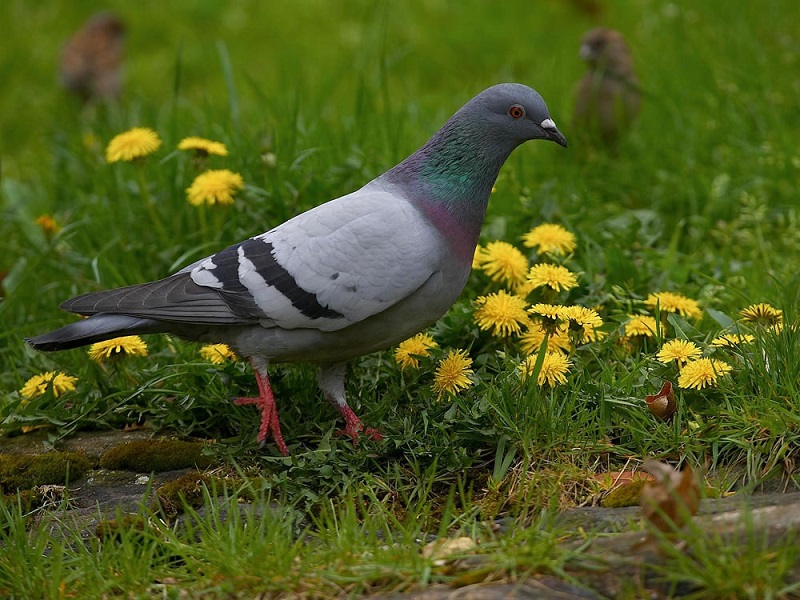
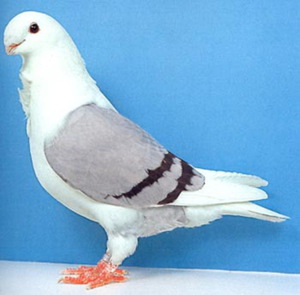
 Throughout history, humans have domesticated many birds, and pigeons are no exception. These small and easy-to-care-for birds have become a hobby for many. Their diverse sizes and colors have given humans ample scope for crossbreeding, leading to the development of approximately eight hundred breeds.
Dovecotes are widespread throughout the Russian Federation, as well as in neighboring and distant countries. The main reason for this prevalence — simplicity of content.
Types of dovecotes
Exists many types of dovecotes, but among them the main ones can be identified, such as:
- The attic dovecote was the most common type of dovecote in the early days of pigeon breeding. This type used the attic space itself for keeping the birds, and a cage was built above the dormer window for walking;
- Rural dovecotes were typically small structures, typically one to one and a half stories tall, or at most two stories high, with an extension for a run of approximately the same size. The lower part of the dovecote was typically used to house young birds and equipment, while the upper part was used for adults.
- Post dovecotes are small houses raised on posts above the ground, suitable for keeping 2-4 decorative domestic pigeons;
- A free-standing dovecote is designed for nesting rock pigeons in large urban areas. It typically has a hexagonal or octagonal shape and is divided into tiers. The nests are open.
Breeds of domestic pigeons
Over many years of selection, humanity has developed many unique and beautiful breeds, but The most common and well-known are:
 Grivunas;
- Black and white tumblers;
- Zaporizhian crested;
- Kamyshinsky;
- Klaipeda;
- Nezhinsky;
- Aacharean gulls with lacquered shields;
- English Crosses;
- Antwerp;
- Baku fighting;
Next, we will look at these breeds in more detail.
Hryvnias
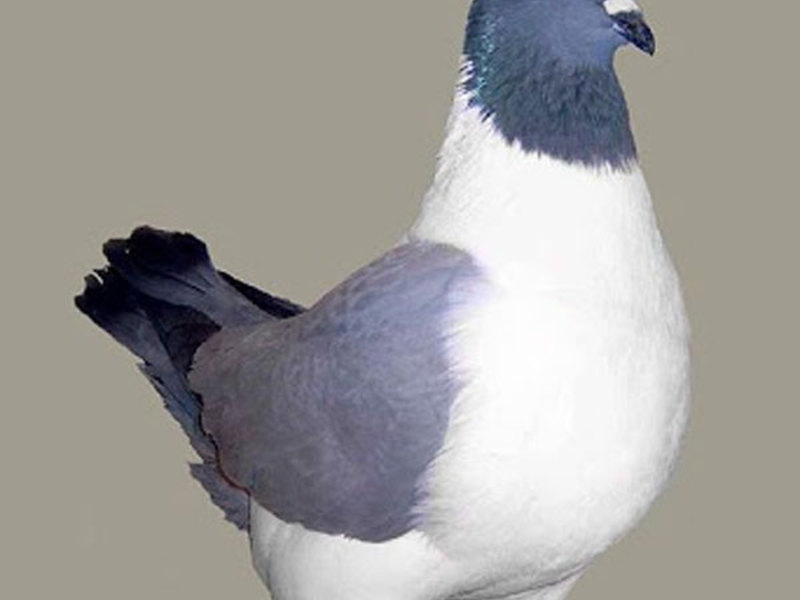
These pigeons are distinguished by their pure white plumage with a bluish patch on the back of the neck. They are excellent flyers, thanks to their streamlined body shape, prominent keel, small size (30–40 cm), and inclined stance at rest. Grivuns were developed by Russian pigeon breeders, and since then, these birds have gained fame for their flying abilities and endurance. Grivun pigeons are widespread throughout Russia, particularly in the Voronezh region.
Black-and-white tumbler
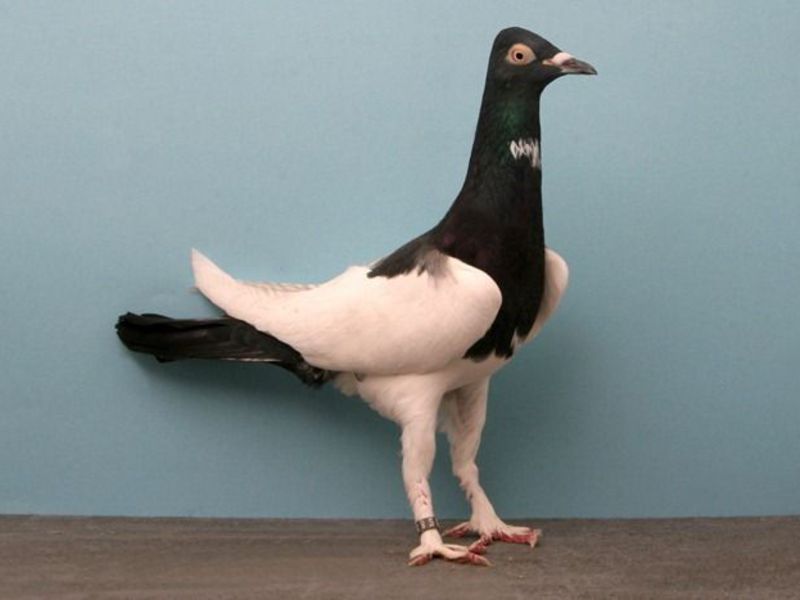
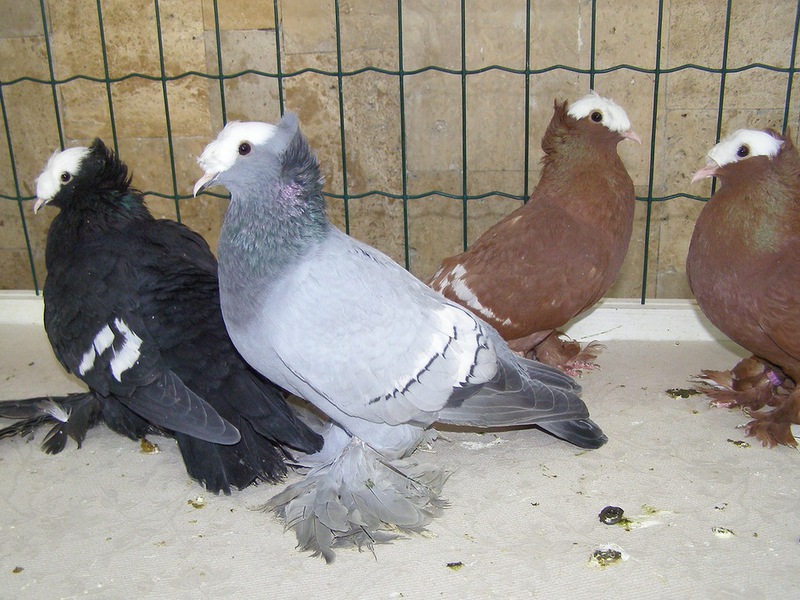
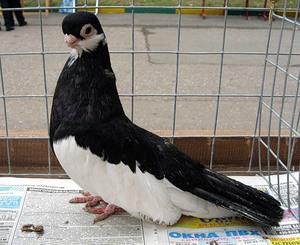 The Black-and-White Tumbler has a very interesting coloring: its wings are snow-white, its throat is marked with a white check, and its eyes are rimmed with white. The back, tail, neck, and head are black. Tumblers were also developed by Russian pigeon breeders in the early 19th century. These pigeons have a nearly vertical stance due to the high neck and head. The Black-and-White Tumbler's beak is slightly truncated, giving the pigeon a swan-like curve to its neck.
Zaporizhzhya crested breed
This pigeon is distinguished from all others primarily by its white crest on its head, dark wings, back, and underparts, as well as a dark cap. The rest of its body is also snow-white. These birds have an elongated body, long wings whose tips lie at the base of the tail, a shortened bill, and a broad chest. Zaporizhzhia Crested Pigeons were bred in Zaporizhzhia in the 1930s, but after World War II, they were on the brink of extinction and survived only thanks to Zaporizhzhia pigeon breeders, who were able to feed the pedigree birds during the difficult post-war period, maintain their dovecotes, and restore the breed to its former numbers and glory.
Some more popular breeds
Kamyshin breed
Kamyshin pigeons are distinguished primarily by their abundant, sweeping plumage on their legs and coloration: light feathers on the legs and wingtips, and dark feathers on the rest of the body, tail, neck, and head. This breed has excellent flight characteristics due to the length and placement of its wings, as well as the width of its tail.
Klaipeda breed
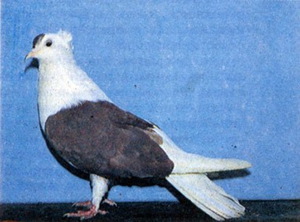 These birds are easily distinguished by their light background feathers and numerous dark spots scattered primarily across the neck, back, and chest. These pigeons have deep-set eyes, surrounded by large eyelids and folds of skin. The pupil is located precisely in the center, and the iris is most often yellow or brown. This breed was developed in Lithuania and has a medium flight quality, preferring to fly at high altitudes. These birds are noted for their undemanding environment and diet, and they are also noted for their high fertility.
Nezhin breed
Nezhin pigeons have a mottled pattern with a predominantly dark head, neck, and tail, and light wings, back, and chest. The Nezhin breed is an excellent flyer, as evidenced by its streamlined body, inclined stance, and long wings.
Aacharean varnish-scutellated gulls
These gulls, with a long but elegant name, were bred in the 18th century in the Aachen area. They are easily distinguished by their dark wings against a light body and legs. The Aachen breed was developed by crossing German pigeons with English gulls.
English Crossbreed
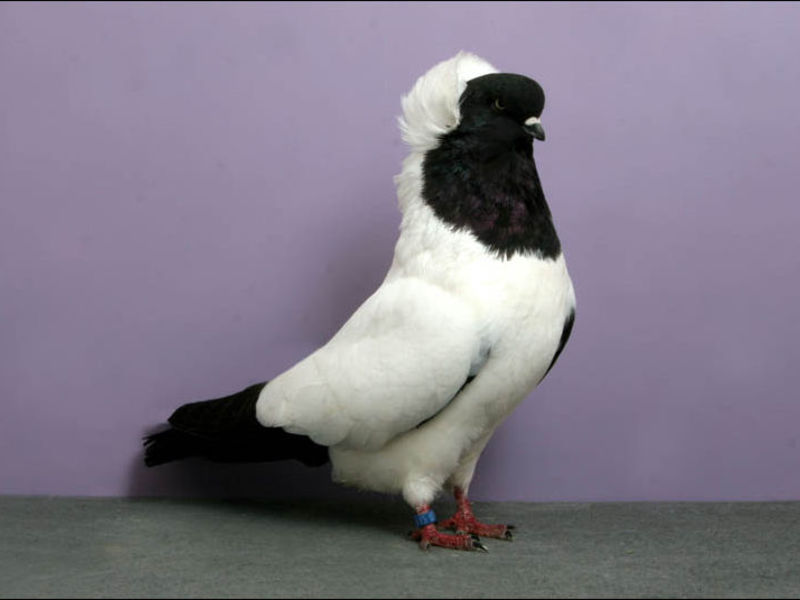
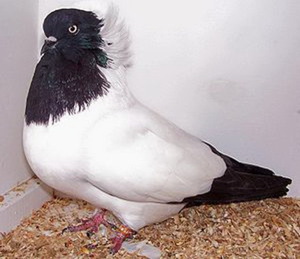 English Cross pigeons have a prominent, long crest that runs the entire length of their head, black at the roots and white at the tips. The head, neck, and tail of these birds are black, while the wings, breast, and back are pure white. The English Cross, or Nun, as it is also known, was bred in the UK and was named for its black hood and crest.
Antwerp breed
Birds of the Antwerp breed have unusually shaped feathers on the neck, a distinctive head, and gray wings with two black bars. This breed was developed in the city of Antwerp, Belgium. Antwerp pigeons belong to the gull group. These pigeons appear very heavy and have a horizontal body position, which are their most important show characteristics.
Baku fighting breed
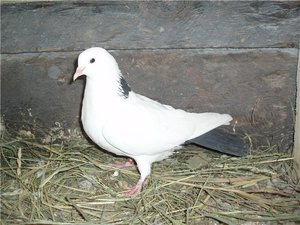 This breed was developed in Baku, Azerbaijan. During breeding, flight and fighting abilities were considered, rather than color characteristics. Baku fighting pigeons have the longest flight time: up to 12 hours, and this flight can be accompanied by both streamer and pole fighting. In addition to endurance, Baku pigeons have excellent maneuverability and easily complete pole fights of various lengths.
There are an incredible number of domestic pigeon breeds worldwide, and even a novice pigeon fancier will have no trouble finding inexpensive and undemanding pets that will delight their owner with annual offspring and high-flying performance.