Pigeons are common city dwellers. It's impossible to imagine famous historic squares without them. Many people don't even notice these birds, which are so commonplace. Meanwhile, there are many misconceptions about pigeons that most people believe.
Pigeons are stupid
Scientists have discovered that pigeons have quite a sophisticated brain. Researchers from various universities conducted several experiments.
In New Zealand, birds were taught to read. Pigeons were shown written words and asked to memorize them. All the words consisted of four letters. After some time, they were given "exams."
The birds had to choose familiar words from a selection of options. But simple recognition wasn't enough. The scientists tried to confuse the subjects by reversing the letters.
For every word they recognized, the pigeons were rewarded with a treat. It turned out that birds also have their prodigies. One "student" recognized 58 words. The lowest score was 26 words.
Another experiment demonstrates pigeons' remarkable memory. Japanese scientists asked the birds to watch three videos. In all of the videos, the main characters were the birds themselves.
- The first one shows the movements of the pigeon in real time.
- In the second - with a delay of several seconds.
- The third shows the actions of pigeons over several hours.
Initially, the birds were shown the first and third recordings. The pigeons became interested in what was happening now.
Then they were given a choice of a second and third video. It turned out that these birds remembered their recent actions. And they chose the second recording.
The longest time pigeons can retain a memory is 5-7 seconds. Anything earlier than that is difficult for them to recall.
Surprisingly, similar experiments involving three-year-olds yielded much lower results. A young child can remember actions performed only a few seconds earlier.
But long before all these experiments, people knew about pigeons' remarkable intelligence. It's no wonder they were tasked with delivering letters. This is likely also due to the birds' strong visual memory, many of which served in pigeon post.
Pigeons are harmless

Pigeons are a common sight in city squares. Mothers with children especially love to feed them. Children often run right into the crowds of pigeons, and their parents film the whole thing on their mobile devices.
But joy can give way to big problems: visits to doctors, hospitalization, and even the threat of disability.
Birds carry dangerous diseases. There are about 90 potential diseases on the list, 10 of which are transmissible to humans. The most dangerous are salmonellosis, trichomoniasis, Newcastle disease (Asiatic swine fever), toxoplasmosis, and ornithosis.
It's not difficult to recognize a sick bird: it's lethargic, apathetic, and has an open mouth—many diseases affect the respiratory tract, and feathers fall out.
But even if a pigeon seems cheerful, it's worth being vigilant. It's quite possible it's already infected, but the disease is still in the incubation period. Because of this, pigeons are even called "rats with wings."
Danger lurks not only for those who love to hand-feed and pet pigeons, but also for anyone nearby. Many bird viruses are transmitted through the air. Therefore, frightening birds and forcing them to take off suddenly in a flock is especially dangerous.
Despite this, there are brave souls who care for birds and pick up sick individuals out of pity in order to cure them.
Interestingly, pigeons are able to remember people's faces. This was proven by another experiment. So, if you ever harm a pigeon, even accidentally, it may hold a grudge.
And there's a good chance some of the bird droppings will land on your head. And the feces can also contain pathogens. So it's best to stay away from urban pigeons.
Pigeons are inconspicuous birds.
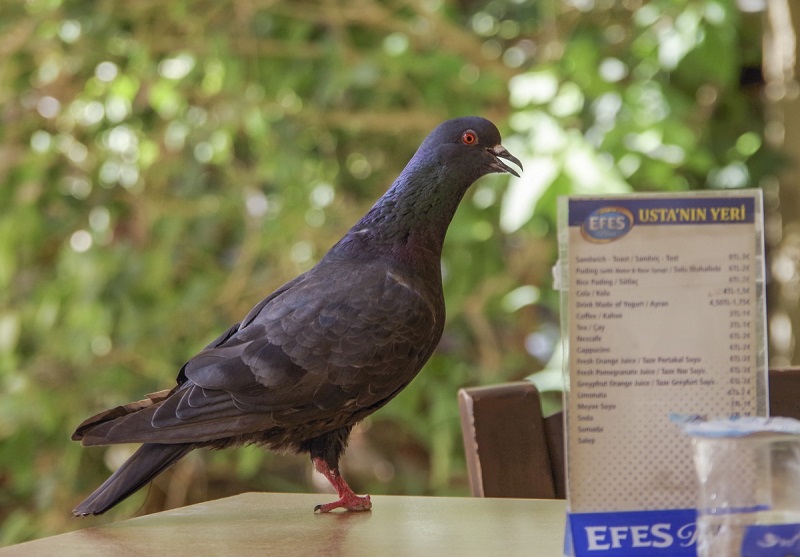
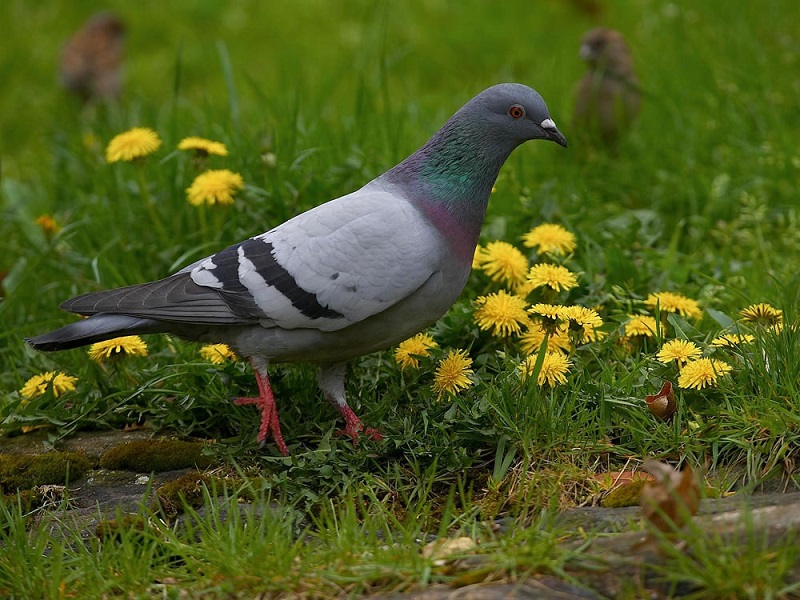
Rock pigeons are the most common birds we see in cities. They have light gray wings with two dark stripes. Their heads are also gray, but darker than their wings. Their necks can have a greenish tint.
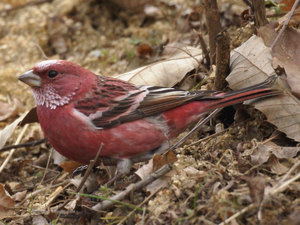
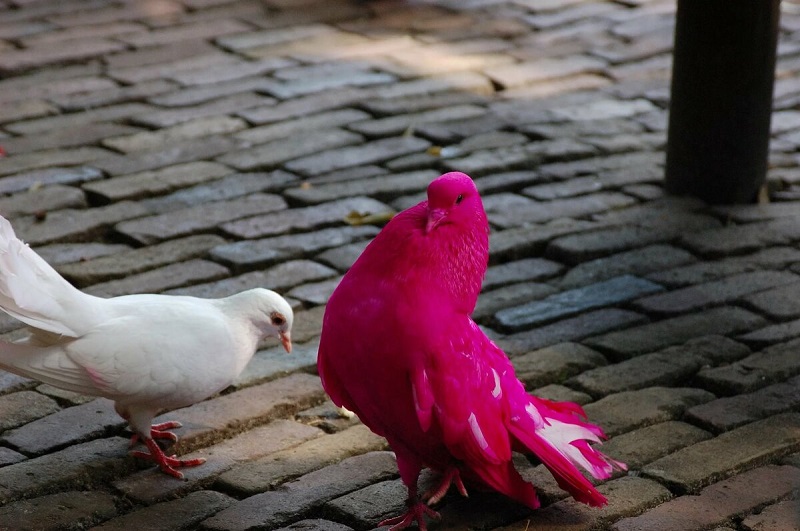
Occasionally, individuals with different coloring—patterns of white, beige, rufous, or completely snow-white—appear among the birds. These goldfinches attract more attention than their blue-gray relatives.
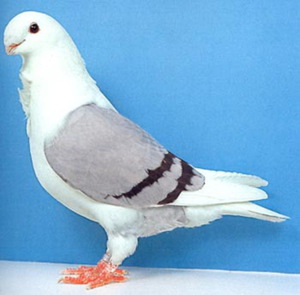
But the diversity of pigeon appearance doesn't end there. There are different breeds of these birds that are bred by humans.
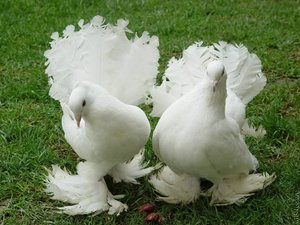
There are pigeons with curly plumage. These are Frillbacks. They can have 18 different color variations.
Birds with shaggy legs, like the Saxon field pigeon, are unusual in appearance. Their stark black and white coloring is complemented by long feathers on their legs.
Jacobin pigeons have a distinctive hood of ruffled feathers, which also resemble a mane.
The name of the crowned pigeon speaks for itself. The bird has a crown of unusually shaped feathers standing upright on its head. The feathers on its head are thin along their entire length, ending in a tuft.
The Jambu fruit dove lives in Thailand. It has a light belly, green back and wings, and a reddish-pink head.
Pigeons cause nothing but harm.
People used to find pigeons useful because the birds' droppings served as fertilizer. No one thought of feeding wild birds, so the birds fed on weeds and their seeds, saving people from the nuisance. And pigeon post was quite popular.
Nowadays, all of this is being successfully replaced by modern technology. So the only visible benefit of pigeons is their decorative function.
Pigeon meat was once highly prized. It was considered a delicacy, and in past centuries it was served in palaces and royal chambers.
Pigeon meat is high in protein, but it's also dietary. Of course, eating common rock doves from city squares isn't recommended. Even today, there are specialized meat breeds bred in hatcheries.
However, everything in nature is interconnected. If pigeons disappear from cities, it could lead to an imbalance in the ecosystem. Therefore, it's important to follow simple rules to protect yourself from possible diseases and avoid harming yourself or the birds. First of all, avoid feeding the pigeons. This will allow them to fend for themselves and keep their numbers within acceptable limits.