 Chickens are the most common pet in households, as keeping them is quite profitable. There are several reasons for this: chicken meat is tasty and lean, and, most importantly, they lay eggs that are edible. However, recently, taking these factors into account, homeowners have begun choosing the meatiest breed, the now-famous broiler.
But this immediately raises the question of how to feed such poultry, what kind of feed to use, and how much to feed them. It's known that you can even prepare poultry feed yourself at home, but you just need to know the recipes.
Content
Features of compound feed
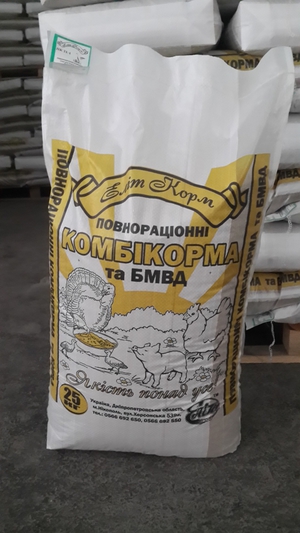 Broiler chickens are good because they grow quickly, and this is their main advantage over any chicken breed. When purchasing them, owners expect that they will will grow within 3 months, so they're not kept longer than this period. This time is enough for the birds not only to grow but also to gain weight. Keeping broilers longer doesn't make sense.
But in order for this type of chicken to achieve good weight, it is necessary to use a feed that is nutritious and necessarily contains a large amount of protein and proteins, but especially various minerals and vitamins that allow the bird to always remain healthy.
It is worth noting that the feed that is currently produced in factories is a rather expensive type of feeding, but it is simply impossible to control its quality and the presence of all the necessary substances in it.
If the feed is poorly prepared, the health of the entire flock will be compromised, and consequently, the poultry owner will not be able to obtain much meat. Therefore, many farmers raising special breeds of chicken for meat prefer to prepare this feed themselves at home. Incidentally, it's not at all difficult to prepare. Just remember that it's based on corn and wheat, which are precisely what allow the birds to gain muscle mass.
Composition of compound feed
Factories that produce feed for broilers, divide their goods into two types:
- Starter, which is given to young birds (up to 2 weeks).
- The finishing treatment, which prepares the chickens for slaughter, is given several weeks before this event.
Depending on the type of feed, its composition and recipes for preparing it will vary. However, there is a list of key ingredients found in both broiler feeds and other products. Broiler feed includes:
- Corn and wheat.
- Meals and cake.
- Oats and barley.
- Meal: fish and meat and bone.
- Salt, lump fat, chalk.
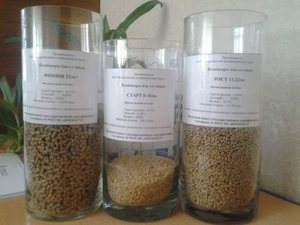
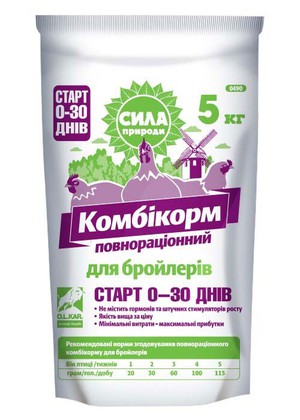
 Of course, they deserve special attention starter feeds, which are an important factor in the successful raising of chickens. There are several varieties, but they can be identified by their markings, and they also vary significantly in appearance. For example, for very young chickens, the feed particles will be small; as the broilers get older, the feed particles will correspondingly increase.
Classification of feed for broilers:
- PC 6.
- PC 6-2.
- PC 6–3 or “finish”.
PC 6 is given to chicks from birth until approximately two weeks of age. It contains ground corn, which is excellent for muscle development. This feed also contains barley, wheat, and all essential vitamins. Of course, dry feed cannot replace other supplements that are essential at this age. For example, fresh herbs, boiled egg or cottage cheese.
PK 6-2 feed is introduced to chicks when they reach two weeks of age. The pellets are now larger, which helps promote growth. The composition of the feed has changed percentage-wise compared to the first feed. Fish meal and bone meal are added to the feed for chicks of this age.
PK 6-3 feed, or the one labeled "finish," is used for feeding poultry from one month of age until slaughter. It is believed that this dry feed should be combined with porridge. This has a beneficial effect on the birds, and is also cost-effective.
Feeding standards for compound feed
But not only will the feed composition change, but the birds' feed intake rates will also change. After all, it's a known fact that the older broilers get, the more appetite they have. But it's important to remember that both overfeeding and underfeeding are dangerous at any age. Therefore, it's worth adhere to certain norms, which are listed in the table:
| Age of broiler | Compound feed norm in grams |
| 0–2 weeks | About 10-25 |
| 2 weeks – 1 month | About 50-120 |
| 1 month - slaughter | About 150 |
How to properly feed broilers
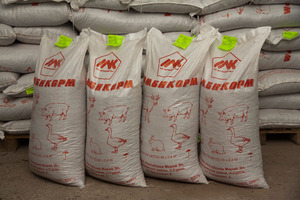
 It's best to feed the birds mixed feed, but loose feed is also acceptable. Of course, feed manufacturers recommend using loose feed, which can be simply poured into the chickens' bowl and topped with water. Birds always eat it with gusto in this form.
A great addition to feeding your poultry will be sprouted grain, or grain that has undergone a yeasting process. This increases the nutritional value of the feed consumed by broilers. Incidentally, grain yeasting can be done quite easily at home.
So, for this, you'll need a pot of warm water, into which you'll add regular yeast. Typically, 10 grams is used per 10 liters of water. About 1 kilogram of compound feed is poured into the same liquid, and leave this mass for 6-9 hours, but it must be stirred. Once all the steps are completed, you can safely prepare the yeast feed.
Professional broiler farmers sometimes prepare their own pelleted feed. It's believed that this type of feed is much more digestible than other feeds. However, preparing pelleted feed at home requires purchasing a pellet mill, which is quite expensive. Some farmers even try to make their own.
Homemade broiler feed recipes
To keep broilers, you need to think about what kind of feed to use for their growth. Of course, it's more convenient buy ready-made, factory-made compound feed, but making your own poultry feed at home is considered a more cost-effective option today. And it doesn't require any special knowledge or skills.
It's worth noting, however, that feed is the largest expense for a farmer in poultry farming. However, it's important to remember that savings shouldn't come at the expense of feed quality. There are countless recipes for making high-quality broiler feed at home. Naturally, the composition and recipe vary slightly for different ages of birds.
So, let's take a look at just a few of these recipes, all quick and easy to make yourself. Let's start with the simplest recipe, designed for young chicks less than two weeks old. After all, the first two weeks are known to be a time of intense bone development, strengthening, and immune system development.
The composition of such a mixture, which will be made independently, includes the following components:
- Corn. It should be prepared in such a way that it makes up half of the total feed composition.
- Wheat. It will make up 16% of the total mass.
- Cake and meal. They account for approximately 14% of the total mass.
- Kefir, preferably low-fat. It makes up 12% of the total mixture.
- Barley, which will make up approximately 8% of the total mixture.
Once the broilers have been raised for two weeks, you can switch to using a slightly different feed composition. PK 6-2 is considered the best feed for feeding poultry. You can make a similar feed at home. if you know the recipe:
 48% of the total mixture will be corn.
- 19% cake and meal.
- At least 13% must be allocated for wheat.
- Meat and bone meal, and fish meal, are essential. They must comprise at least 7% of the prepared mixture.
- 5% baker's or feed yeast.
- You can add skim milk for mixing, and grass and feed fat are essential. Their percentage in the mixture should be at least 5%, but can be as high as 7%.
 48% of the total mixture will be corn.
And only after your birds have already reached a month, you can switch to the food that is usually they feed them until they are slaughteredFinishing feed can easily be made at home, especially since two other recipes have already been prepared. For month-old broilers, you'll need the following ingredients:
- Corn. It must make up at least 45% of the total feed mass.
- Fish and bone meal, which together with meal and oil cake in the composition of such feed should make up approximately 17%.
- Wheat. The percentage must be at least 13%.
- About 8% barley.
- 10% will be a mixture of yeast, fat, salt, chalk and grass.
So thoughtful and, most importantly, economical nutrition Breeding broiler chickens will not only allow you to get healthy birds, but also to very quickly feed and raise them for slaughter.