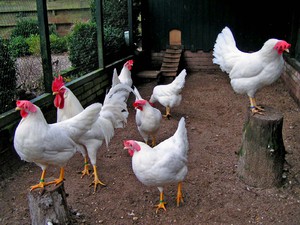
 This breed of chicken first appeared in England and immediately gained popularity among farmers and large poultry farm owners. The breed was specifically developed to meet specific requirements: the birds' skin should be white, not yellowish, as is the case with other meat-and-egg breeds.
Content
Description of the breed
Orpington chickens differ from other inhabitants of the chicken coop in their massive and large build, as well as a wide variety of colors. These birds are completely flightless and do not require large living spaces.
Origin
The homeland of these chickens is the small town of Orpington in Kent, hence the breed's name. Breeding efforts to develop Orpingtons began in 1876 and continued for approximately 30 years. Ultimately, breeder William Cook created a breed that met English standards, which required the bird to have snow-white skin, which the nobility believed was the most attractive and appetizing.
The first individuals had very mixed breed characteristics and a black color. However, as a result of further breeding work, these shortcomings were eliminated. Some time later, the Orpington chickens that appeared by crossing with the Black Cochin, were recognized as the classic type of this breed.
But breeding efforts continued, and in 1894, fawn and yellow Orpingtons were born. After the breed's introduction in Germany, red-colored individuals were introduced to the world. It wasn't until 1989, by crossing Orpingtons with Leghorns, that breeders succeeded in producing white chickens.
Appearance of Orpington roosters and hens
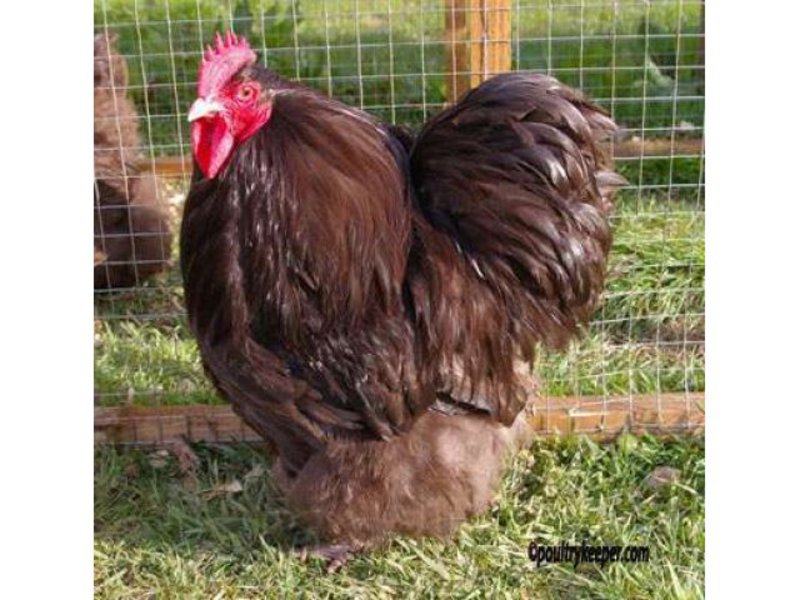
Roosters and hens have a strong build and resemble a cube in shape.
Roosters have the following characteristic features:
 The head is small, rounded in shape;
- the neck is massive, strong, and has thick plumage;
- earlobes and earrings are deep red and very well defined;
- the comb is erect, leaf-shaped;
- eye color can range from orange to black;
- the chest is round, full, and noticeably protruding forward;
- the back is massive and wide;
- since representatives of this breed lack the ability to fly, their wings are small and pressed tightly to the body;
- The color of the paws and beak is determined by the color of the bird's plumage as a whole.
 The head is small, rounded in shape;
Hens of this breed are a miniature version of the rooster. They are slightly shorter in stature and have a rounder belly.
Signs that indicate non-compliance with the standard:
- Skin color is yellow;
- flat chest that does not protrude forward;
- the body is too narrow;
- light shade of the iris;
- a white coating is visible on the earrings and earlobes;
- The color of the tarsus and beak does not match the color of the bird.
Description of species
Among the wide variety of colors of Orpington chickens The most famous are the following:
- blue;
- chintz;
- marble;
- red;
- striped;
- golden;
- white;
- fawn;
- black;
- blue.
 blue;
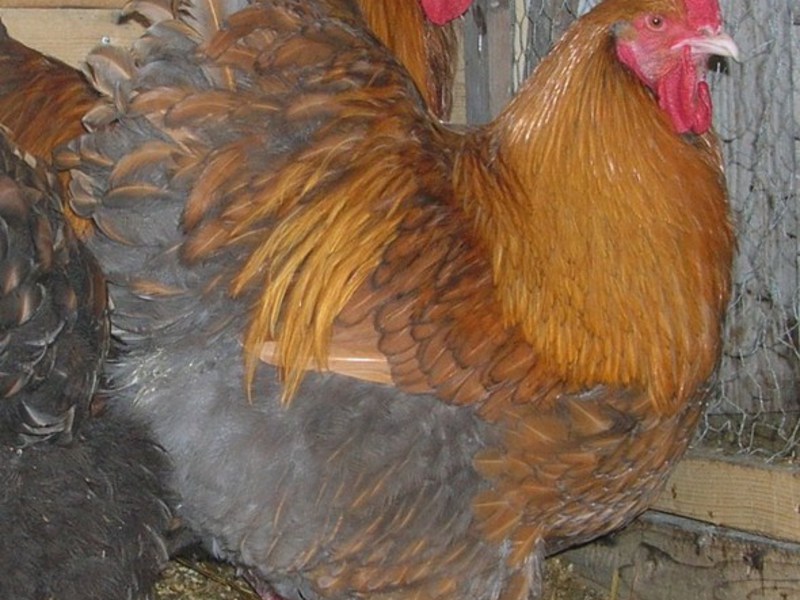
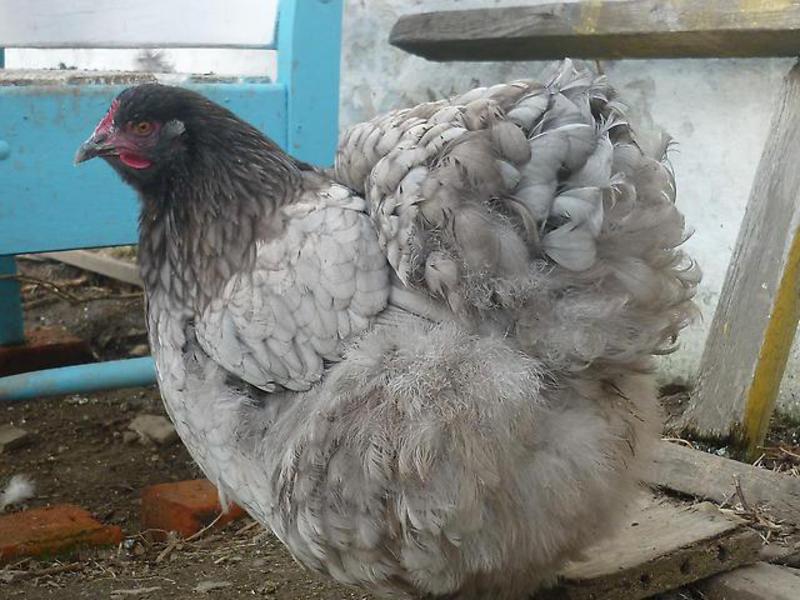
blue;BlueThe birds' plumage is blue with a bluish-gray tint. According to the standard, the coloration should be uniform, without any extraneous colors. The feathers on the lower back and collar area are blackish-blue, while on the rest of the body they are edged with dark blue. The tarsus and beak are dark.
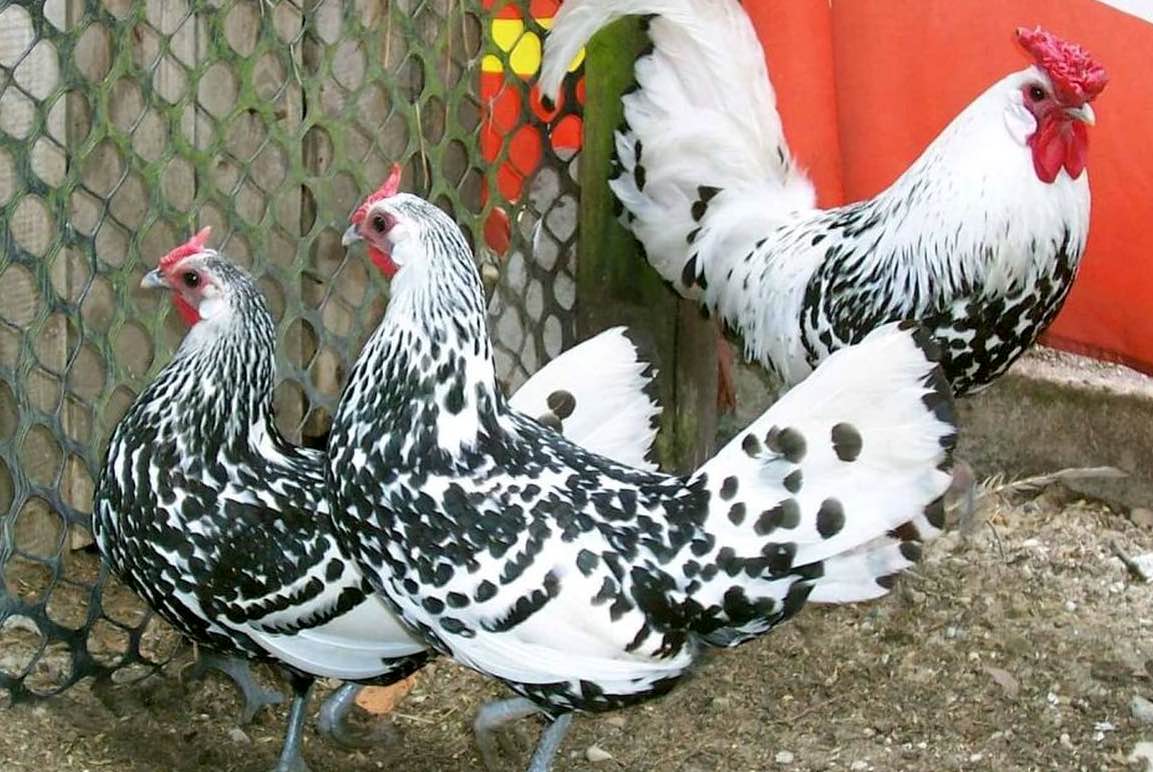
MarbleOrpingtons of this species have a black and white coat reminiscent of a marbled pattern. The black feathers are beautifully edged with white. The tarsus and bill are light, but dark spots are permitted. The eyes, like those of many other species, are red-orange.
StripedChickens of this species have an unusual coloring—black with a green tint. Black and white stripes alternate evenly across their entire body, with the dark stripes being slightly narrower.
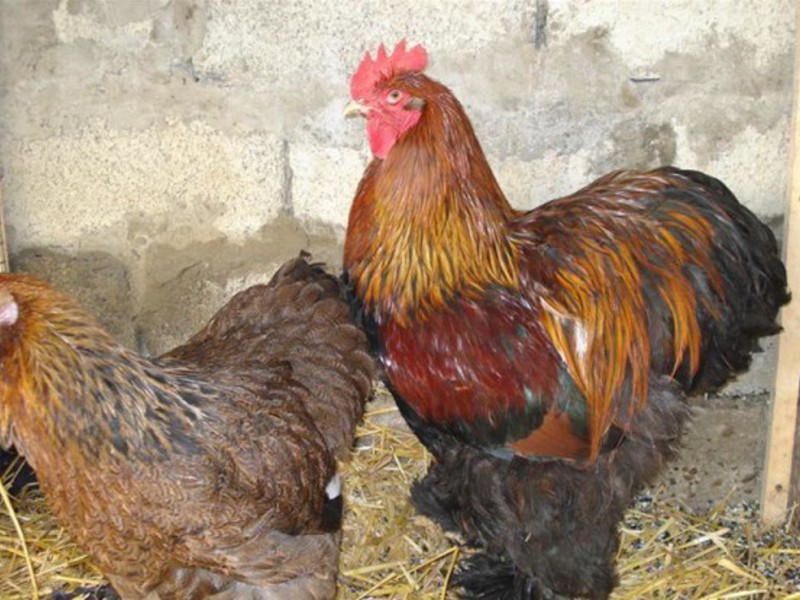
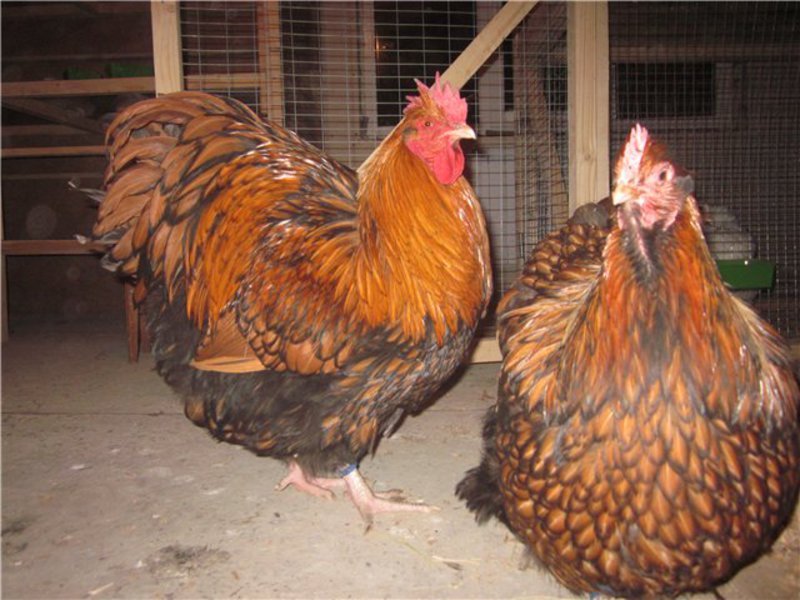
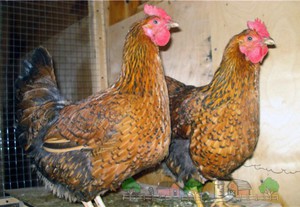
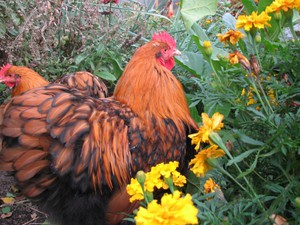
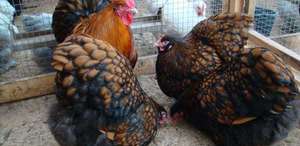
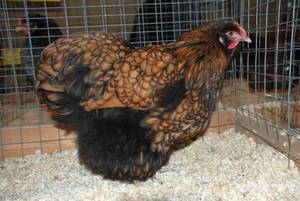
GoldenIndividuals of this species have a very interesting coloration with many variations. The feathers are brown or golden with a black edge, often arranged in unique patterns. The bird's belly is usually black with isolated golden feather patches. The bill and tarsi are light, and the eyes are red-orange.
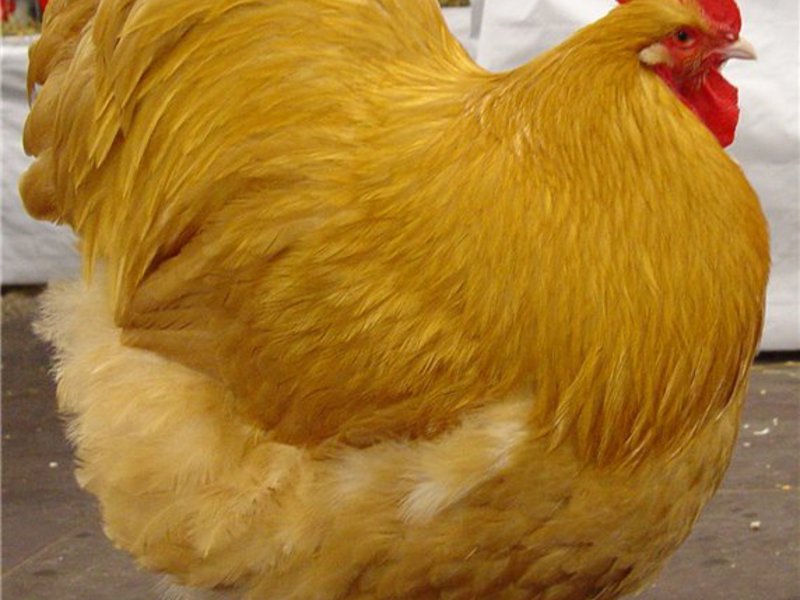
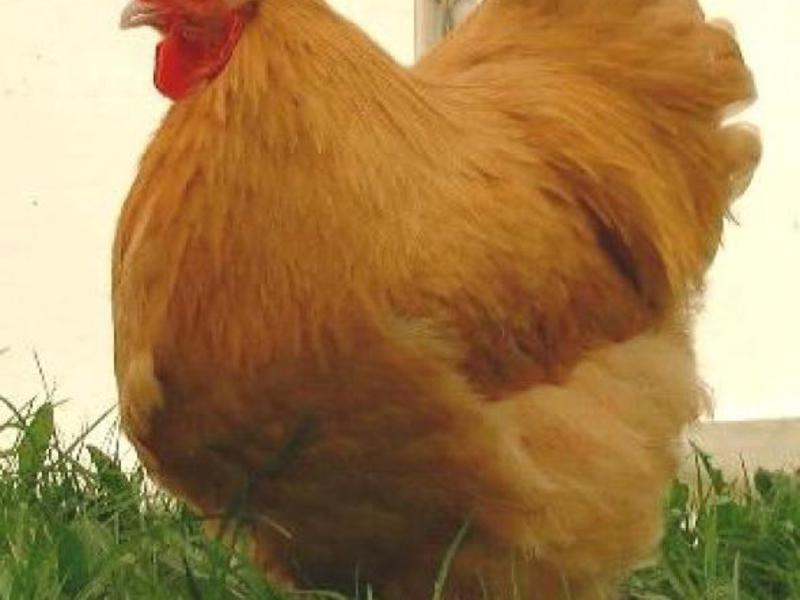
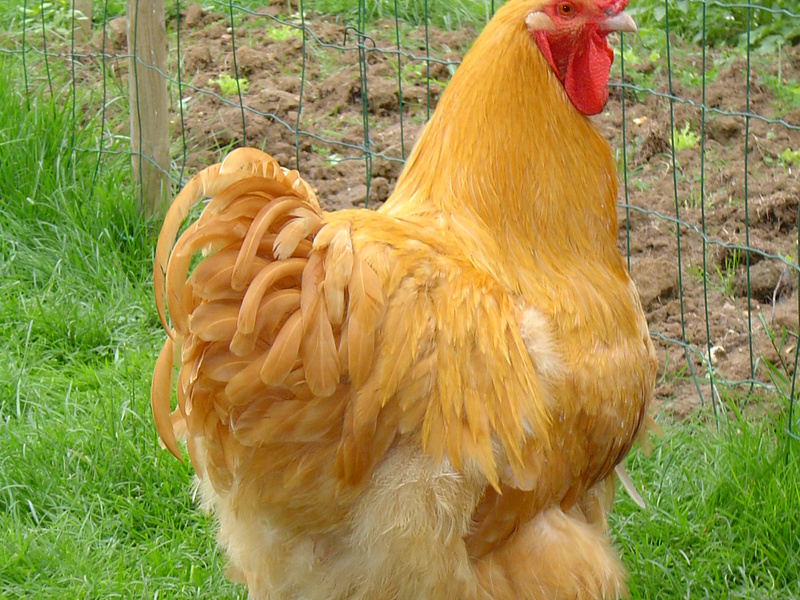
FawnThe birds have a coloration reminiscent of old gold, which is why these Orpingtons are also called yellow. The plumage is uniform, without any speckles. In some cases, the feathers of the roosters' collar and lower back are shiny. Yellow Orpingtons have gained immense popularity among poultry breeders due to the fact that the males can reach enormous sizes (up to 7 kg), while other representatives of the breed grow to a maximum of 5 kg.
Chintz Porcelain (porcelain) individuals have brown plumage. At the tip of each feather, a black circle with a white spot in the center is visible. The eyes are reddish-orange.
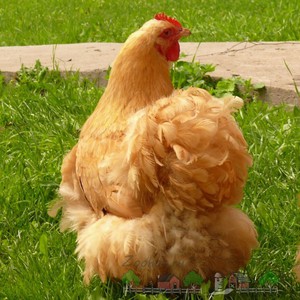 WhitesThe tarsi and beak, corresponding to the feather color, are white. The eyes are red-orange. Yellowish spots or stripes on the feathers or tarsi are not permitted.
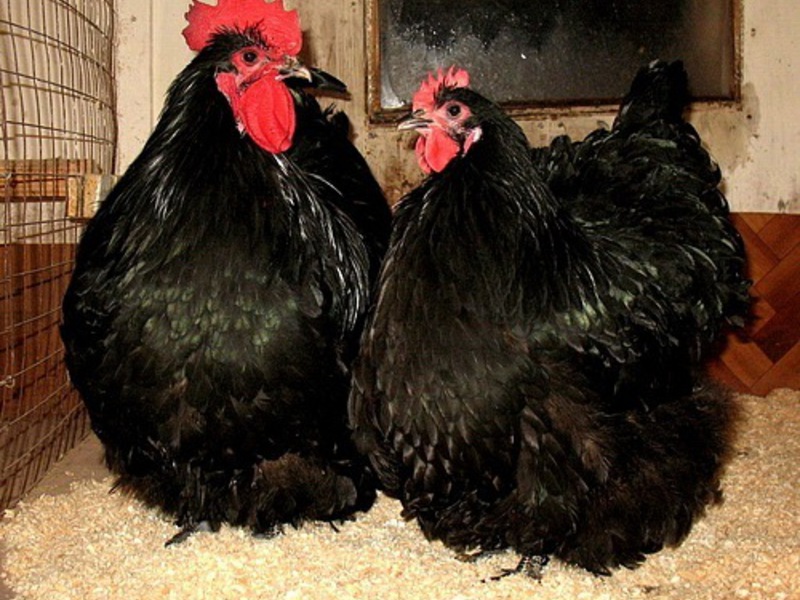
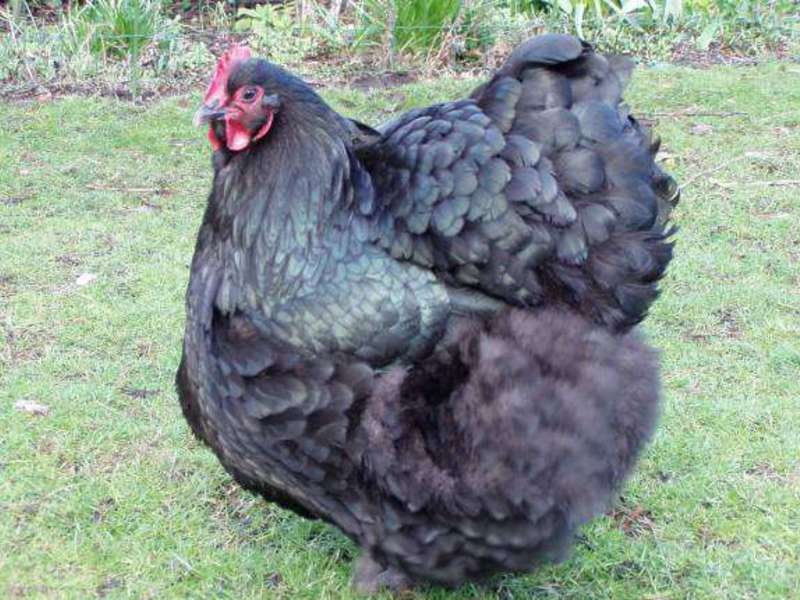
And finally, black Orpingtons, the ancestors of the breed. Their plumage is a rich black with a greenish tint. Their down, feet, and beak are all black, but their skin must be white. Their eyes are brown or black.
In addition to these main varieties, there is also a Dwarf Orpington, which deserves special attention. This variety was developed by German breeders in 1907. In appearance, the Dwarf Orpington is virtually indistinguishable from its standard counterparts, except, of course, in size. However, the beautiful, lush plumage makes these miniature hens resemble feathered buns.
Advantages and disadvantages of the breed
Among the advantages, the following can be noted:
- A well-developed maternal instinct. Hens not only raise their young but also show great care for them.
- High meat yield. However, Orpingtons, unlike other meat breeds, are not known for their early maturity. Young animals gain weight rather slowly, and therefore require more feed.
- Friendly and calm character;
- Good taste qualities of meat products.
- The meat is juicy and dietary.
- Stable egg production.
Cons:
- relatively low egg production (only 160-180 eggs per year);
- high feed consumption (the bird is very voracious);
- too slow growth of chickens;
- a tendency to obesity, which subsequently leads to various deviations.
Productivity
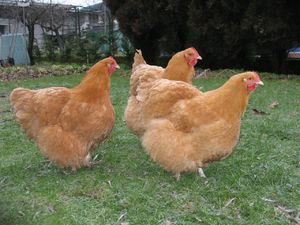 Males weigh up to 4-5 kg, while females weigh slightly less. Orpingtons lay approximately 150-180 eggs per year. Although considered a meat and egg breed, these hens are primarily raised for their meat production. Their tender white meat is highly prized by gourmets for its excellent nutritional qualities.
Content Features
Because Orpingtons are large, their housing needs to be quite spacious. A good ventilation system is also essential, especially during the winter, when the birds spend most of their time in the coop. Accumulating harmful gases can lead to poisoning. Males refuse to trample the hens, resulting in empty, infertile eggs.
Since chickens of this breed are completely flightless due to their heavy weight, they require special perches, which should be located low to the ground and equipped with ramps for access. A layer of straw should be placed underneath these structures in case the chicken falls.
Dry peat, crushed sunflower stalks, straw, or well-dried sawdust can be used as bedding. However, bedding should only be placed on a lime-sprinkled floor. The condition of the bedding must be constantly monitored: it must always be dry, otherwise the coop will become contaminated. parasites will begin to develop, worms, and bacteria, which can cause many serious diseases. Litter with a moisture content no higher than 25% will protect chickens from falling and hypothermia, and will also provide a source of warmth.
Laying peat, straw, or sawdust should only be done in dry weather. Bedding should be prepared in the summer so it has time to dry thoroughly before the cold weather sets in.
Although the bedding is called permanent, this doesn't mean you can lay it down once and forget about it for years. The top layer needs to be cleaned periodically and replaced with fresh one.
Nutrition
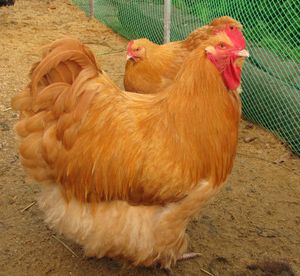 A properly formulated diet is essential for keeping Orpingtons. Normally, the bird should receive whole grain mixed with the following ingredients:
- cottage cheese and other dairy products;
- boiled meat and fish;
- all kinds of greenery;
- raw grated carrots;
- various vegetables;
- boiled shredded beets.
The flock should be fed twice a day: early in the morning after the birds wake up and at three o'clock in the afternoon. In addition to the main feeder in the chicken coop, there should be a bowl with dried eggshells, crushed shell rock, and limestone. Don't forget about water either. It should always be fresh, so if your coop isn't equipped with automatic waterers, change the water twice a day, and three times in hot weather. Giving Orpingtons whey is also beneficial, but don't use it as a complete replacement for water.
Farmers typically keep adult birds for breeding over the winter. Since chickens of this breed are quite voracious, sedentary, and therefore prone to obesity, their winter diet must be carefully considered. Otherwise, excess weight gain can cause problems with fertilizing eggs.
Therefore, two months before the start of collecting eggs for incubation of roosters and laying hens put on a strict dietThe ideal option would be to replace high-calorie grain mixtures with lighter foods that are still rich in vitamins and microelements (for example, sprouted grains).
You should also constantly monitor the bird's health. Signs of a healthy chicken:
- the bird is active;
- has warm paws;
- the comb is bright, hot and full;
- eyes open;
- droppings are normal black-brown in color;
- goiter filled by evening.
Due to their good meat yield and excellent taste, their unpretentiousness and ease of maintenance, Orpington chickens are an ideal choice for breeding at home and on farms.