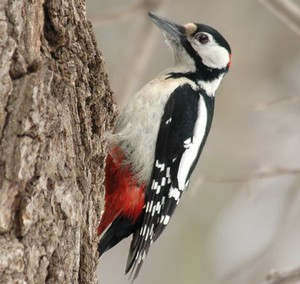
 Anyone who owns a dacha or spends time in the forest is familiar with the staccato tapping sound. The source of this sound is the woodpecker. This bird's family is widespread throughout the world, making it one of the most numerous. Ornithologists recognize more than twenty species of woodpeckers. Since ancient times, these birds have captivated people. For a long time, they were considered pests and were hunted.
Later, a discovery was made: woodpeckers, using their strong beaks, pull bugs and worms from trees, thereby protecting vegetation from pests. Since then, woodpeckers have been called the forest's orderlies. Research has already revealed that the bird chooses only dry, old trees infested with insect larvae. By eating the parasites, the woodpecker saves the tree from destruction.
Great Spotted Woodpecker: Photos and Features
The most widespread species of woodpecker in the world is Great Spotted WoodpeckerIt is especially common in Russia. Its habitats include old parks, cemeteries, and summer cottages. Representatives of this family are generally not nomadic, preferring to settle in a single area. Mass migrations are observed only during periods of poor food supply. Then, the birds gather in flocks and migrate to another region.
The appearance of the Great Woodpecker
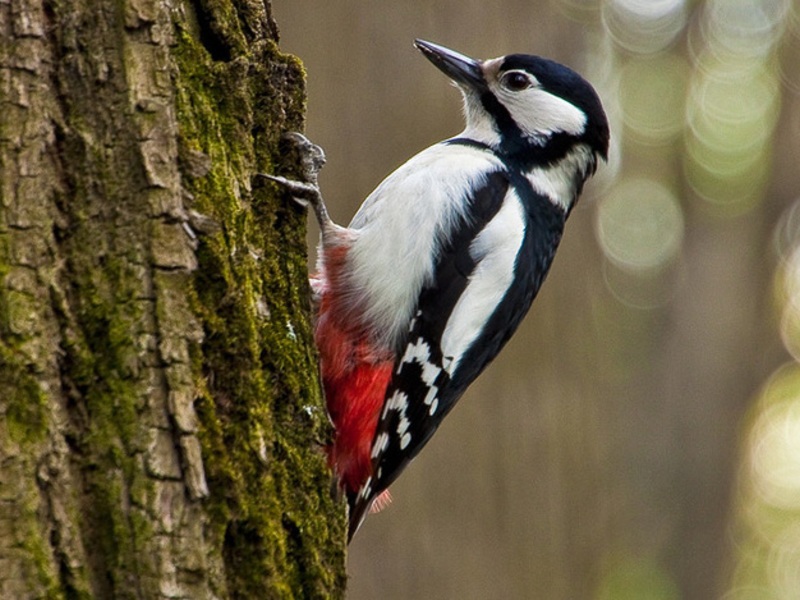
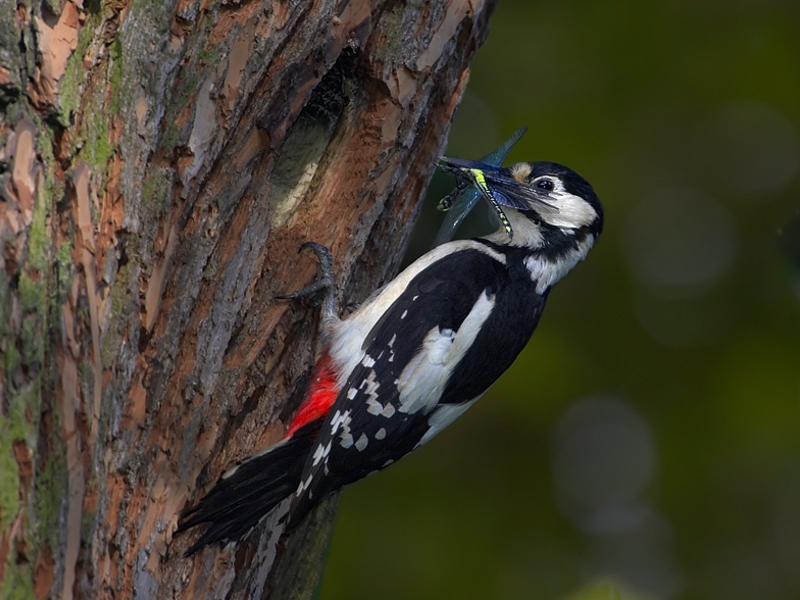
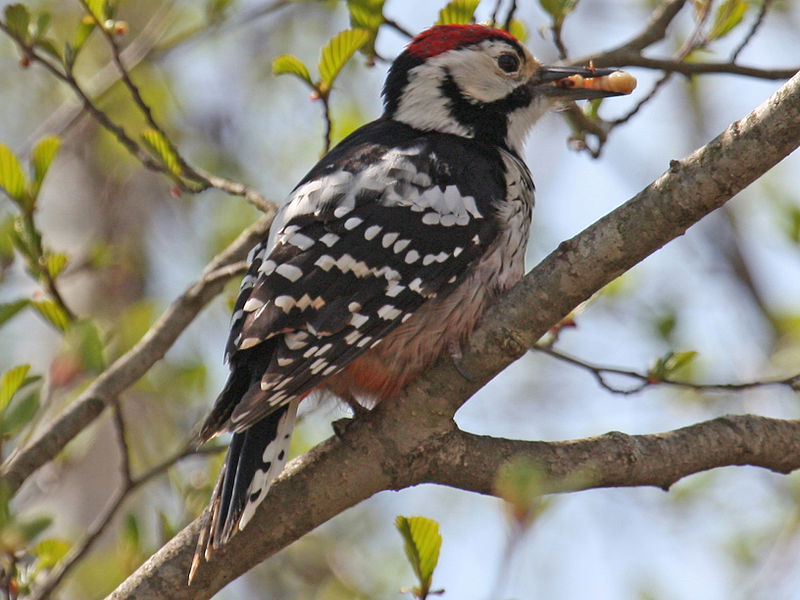
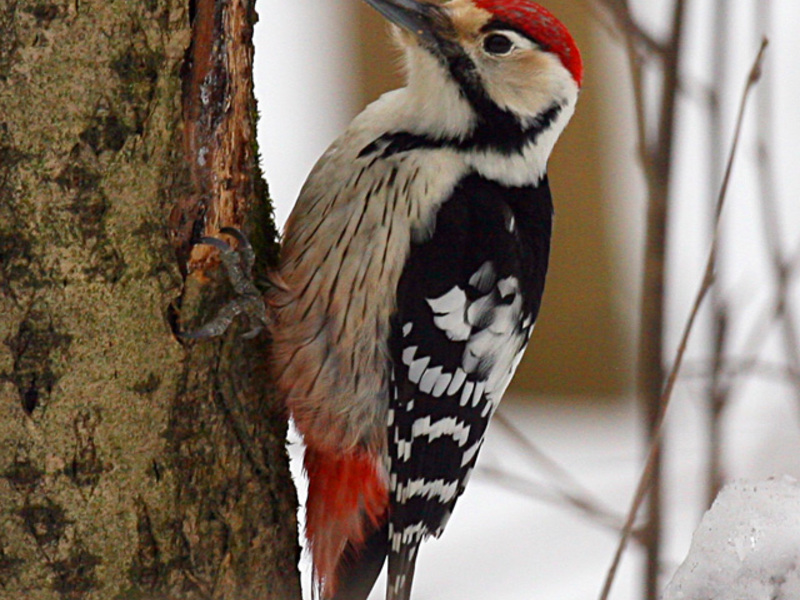
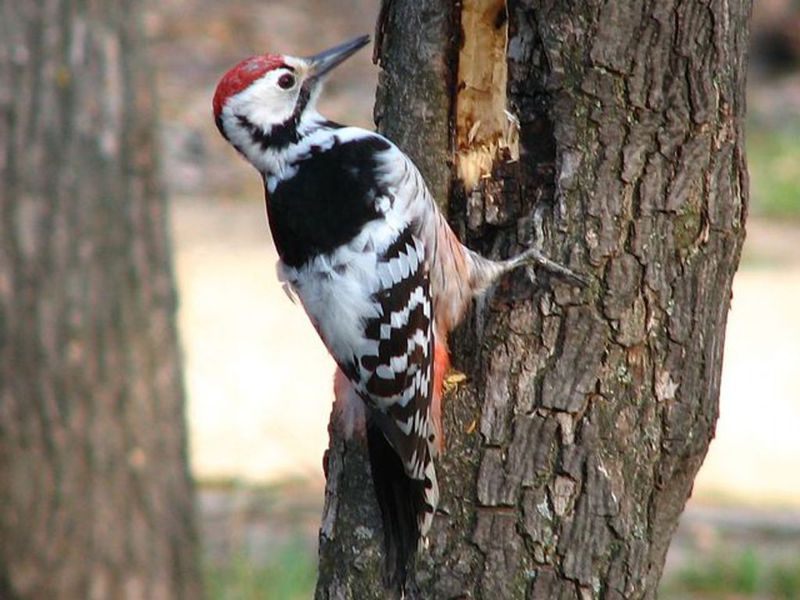
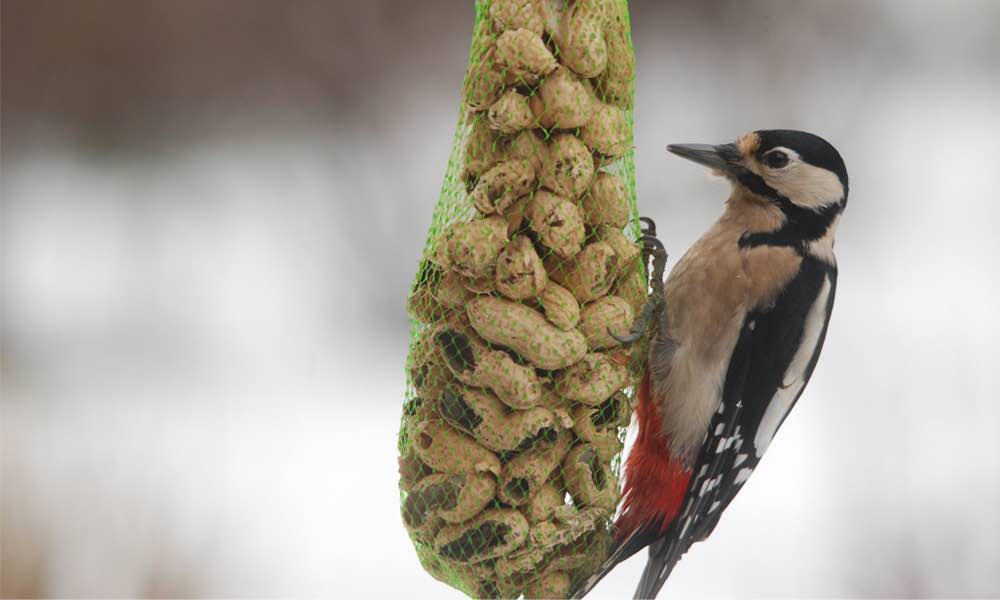
Like many birds, the woodpecker has a distinctive appearance. It is this, combined with its characteristic tapping sound. makes this family extremely recognizable:
 Maximum length 27 centimeters;
- Maximum wingspan: 47 centimeters;
- Maximum weight - 100 grams;
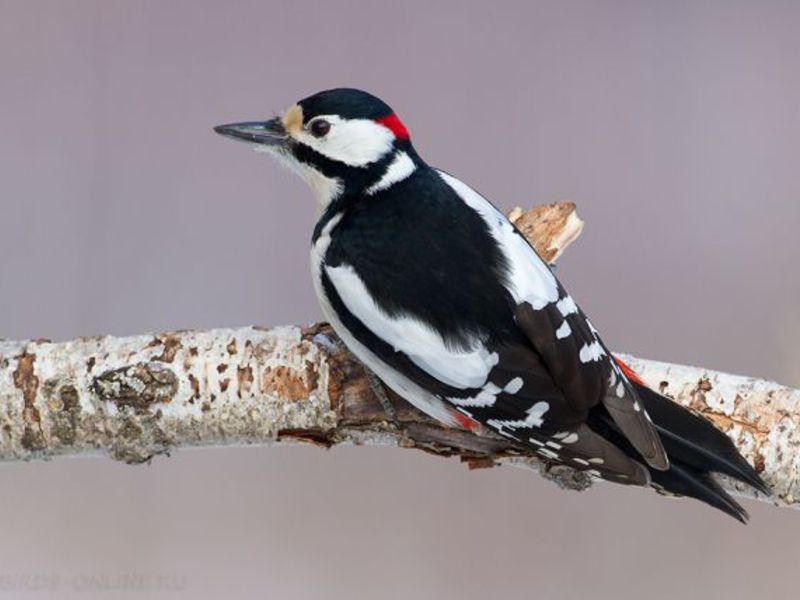
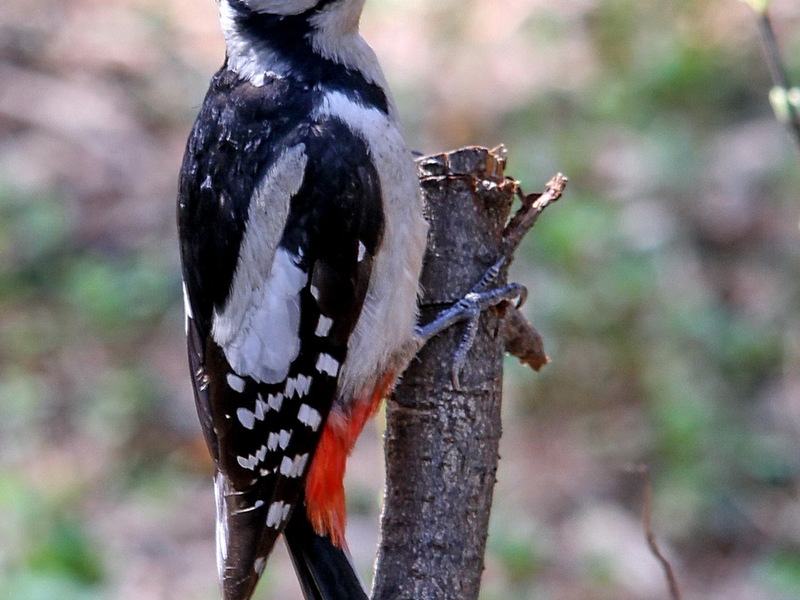
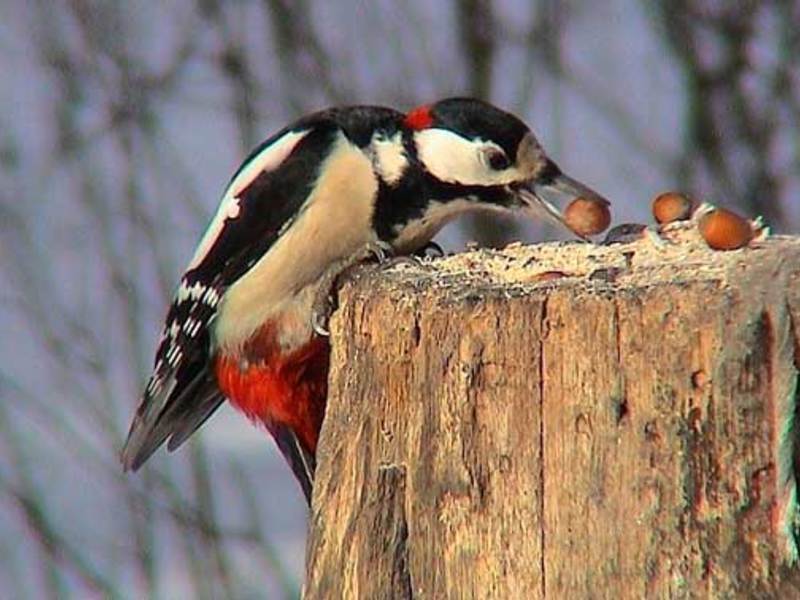
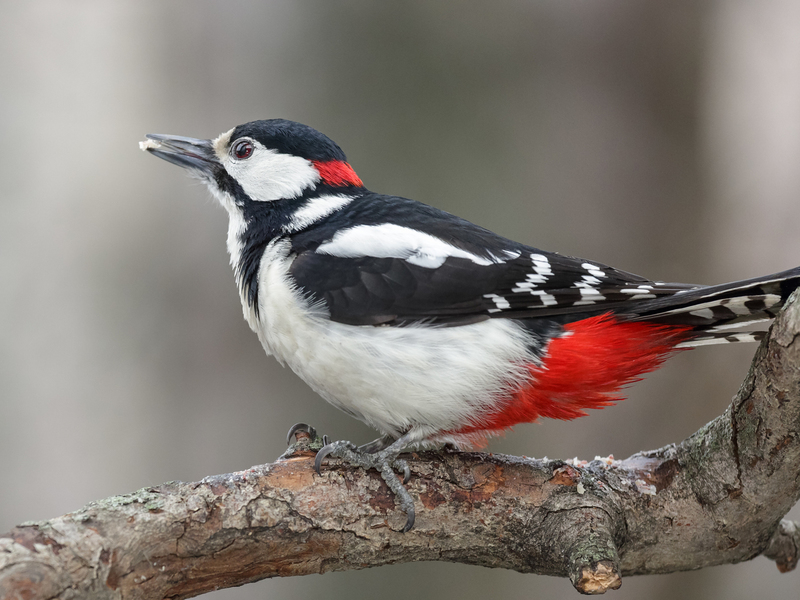
- Variegated plumage is a combination of white and black with elements of red, and in some species pink plumage;
- The beak and feet are dark in color, black or lead;
- On the head there is a “cap” of red or pink color;
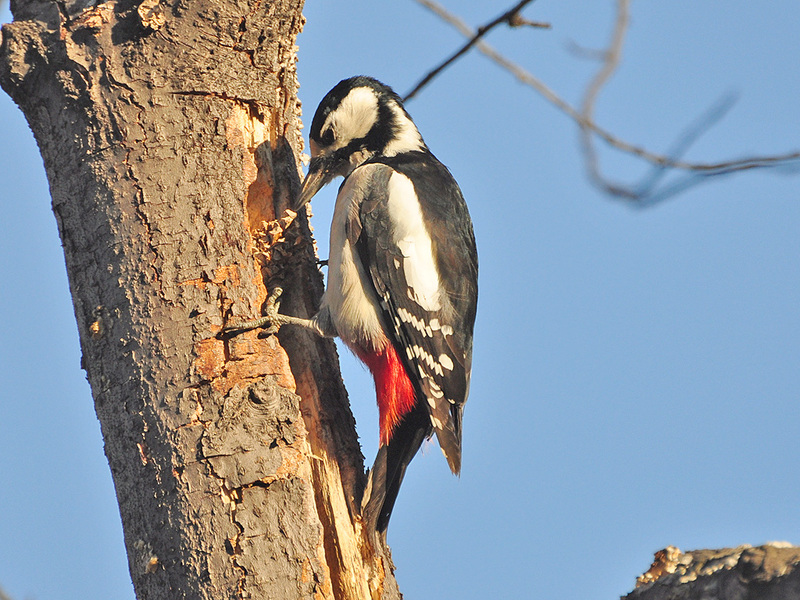
- The tail is long, consisting of dense feathers - it serves as support when climbing trees;
- A distinctive feature of males is a long transverse stripe on the back of the head;
- A distinctive feature of young individuals is a red spot with black stripes on the body;
- The tongue can reach 10 centimeters;
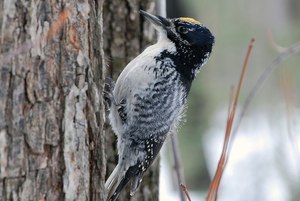 Maximum length 27 centimeters;
Habitat of the Great Woodpecker
Woodpeckers have an extremely wide range. Simply put, the bird is found wherever there are trees. There are species in the family that prefer solitudeBut many of them have adapted to life near humans. Therefore, they can be found in summer cottages, city parks, and public gardens. They prefer coniferous forests, predominantly pine, but can also inhabit mixed forests.
Ornithologists note that two hectares of land are usually sufficient for one bird. This area is sufficient for adequate food. Under unfavorable conditions, the great spotted woodpecker can migrate long distances, but then it does not return to its original location. These birds easily tolerate cold weather and adapt to the conditions, so there is no reason for them to migrate to other countries for the winter.
The lifestyle of the great woodpecker
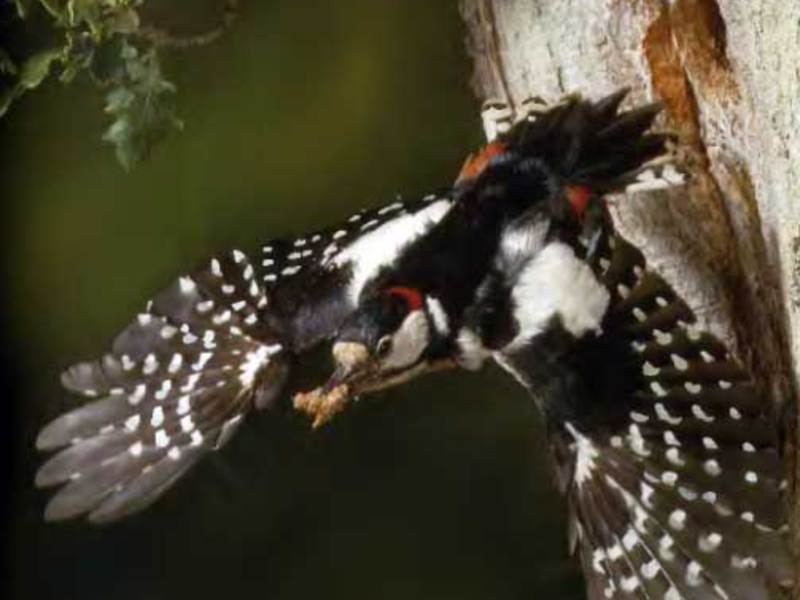
Watching various birds brings great pleasure, especially forest dwellers. Woodpeckers are known for their activity. So, from early morning, they are busy with their laborious task: chiseling wood. Their work leaves behind hollows, which are then used by various birds and animals.
The peculiarity of woodpeckers is that they don't like flyingThey most often prefer to climb trees, using their claws and tail. Interestingly, this also applies to chicks. They begin to move around in trees earlier than they begin to fly. They lead a similar lifestyle in winter.
The diet of the Great Spotted Woodpecker
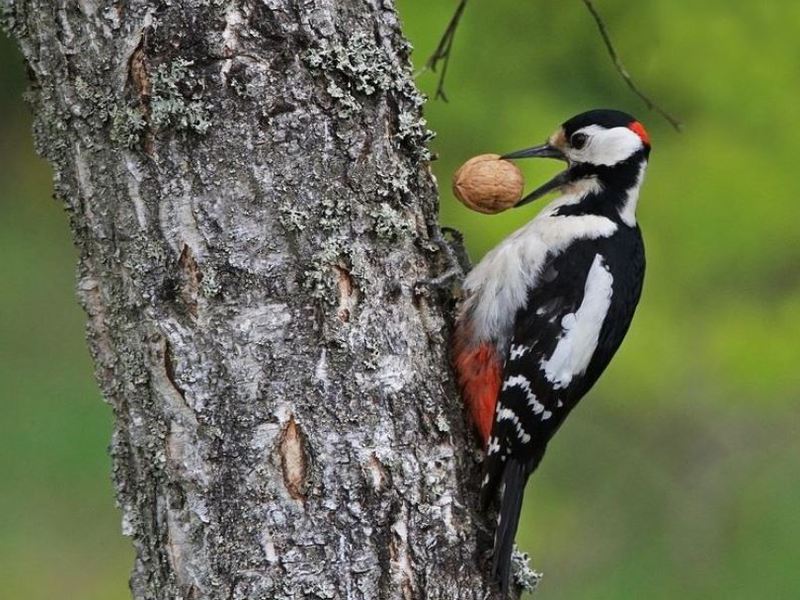
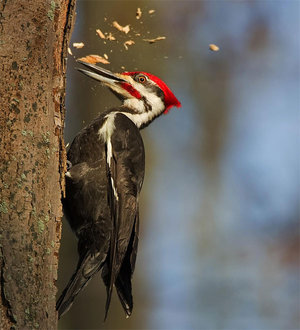 Part of the reason woodpeckers remain in their habitats for the winter is their omnivorous diet. This is especially helpful during times of famine. Under favorable conditions, their main diet consists of insects and their larvae. Woodpeckers obtain these with their long tongues, coated with sticky juice. Ornithologists examine individuals during autopsies. up to 500 bugs were found in the stomachThis is the amount of food required per day.
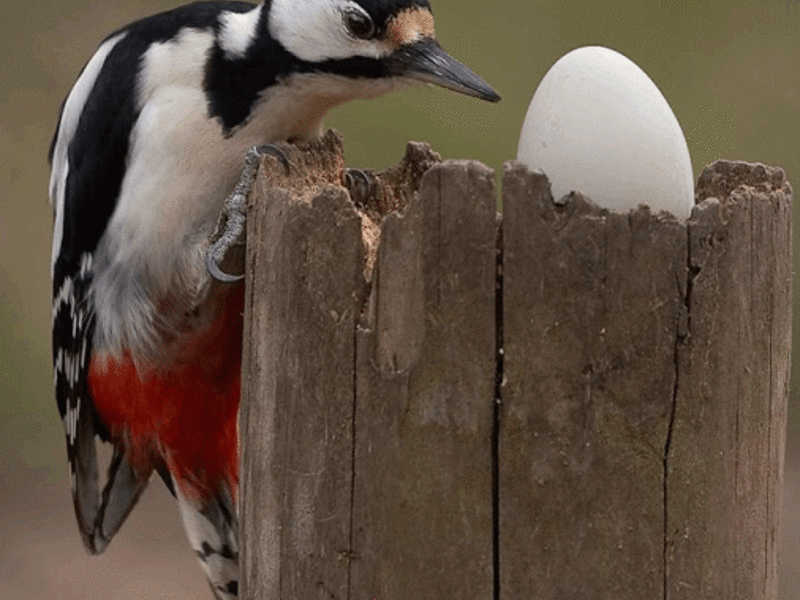
Occasionally, they may eat crustaceans and mollusks. Unfortunately, living alongside humans has taken its toll on them. Woodpeckers can be seen in garbage dumps, scavenging for scraps of food: sausage, cheese, meat, and the like. Ornithologists have also noted that, when food supplies are poor, they may temporarily feed on carrion and raid the nests of small birds, eating eggs and their chicks.
Interesting facts:
- When crawling on a tree, they never hang upside down - that's how their vestibular system is designed;
- They move mainly in a spiral;
- The tongue is covered with a sticky substance, which makes it easier to capture all kinds of insects;
- Woodpeckers have a keen sense of music. Sometimes they tap on trees not for food, but for pleasure;
Great woodpeckers are important participants in forest life, protecting it from pestsTheir role in helping other animals is also important, as the fruits of their labor—tree hollows—are used by other birds and small mammals to build shelter.