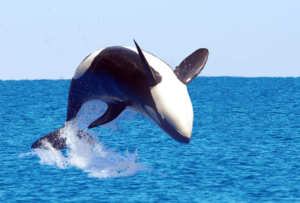
 The depths of the sea and ocean conceal many mysteries and enigmas, sometimes very dangerous for humans. They are home to a wide variety of fauna, some of which are extremely large. The killer whale is one such animal. Many of us have heard the most terrifying stories about it, seen movies, and seen gripping animal television programs. What is a killer whale, what does it look like, how much does it weigh, and what does it eat?
Is a killer whale a dolphin or a whale?
This large animal belongs to to marine mammals of the order Cetacea, a member of the family Delphinidae, a suborder of toothed whales. It is the only cetacean that feeds not only on fish but also on warm-blooded marine animals. Among aquatic predators, it is the largest in size.
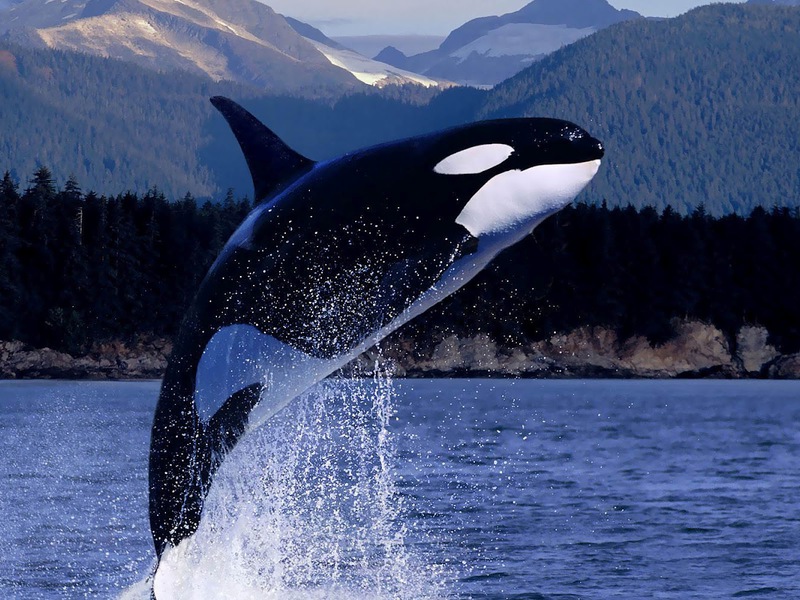
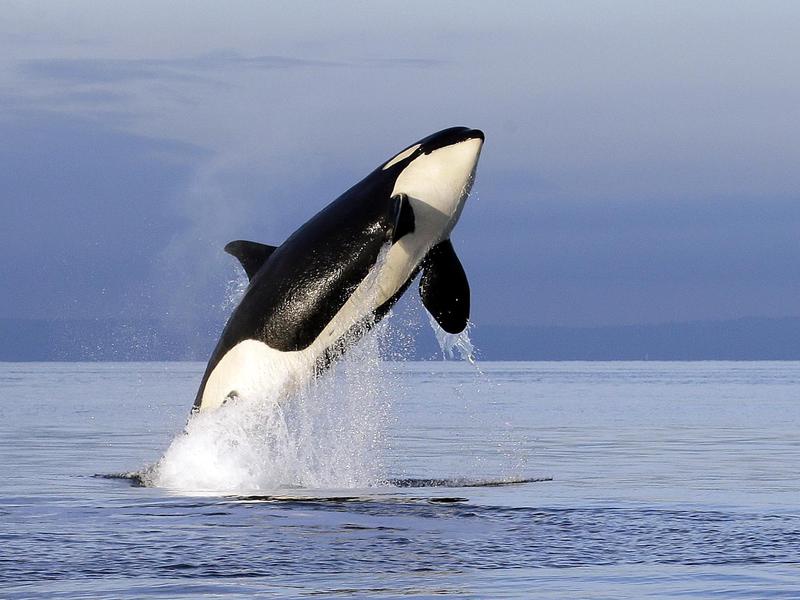
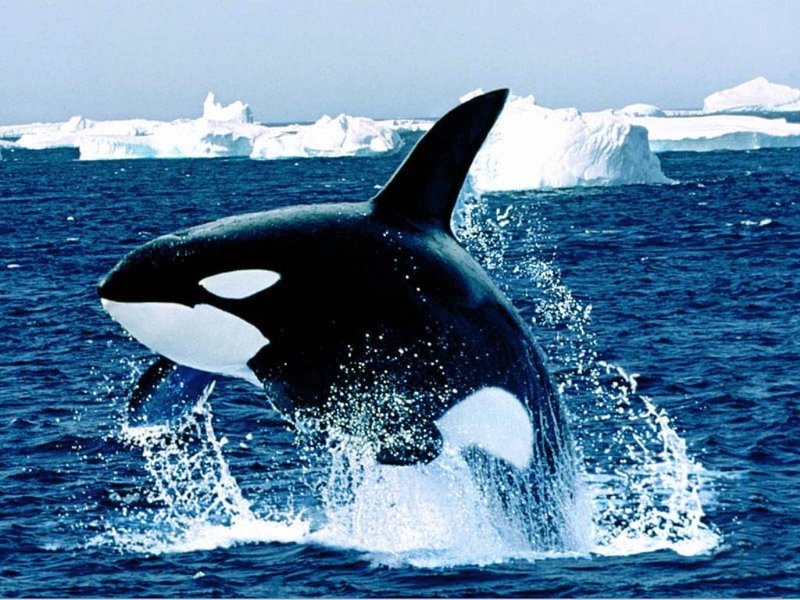
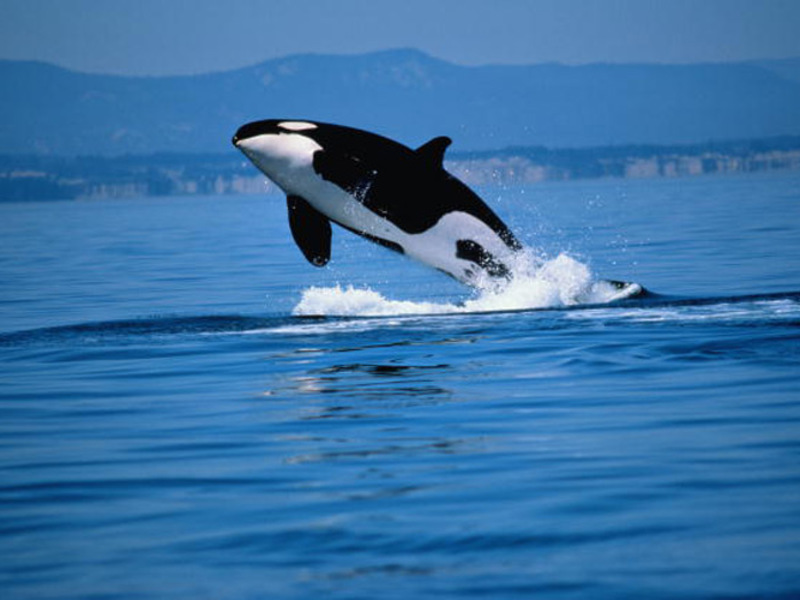
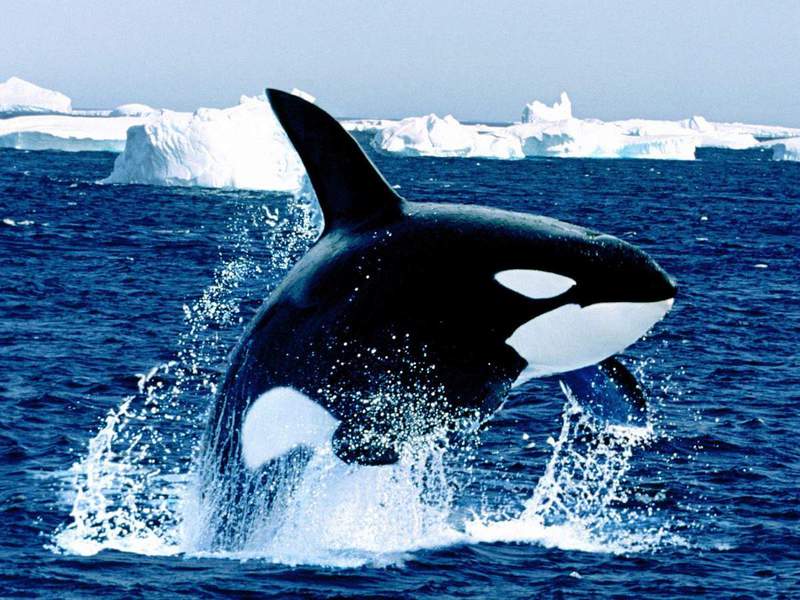
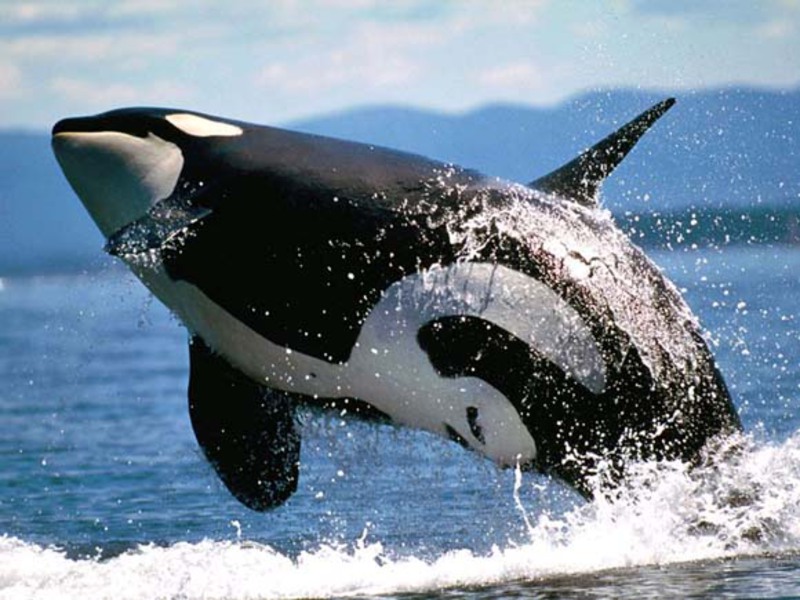
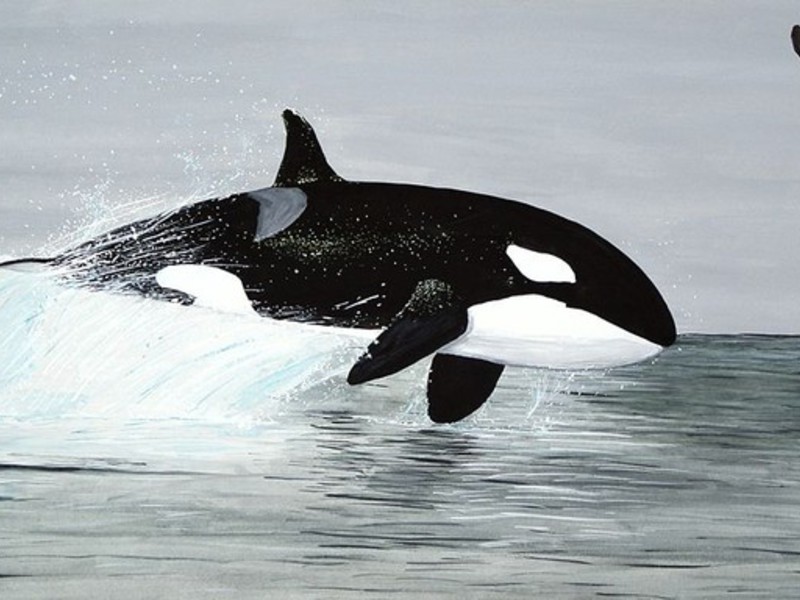
The photo clearly shows the killer whale's distinctive black and white body color. This immediately distinguishes it from other deep-sea creatures. The killer whale's back and sides are black, with a longitudinal white stripe running across its belly and throat. A gray saddle-shaped spot runs behind the dorsal fin. A white spot is located above each eye. Rare black and albino (white) individuals are found in the North Pacific.
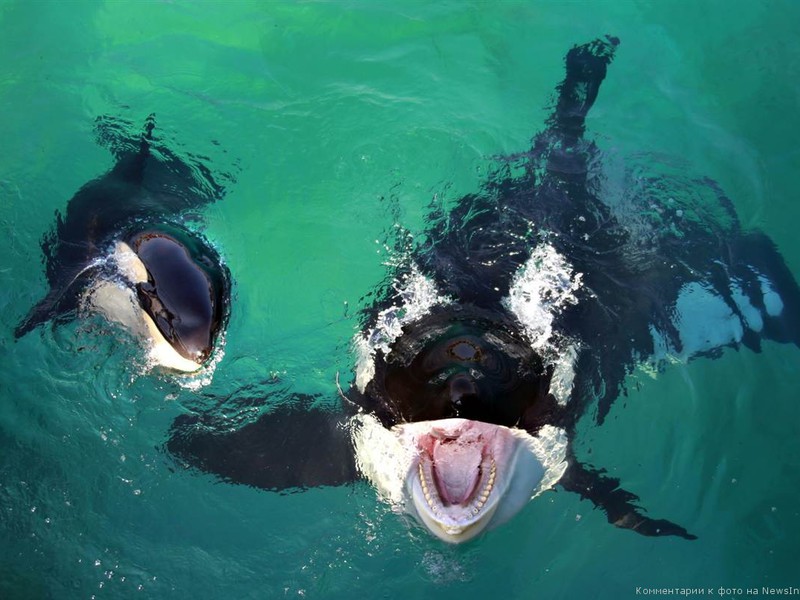
The killer whale is often called a "killer whale," which is confusing. In fact, the killer whale is predatory dolphin, but only very large ones. In aquariums, killer whales appear harmless and peaceful. In reality, they are formidable and merciless marine predators. They hunt not only fish, but also have been known to attack sharks and even enormous whales.
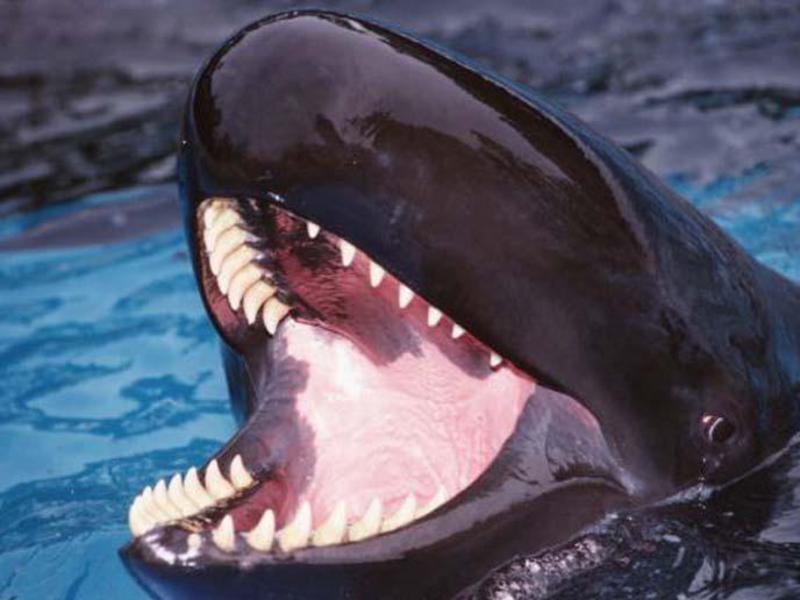
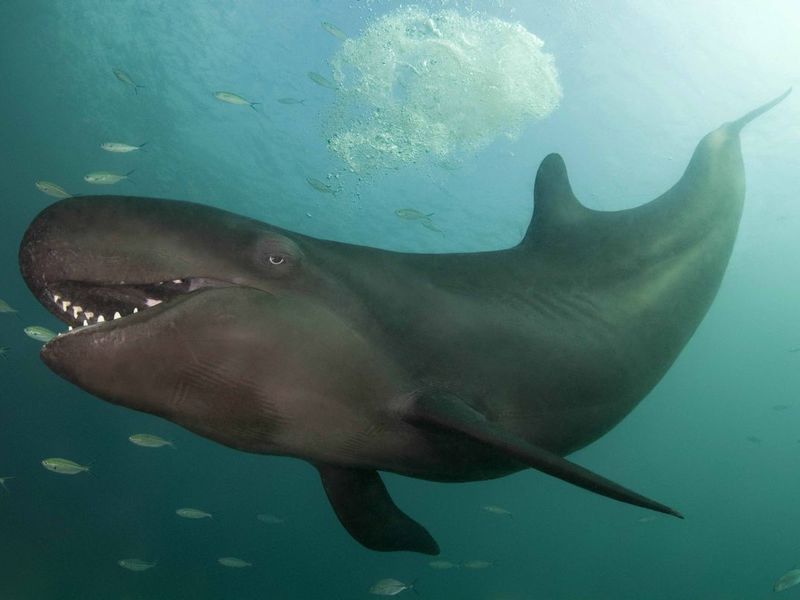
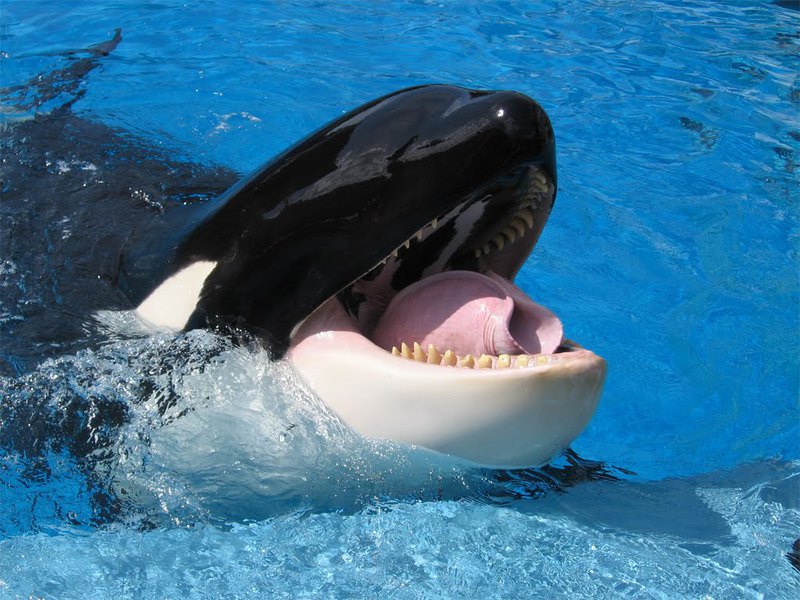
Male killer whales can grow up to 10 meters in length and weigh around 8 tons. The dorsal fin of this formidable animal can reach up to one and a half meters in length. Females are smaller, almost half the size. They differ from dolphins in their wide, rounded fins. As can be seen in the photo, they have a heavy, massive head, containing rows of large teeth. The teeth reach 10-13 cm in size.to attack other large sea creatures. Killer whales can reach speeds of up to 60 km/h while hunting. Their lifespan can be up to 35 years.
Habitat
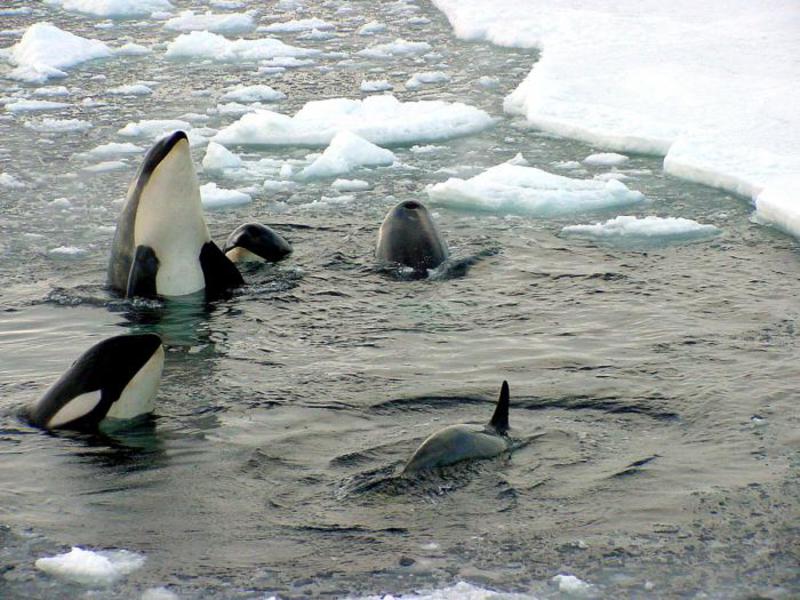
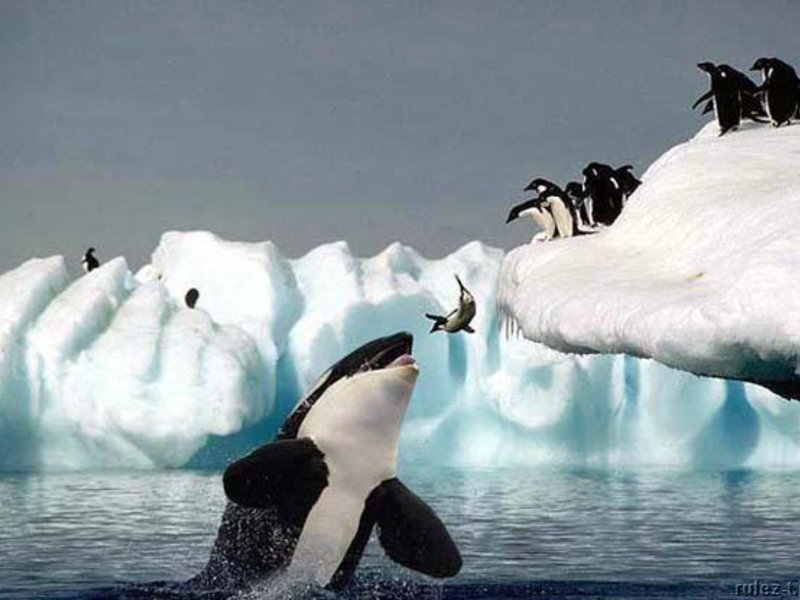
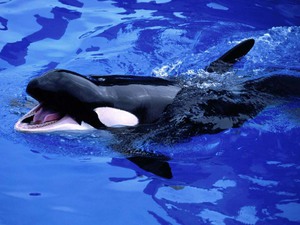 Killer whales are found in all oceans from the Arctic to Antarctica, and venture deep into the pack ice. They prefer to swim far from shore, although they can be seen close to land while hunting seals and penguins. Their habitat is the seas and oceans of the entire planet. They usually swim at great depths, but sometimes they can swim into river mouthsThey prefer cold seas and oceans, so they are most often found in cold and temperate waters. They are extremely rare in the tropics.
They hunt in packs and live in groups. Their environment is matriarchal, despite the fact that males are much larger than females. During the hunt, females with calves remain at a safe distance, but may participate if males are few in number. A group of killer whales is always peaceful and calm. Groups often team up for a successful hunt.
What do killer whales eat?
These predators have a wide range of prey. For example, those living off the coast of Norway can feed on herring, so they migrate in search of fish. There are populations that prefer to hunt pinnipeds. Scientists have identified two populations:
- "vagrants";
- homebodies
The second variety feeds mainly on fish:
- cod,
- herring;
- halibut;
- mackerel;
- tuna;
- salmon;
- cephalopods.
In rare cases they attack marine mammalsWhen a group of killer whales spots a school of fish, the entire group herds them into a tight ball close to the surface. The predators then stun the fish with tail strikes, diving in turns. A hunting group typically consists of 5-15 individuals.
Transient killer whales are the most dangerous, known as "killer whales." They prey on the following animals:
- whales,
- sea lions;
- pinnipeds;
- dolphins;
- sea otters.
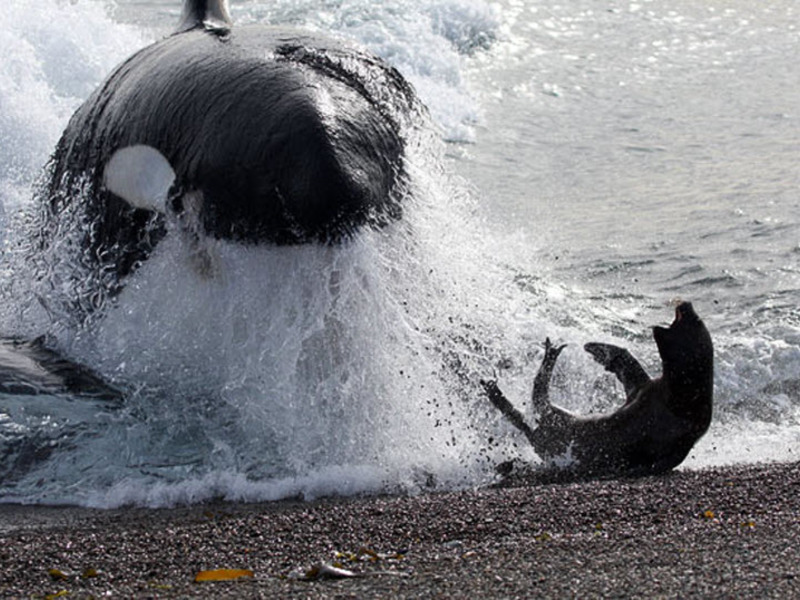
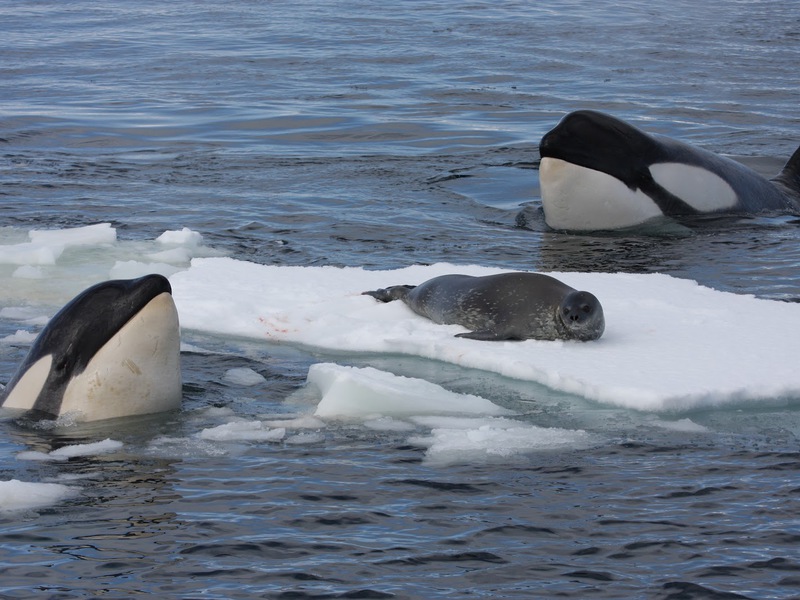
The pods of such killer whales are much smaller. can gather from 1 to 5 individualsWhen hunting sea lions, they beach themselves. This is the most spectacular method of hunting marine animals. When hunting seals, they ambush them. If a seal is on an ice floe, the cunning killer whales try to entice it to fall off into the water. They use various maneuvers to achieve this. While hunting, these "vagrants" make virtually no sound, as marine mammals have excellent hearing.
Killer whales have a voracious appetite. They consume between 50 and 150 kg of food per day. A killer whale's only enemy is a dolphin. Sharks are not rivals, but rather prey.
Reproduction
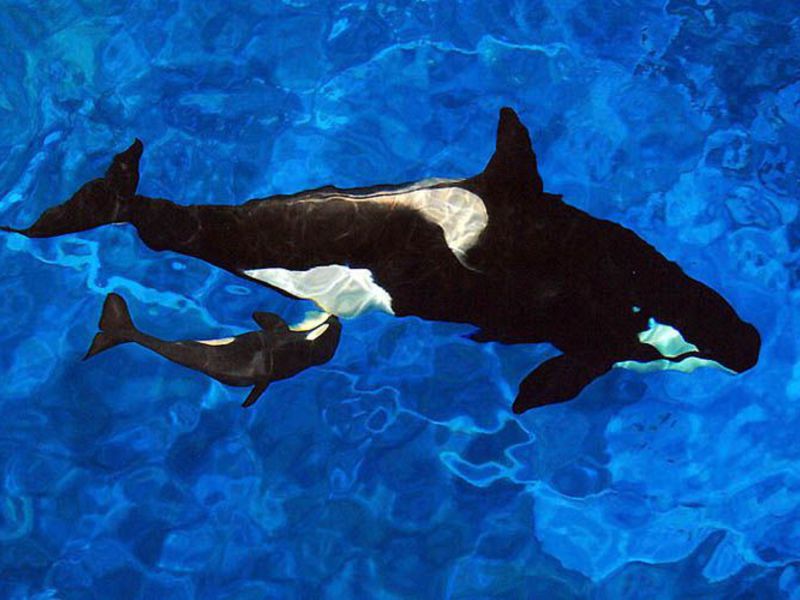
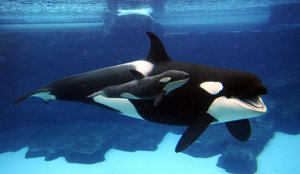 Males begin sexual maturity at 8 years of age, while females reach sexual maturity two years earlier. Mating season begins in early winter. Scientists have collected little information about killer whale mating. It is known that during the mating season males are very aggressive and fiercely compete for mating rights. The young are born in spring or early summer, and a female can only have one. A playful baby weighs only 260 kg and is 2.1-2.7 meters long. The mother nurses the baby for up to 1 year. She will be ready to mate again only after 3-4 years.
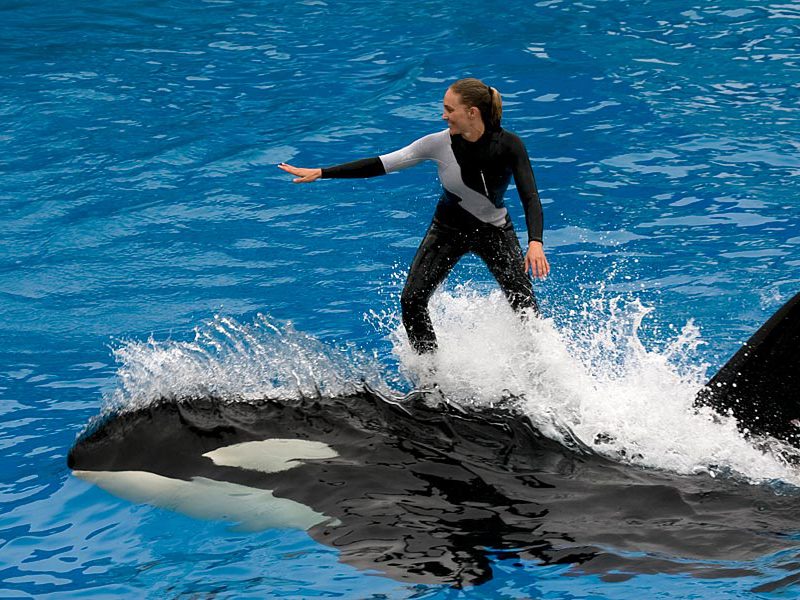
Killer whales are considered to be very intelligent animals. They they are very trainableWhen they are brought to aquariums or dolphinariums, they perform complex tricks in these conditions. There are acts where the trainer places their head in the killer whale's mouth, and the predator carries the trainer on its back in front of the audience during shows. When they are forced to live in captivity, they behave differently. Aggressive and fearsome animals become crowd favorites because they are peaceful and pose no threat.


 Mark Bryksin
  Mark
Mark  Pirate Morgan
  Oleg
Oleg
4 comments