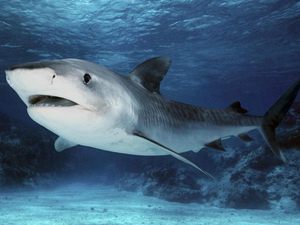
 One of the most ancient animal species, mysterious and little-studied, are sharks, also known as selachians. Numerous myths and legends surround this marine fauna, contributing to prejudice against these amazing fish. Systematic study of selachians began during World War II, during battles in the Pacific and Indian Oceans. The goal was to find a way to protect humans from these marine predators.
Is a shark a fish or a mammal?
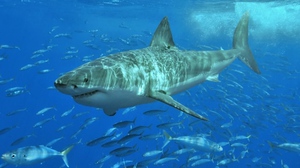 The list of these marine predators includes more than 400 species, differing dramatically: from the smallest deep-sea shark, barely reaching 17–20 cm, to the giant whale shark, a huge 20-meter, multi-ton individual.
The name "mammal" speaks for itself. Animals that feed their young with milk are called "mammals."
The shark does not feed its young with milk, and in addition, the shark breathes with the help of a device called “gills”. A shark is a fish.
In size, of course, these predators are comparable to dolphins or some species of whales. But in the marine kingdom, there are many similar-sized creatures with different contents.
In the modern classification of the animal kingdom, sharks and rays form the subclass Elasmobranchia, which belongs to the class Cartilaginous fishesCartilaginous fish, mammals, and humans share a number of similar characteristics, forming a single phylum—Verbate.
The skeleton of bony fishes consists entirely of bones, while sharks there are only cartilagesThe large amount of calcium makes the cartilage hard and strong. The curved, impressive mouth is located at the bottom of the head.
The large, soft caudal fin is asymmetrical—the upper lobe is much larger than the lower. Bony fishes move their lateral fins freely, unlike selachians.
Bony fish and sharks: what are the similarities and differences?
 Reproduction Method: Some shark species (the relict heterotooth shark, the cat shark, and the carpet shark), like bony fish, lay eggs—fertilized eggs protected by a tough, horny shell.
- Respiratory system. Selachians obtain the oxygen they need to survive from water, which they pass through their gills. They have five to seven (sometimes ten) gill slits. Unlike sharks, bony fish have gill covers.
- Swim bladder. Sharks lack one. Buoyancy is provided by a huge liver with fatty deposits, constant movement, and a cartilaginous skeleton.
- Scales. The body of the selachian is covered with placoid scales, the plates of which are embedded in the skin. On the surface are spines coated with a substance similar to enamel. Thanks to this armor, the fish is almost invulnerable.
- The lateral line is a collection of receptors, either solid or broken, running from the gill slits to the tail. It serves as a sensory organ for perceiving vibrations in the environment.
- Their sense of smell is significantly more developed than that of bony fish. Long-finned oceanic sharks can detect and recognize odors even in the air. Thanks to this ability, they arrive at the prey distribution site much earlier than other marine predators.
 Reproduction Method: Some shark species (the relict heterotooth shark, the cat shark, and the carpet shark), like bony fish, lay eggs—fertilized eggs protected by a tough, horny shell.
What are the differences between mammals and sharks?
- The main and fundamental difference between selachians and mammals is the process of feeding their offspring with milk. Fish do not produce milk.
- Mammals naturally care for their offspring—nurse their young, teach them survival skills, and learn how to find food. Sharks don't do this. They produce genetically strong and healthy offspring that can do everything in life—hunt, recognize enemies and friends, and survive.
- Based on their reproductive method, selachians are classified as oviparous, ovoviviparous, and viviparous. Viviparous sharks have a developed placental-like structure for feeding the embryo. A placenta, or placenta, is found only in mammals.
- Some, but not all, shark species are partially warm-blooded. Like mammals, they are capable of maintaining a constant body temperature, which can be up to 10˚C higher than the surrounding environment. Thermoregulation is achieved through continuous movement, which engages muscles throughout the body, transferring heat to the blood vessels surrounding the muscles.
- No other animal on earth possesses such a wide range of senses. Throughout its evolution, this formidable marine predator hasn't lost any of them; rather, it has developed and enhanced its capabilities.
 The main and fundamental difference between selachians and mammals is the process of feeding their offspring with milk. Fish do not produce milk.
One of the unique properties is electroreception, the ability to sense electrical and magnetic signals environment. It is used to detect prey, navigate in space, and maintain communication with conspecifics.
Electroreceptor sensory organs are found in selachians and rays, as well as some species of bony fish. Among mammals, the Australian platypus and, presumably, the echidna boast electroreceptors. The ampullae of Lorenzini are called electroreceptor apparatus predator, which she successfully uses at the moment of attack.
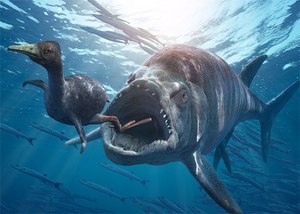
As evolution progressed, the Earth's topography changed—oceans emerged where land once stood, or, conversely, continents sank beneath the waves. Some life forms disappeared, others emerged. Only the Selachians survived for nearly 500 million years. Some members of this unique and little-studied species have remained virtually unchanged.
The largest specimen is carhadon fossil, an ancestor of the great white shark. Its size was estimated from fossilized teeth found, which measured 10–15 cm. It is estimated that its mouth could have held seven people. The smallest living representative of the species is dwarf lantern shark only 7 cm long.
 Kate
Kate
2 comments