A well-known predatory fish is the great white shark. Specimens of the Carcharodon carcharias species inhabit the surface layers of various oceans, although they are also found in the deep. Only the Arctic Ocean is free of sharks. These predatory fish are known as white death, man-eating fish, and carcharodon (terrible-toothed).
Content
Characteristics of the Great White Shark: Size, Weight, and Teeth Structure
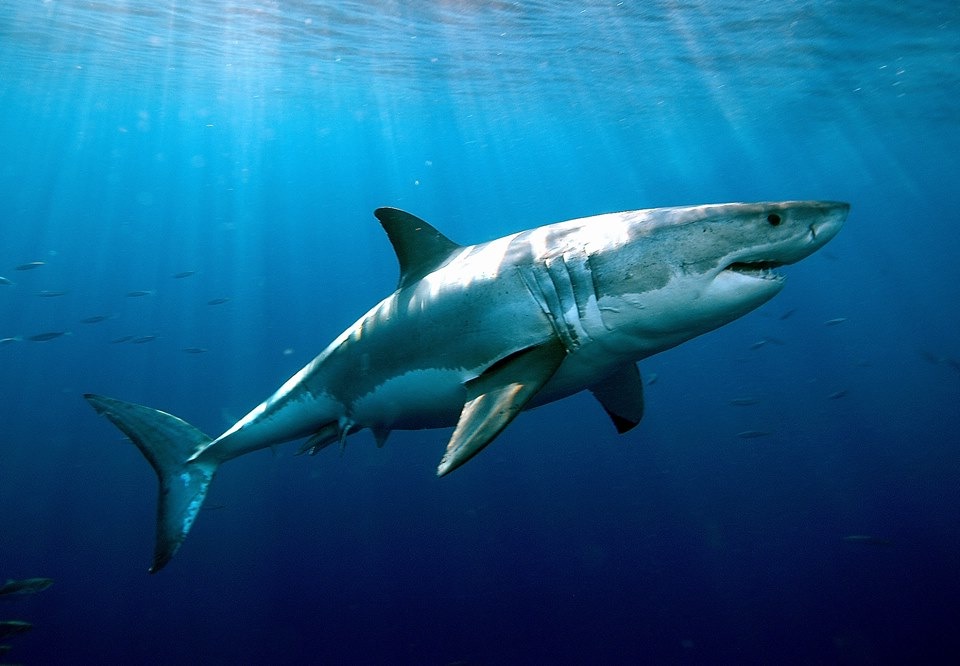
Great white sharks owe their name to their specific appearance. The belly of predatory fish is white, their sides and back are grey, and in some individuals it is grey-blue or grey-brown.
Their distinctive coloration makes them difficult to spot from afar. The gray coloration of their back and sides makes them difficult to see from above, blending in with the water's surface. When viewed from the ocean floor, their white belly blends in with the sky. The shark's body appears to be divided into two halves when viewed from a distance.
Female sharks are larger than males. The average length of female carcharodon sharks is 4.7 meters, while males grow up to 3.7 meters. At this length, their body weight ranges from 0.7 to 1.1 tons. Experts estimate that man-eating fish in ideal conditions can grow up to 6.8 meters. The great white shark has a fusiform, compact body. Five pairs of gill slits are located on the sides. The large, conical head bears small eyes and nostrils.
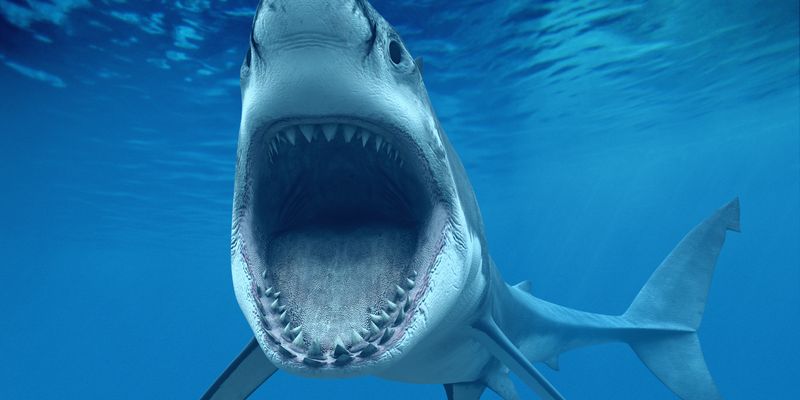
Due to the grooves that approach the nostrils, the volume of water reaching the olfactory receptors increases
The carcharodon's mouth is wide and arched. Inside are five rows of sharp, triangular teeth, up to 5 cm high. The fish has 280–300 teeth. In young fish, the first row of teeth is completely replaced every three months; in adults, every eight months. A distinctive feature of carcharodon is the presence of serrations on the surface of the teeth.
The shark's powerful jaws can easily bite through cartilage and break the bones of its prey. A study conducted in 2007 determined the bite force of this predator.
A CT scan of the shark's head revealed that the bite force of a juvenile weighing 240 kg and 2.5 m in length is 3,131 N. A shark 6.4 m in length and weighing over 3 tons can bite with a force of 18,216 N. Some scientists suggest that the bite force of large sharks is overstated. Due to the special structure of their teeth, sharks don't necessarily need to be able to bite with great force.
The first large dorsal fin is triangular in shape, the pectoral fins are long and large, sickle-shaped, and the anal and second dorsal fins are small. The body ends in a large tail with equal-sized plates.
Large carcharodons have a well-developed circulatory system. This allows these predators to warm up their muscles and increase their speed through the water. Great white sharks lack a swim bladder. Because of this, carcharodons are forced to constantly move, otherwise they sink to the bottom.
Where does it live?
Man-eating sharks have a vast habitat. They are found both in coastal areas and far inland. Sharks mostly swim in surface waters, but some specimens have been found at depths of more than 1 km. They prefer warm waters, with the optimal temperature for them being 12–24°C. Sharks are not suited to desalinated or low-salt waters.
Carcharodons are not found in the Black Sea.
The main centers of predator aggregation include coastal areas in California, Australia, South Africa, and New Zealand. Sharks are also found:
- near the coasts of Argentina, the Republic of Cuba, the Bahamas, Brazil, and the east coast of the United States;
- in the east of the Atlantic Ocean (from South Africa to France);
- in the Indian Ocean (found near the Seychelles, in the Red Sea and the waters of the Republic of Mauritius);
- in the Pacific Ocean (along the west coast of America, from New Zealand to the Far Eastern territories).
Sharks are often seen around archipelagos, shoals, and rocky capes where pinnipeds live. Individual populations live in the Adriatic and Mediterranean Seas. However, their numbers in these waters have declined significantly in recent years, and they are practically extinct.
Lifestyle
The social structure of shark populations and the behavior of individual sharks have been insufficiently studied by humans. Through observations, it was possible to identify that the attack tactics of predators depend on the type of prey chosen. This is facilitated by high body temperature, which stimulates brain function.
Their attacks are so swift that they can completely emerge from the water while pursuing their prey. These animals reach speeds of over 40 km/h. An unsuccessful attack does not stop their pursuit. They can raise their heads above the water while searching for prey.

Interspecific competition occurs in areas where sharks and cetaceans share a common food source.
It was previously believed that great white sharks had no natural predators. But in 1997, whale watchers witnessed an attack on an adult great white shark. The attacker was a killer whale. Similar attacks have been recorded since.
Nutrition and the digestive system
The diet of carcharodons varies depending on the age and size of the animals. They feed on small animals:
- fish (tuna, rays, herring and small representatives of the shark family are popular);
- pinnipeds (most often, fur seals, lions, and seals are affected);
- cephalopods;
- birds;
- representatives of cetaceans (porpoises, dolphins);
- sea otters, turtles.
Carcharodons don't disdain carrion. A whale carcass can be a good catch.
Large individuals are especially interested in seals, other marine animals, and small whales. They maintain energy balance with fatty foods, so they require high-calorie food.
However, they rarely attack porpoises and dolphins, although the latter are an important component of the sharks' diet in the Mediterranean Sea. They attack this type of prey primarily from below, behind, and above, trying to avoid detection by sonar.
Contrary to popular belief, humans are of no interest to sharks as food due to their low fat content. Carcharodons may mistake humans for marine mammals, which is believed to be the primary reason for attacks.
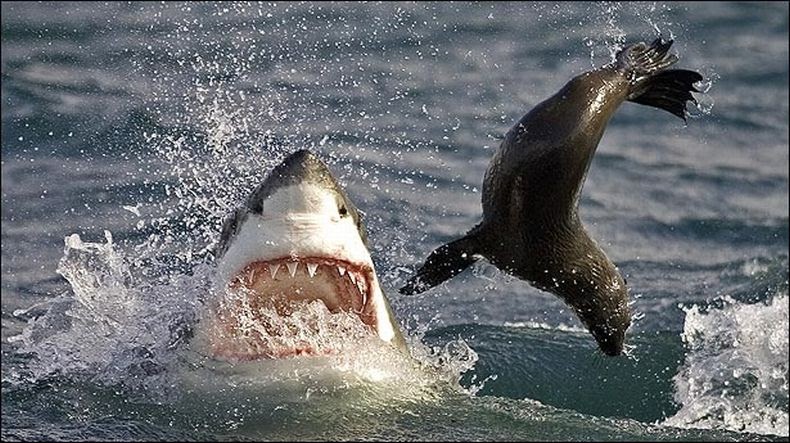
Great white sharks have a slow metabolism, so they can sometimes go for long periods without food.
Predators can go for long periods without food. It is believed that 30 kg of whale blubber is enough to support the metabolic processes of a shark weighing over 900 kg for 45 days.
In terms of the structure of their digestive organs, sharks are practically no different from other fish. But in carcharodons, the digestive system is clearly divided into various sections and glands. It begins with the oral cavity, which gradually merges into the pharynx. This is followed by the esophagus and the V-shaped stomach. The folds inside the stomach are lined with a mucous membrane, which abundantly secretes digestive enzymes and juices necessary for processing the ingested food.
The stomach contains a special compartment where excess food is stored. Food can be stored there for up to two weeks. When necessary, the digestive system begins to use the available reserves to sustain the predator.
Sharks are distinguished from other fish and animals by their ability to "turn" their stomachs inside out through their mouths. This ability allows them to clear their stomachs of dirt and accumulated food debris.
From the stomach, food passes into the intestines. The spiral valve facilitates more efficient digestion. Its presence increases contact between digested food and the intestinal mucosa.
The following also play an active role in the digestion process:
- gallbladder;
- pancreas;
- liver.
The pancreas is responsible for producing hormones and pancreatic juice, which breaks down carbohydrates, fats, and proteins. The liver detoxifies toxins, destroys pathogens, and processes and absorbs dietary fats.
Behavioral features
Great white sharks do not live in one place. They migrate along the coast, making transatlantic journeys, but return to their usual habitats. Due to migrations, there is the possibility of overlapping between different shark populations, although it was previously believed that they lived in isolation. The reasons for the Carcharodon's migrations are still unknown. Researchers suggest that they are related to reproduction or the search for food-rich areas.
Observations in South African waters revealed that females are dominant. When hunting, the predators separate. Any conflicts that arise are resolved through demonstrative behavior.
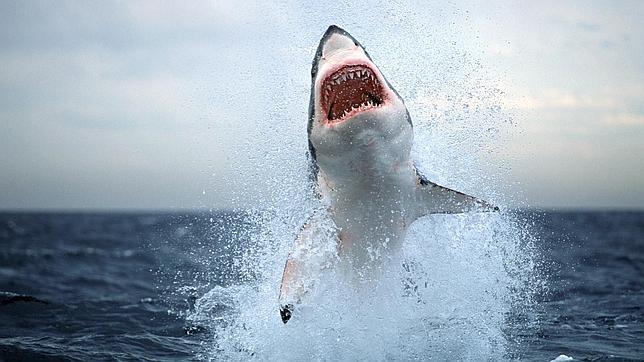
White sharks only start fights in exceptional cases.
Their hunting behavior is interesting. The entire process of catching prey can be roughly divided into stages:
- Identification.
- Determination of species affiliation.
- Approaching an object.
- Attack.
- Eating.
They attack primarily when their prey is near the surface. They grab larger specimens by the middle and pull them underwater, where they can swallow them whole.
Diseases
In the natural environment, sharks can die not only as a result of being caught by humans or attacked by killer whales. Carcharodons can suffer from parasites. Sharks often become infected with helminths. When the worms become active, they become weak, and some tissues die. Infected great white sharks experience impaired vision and sense of smell.
Carcharodons are threatened by small copepod crustaceans. They colonize the shark's gills, feeding on the shark's blood and the oxygen it receives. Gradually, the gill tissue deteriorates, and the shark dies of suffocation.
Predators have a well-functioning immune system that can protect them from autoimmune, inflammatory, and infectious diseases, but they are susceptible to cancer. More than 20 types of tumors that threaten the lives of sharks have now been identified.
Reproduction: How Great White Sharks Give Birth
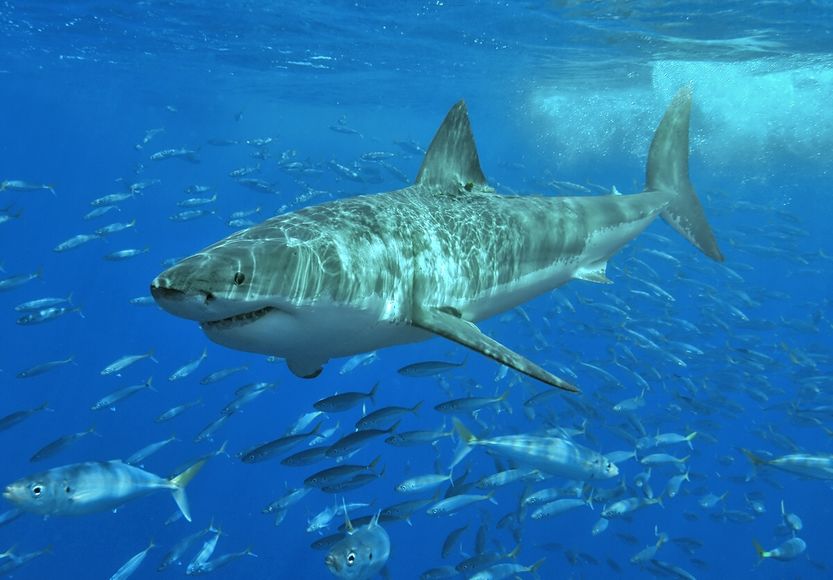
Young sharks are born adapted to independent life.
White sharks are ovoviviparous fish. The young hatch from eggs within the mother's body. They emerge fully grown. There is no connection with the mother. The species reproduces by aplacental ovoviviparity. A litter consists of 2–10 sharks. Most newborns are 5–10. Their length at birth is 1.3–1.5 m.
The eggs produced by the mother's body become a source of nutrients for the growing embryos. In the womb, the pups have a distended abdomen, up to 1 meter long, containing the yolk. At later stages of development, the stomachs become empty. Newborn sharks are most often encountered by observers in calm waters. They are well developed.
How long does it live?
The average lifespan of a carcharodons is 70 years. Females reach sexual maturity at 33 years of age, while males reach sexual maturity at 26. They stop growing at this point.
Attack on a person
Humans are of no interest to sharks, although there have been many recorded cases of them attacking. Most often, the victims are divers and fishermen who get too close to the predator.
A "shark phenomenon" has been observed in the Mediterranean Sea, whereby carcharodons swim away after a single bite. Experts believe that hungry sharks can easily prey on humans.
Most often, people die from blood loss, drowning, or shock when encountering sharks. When attacking, predators wound their prey and wait for it to weaken.
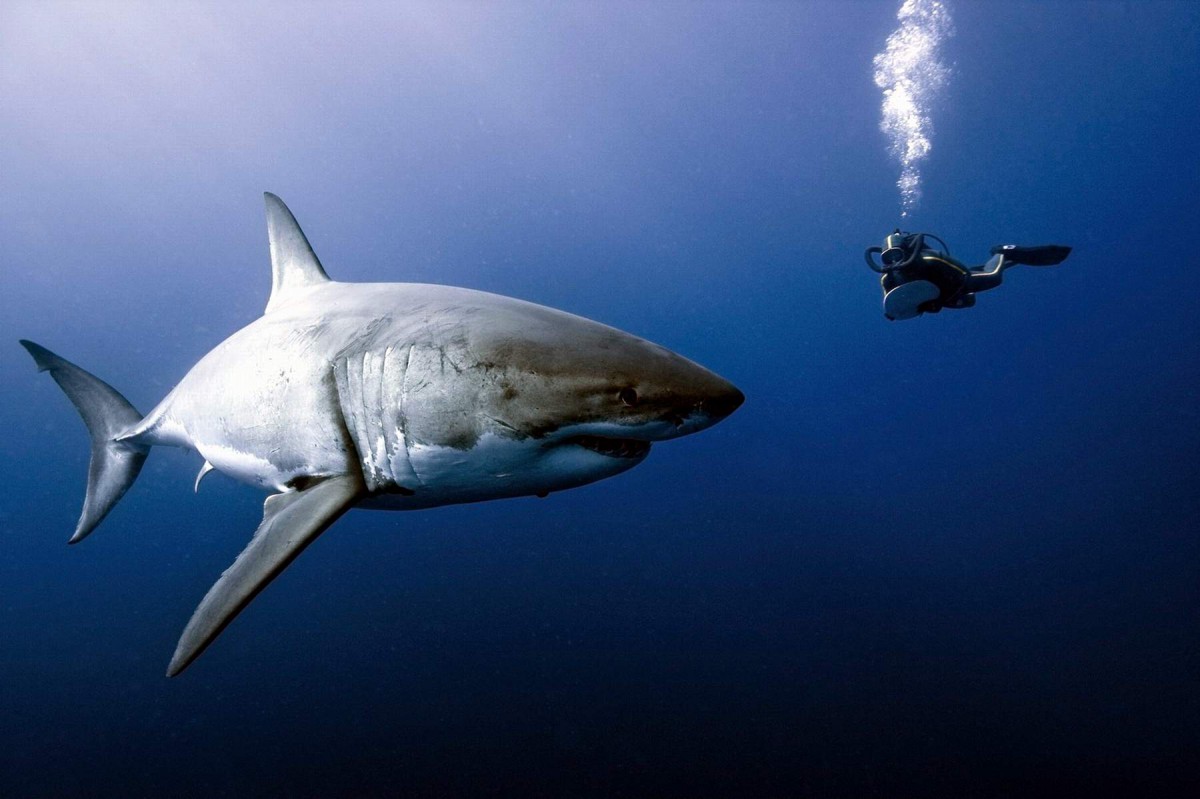
Playing dead is the worst option when confronted by a shark.
Solo divers can be partially consumed by sharks, while those diving with partners can be rescued. Those who actively resist are often saved. Any strikes can force the predator to retreat. Experts advise, if possible, to strike the shark in the eyes, gills, and snout.
It's important to constantly monitor the predator's location; it may attack again. Sharks readily feed on carrion, so the sight of unresisting prey won't deter them.
Interesting facts
Sharks are a poorly studied species of predatory fish. Their decline in numbers impacts the food chain, as they are integral to the world's ocean ecosystem. Although little is known about great white sharks, researchers have uncovered a number of interesting facts about these animals:
- Females have thicker skin than males. This is due to the male roughly holding his partner during mating, biting her fins.
- Shark teeth are coated with fluoride, which prevents them from decaying. The enamel is made of a substance that is resistant to the acid produced by bacteria.
- Sharks have well-developed senses of sight, smell, hearing, touch, taste, and sensitivity to electromagnetic fields.
- Sensitive olfactory receptors enable the shark to detect the scent of a seal colony located 3 km away.
- When hunting in cold waters, carcharodons are able to raise their body temperature.
Due to industrial fishing, the number of great white sharks is rapidly declining. Experts estimate that there are only about 3,500 left worldwide. If the sharks become extinct, this could lead to the extinction of many marine plants.