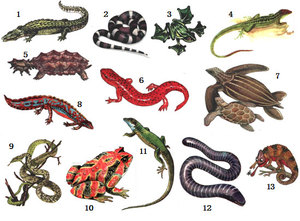
 The class of vertebrates that occupy an intermediate position between amphibians and mammals is called reptiles. They are most similar to birds. The following animals belong to this class:
- crocodiles;
- turtles;
- snakes;
- lizards;
- dinosaurs (fossil form of animals from the Mesozoic era).
Content
General characteristics of reptiles
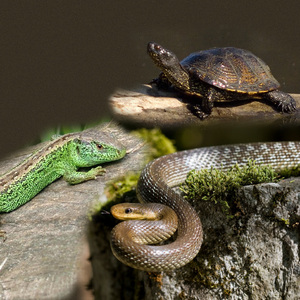 Like amphibians, reptiles are cold-blooded creaturesIn other words, their body temperature is determined by their surroundings. To some extent, reptiles are able to regulate their temperature by covering themselves to protect themselves from hypothermia. For example, in winter, animals hibernate, and during periods of extreme heat, they begin hunting at night.
Reptiles have tough skin covered in scales. The main function of these scales is to protect the body from drying out. For example, in turtles, the upper protection is provided by a strong shellCrocodiles have hard plates of bony origin on their heads and backs.
Reptiles breathe exclusively through their lungs. In some species, the lungs are equal in size and development, while in others, such as snakes and lizards, the right lung is larger and spreads throughout the body cavity. Turtles have immobile ribs due to their shell, so ventilation is organized differently. Air enters the lungs through the swinging movements of the front legs or through vigorous swallowing.
The reptile skeleton is fairly well developed. The number and shape of ribs varies by species, but they are present in all representatives of the class. Almost all turtles have fused bony plates in their carapace and spine. Snakes have ribs. designed for active crawlingLizards use their ribs to support fan-shaped membranes for gliding in the air.
Most reptiles have a short tongue that cannot be protruded. Snakes and lizards have a long tongue, divided in two, that can extend far from the mouth. For these animals, this is the most important sensory organ.
Small reptiles develop distinctive coloration to protect themselves from the environment. Turtles are well protected by a thick shell. Some snakes are venomous.
Reptiles share similarities with birds in their reproductive organs. Reptiles are generally oviparous. However, in some species, the eggs remain inside the oviduct until hatching. Some lizards and vipers belong to this type.
Classification of reptiles and their distribution
Modern reptiles are divided into four groups:
- turtles (about 300 species);
- crocodiles (25 species);
- Squamates (about 5,500 species of lizards and snakes);
- tuatara
The last order belongs to the only representative of the beaked-winged animals among reptiles.
Reptiles distributed throughout the worldThe greatest numbers are found in warm regions. In regions with cold climates and a lack of tree vegetation, reptiles are practically absent. Representatives of this class live on land, in water (fresh and salt), and in the air.
Ancient fossil reptiles
Reptiles have been known since the Carboniferous period. They reached their largest sizes in the Permian and Triassic periods. This period also saw increased reproduction of animals, which colonized new territories. During the Mesozoic era, reptiles dominated both land and water. It is not without reason that this period was called the Age of Reptiles.
Turtles
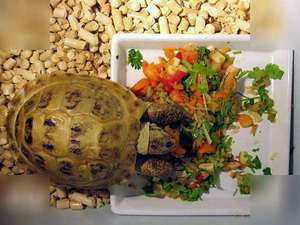
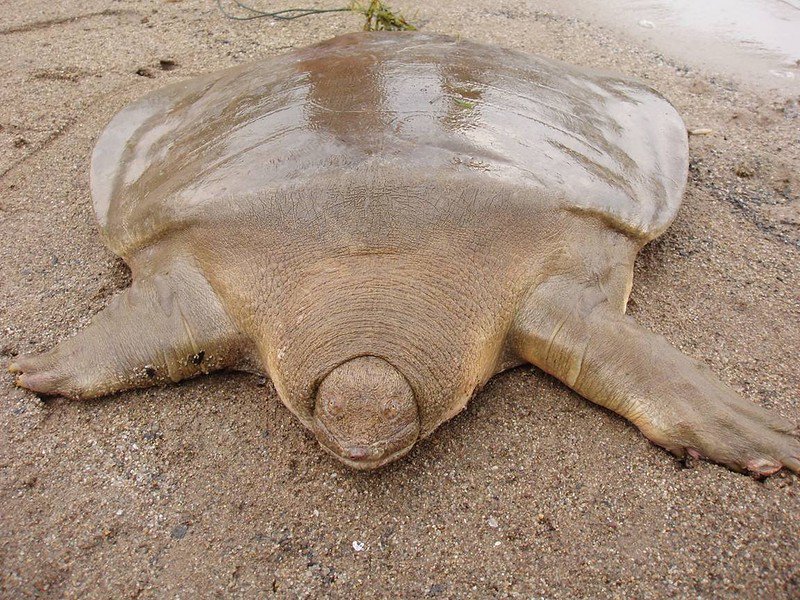
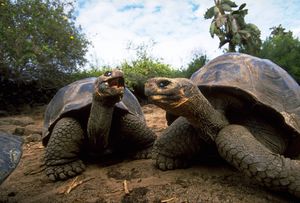 Turtles are one of the most well-known species of reptiles. There are both marine and terrestrial representatives of these animals. The species is distributed throughout the world. The animals can also be keep it at homeThe most ancient turtles were discovered 200 million years ago. Scientists believe they descended from a primitive species of cotylosaurs. Turtles are virtually harmless animals and are not dangerous to humans.
Animals of this species have a bony shell. On the outside, it is formed by numerous individual horny tissue elements connected by plates. Land turtles have excellent lungs for respiration. Aquatic representatives of this class breathe through the mucous membrane of their pharynx. The main characteristic of these animals is their longevity. The average lifespan of turtles exceeds that of any other reptile.
Crocodiles
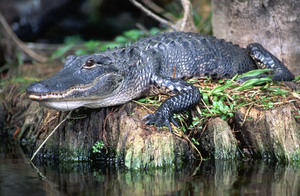
The animals are among the most dangerous reptile species. The origin of crocodiles is associated with ancient reptiles, the size of which exceeded 15 meters in lengthScientists have found remains of ancient crocodiles on every continent. Modern representatives of this class are more typical in size. However, they still remain the largest species among reptiles.
Crocodiles spend almost all their time in the water. Only the animal's ears, nose, and eyes appear above the surface. Crocodiles swim using their webbed tails and paws. However, only a few representatives of this class—the saltwater crocodiles—can survive in the deep. Crocodiles nest on dry land. In some cases, they also emerge from the water to bask.
Reptiles have a strong, powerful tail and are also characterized by high speed on land. Therefore, crocodiles are extremely dangerous to humans. A sudden, sudden lunge can catch people off guard. Alligators are considered the most dangerous crocodilians.
Chameleons
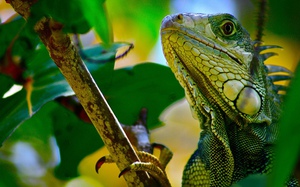 This type of lizard is familiar to almost everyone. These reptiles are known for their unique coloration, which serves as camouflage. The animal's skin can change color depending on environmental conditions. Chameleons live in treesSome people keep these cute creatures at home.
Reptiles are quite demanding in terms of care. They require a spacious terrarium equipped with special lamps. A tree, a small pond, underfloor heating, and excellent ventilation are also required. Chameleons feed on insects, so their owners will also need to ensure they have enough to eat them.
Iguanas
Nowadays, more and more people are choosing iguanas as pets. This lizard also requires special care. Iguanas should be kept in a special terrarium that can maintain a specific temperature. Pet iguanas prefer fresh fruits and vegetables, as well as greens. With proper care and optimal living conditions, these lizards can grow quite large. Maximum iguanas weigh 5 kgKeeping such a pet at home is difficult; it requires a large financial investment, as well as significant labor costs.
Iguanas are among the rare reptile species that molt. Most reptiles undergo this process in two days, but for iguanas it can last for several weeks.
Monitor lizards
There are approximately 70 species of monitor lizards. They inhabit a wide variety of habitats. Their sizes are quite impressive. Short-tailed monitor lizards are about 20 cm long, while others are much larger (around 1 meter). The Komodo dragon is considered the largest monitor lizard, reaching up to three meters in length and weighing up to 1,500 kg. It's no wonder these animals are called modern dinosaurs.
Monitor lizards are covered with large scales. They have strong paws with a tenacious grip and powerful long tailThe animal's tongue is also large, divided at the end. Lizards can smell only with their tongues. Gray and brown shades predominate in the animals' coloration. Young representatives of the class often have spotted or striped scales. Monitor lizards inhabit regions with warm climates. They are most commonly found in Australia, Africa, and southern Asia. Depending on their habitat, monitor lizards are divided into two types. The first type inhabits desert areas with dry trees and shrubs. The second type is found closer to tropical forests and bodies of water. Some monitor lizards live on tree branches.
Geckos
Unique reptiles that can adhere to any surface, even the smoothest. Geckos can climb smooth glass walls, hang from ceilings, and do many other interesting things. A lizard can hold on to a surface with just one foot.
Snakes
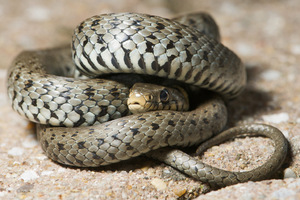 These are well-known representatives of the reptile family. Their main difference from other species is their body shape. Snakes have a long body but lack paired limbs, eyelids, and an external auditory canal. Some of these characteristics are present in individual lizard species, but collectively, they are unique to snakes.
Snake The body consists of three elements:
- head;
- body;
- tail.
Some representatives have retained vestigial limbs. A large number of snake species are venomous. They have grooved or channeled teeth that contain venom. This dangerous fluid comes from the animal's salivary glands. All of the snake's internal organs differ from standard ones. They are elongated. The animals lack a urinary bladder. The eyes are covered with cornea, which is formed by fused eyelids. Diurnal snakes have transverse pupils, while nocturnal snakes have vertical pupils. Because these animals lack an auditory canal, they can only hear loud sounds.
Grass snakes
 These are representatives of a type of snake. Their main characteristic is that they are non-venomous. Grass snakes have brightly colored scales with a large, ribbed surface. They are common near bodies of water. They feed on amphibians and fish. Grass snakes sometimes manage to catch a bird or small mammal. These snakes do not kill their prey; they swallow it whole.
If the snake senses danger, then it pretends to be deadWhen attacked, a highly foul-smelling liquid is released from its mouth. Grass snakes breed in plant soils covered with damp moss or natural debris.
The list of modern reptiles is endless. All members of this class share certain similarities characteristic of this type of animal, as well as distinct differences. These animals are of great interest to scientists and hobbyists from all over the world. Their unique characteristics can reveal a great deal.