 Household insects are so diverse that describing even the most basic species requires more than a few fingers. However, it's still possible to classify them, for example, by their degree of danger and harmfulness to humans. To help you identify the insects you've spotted in your apartment, below are descriptions, photos, and names of each type of house insect.
Content
Classification of domestic insects
All insects can be divided into the following groups:
 Harmless insects that pose no danger to humans and do not cause damage to a home or apartment. These include silverfish, small spiders, centipedes, and flycatchers.
- Pests are arthropods that don't directly harm people but can damage food and various household items. These include moths, cockroaches, whiteflies, springtails, termites, woodlice, ants, book lice, and carpet beetles.
- Parasitic insects are those found in apartments that bite people and feed on their blood. These include mosquitoes, bedbugs, fleas, and lice.
 Harmless insects that pose no danger to humans and do not cause damage to a home or apartment. These include silverfish, small spiders, centipedes, and flycatchers.
There is also another group of domestic insects - the so-called "visiting guests"," flying in through a window, "arriving" on clothing, etc. Among them may be the parasites already described above. However, many of them are not household insects, so we will consider the first three types.
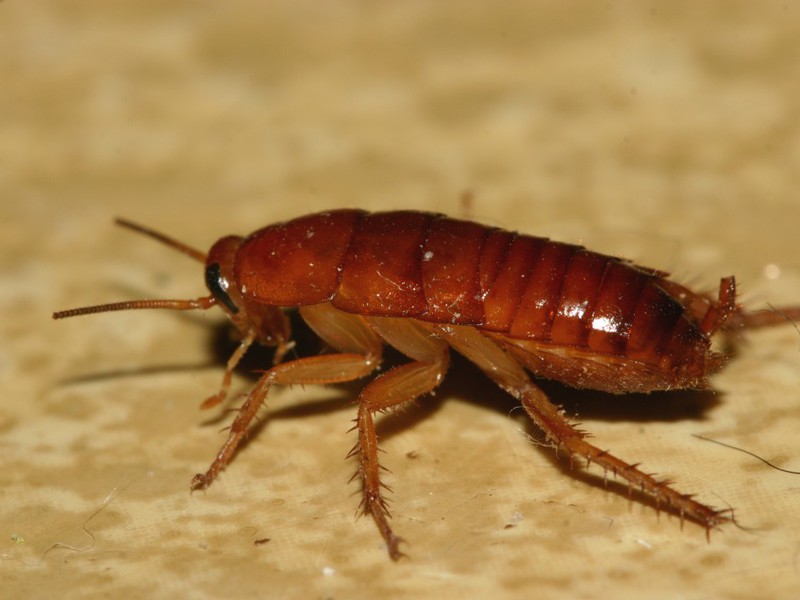
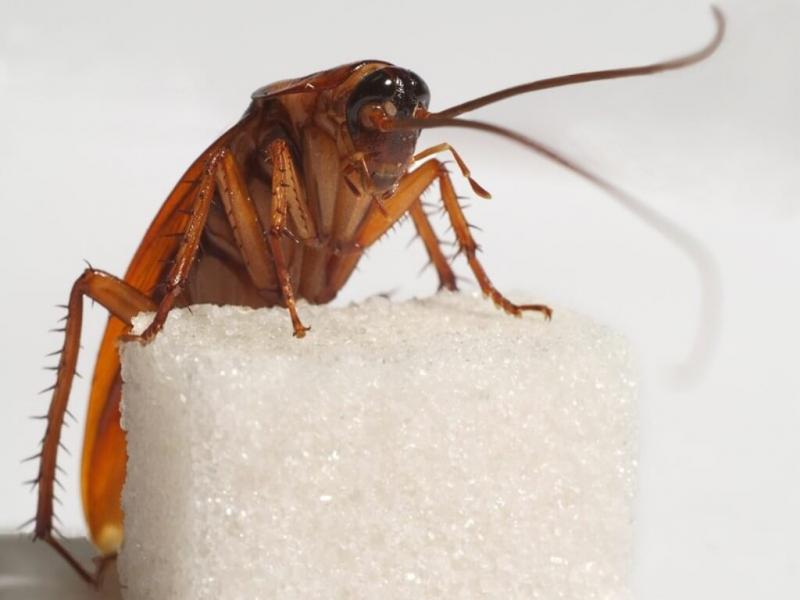
Cockroaches are probably the most common household pestsNaturally, first place goes to one of the most familiar household insects—the German cockroach (also known as the "Prusak").
The next, quite common type for our apartments is black beetleThis is a fairly large domestic insect that is gradually disappearing under the onslaught of Prussians (the German cockroach actively eats its eggs).
The last species of these insects is American cockroachAt first, it was quite rare in our latitudes, but with the development of trade, this type began to conquer the shops and warehouses of large cities, and only then – neighboring apartments.
The key to these insects successfully "taking over" a home is their biology. Cockroaches are pests that feed on any kind of food scraps and certain household items, such as paper, shoe polish, and various adhesives. Furthermore, they can simply go for quite a long time without food—sometimes even up to a month.
Cockroaches reproduce quite quickly, and the lifespan of an adult insect is about 10-15 months.
In addition to the obvious damage insects cause to various foods (by contaminating and eating them), they also carry various infectious diseases and the eggs of certain helminths. Therefore, cockroach control is essential.
Bed bugs
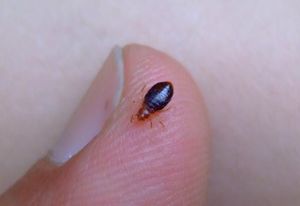
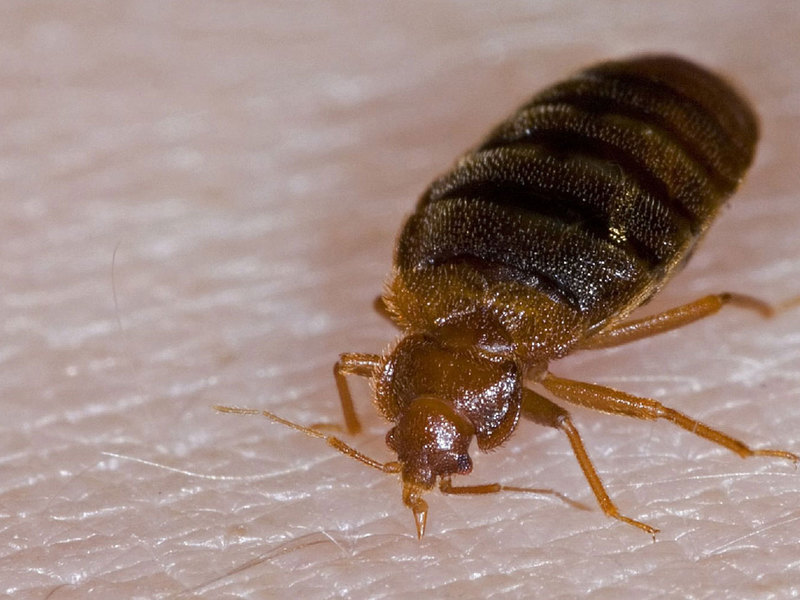
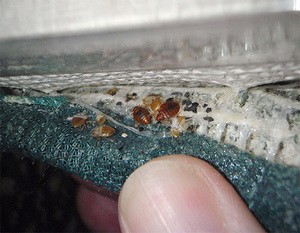 These are probably the most unpleasant parasites in an apartment. The main harm they cause to people is, of course, their bites. And although there are no scientifically proven facts yet, these domestic parasites They are infected with some infectious diseases, however, dangerous pathogens have often been observed in their bodies.
Bedbugs can live in almost any nook and cranny of the home, where they reproduce at an incredible rate. Being parasites, the insects jump onto the bed at night. bite people and begin to suck their blood. Surprisingly, the larvae begin feeding from the very beginning of their life and differ from the adults only in size.
Basically, there can be parasites in the apartment several varieties bed bugs, but it is almost impossible to distinguish them from each other without a microscope and some knowledge.
Controlling these pests is much more difficult than controlling cockroaches, as most commercially available insecticides are ineffective against them. Typically, special insecticides are used to kill bedbugs. dusts, sprays, aerosol insecticides.
House ants
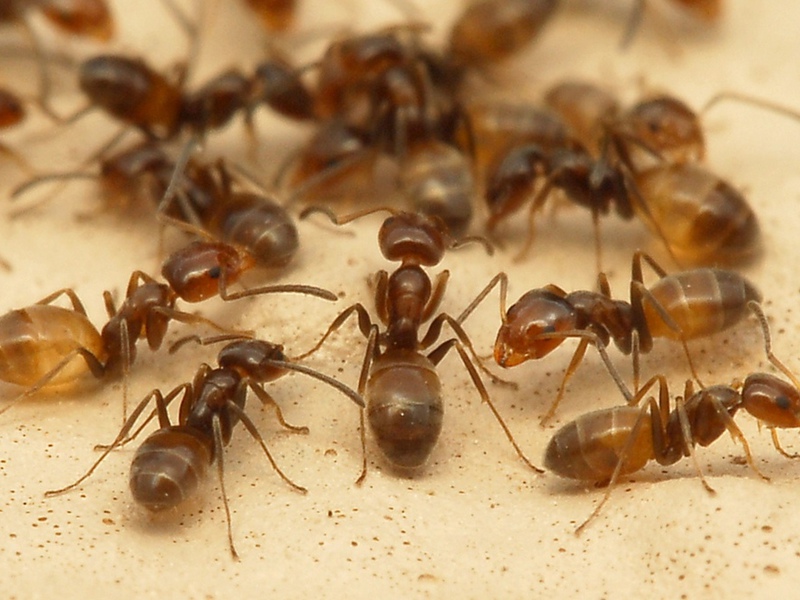
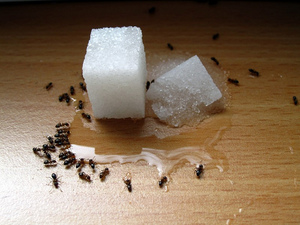 Ants are considered one of the most difficult pests to eliminate. Typically, two types of these parasites are found in apartments: thief ants and red ants, which are also called pharaoh ants. For the average person, distinguishing between these two species can be very difficult, but pharaoh ants are considered to be more common in apartments.
Speaking about the damage they cause, it can be noted that these domestic insects - like many of their main relatives - can spread various infections, and also spoil food products.
The main problem with ant control is that colonies often have multiple nests, which are interconnected and even located in different apartments. For this reason, destroying a single nest won't be effective: as long as the colony remains united, the pests will return to the apartment again and again.
It's essential to combat them together—preferably with all residents of the house working together. Only then will there be a positive effect; otherwise, only temporary removal of the ants will be achieved. Almost any insecticide is suitable for extermination, but the best method is still special poisoned baits.
Parasitic insects - fleas
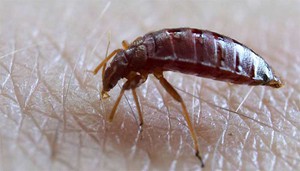 Unfortunately, the list of blood-sucking insects doesn't end with the bedbugs described above. Fleas also are parasites, which can be seen quite often in apartments.
In fact, fleas don't have a "permanent home": they can be found both in the home and in the natural environment. In an apartment, they typically hang out near pets' resting areas, where they parasitize by sucking blood.
Fleas are domestic insects that readily swap hosts (for example, humans). These parasites require blood for both nutrition and reproduction—without blood, the female's eggs cannot develop.
Theoretically, fleas can carry a large number of fatal diseases—from brucellosis and encephalitis to typhus and plague—and therefore require especially careful control. But even when the insect itself isn't infected, the bite is very painful, can cause severe itching and the formation of pustular inflammation on the skin.
In general, getting rid of fleas isn't that difficult if you do it right:
- First, you need to kill insects on your pets, in their resting areas and bedding.
- Then you need to treat all the rooms, since flea larvae can be observed behind baseboards, in cracks in floors, and in floor rags.
Moth
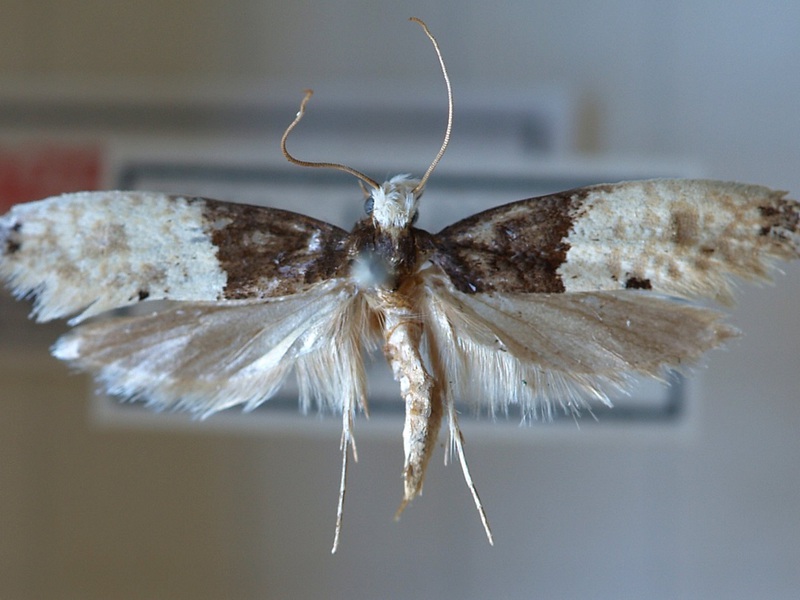
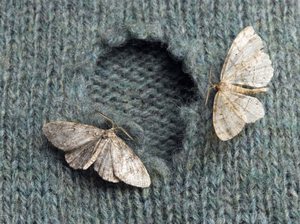 This is a very large group of insects, which also includes several varieties of household pests. Some feed on cereals and groceries, spoiling the food, while others damage clothing, typically preferring wool and fur items.fur moth).
Adult moths are butterflies. They can be active pests in an apartment during the caterpillar stage, but adult moths may not feed at all.
That's why killing a single moth hovering near a closet is unlikely to eradicate the pest population—most likely, the adult moth has already laid eggs, and the subsequent "battle" must be directed against the caterpillars, which hatch approximately two weeks after laying.
The fur moth is destroyed insecticidal agents, and also, when possible, elevated temperatures (up to 75C) or, conversely, freezing of clothing.
Unfortunately, folk remedies based on lavender and various herbal infusions won't rid your apartment of moths; they can only be used as a preventative measure. Food moth control primarily focuses on destroying infested food.
Woodlice
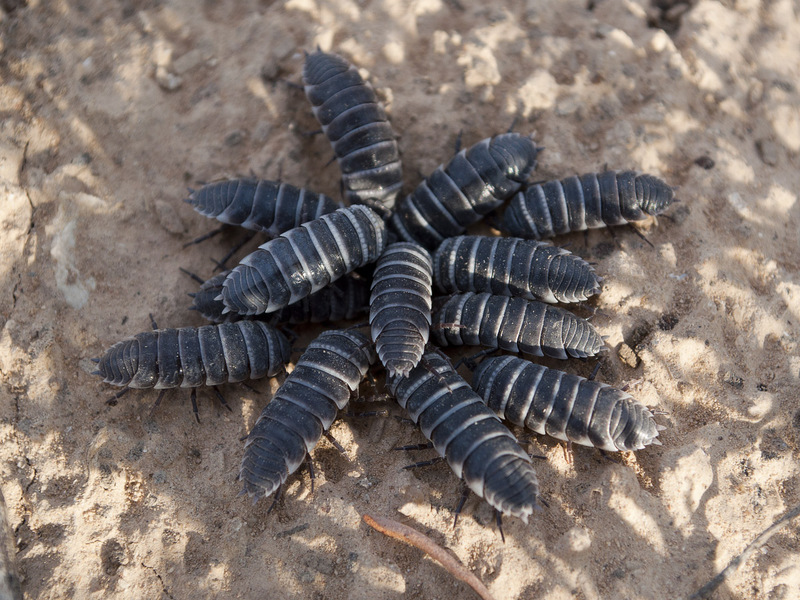
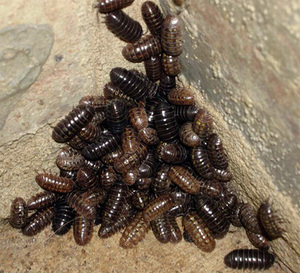 Woodlice cannot be classified as apartment-dwelling insects—these arthropods are a type of higher crustacean.
Big they do not cause harm to humansOnly occasionally do woodlice damage vegetable stores or young shoots of houseplants. However, encounters with these miniature companions are not always pleasant.
Most often, woodlice live in those rooms in which the environment is constantly kept high humidity or there are water leaks: these are usually toilets and bathrooms. These areas also provide plenty of dark, secluded hiding places (insects dislike bright light) and a food source—for example, a trash can where they can feed on various food scraps.
Woodlice are, to a certain extent, dependent on water for their life cycle, so getting rid of them is quite simple. Typically, all you need to do is eliminate humidityFor example, fix a leaky faucet or dry out the bathtub. If these measures don't produce the desired effect, you can get rid of woodlice with any insecticide (Delta-Zone, Get, Dobrokhim FOS, Cyfox, etc.).
Skin beetles
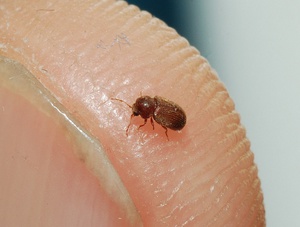 They are one of the most striking examples of insects in an apartment, which the owner is often unaware of. The reason is very simple to explain: adults barely reach the size of 3 mm, and the larvae are 1.5 mm..
In general, there are quite a few different species of carpet beetles. In the natural environment, they almost always settle in places where organic remains of birds or animals are abundant. In an apartment, these insects settle in places where there are clothes, leather, or paper.
In residential areas these insects they feed on books and clothing items And so on. It's worth noting that carpet beetles are true "generalists" in their diet: they can be found, among other things, in herbariums and cereals. They can even feed on dust particles and breed for extended periods behind baseboards.
But damage to household items and food is not the worst thing you can expect from carpet beetles. Since these household insects are capable of the cause of people's defeat helminths and even a number of infectious diseases, so their timely destruction is very important.
As a rule, carpet beetles are removed in different ways aerosol insecticides, but folk remedies can also be of significant help in the case of these pests. For example, the larvae of these insects cannot stand the scent of wormwood and lavender.
Silverfish
These are probably the quietest and most harmless insects. Their lifestyle can be compared, for example, to woodlice: these tiny companions also love warmth, darkness, and moisture.
These pests feed on various organic matter found in dust, bread crumbs, sugar on the table, and sometimes on everything that carpet beetles love.
Silverfish don't reproduce in large numbers and are most often encountered in the evenings, when apartment owners turn on the lights, catching the pests off guard. Silverfish are rarely targeted for control and are usually removed along with other insects. Various aerosol insecticides are most often used for this purpose.
Lice
The louse is blood-sucking parasiteThese insects are attached not to a home, but to the person themselves, and are incapable of remaining outside the body. Adult lice spend most of their time firmly attached to human hair, and crawl to the skin's surface every couple of hours to feed.
Their eggs are called nits, and they can significantly spoil the appearance of hair. As a result of lice feed on human blood And thus, they bite constantly, causing intense itching. Today, there is a vast arsenal of special anti-lice medications:
- combs;
- sprays;
- pediculicidal shampoos.
Spiders in the home
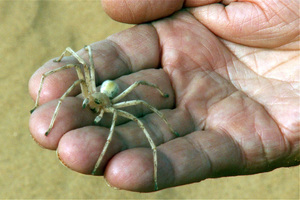 They are also an example of invertebrates living in an apartment that are not classified as insects. The presence of spiders is probably the most frightening thing you can expect from them: since spiders in an apartment are not neither pests nor parasites.
On the contrary, spiders can be considered helpful in the fight against other insects, as their main "task" in the home is to catch mosquitoes, cockroaches, and flies. So, when spiders don't cover an entire room with their webs, they can be considered more useful.
Spiders are not often numerous in an apartment, so it is very easy to get rid of them: as a rule, they are simply caught, for example, with a broom and throw out the cobwebs at the same time.
To summarize, it should be said that it is necessary to combat household insects from the moment they are discovered in the apartment. Numerous manufacturers produce products to exterminate many insects. special drugs in various forms.
These drugs can be presented as powders, sprays, gels, solutions, sticky tapes, traps, and also have pressed or tablet form.