 Butterflies always evoke delight with their grace and delicate beauty. These fluttering creatures have long been symbols of beauty and rebirth. They were associated with eternity, love, and good fortune. For this reason, they often became the subjects of legends and myths. One of the most striking representatives of this order of insects is the peacock butterfly. In this article, we will describe the appearance and habitat of this beautiful fluttering creature.
Peacock eye description and photo
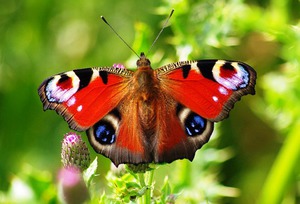
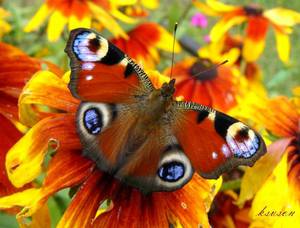
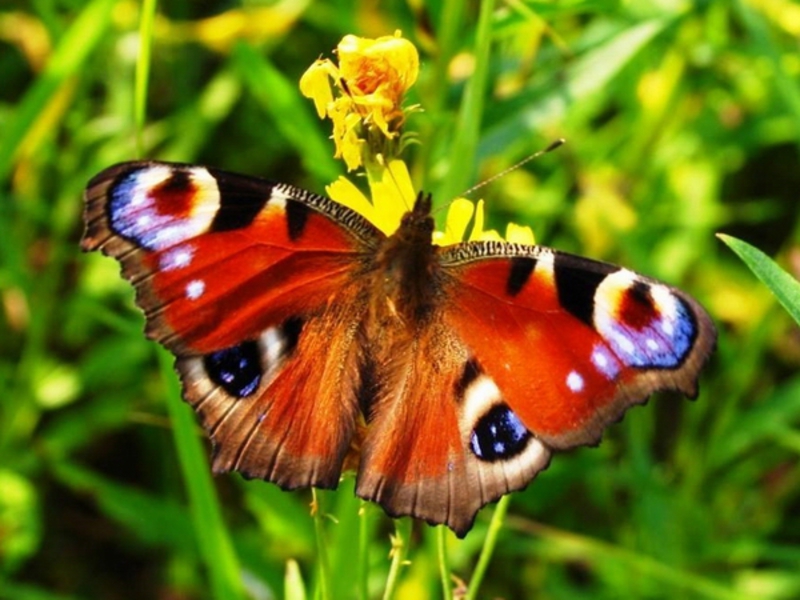
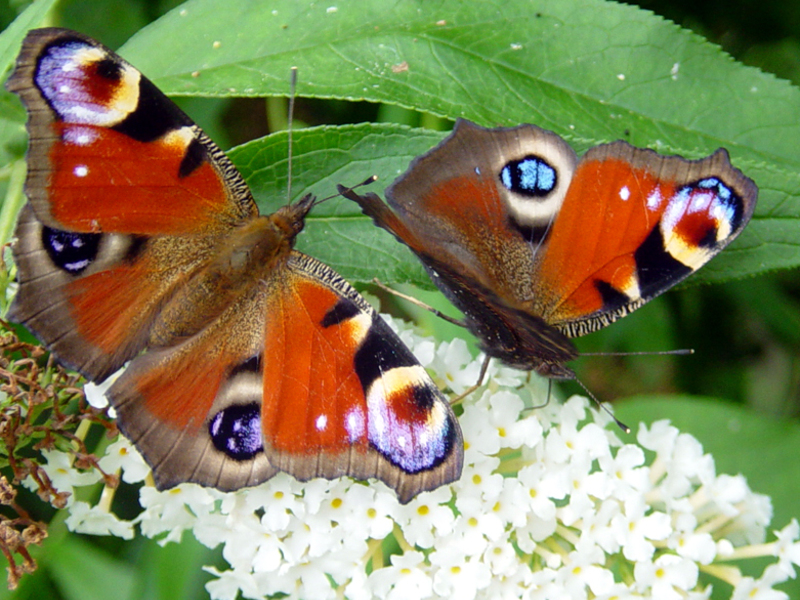
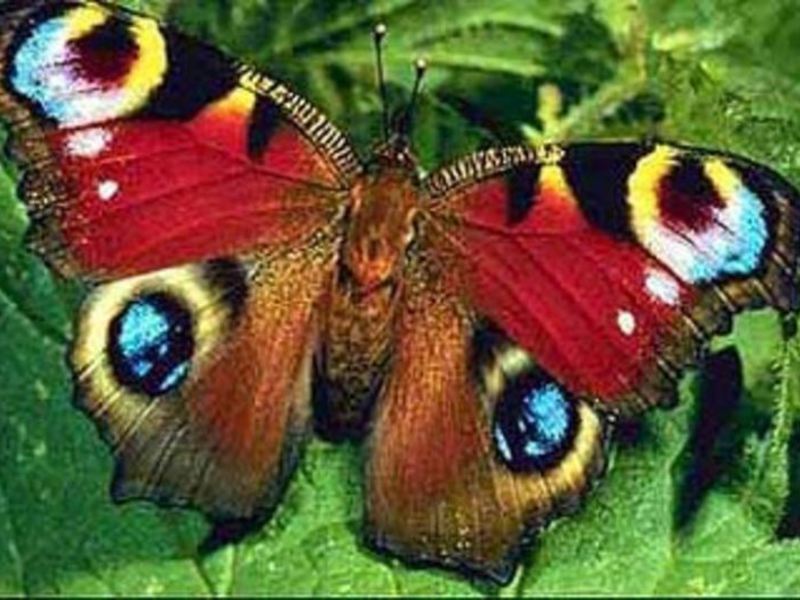
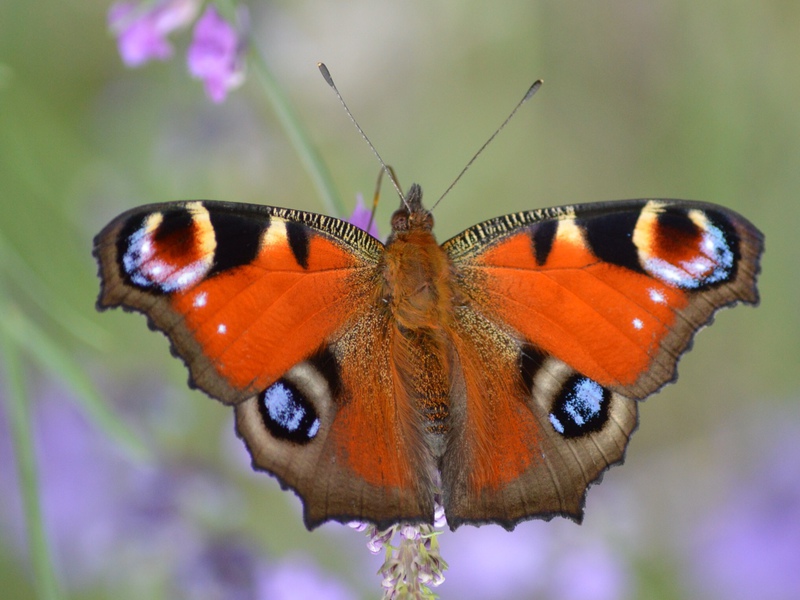
Among the many insects, butterflies are the most colorful representatives that people never tire of admiring. Peacock butterfly The butterfly immediately attracts attention with its enormous eyes. These four large, bright spots on the insect's wings are very reminiscent of the spots on a peacock's tail, which is where the winged insect got its name. The spots are not only decorative but also serve as a means of protection from enemies. When a bird approaches, the butterfly flaps its bright wings, causing the bird to fly away in alarm.
The peacock butterfly is a diurnal species of the Nymphalidae family. 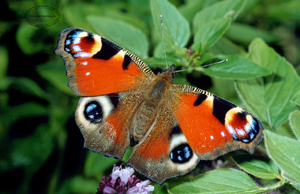 Butterflies belong to the arthropod insects of the order Lepidoptera.Their wings are reddish-brown with a black-red border along the edges. Large bluish-blue eye spots are located at the four corners of the wings. A black-gray tint is clearly visible under the wings. The photo clearly shows that the butterfly has simple wing shapes with shallow notches along the edges. The body is black, with a reddish tint visible only in the upper part.
Females are larger, with a fragile wing span reaching 5–6 cm. Males are slightly smaller, reaching a maximum of 4.5–5.5 cm. The intensity of the butterfly's color always depends on the air temperature at the time of pupation.
Habitat and favorable environment
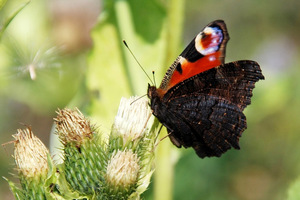
These bright and beautiful creatures are typical inhabitants of Eurasia. They They are found from the territory of Spain to the borders of JapanThey are most abundant in Germany, where the peacock butterfly was named Butterfly of the Year in 2009. The most favorable habitat for these creatures is open space. They feel most comfortable fluttering around:
- meadows;
- steppes;
- forests;
 ravines;
- forest edges.
 ravines;
They can often be seen in parks, squares and gardens. For normal existence and development They require life-giving moisture and space. Deserts and dense forests are unsuitable for them, and the cold climate prevents them from living in the polar tundra. They are not found on the island of Crete or in northern Africa.
Life cycle
The peacock is a migratory insect, capable of covering vast distances. In mountainous areas, they can fly at altitudes of up to 2,500 meters above sea level. These beautiful creatures are diurnal. In winter, they migrate to areas with damp, cool climates. The life cycle of this butterfly species consists of four stages:
- egg;
- caterpillar;
- doll;
- imago (butterfly).
 In warm and hot climates, two generations of peacock butterflies emerge during the warm season. In cooler climates, there is only one generation. At the very beginning of summer, the delicate butterflies emerge from their pupae and begin to flutter actively throughout the summer.
Adults spend the winter in secluded and cool places. Sometimes they may be in the pupal stateA cool climate is considered essential for normal overwintering. Sometimes, a butterfly chooses a warm place indoors for overwintering, in which case it risks dying before spring. During hibernation, a warm climate will promote a more active metabolism, which will accelerate the insect's aging.
Nutrition and reproduction
A butterfly has two main stages in its life: caterpillar and adult. Adult caterpillars feed on plant matter:
- hop;
- raspberry;
- nettle;
- willow leaves.
 When she goes through the pupal phase and passes into the state of an adult insect, it begins to feed solely on nectar. The diurnal peacock butterfly has a close relative—the nocturnal peacock butterfly. These butterflies, upon reaching adulthood, live in a state of aphagia and do not feed at all. Even as caterpillars, they accumulate a necessary food supply, which is why they are considered very voracious insects.
When the female reaches adulthood, she lays eggs, attaching them to the underside of nettle leaves. A single peacock butterfly can lay up to 300 eggs at a time. From May to August, the peacock butterfly remains a caterpillar. Its coloring is black with white speckles. They always live close to each other, separating only during the cocoon-weaving period.
The peacock eye remains in this phase for about two weeks and that’s it the doll's body is greenish in colorAfter two weeks in this phase, a beautiful butterfly emerges with beautiful long wings, captivating with its bright and delicate beauty.
It is interesting that the voracious butterfly, feeding on plant food, does not harm plantsSuch amazing insects are created only for the purpose of admiration, so obviously they cannot be pests.