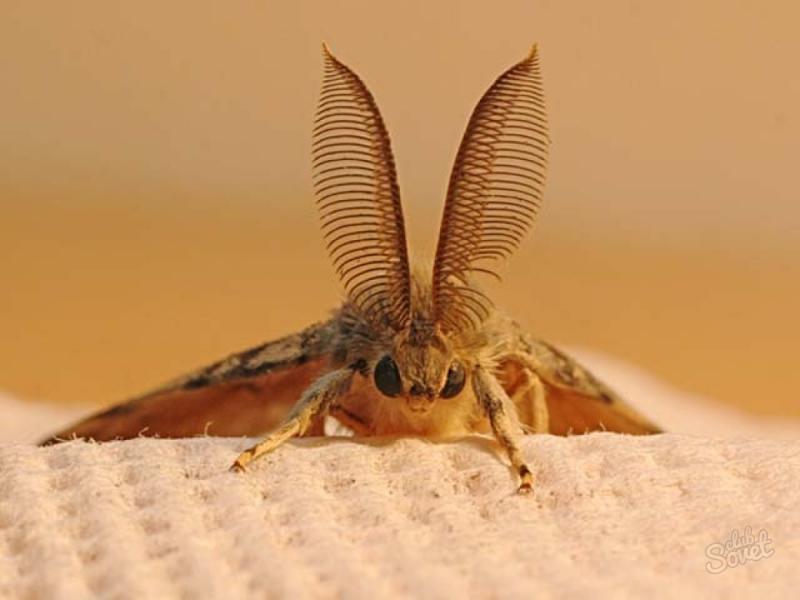
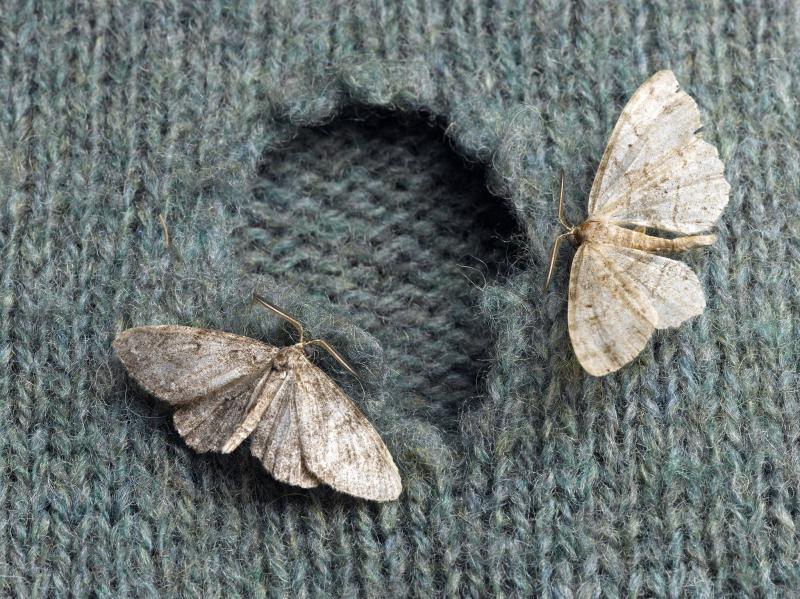
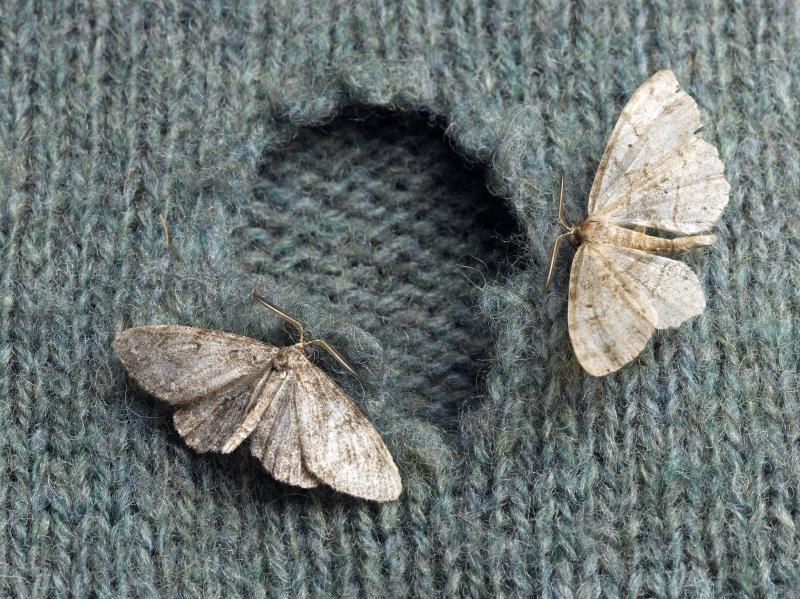
Every housewife has encountered the problem of moths in her apartment at least once in her life. These small, inconspicuous creatures fly around the house, causing a great deal of anxiety, as this means they've already laid eggs somewhere, which will hatch into voracious larvae. While moths can cause damage to clothing and furnishings, a moth in the kitchen is a whole other, very serious matter, as it puts our food, and therefore ourselves, at risk.
Content
What is a food moth?
Entomologists distinguish several species of moths that irritate people in the kitchen. The most common are the walnut moth, the grain moth, the cocoa moth, the Indian moth, the mill moth, and the granary moth—moths of the order Lepidoptera that prefer a nocturnal lifestyle.
Appearance of food moth
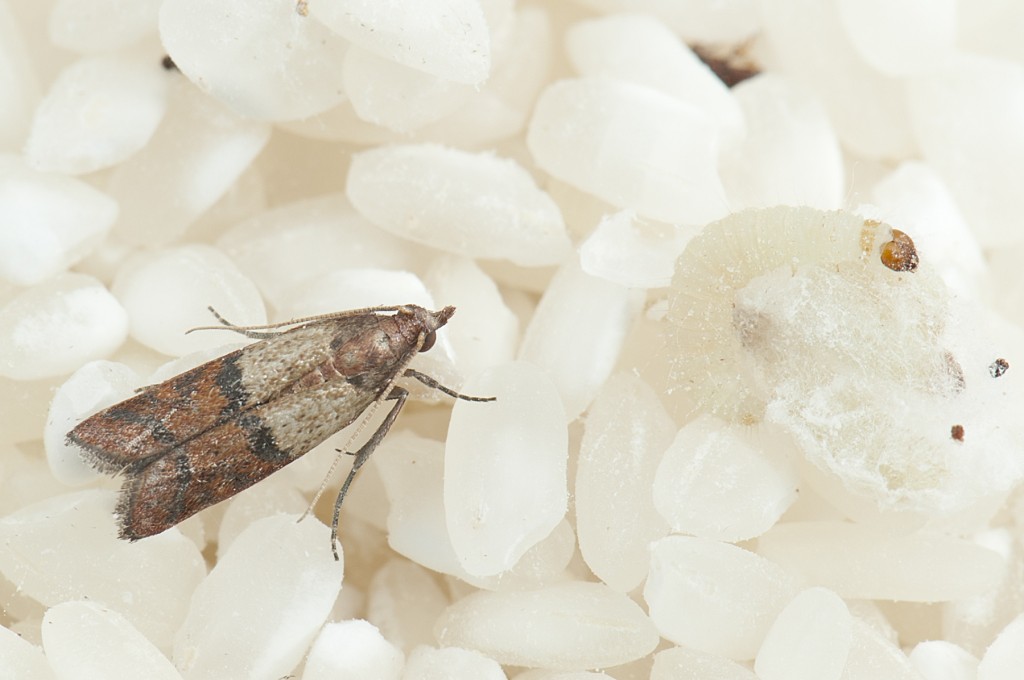
To the untrained eye, all these pest species look similar—moths no more than 1 cm long with grayish-brown wings from which scales easily fall. Insects whose larvae feed on food are commonly referred to as "food moths." Control methods also differ by species. Most often, groceries are attacked by pests: cereals, sugar, dried fruits, cereals included in ready-to-eat breakfasts, flour and flour products, pasta, baby food, tea, coffee, and nuts and seeds.
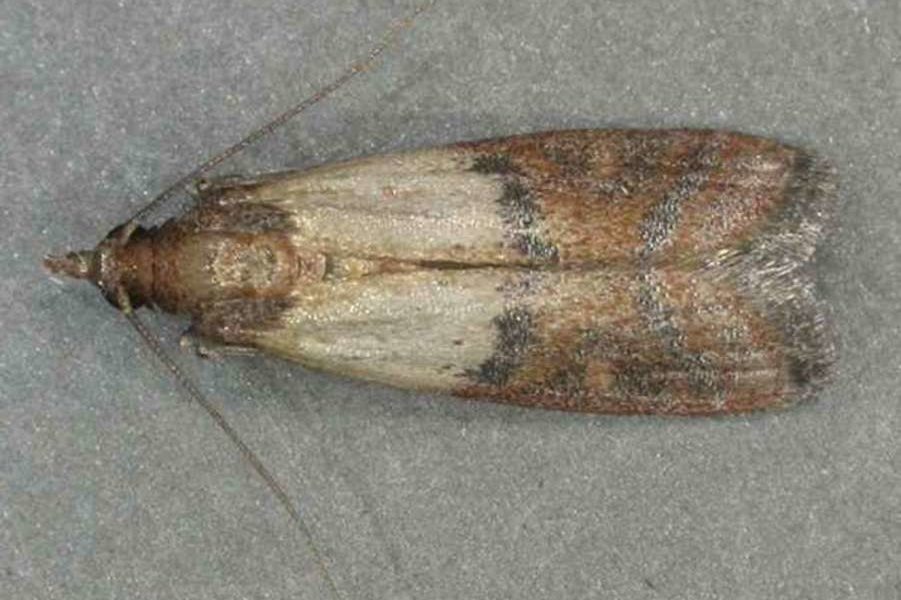
The wings of food moths can be of a single color or have stripes and dots in the pattern.
Life cycle of an insect
The moth lives for no more than two months. However, under unfavorable conditions, this period can increase to 300 days due to delayed development. At temperatures of +25°C °C and humidity from 50%, it multiplies quickly, laying eggs in hard-to-reach places and near food products.
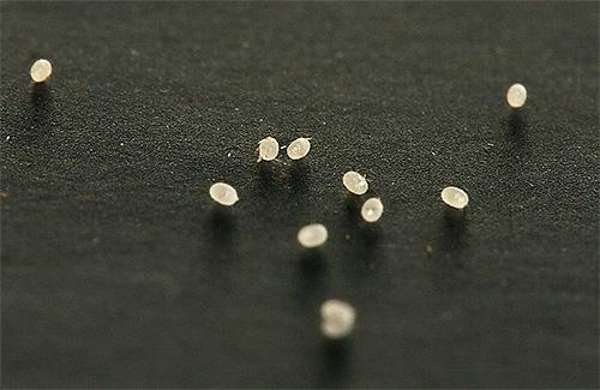
In appearance and size, food moth eggs resemble grains of semolina.
A single female produces 100 to 400 eggs, which hatch into the main pests—the caterpillar larvae. Under favorable conditions in a residential kitchen, they actively develop, feeding on food, and within a few weeks grow to a size of 14–16 mm. The larvae are light-colored and resemble worms with five pairs of legs. They are the ones who harm food products by contaminating them and eating them within their reach. When the infestation is severe, it is impossible not to notice them: they create a web around themselves, from which cocoons are later formed.
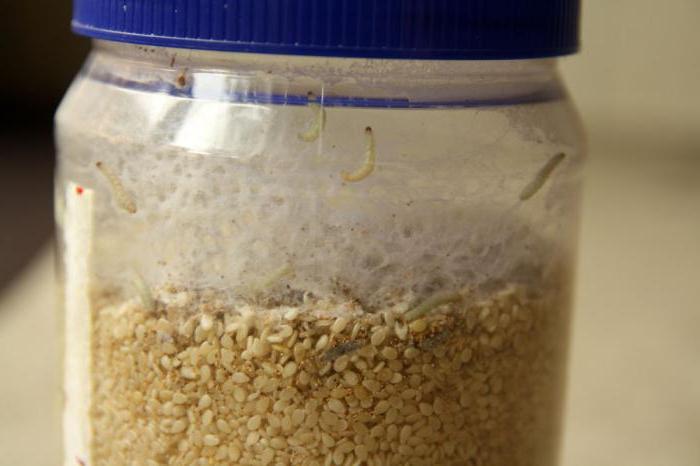
Food moth caterpillars (larvae) cause significant damage to kitchen supplies.
The food moth remains in its cocoon for 1-2 weeks to a month, gradually developing into an adult. After hatching, it emerges to mate, which can occur as early as the next day. The fertilized females then seek out a feeding site to lay their eggs. The adult lifespan does not exceed two weeks, during which time the moth does not feed, but only drinks water. Her underdeveloped digestive system prevents her from absorbing food.
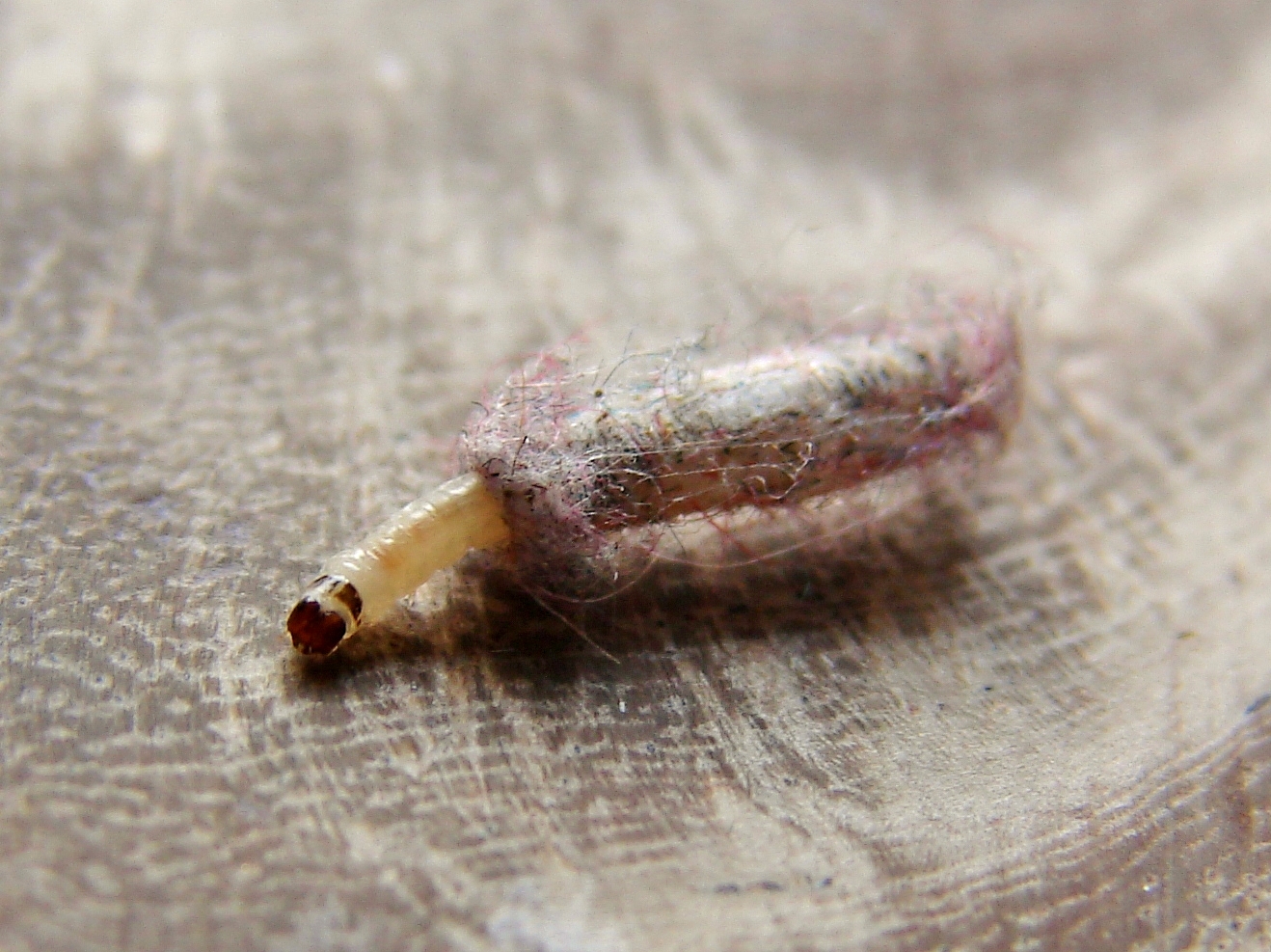
In the cocoon, the insect is motionless, so it can no longer cause direct damage to the products.
Why are food moths harmful?
Although the main kitchen pest is the moth larvae, the insect is capable of causing damage at every stage of its development:
- eggs contaminate food products, making them unusable;

If food moth eggs get into food, they should not be eaten.
- the larvae eat the supplies, spoiling them with cobwebs, excrement and dead shells;
Foods infested with food moth larvae pose a health risk.
- moths fly randomly around the kitchen, getting into liquid food, which can cause infection;
A moth that accidentally flies into food is no less of a nuisance than a fly.
- Dead insects litter the room and give it an unattractive appearance.
Dead insects give a home a neglected feel.
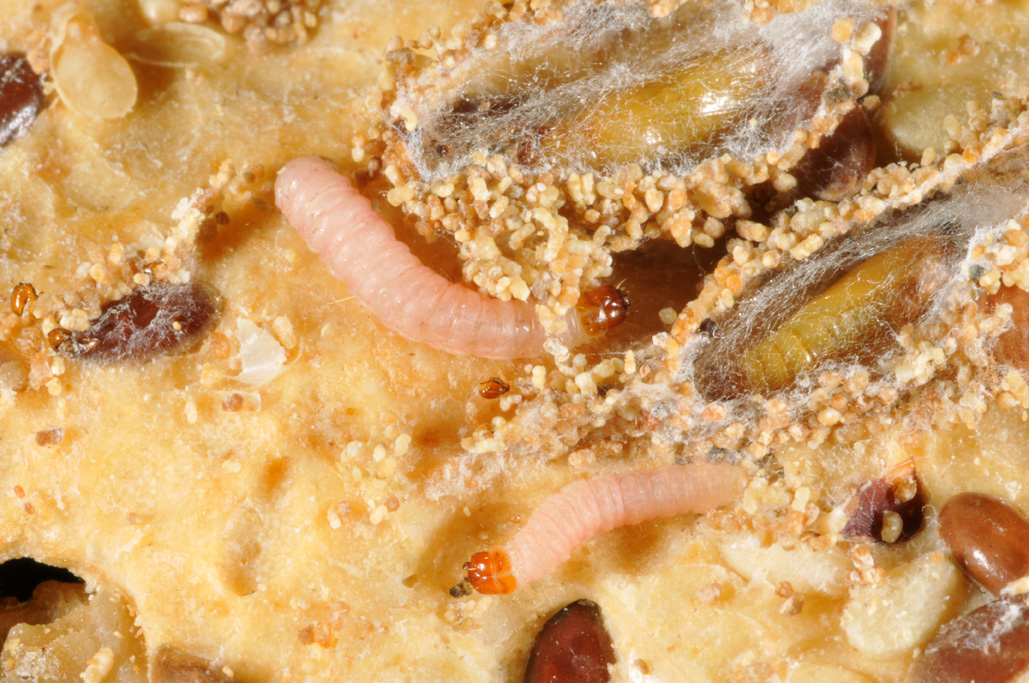
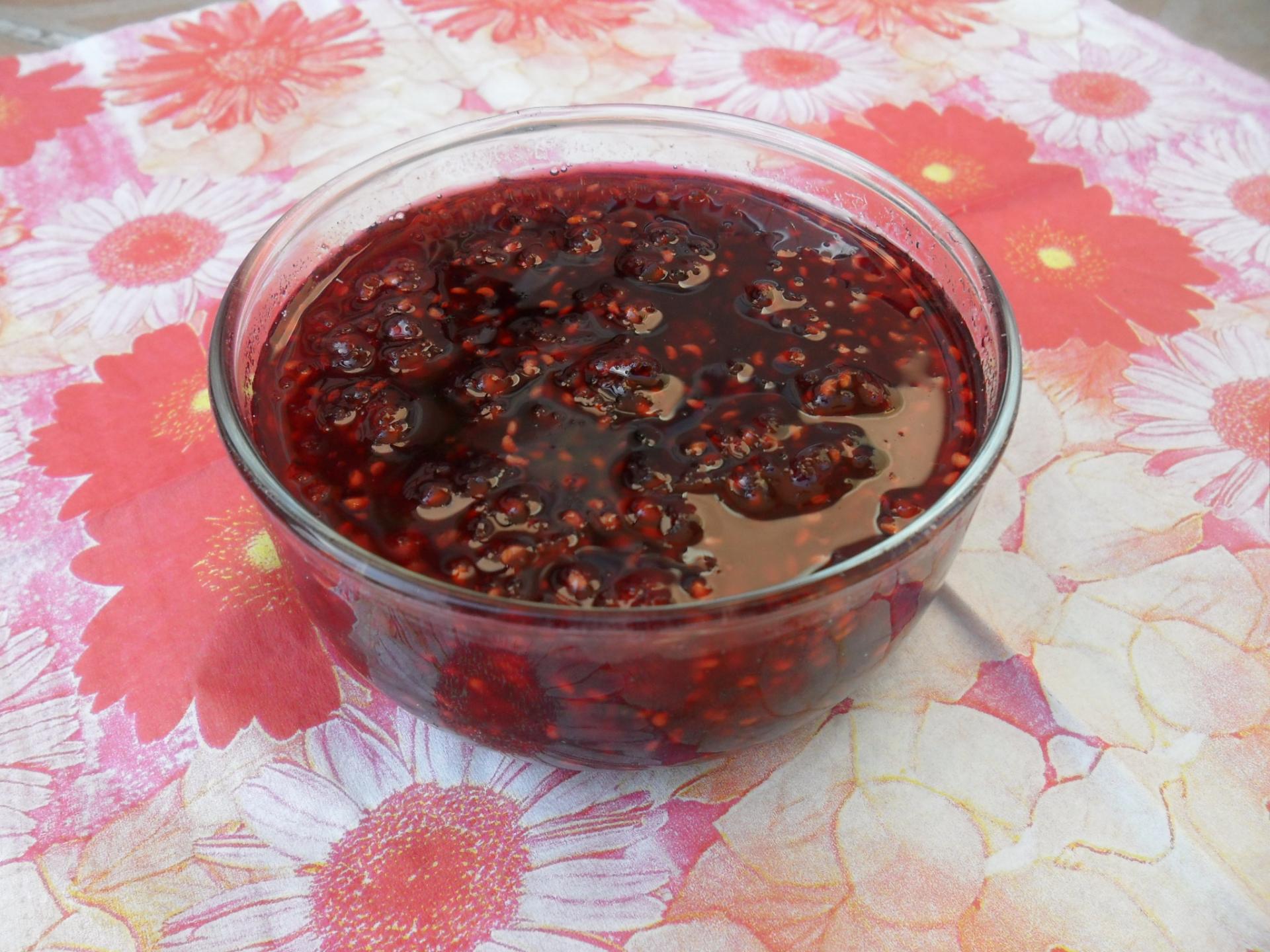
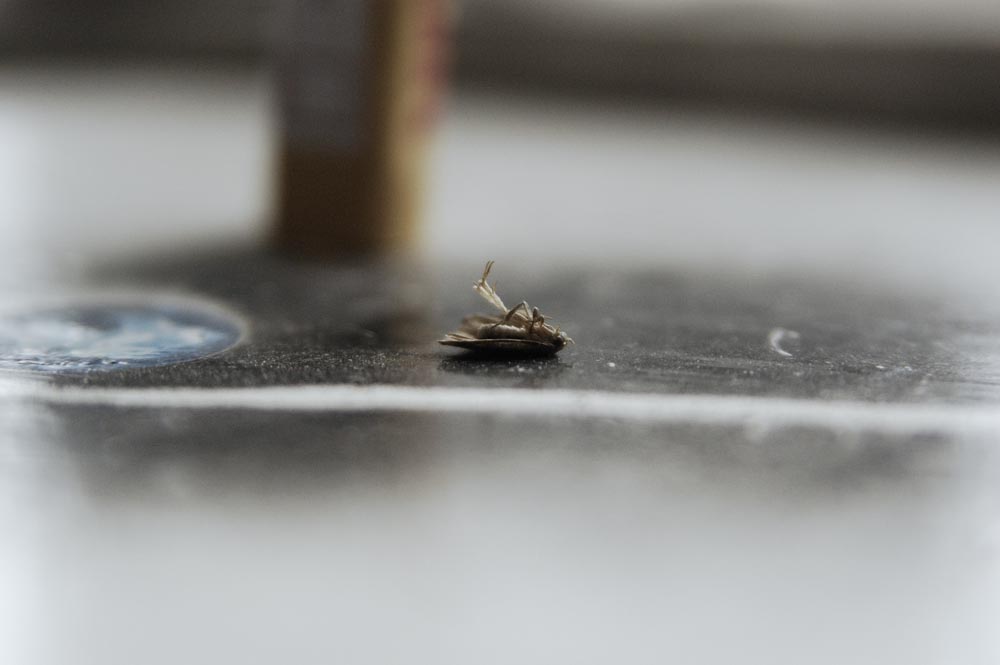
Accidentally consuming food contaminated with larvae and larval cocoons can cause an allergic reaction or serious food poisoning, which can lead to intoxication and further immune problems.
If food moths are detected in commercially produced food products, they are removed from the market. In your own kitchen, control measures begin as soon as the first traces of the pest are detected.
Signs and causes of food moth infestation
You can suspect the presence of insects in your kitchen supplies in the following cases:
- small grey-brown butterflies are flying around the kitchen - if you see even one, you can be sure that eggs have already been laid somewhere, from which larvae will soon hatch;
- lumps have appeared in small groceries, and larger ones (nuts, dried fruits) show signs of the presence of larvae, for example, nuts have been eaten from the inside;
If you find lumps in your flour when sifting, this may be a sign of moth presence.
- small light-colored caterpillars crawl along the walls of containers with cereals or on the shelves of a food cabinet;
At a more serious stage of infestation, the larvae openly crawl on the food, and a web appears.
- cobwebs are found in the products.
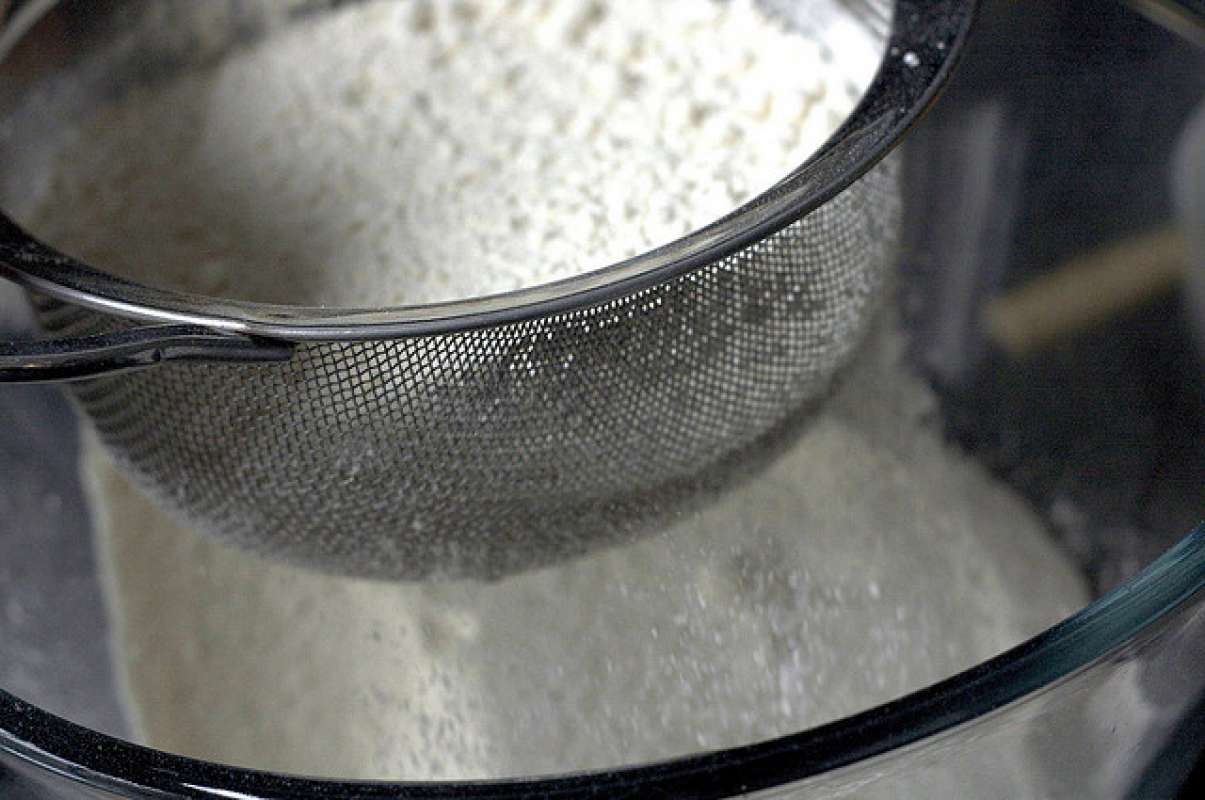
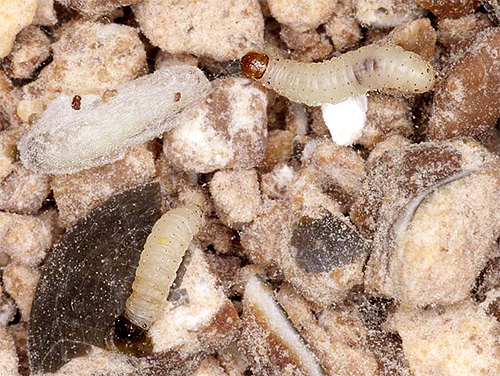
If the infestation has just begun, larvae can be difficult to spot. Therefore, inspect small groceries very carefully, and check larger items for nests.
Why does a pest appear?
To successfully combat moths, you need to know how they enter your apartment and infest areas where food is stored. There are three ways:
- With purchased products already infested with pest larvae or eggs.
- From neighbors (usually through ventilation, like most insect pests).
- Through loosely closed doors and windows of the apartment.
The presence of pantry moths doesn't mean the home is being poorly maintained. These insects come from outside and can infest even the cleanest kitchen.
The difference between food moths and clothes moths
All small moths appear similar. However, since pest control methods for food and fabric pests vary, it's important to consider a number of differences that will help you determine what type of moth you're dealing with.
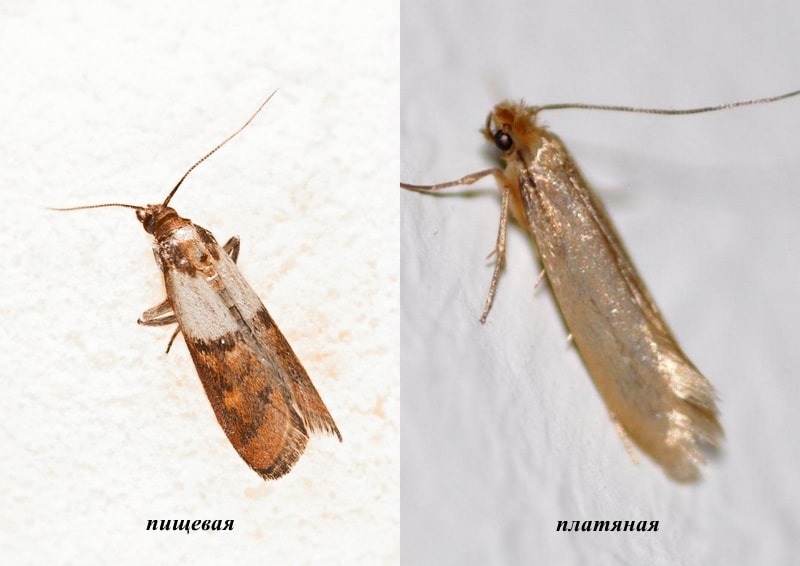
- Habitats. If moths appear in the kitchen, they're food moths. Clothes moths aren't interested in food: they're not adapted to feed or lay eggs in it. And a pest that spoils food won't damage clothing.
Food moths differ from clothes moths in size, color, and habitat.
- Size (food grade larger).
- Color. Unlike the lighter, golden-sandy hue of the clothes moth, the pantry moth is darker, with brownish-gray tones on its wings.
How to get rid of food moths at home
Methods of control can be conditionally divided into the following categories:
- mechanical (aimed at mechanically clearing the area of pests);
- chemical (insecticides);
- folk (without the use of chemicals).
Their combination is allowed.
Mechanical impact
The pest must be controlled at all stages of development, otherwise, the methods will not produce the desired results. If only the larvae are destroyed, the remaining adult insects will lay new eggs, and the treatment will have to be started all over again.
Cleaning
This is the simplest and most effective method. Sort through your kitchen items and identify the source of contamination using the signs described in detail above.
It's best to dispose of contaminated products immediately. However, if more than two-thirds of the grain is in good condition, you can try to salvage it by disinfecting it by baking it in the oven at 60°C. °C or placing in the freezer for 1-2 days.
Isolate food items that haven't been reached by the moths by placing them in dry, clean containers with tight-fitting lids. You can also store them in the refrigerator. Thoroughly wash shelves and cabinets where the moths may have been present with a solution of laundry soap.

Most often, food moths infest grocery products.
Next, vacuum the kitchen. Go into all the crevices where the pest might be hiding, paying special attention to baseboards and other dark, closed areas.
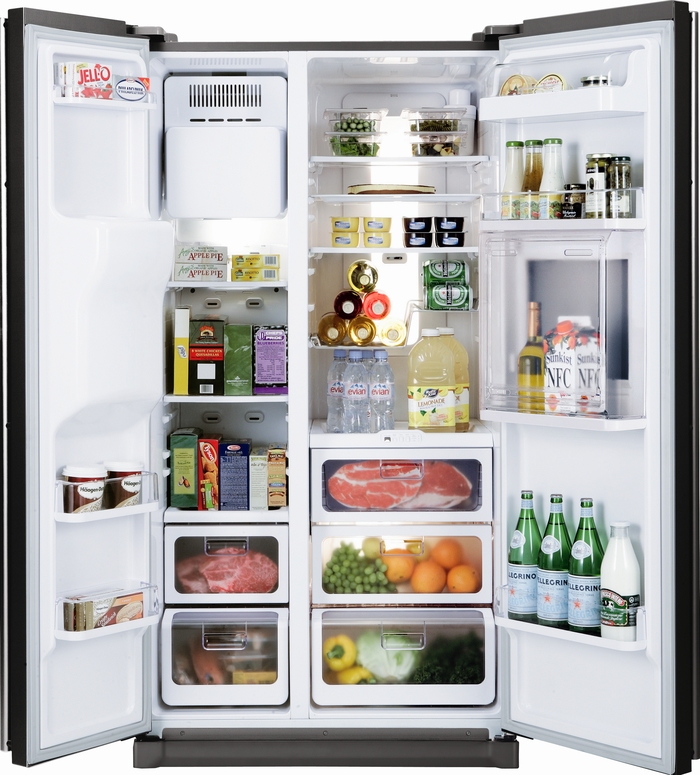
Food moths cannot stand the cold, so food is safe in the refrigerator.
Traps
Traps are available for purchase in stores. Despite the wide variety, they all operate on the same principle: mechanically destroying the insect. They typically contain an adhesive base and a pheromone bait. The adhesive is applied to cardboard or thick paper, and the bait is either incorporated into the adhesive or included in a separate packet.
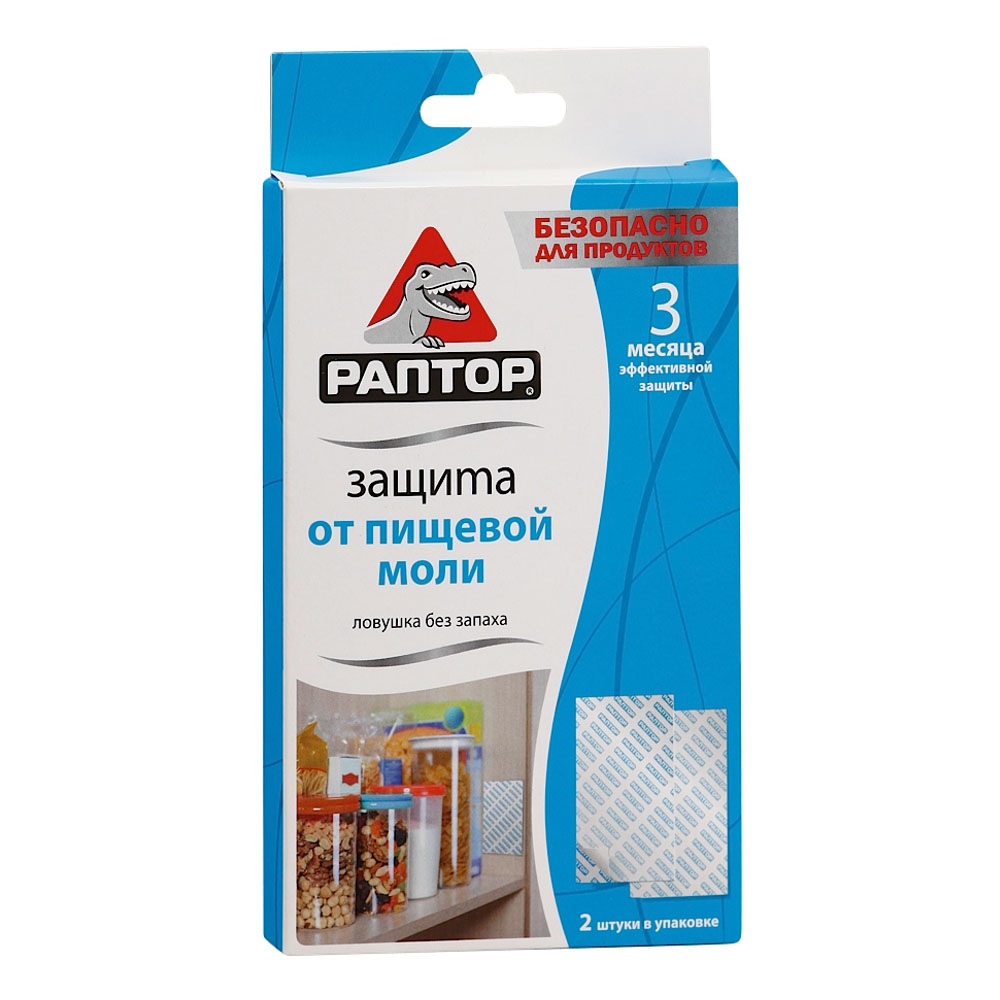
Food moth traps are toxin-free
This method of mechanical action is safe because the traps do not contain toxins or poisonous substances. But it has no effect on eggs and larvae: pheromones are designed to attract adult individuals.
When using glue traps, be careful not to overdo it. If you use too much pheromone, the insects won't be attracted to any of the traps.
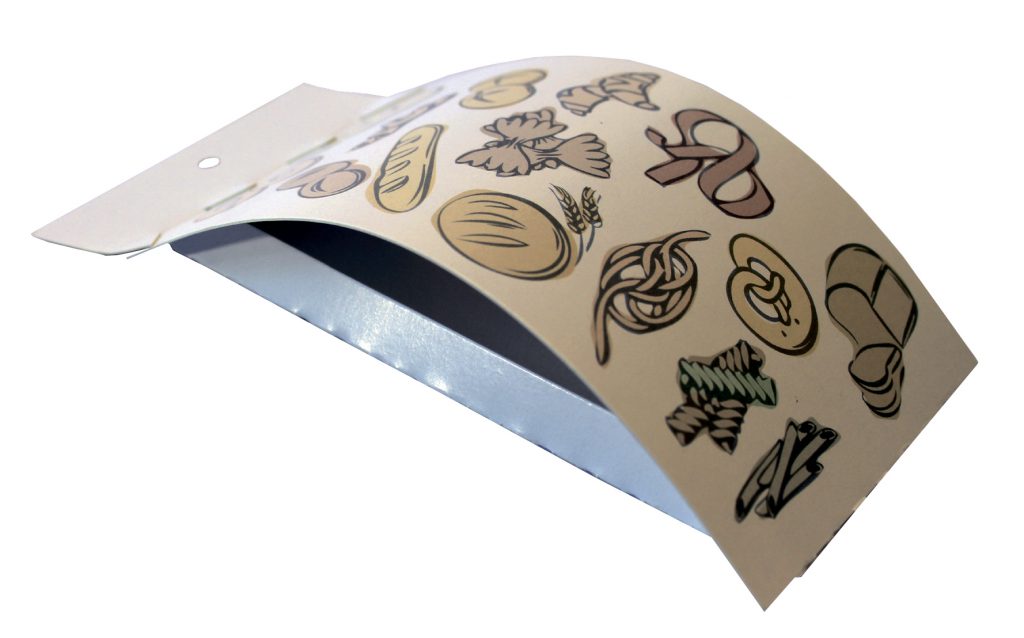
Assembling a glue trap yourself is not difficult.
Sticky tape
It differs in its shape and lack of attracting pheromones. It's rarely released specifically for pantry moths, so any type designed for protection against flying insects can be used. Pantry moths fly erratically, so this type of trap is effective against adult moths, but will not protect against larvae and eggs.
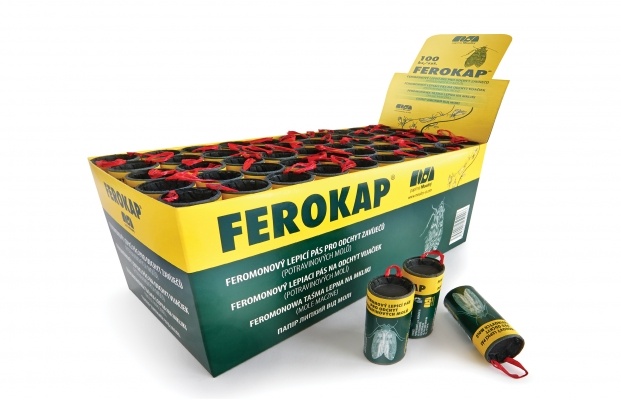
Sticky tape will protect against moths, but it won't protect against moth larvae and eggs.
Chemicals
Modern industrial means for the destruction of food moths are divided into two groups:
- Insecticides, most of which are based on the toxicity of the drug.
- Repellents are less dangerous substances based on plant origin.
When used indoors, especially in the kitchen, chemical products for controlling food moths require caution and safety precautions.
Insecticides
Aerosols are one of the most popular forms. The benefits of their use include:
- spectrum of action - destroys both adult butterflies and their caterpillar larvae;
- duration of action - up to a year, depending on the chosen product;
- efficiency - provide immediate effect;
- wide selection - you can choose the product that is best suited for each specific case.
Although there are also some downsides:
- Unsafe - manufacturers recommend preventing the substance from coming into contact with food products and using protective equipment when using it - gloves and a bandage or respirator;
- Difficulty in use: since the products cannot be processed directly, it is impossible to do without mechanical destruction of the larvae that have already entered the groceries.
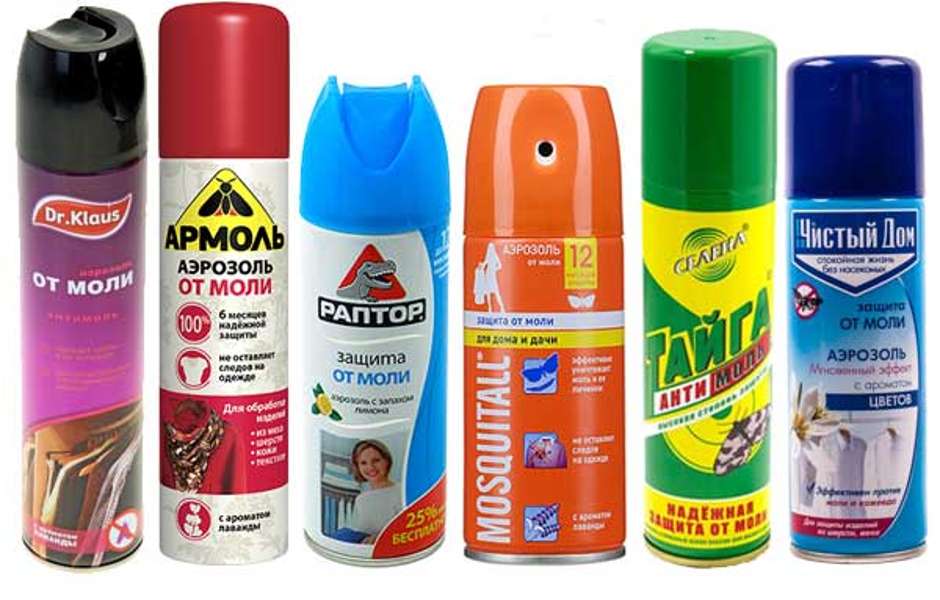
Aerosols have gained popularity due to their ease of use and storage of active ingredients.
The operating principle of fumigators is similar to that of aerosols: insecticides are released into the air, destroying food moths. But unlike aerosols, they release insecticide continuously and at a much lower concentration. Therefore, they cannot be used continuously; they should only be turned on for 8 hours at a time with a window open. Their advantages:
- relative safety;
- broad spectrum of action: destruction of caterpillars and adult insects.
Disadvantages of use:
- localization - they operate from the electrical network, the location of their installation is limited by the availability of an outlet;
- efficiency - the product shows good results in destroying butterflies and their caterpillars, but additional measures are needed to completely destroy the larvae;
- Due to the low concentration of insecticide, the effect is not immediately visible.
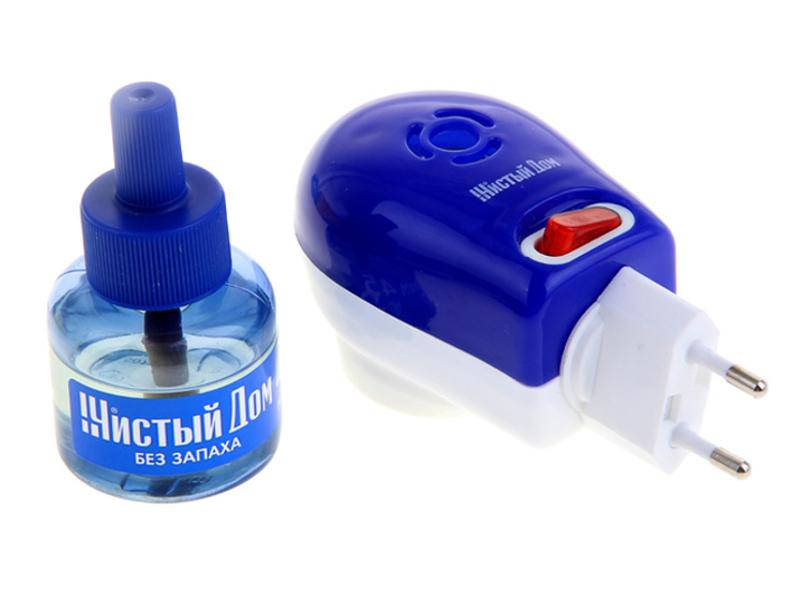
The fumigator tank lasts up to 45 days.
Repellents
Many housewives prefer a moth repellent in the form of a section. Its advantages:
- safety - based on essential oils;
- pleasant smell;
- Unlike glue traps and fumigators, the moth section is not too noticeable and looks neat.
Among the disadvantages worth considering:
- questionable effectiveness: the aromas act as a repellent to adult butterflies, but are ineffective against larvae;
- short-lived control of the population: larvae exposed to the product may hatch into butterflies resistant to a particular scent.
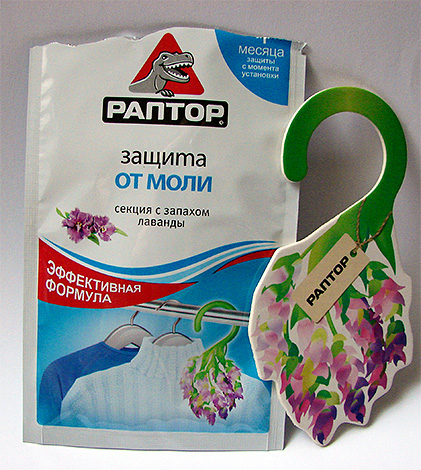
Mothproof sections can have interesting design solutions
Moth tablets work the same way. They are usually sold in small packages and used according to the instructions. It's best to wrap them in a porous cloth (gauze or bandage) and place them on kitchen shelves. The pros and cons of using them are the same as those of using sections, but tablets are usually cheaper.
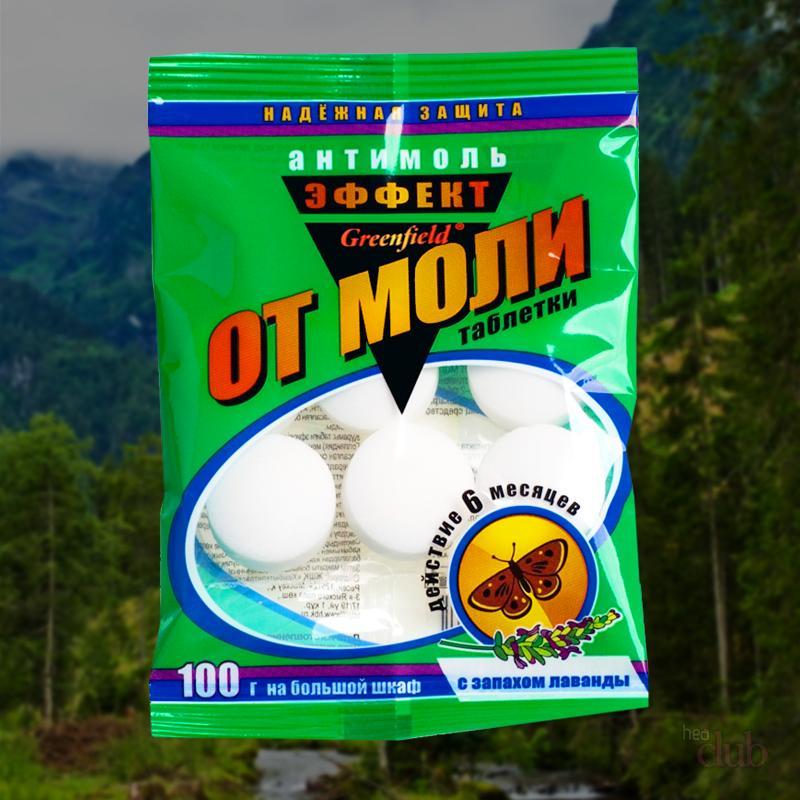
Food moth tablets remain effective for up to six months.
Folk remedies
All time-tested recipes for fighting food moths rely on repelling the pest. Moths cannot tolerate strong odors and are unable to lay eggs in areas with strong odors.
Most industrial repellents are based on folk recipes.
To get rid of food moths, simply create conditions unsuitable for breeding. The following will help:
- Essential oils. A few drops of this pleasant remedy applied to a cotton pad or piece of cloth is enough to repel pests from your kitchen cabinet shelves.
One of the most pleasant means in the fight against food moths is essential oil with your favorite aroma.
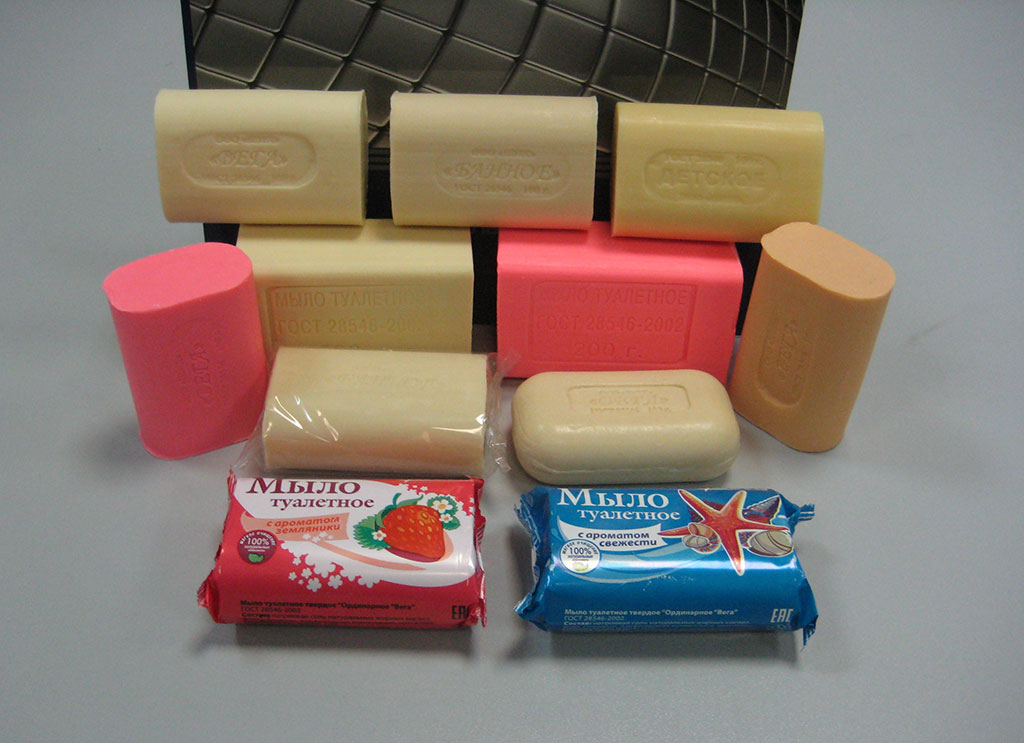
- A strong-smelling soap. Toilet soap is more pleasant, while laundry soap is more effective. Bars are placed in areas where insects are likely to appear, creating a fragrant veil.
The smell of soap will prevent food moths from approaching food and laying eggs.
- Dried herbs. Llavanda, tansy, mint, wormwood, and other plants with similar aromas are sewn into small bags or simply wrapped in a porous cloth or napkin to avoid accidentally cluttering shelves.
If you collect herbs to repel food moths yourself, it is best to do so during their flowering period.
- Citrus peels. Store the peels in cupboards. Both dried and fresh peels will work. Just be sure to replace them regularly and ensure fresh peels don't spoil.
It is worth considering that if the bark begins to deteriorate, its smell will attract rather than repel moths.
- Fragrant indoor plants: geranium and fragrant tobacco. One beautiful flower on the kitchen windowsill is enough to keep moths away.
A common geranium will reliably protect your kitchen from an invasion of food moths.
- Herbs and spices. Open the lid or cut the packaging slightly to allow the pleasant aromas to spread throughout your kitchen cabinet.
Spicy and pungent smells will keep pantry moths away from your kitchen cabinets.
- Camphor and vinegar. Neither of these remedies are particularly pleasant to use, but their effectiveness has long been proven. Camphor is used in the same way as essential oils: a few drops on a cotton pad. Vinegar is added to water when cleaning the kitchen.





When choosing folk remedies, keep in mind that neither mothballs nor garlic have stood the test of time. Mothballs are considered dangerous due to the carcinogenic substances they contain, and most insects have developed a tolerance to garlic.
Preventive measures
Once you have gotten rid of pantry moths, it is important to prevent re-infestation in your kitchen.
- Before placing food into containers, check each one for food moth infestation.
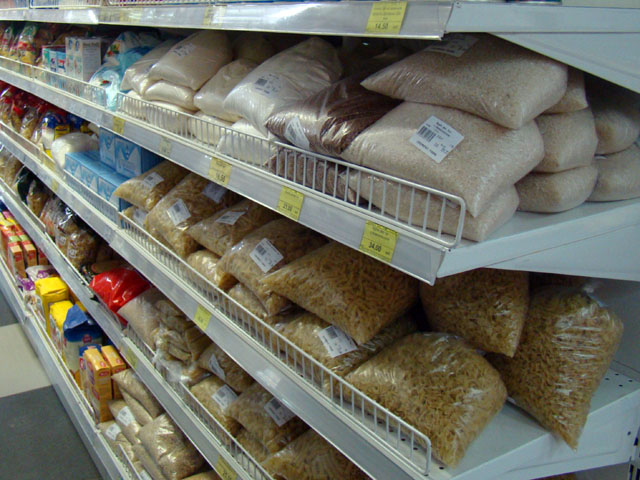
It is better to buy groceries in factory packaging rather than pre-packaged in the store.
- If possible, avoid storing groceries for long periods. If you buy groceries for the family, do so for no more than a week—the risk of food moth infestation will be significantly reduced.
It is better to buy more product than to throw away old stocks due to food moth infestation.
- Use pleasant and harmless aromatic products. Only a small amount is needed for prevention.
You can make your own homemade moth repellent.
- Store food in airtight containers. Even if you accidentally lose a larva, it won't be able to escape and infect neighboring containers. Adult flies won't have the opportunity to lay eggs.
Hermetically sealed foods are not at risk of food moth infestation.
- Monitor the condition of windows, doors, and vents. A standard mosquito net will protect your home not only from occasional moth intrusions but also from many other household pests.



Reviews
Raptor Moth Protection Aerosol - I still prefer the products in strips and tablets, the smell makes my throat itch
Pros: The moths are gone, it's available everywhere, and it works quickly.
Disadvantages: the smell makes your throat itch
We have to deal with moths from time to time. For many years, we didn't have any, but then suddenly they started popping up. As it turned out later, they were all coming from the cereals I'd been buying for years at Magnit stores. When a friend had a similar problem and said she blamed the cereals, I didn't want to believe it, but then I bought a couple of packages and simply left them unopened for about a month. When I opened them, I realized they were the source of this winged pest. Now there are few moths, but they're still not completely eradicated. Moth tablets and sheets help for up to six months, but if you forget to change them on time, a horde of them appears. Spray is a simple and easy way to get rid of the little food eaters and grain eaters. Unfortunately, I chose Raptor, unfortunately because my allergies to such fragrances are contraindicated. My throat was sore for a few hours after using it, so I took a couple of Suprastin tablets just in case. It's clearly not my thing, although the moths disappeared immediately. I haven't seen any in the house for weeks now, which is a big plus for this moth repellent. However, I won't be buying it again and will give this bottle to my family.
Mosquitall Moth Curtains - Both Aesthetic and Practical
Pros: They work
Disadvantages: none yet
I have a moth in my kitchen. I've tried various methods. I poured all my grains and herbs into jars. I store all my food in plastic containers. I don't know what they feed on, but they won't leave me. I happened to see Mosquitall moth repellent sections at the checkout. The price was reasonable, so I decided to give them a try. They come with two sections. They're attached with double-sided tape on the back. For the section to work, you need to twist the lid slightly and open it. I placed one inside the cabinet and glued the other to the outside. After half an hour, the moths were clearly alive and flying away. We'll see, but I hope to have them all gone by morning. I'll get a couple more for the cabinet, as a preventative measure.
Mosquitall moth control sections - I didn't use them exactly where indicated, but I was very pleased.
Pros: Helped
Disadvantages: I don't like the lavender scent, but it's useful. I have two lovebirds at home. I keep their food in jars with the lids on... But somehow, a pantry moth managed to appear... Not many, but I started noticing a moth here and there... I thought it was just a summer moth that had accidentally flown in through the window, but then I noticed that one or another moth was circling around these jars in the closet... I decided to buy these sections... I bought two packages... I hung one in the closet with clothes, just in case, and the other in the kitchen cabinet next to the food... The composition is very simple. The lavender scent, I wouldn't say it's pleasant, but it's suitable for a closet... I still have one question for the manufacturer... If you already make a scented product, then why do you use an intrusive lavender scent? And not lily of the valley, for example. The product emits a subtle lavender scent, so it serves as a bit of a fragrance diffuser. I can't see if anyone has crawled into the trap. But I can say with certainty that the next day I saw one moth acting strangely. And within two days, there weren't a single moth left in the apartment. These sections helped me, so I can definitely recommend them.
Armol Moth Repellent Plates – The Effect Is Impressive
Pros: Efficiency, smell
Disadvantages: If there were any downsides, I would point them out, but I didn’t find any.
We had a dryer in the pantry, and when we opened it, moths started flying out. We'd never seen moths before. Whether it wasn't dried thoroughly, or the fur collars attracted them—I don't know, but the fact remained. We tried various sprays, but they didn't help. Then, by chance, we saw Armol lavender-scented moth repellents at the store and bought them. The package contains 10 moth repellents, each individually packaged in plastic. The instructions for use are quite simple: remove the moths from their packaging and place them in areas where moths are found. That's what I did: I placed Armol tablets all over the pantry; the scent is very pleasant (my husband said he'd buy them instead of car air freshener). Literally a week passed, and the moths were gone.
Raptor Moth Protection Section — — "Moth, defend yourself!"
Pros: Convenient for kitchen cabinets
Disadvantages: Peels off...
The Raptor moth trap can be used in kitchen cabinets. This additional protection will never harm those flying "hooligans." Food, especially cereals and flour products, is very popular with food moths. A glued-on section lasts for three months, but it can accidentally start peeling off even before that time has passed. The back of the Raptor packaging describes the moths that should definitely be avoided, especially for people living in rural areas and country houses. In our case, we needed protection from the third option—the grain moth. The food moth trap is virtually odorless, which is certainly our favorite feature. The package contains exactly two sections, but I don't think gluing them indoors is the most practical option due to the small area they affect. The Raptor section can be replaced each time it's full or partially filled. Disadvantages: 1) the section may start peeling off at the most inopportune moment; 2) Everything sticks to the sticky side, so it's best to keep plastic bags as far away as possible. In general, sections won't help get rid of a large number of moths, only the most minimal ones, until the nasty moths have time to lay their eggs.
I had this problem. First, you need to check everything that could be eaten by moths. Naturally, anything infested with larvae is thrown out without a trace. Then you need to check every nook and cranny in the kitchen. For example, many people put paper on top of cabinets. There, between the cabinet and the paper, larvae were found. Everything is washed, and the paper is thrown out. Also, check the back of the cabinets. In short, check every hidden place. Then, personally, I transferred all cereals, pasta, dried fruit, flour, and other loose food into glass jars and tightly sealed them with lids. I put everything in the refrigerator. Only then, after many years of suffering, was I able to get rid of this nasty thing.
They sell moth repellents in the open space. I think they'll be available in other hypermarkets too. We bought some just a couple of weeks ago. The moths were still scurrying around the kitchen for three or four days, but now I've forgotten it like it was a bad dream. We clapped our hands and went through things and food for a couple of years. Even moving to a new apartment didn't help. We successfully threw out the winter boots. Now everything is clean. I recommend placing these repellents throughout the apartment. One package is enough.
Almost all the sealed baking spice packets, both the plastic and paper ones, were chewed through. Nesting sites can be identified by the webbing. I threw out any suspicious ones, transferred the rest to jars, and treated them with dish soap and vinegar. The moths haven't been seen for over three months.
I'm sure many people have encountered the problem of pantry moths... Methods of controlling them vary, but I don't think they're particularly effective. In any case, the main task is to find and destroy the breeding ground. We've been living with these brazen pantry moths for about a year now. Our kitchen is old (but sturdy!), with a large number of crevices where this insect can comfortably thrive... However, the moths also need food, so they primarily choose cereals for laying their eggs (we've also had them in dried apples, popcorn, and cookies). Fighting the moths has become a hobby of mine, as every evening I'd come into the kitchen, turn on the light, open the cereal cabinet, and... slap away the moths that were perched on the top inside of the cabinet. We tried many methods, but each time the moths returned and found a new home. We couldn't find anything specifically for pantry moths in the stores...
But one day, Grandma finally spotted the Raptor "Food Moth Protection" traps. The box says they're effective for three months. The traps can also be used "preventatively" by sticking them in a cabinet. And if you suddenly catch one or two moths, then BINGO! You're the lucky owner of this pest in your kitchen. The traps are economical—one or two are enough for a room of 10-15 square meters, or one cabinet.
These traps are made in Latvia. The Raptor moth trap is non-toxic and odorless. It's unclear why moths would land on it... But if you place the traps in their favorite spots... which is what we did! We're practically moth-free now (pah, three times!!!), but perhaps I finally destroyed all the breeding grounds, and I have more credit for that than the traps, but we did catch three at once! So they were definitely worth it! Now, whenever I see a moth in the kitchen, I hunt it down until I kill it. Thankfully, that doesn't happen often anymore. P.S. Over time, the moths have increased! About a year later.
Raptor "Protection from food moths" trap - At least it helps somehow
Pros: everything in the review
Disadvantages: everything in the review
I first encountered pantry moths in a rented apartment. We moved here a year and a half ago. I don't know if we brought them with us in nuts or if they were already here. But for the past year and a half, I've been battling them. They're a rare and difficult pest to get rid of, especially since they have plenty of places to live here. I tried a ton of folk remedies. I scattered mint and orange peels everywhere. And I was amazed when I discovered this pest eating those same peels. The only downside is the stickiness. I constantly have trouble with these traps: either my hand or a bag gets stuck to them. So it's always a challenge to hang them where the moths are concentrated, while keeping them out of the way and preventing you from getting stuck to them. Of course, it didn't get rid of all the moths, but their numbers have noticeably decreased. We're still at war. And Raptor traps are my only weapon against moths for now. And my own hands, too.
Getting rid of pantry moths in the kitchen isn't easy. But if you use the suggested methods and proper preventative measures, these pests will leave your home for good and never return.