The appearance of unsightly moths in the home is tantamount to a distress signal: the imagination conjures up bald spots on fur garments, holes in woolen items, and other horrors. Moth is a collective name for three thousand species of flying insects. They can cause damage to more than just fur and wool.
Content
Moth: who it is and what it eats
The moth belongs to the order Lepidoptera, a family of butterflies. This small flying insect of inconspicuous colors lives for several weeks. During this time, a caterpillar hatches from an egg, which then transforms into a chrysalis, from which a butterfly emerges.
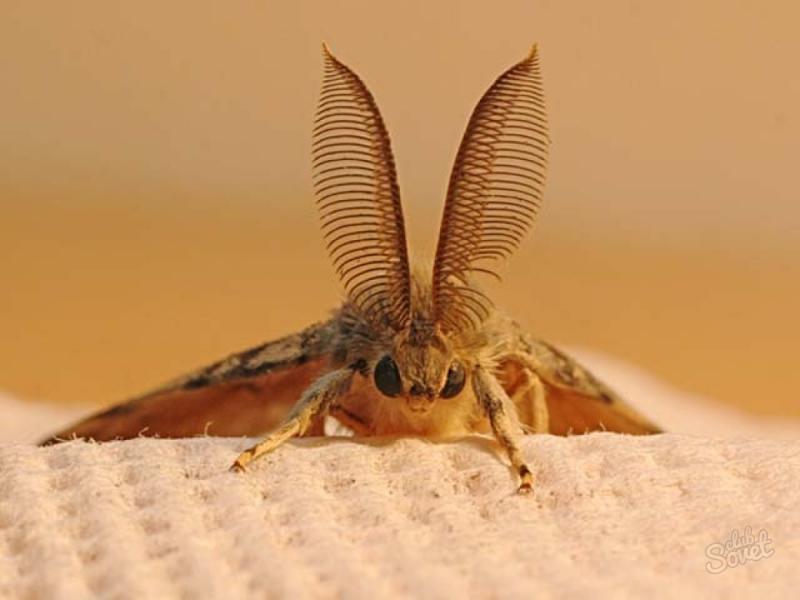
More often than not, male moths flutter around the apartment. Females wait for their partner in a secluded place, luring him with their scent.
Three to four days after hatching, the female lays her eggs and, having fulfilled her purpose, dies. Males die immediately after mating.
Moths are afraid of sunlight, so insects are active in the evening and night hours. During the day, moths hide in dark places.
There are about three thousand species of moths in nature, but only 14 of them live in houses.
Types of house moths
The moth enters the dwelling in search of food for its larvae. The adult does not eat anything from the moment it emerges from the pupa, but the caterpillars are unusually voracious. They cause irreparable damage to clothing and food. Moths are classified by their food preferences:
- wardrobe;
- fur coat;
- furniture;
- food;
- poplar.
Wardrobe
Clothes moths nest in closets, pantries, laundry baskets, and boxes, feeding on fabric fibers. They are attracted to the smell of sweat, so if you have a habit of hoarding dirty laundry, expect visitors.
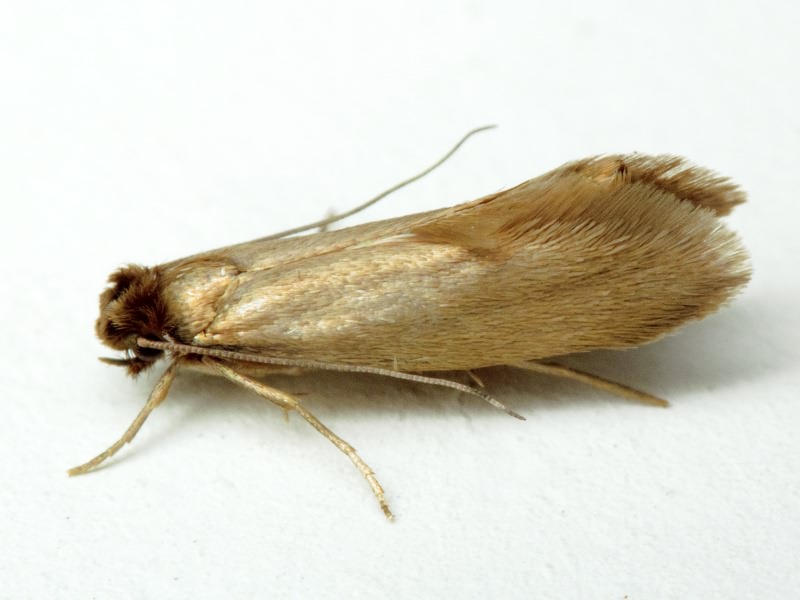
Clothes moths feed on fabric fibers.
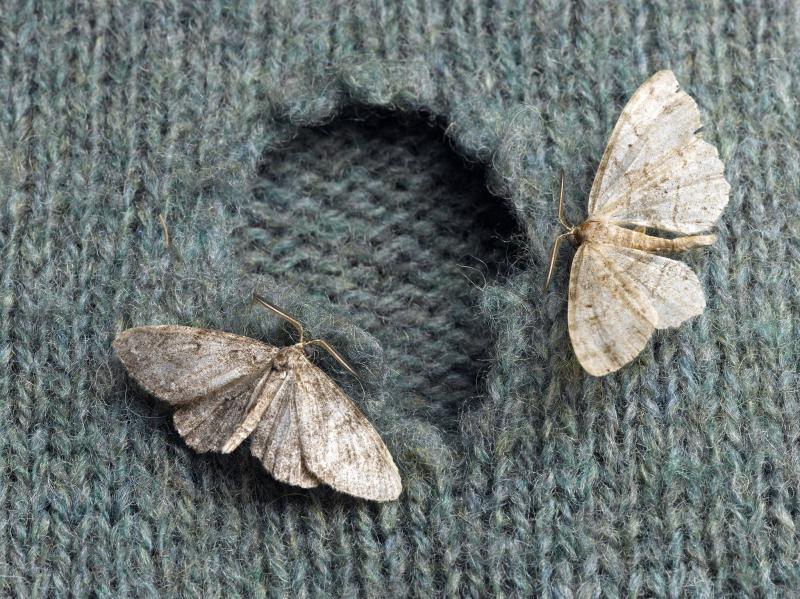
The larvae of this butterfly damage woolen and knitwear items. They don't like fabrics made of pure synthetics, but they don't disdain mixed ones.
The insect's wingspan reaches 22 mm, and its color is light gray-brown. Touching its wings leaves a pearly dusting on your fingers.
Fur coat
Fur moths prefer fur, felt, and felt. The larvae carefully trim the hairs and grind them with their powerful jaws. Even after it has had its fill, the caterpillar continues to cut off the hairs, making its way to a new place.
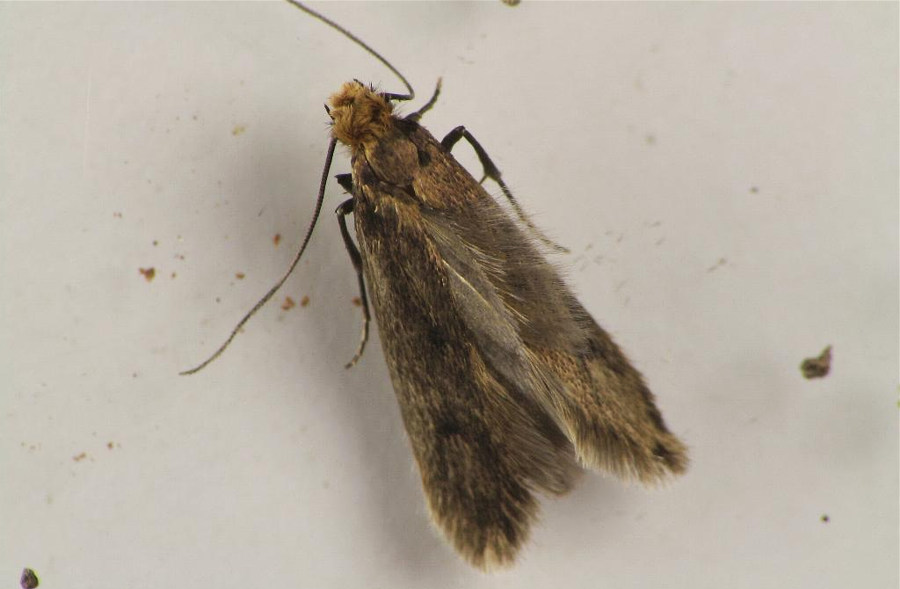
The fur moth's food is fur, felt, and felt.
The upper wings are clay-yellow and shiny (with two small dots near the middle and one behind the middle), while the underwings are light gray. The fur moth is smaller than the clothes moth, with a wingspan of 15–16 mm.
Furniture
Furniture moths nest in upholstered furniture, where the upholstery serves as food for their larvae. They first consume the hairy interior, then emerge from the surface and burrow into the soft upholstery. Pupation occurs on its lower surface. Blankets and rugs used to cover furniture are also prey. Natural materials are preferred, but the pest will also accept semi-synthetic materials.
This species differs from its relatives in its structure by the absence of oral tentacles. It is characterized by silvery-yellow wings and a dark yellow head. Larval development takes 2–5 months, depending on the season.
Food
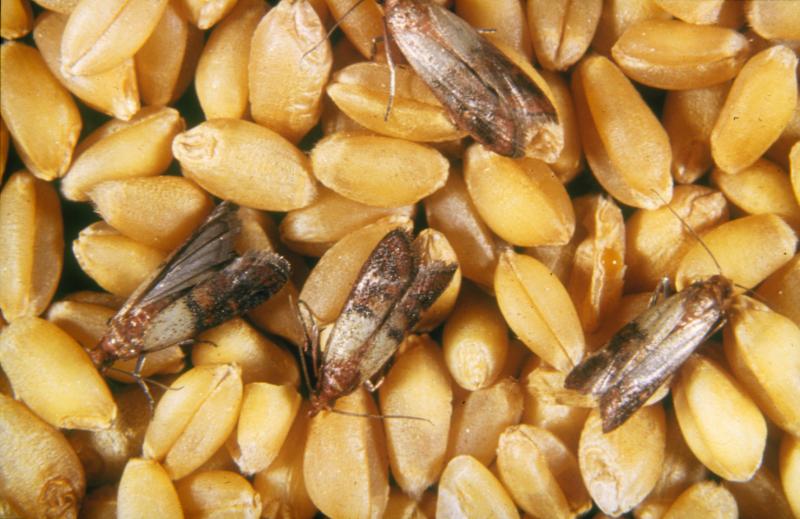
The pantry moth, often called a fire moth, inhabits kitchens, barns, and pantries. Its diet consists of grains, flour, and sugar. It also feeds on nuts, dried mushrooms, herbs, dried fruits, roots, pet food, and other dry foods.
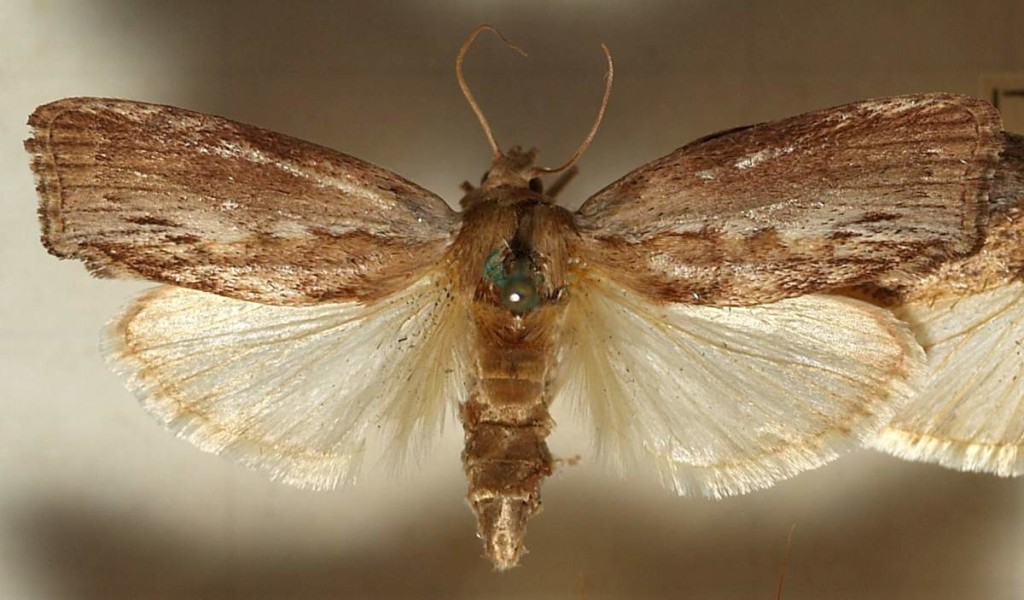
The color of the moth depends on the product it feeds on.
The moth's wings are no more than 8 mm long, and their coloration is inconspicuous, varying depending on the species that feed on specific foods. For example, the grain moth has a dirty white coloration, while the flour moth has a brownish-black pattern on its wings.
This is interesting. Food moths cannot damage furniture, fur, or clothing, and clothes moths will not eat food.
Poplar
If you have poplar trees near your home, get to know the poplar moth. This insect does not live in the apartment, but often flies into it through an open window.y.
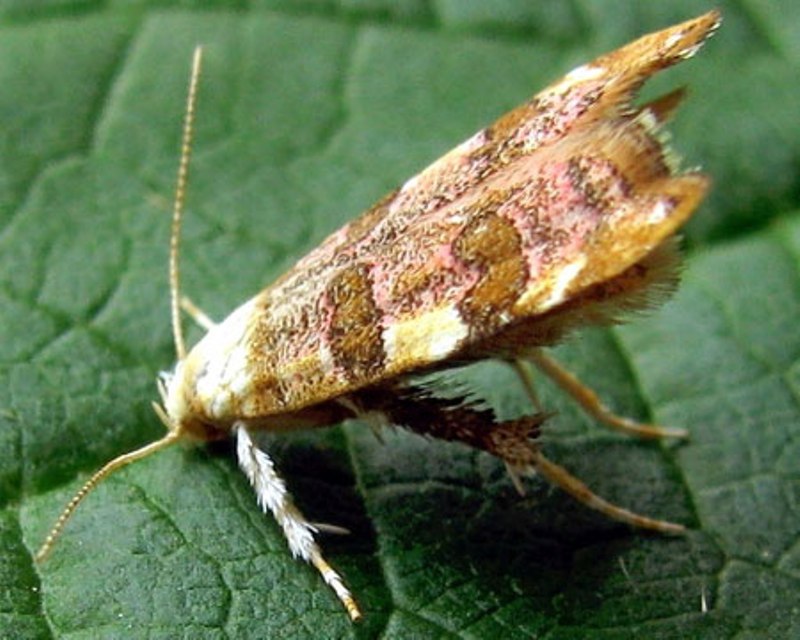
The poplar moth does not live in the house, but often flies there
The moths overwinter in a secluded location, and when warmer weather arrives, they mate and lay eggs within a month. This occurs during poplar bloom, as the fluff protects the eggs and young caterpillars. The larval lifespan before pupation lasts 2–3 weeks. During this time, they feed intensively and can destroy all the foliage on a tree. During the warm season, the moth reproduces only once.
The insect has two pairs of white wings, the upper ones with a brown pattern and the lower ones with a fringe. The folded wings are 7 mm long.
Summer residents and rural residents encounter several other types of moths:
- cabbage;
- potato;
- wax.
Cabbage
Cabbage butterfly larvae, a parasitic moth, feed on cruciferous plants, causing damage to cabbage and other cabbage-like plants. Females lay eggs 4-5 times a year, 1-4 on the underside or petiole of leaves. The moth can be found from April to September; its full life cycle lasts 30-35 days.
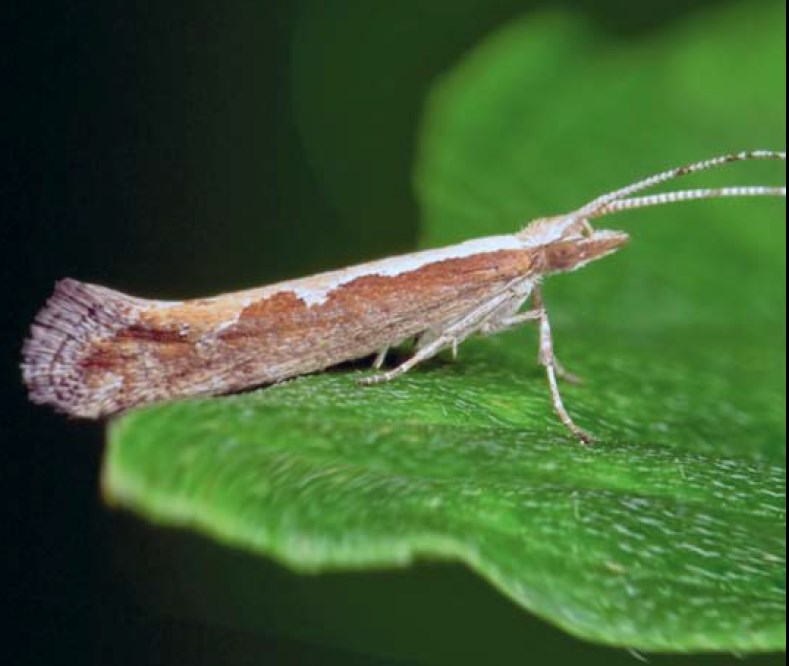
Cabbage moth lays eggs on the underside of leaves
The butterflies range in color from gray-brown to dark brown, with a wavy white or yellow stripe on the upper wings. The wingspan is 12–16 mm.
Potato
The potato moth overwinters in vegetable storage or on the remaining haulm in the field. Mating occurs with the onset of warm weather. After 24–30 hours, the female lays eggs. The clutch is placed on the underside of leaves, tubers, or in the soil. The number of eggs varies from one to several. Three to four breeding cycles occur over the summer.
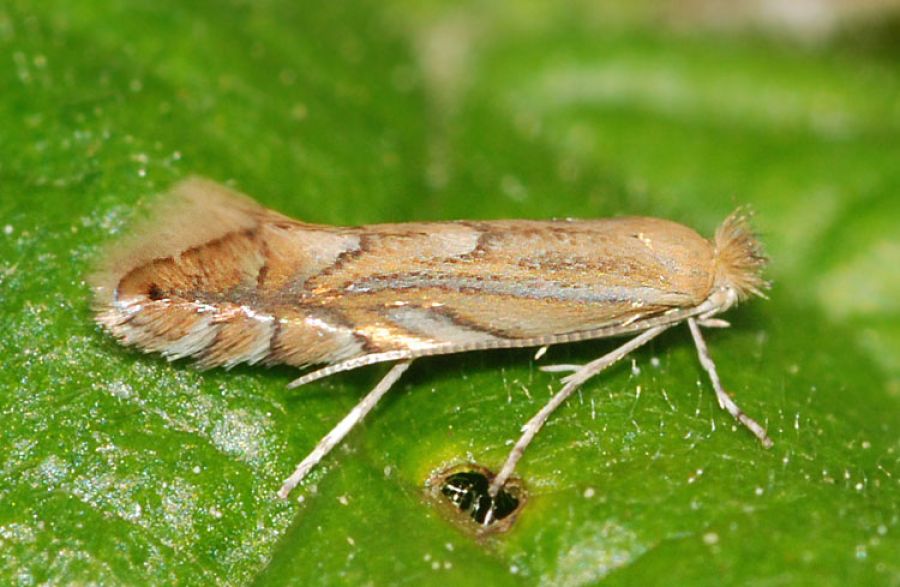
Potato moth larvae feed on both leaves and tubers.
The butterfly is brownish-gray in color, with yellow spots and brown stripes on the upper wings, a dark outline along the edge, and fringed feathers on the underwings. Wing size ranges from 10 to 16 mm.
The larvae emerge transparent but change color depending on their food source: those feeding on leaves become green, while those feeding on tubers become pale gray. The larvae spread throughout the crops, causing damage to the harvest.
Wax
The wax moth feeds on wax, bee bread, and honey in beehives. Two days after mating, the female lays eggs on the walls, roof, honeycomb, or frames. The insect lives for 66 days.
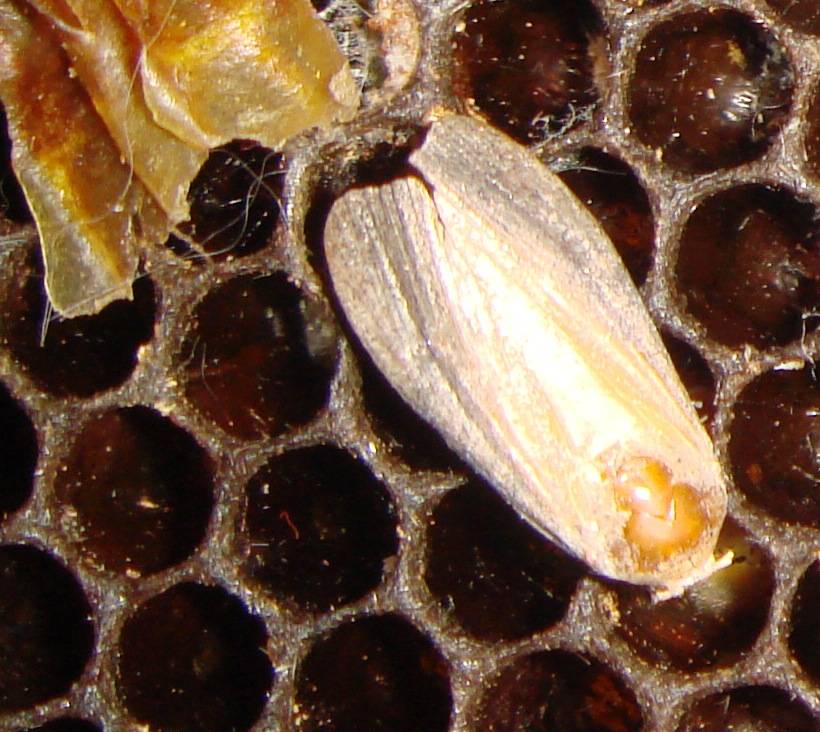
The wax moth is the master of the hives
A single clutch can contain up to 80 eggs, and a female can lay up to 1,500 over her lifetime. Beekeepers suffer greatly from such fecundity and the voracious feeding habits of the larvae.
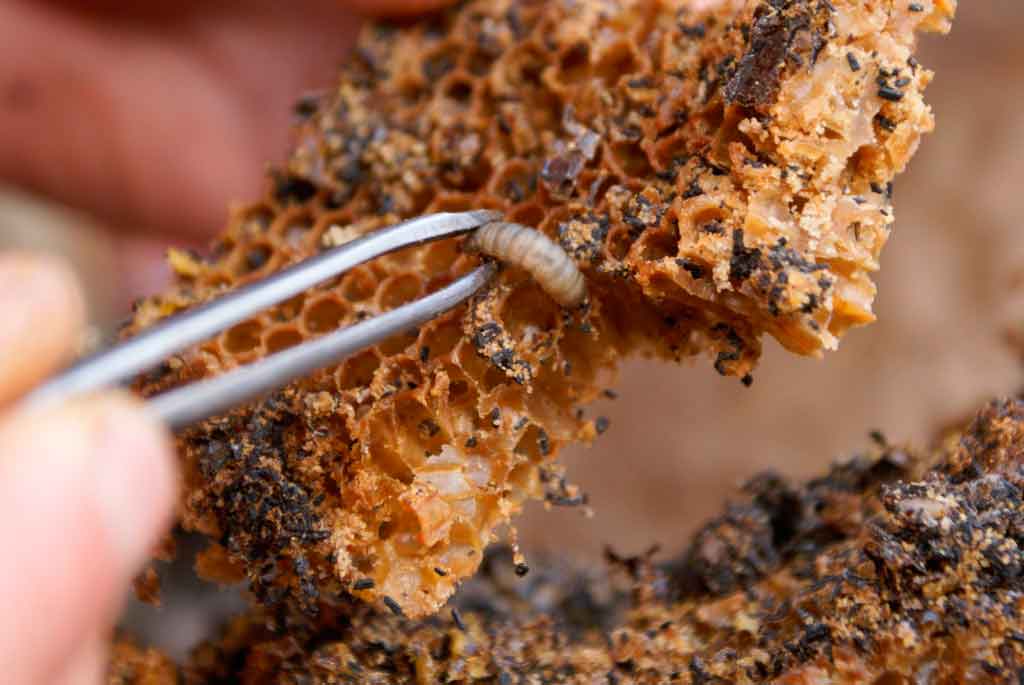
Wax moth larvae feed on wax, bee bread and honey.
The butterflies are light gray, with fringed underwings. The wingspan reaches 30–35 mm. The caterpillar is white and gray and has 16 legs.
This is interesting. It turns out that wax moths can be beneficial. The wax-eating larvae produce a bactericidal substance. Therefore, they are used in medicine to treat a variety of ailments.
How does a pest get into a home?
The appearance of insects in the house means that they were brought in from outside.
Typical routes of introduction:
- With a new purchase. A recently purchased fur coat, fur boots, woolen or knitted items may be infested with larvae right at the store.

Moths can enter an apartment on both new and used clothing.
- Used furniture (from a consignment store or purchased from friends) is a tasty morsel for moths.
- Store-bought cereals, pasta, or other products that have been improperly stored in a warehouse and do not have airtight packaging.
Grocery products can become infested with moths in the store or warehouse.
- Dried mushrooms, dried fruits, and herbs purchased at the market can also be infested with pest larvae.
- Sometimes it happens that clothes moths enter a room on the fur of pets and even the feathers of birds.
- Another way for this pest to enter an apartment is through ventilation ducts. Although this moth is a poor flyer, its migration from an adjacent room cannot be ruled out through this route.

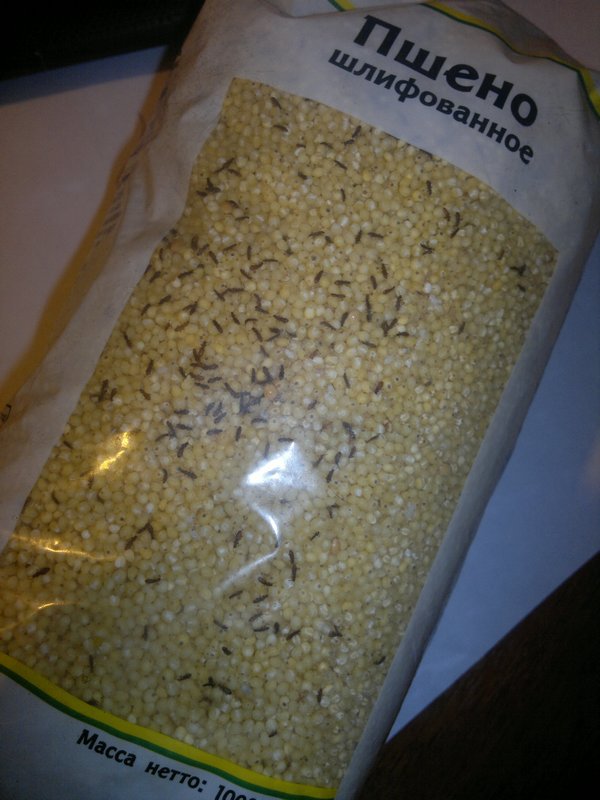
No matter how the winged vandals appear in your home, you will have to fight them.
What to do if moths appear in the house
Before fighting moths, let's remember the conditions necessary for their comfortable existence.
- Food for larvae. Free access to items and products that the pest feeds on creates favorable conditions for the moths' life.
- A secluded place to live and breed. Moths prefer closed cabinets, boxes, and dressers where clothes and food are stored.
- Lack of light and drafts. The pest cannot tolerate either.
- No strong odors. Some odors are unpleasant for moths, and they won't settle in areas where they are present.
Obviously, to get rid of an unpleasant neighbor, create unfavorable living conditions for the “uninvited guests.”
- If you find moths in your closet, remove all items. Wash the shelves with laundry soap, vinegar, or dichlorvos.
- Throw away hopelessly damaged clothing, wash and iron the rest. Shake out large items and fur items, clean them, and leave them in the cold or sun. Small items can be bagged and placed in the freezer for 24 hours.
- Throw away any food in which larvae are found, and wash the jars used to store them with soap and vinegar.
- Treat items with anti-moth spray and hang sticky tape around the premises to repel moths.
- Vacuum upholstered furniture and treat it with a special aerosol.
- Place fresh orange peels, bunches of lavender, wormwood, garlic cloves, cedar pieces, and strawberry-scented soap on your shelves to repel pests. Lavender-scented slabs are available for closets and can be attached to a clothes rail.
The scent of lavender repels moths.

Important: Don't try to kill moths with mothballs. They are toxic not only to insects but also to humans.
These voracious pests can damage both food and other items. Store them so that moths have no chance to reach them.
How to store things and food to protect them
- Before storing seasonal clothing, wash and iron it; clean, shake out, and air large and fur items.
- Store fur coats and woolen outerwear in thick paper bags with moth repellent tablets inside. You can also spray an aerosol moth repellent into the bag.
- Purchase special covers treated with moth-repellent agents. They will effectively protect your clothes from unwanted vandals.
- Small items are conveniently stored in vacuum-sealed bags. Layer the clothes with mothballs or canvas bags filled with fragrant herbs.
- Wrap your items in fresh newspapers; moths cannot stand the smell of printing ink.
- Store cereals, sugar, flour, and other dry foods in glass or metal containers with tight-fitting lids. Cardboard boxes and plastic bags are no barrier to moths.
To preserve your belongings and food and prevent pests from appearing in your home, create unacceptable conditions for their existence.
Prevention of moth infestation
- Check items and products carefully after purchase.
- Throw away contaminated products immediately.
- Steam or wash second-hand items at temperatures above 50°C.0C, then iron.
- Vacuum used furniture and treat it with anti-moth spray.
- Ventilate your kitchen and wardrobe cabinets frequently by leaving the doors open.
- Turn on the ultraviolet lamp periodically; it will replace the sun's rays.
- Place a clove of garlic in containers with dry goods—the smell will repel insects. No need to peel the garlic.
- Get some geranium or coleus, moths don't like their strong scent.
- Even if there are no moths, don't neglect anti-moth tablets and boxes: place them in closets with clothes.
- For kitchen cabinets, use fresh citrus zest and replace it as it dries out.
Tip: Instead of herbs to repel moths, use essential oils. Soak cotton balls and place them in cabinets or leave open bottles on shelves.
Reviews of pest control methods
I once bought buckwheat, started cooking it, and opened a brand new package! And there was this *** crawling around in there. Ugh... I threw it all out. Look at your grains more carefully when you buy them. This can happen in unopened packages. It's probably living in the packaging. I found a solution: when I buy grains, I open the package, carefully check for this nasty stuff, and then pour it into cereal containers and close them. This crap can also get into spices!
In short, I followed this procedure: I took all the grains, flour, dried spices, herbs, and other beans, peas, and pasta, poured them into paper bags, and microwaved several bags at a time on full power for 30 seconds. While I was at it, I tidied up the shelves and wiped them down with vinegar. After processing, I poured everything into various jars with screw-on lids. All that gunk blew away like the wind. To prevent re-infestation, after purchasing any dry food, I perform a preventative "irradiation" in the microwave, right in the original packaging. The main thing is that the packaging is free of metal (foil, metal tear-off strips, etc.). Opening the packaging simultaneously dries out the product. This problem has been gone (knock on wood) for three years now. The main thing is to remember to perform preventative maintenance after purchasing.
I peeled a clove of garlic, chopped it into several pieces, placed it in a child's cup, filled it with tap water, and placed it in the attic with food where the birds live. I filled a second cup with garlic and water and placed it in another cupboard where the moth-infested food was. After three days, the moths had noticeably decreased, and after six days, they had disappeared completely. Three days later, when I replaced the garlic and water with a new one, I saw countless drowned moths. I made a new garlic and water mixture and returned it to the same place. Six days passed, and the moths were completely gone, but I changed the solution again and put it back in the same place, just in case. The smell of garlic in the attic is quite delicious, though.
I bought some dried lavender, put it in the closets, and the moths disappeared. I didn't do this in another room - moths periodically fly out from somewhere.
All the store-bought "lavender" is just crap... I got rid of the moths!!!! I found the things where they were living and threw them out... They found a new "home" for themselves... I need to buy lavender oil, BUT not the surrogate that is diluted 1:10, but 100% natural. Try the brand "STIX" sold only in pharmacies. Put it on a cotton pad and in the closet, and on the kitchen shelves and anywhere else you suspect... Natural essential oil costs about 200 rubles per 10 ml. Anything cheaper is "diluted" and, naturally, won't help. You can also add clove oil... just to be sure.
I bought it at Auchan for 10-15 rubles, I don't remember the exact price or the name, I think it was Combat, a set of 10 regular sheets, place them all over the cabinets, corners, hang them on the curtains)))) or stick them on with double-sided tape, it worked for us)))
I hang Maskitol tablets in my closet and put them on every shelf. Cheap tablets give me a splitting headache, but these are fine. But it's best to air out all woolen clothes in the cold before using them. Ideally, store them on the balcony during the winter.
Moths in the home are a problem best prevented. After all, unnoticed larvae can multiply and cause widespread damage, ruining a fur coat, a sofa, or even a supply of food. Knowing this will help you get rid of these inconspicuous but dangerous moths. Follow proper storage guidelines for your belongings and food and prevent these winged vandals from reappearing.
 Ivan
Ivan
1 comment