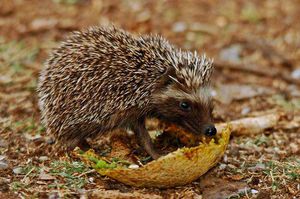
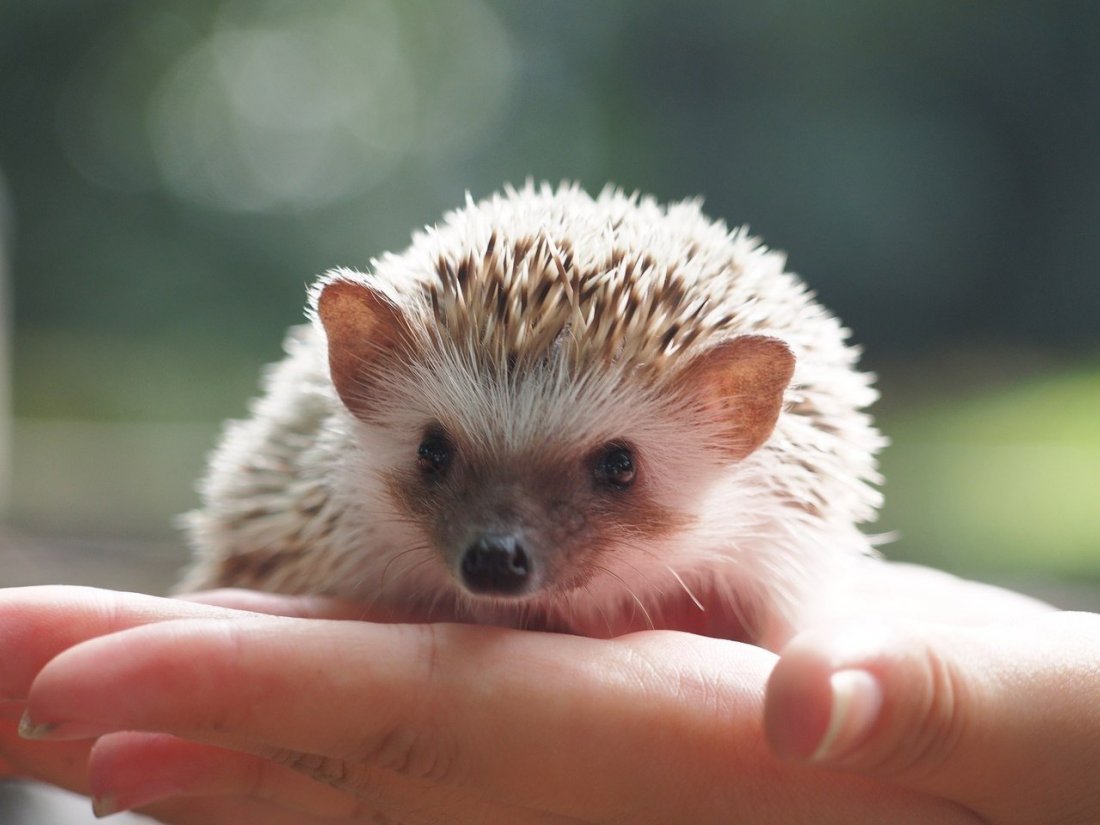
The African pygmy hedgehog is a mammal not found in the wild. It is a captive-bred animal, which is why it cannot be released into the wild. It was created by crossing the Algerian hedgehog with other African hedgehog breeds.
Before getting this cute pet, carefully read the instructions for its care and maintenance.
Content
How to tame an African pygmy hedgehog
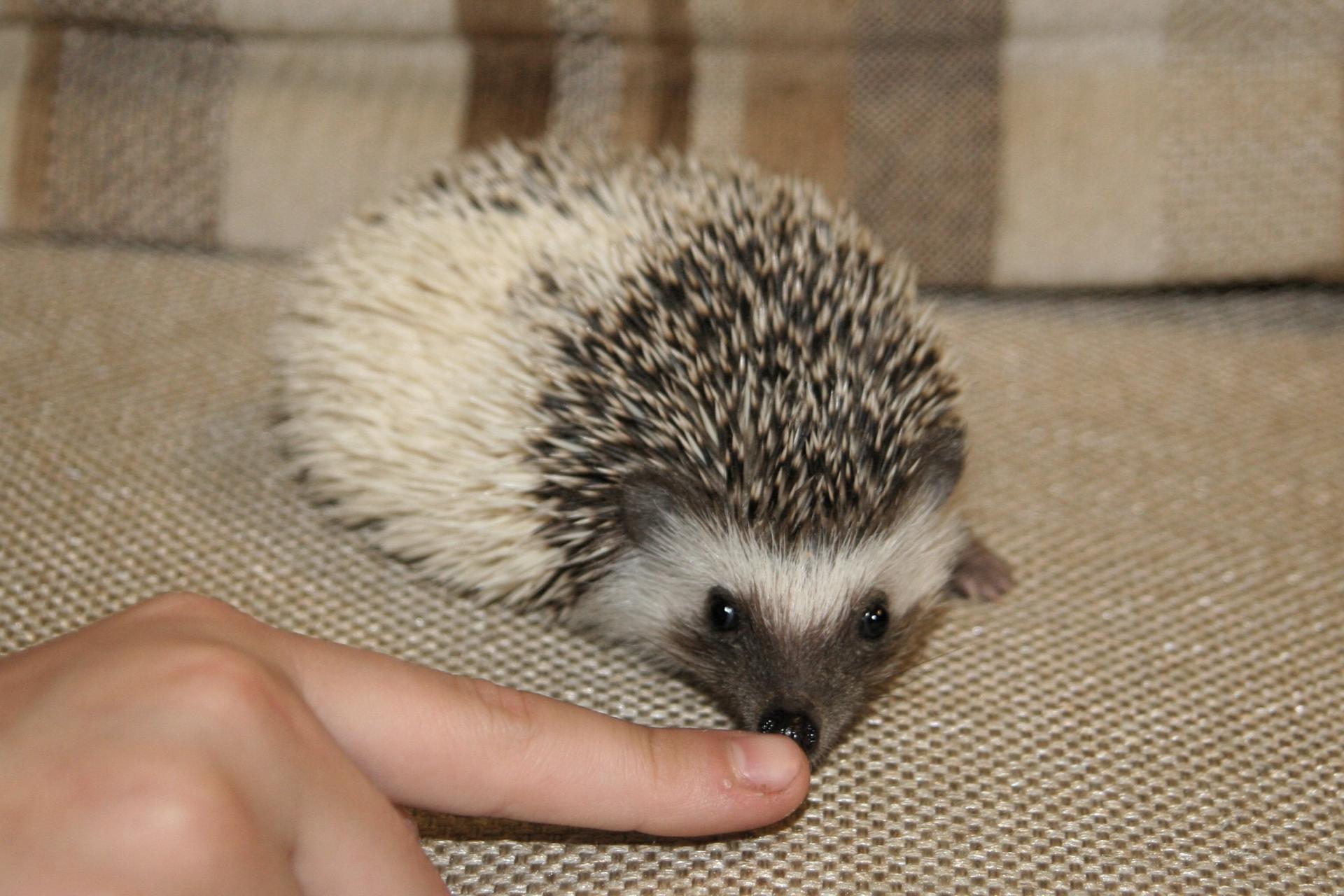
To tame a hedgehog, you will need calmness and patience.
To tame a hedgehog, surround it with affection and care. Talk to it regularly and create a safe and calm environment for it. Hedgehogs have poor eyesight and a very sensitive sense of smell. They will recognize you by your touch, scent, and voice.
Try gently lifting your pet by the belly. If it starts to use its quills, use a blanket or towel to lift it. This will stop the panic and calm the hedgehog down. If your attempts to pick it up are unsuccessful, don't worry. Under no circumstances should you shout at the animal and, especially, do not throw it! Instead, be balanced but assertive.
Hedgehogs are nocturnal animals. Therefore, try not to disturb them during the day, especially in the first few days after you acquire them. To help them get used to you quickly, try to hand-feed them as often as possible.
Talk to your pet in a calm, gentle voice. Pick it up daily for 15–20 minutes. If you follow these simple guidelines, your hedgehog will soon begin to approach you on its own.
Description and varieties
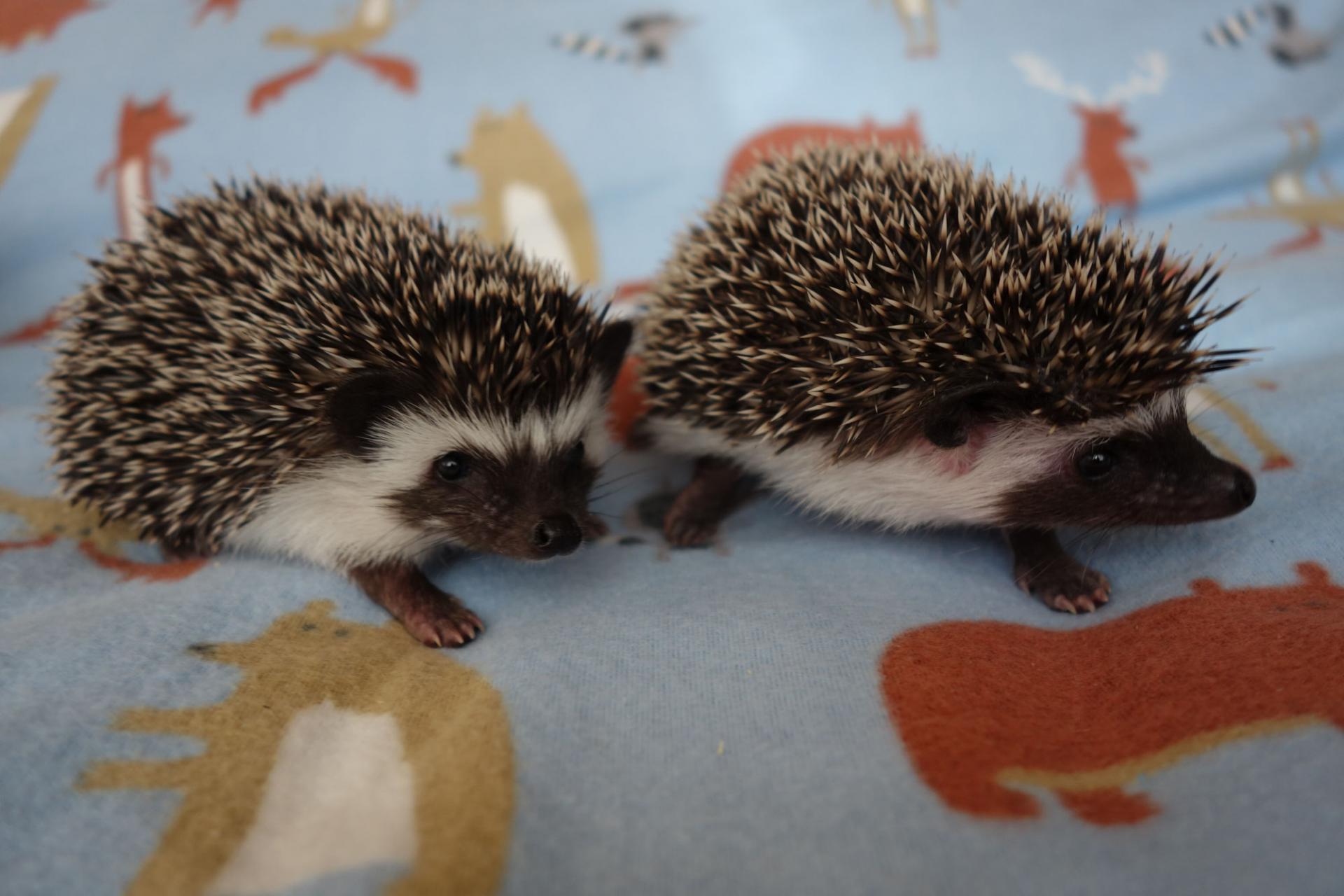
African pygmy hedgehogs come in a wide variety of colors.
The African pygmy hedgehog grows to no more than 20 cm in length and weighs about 500 g. Individuals of this breed differ from each other in color.
Salt-and-pepper hedgehogs have black eyes, masks, and noses. They have more black quills than non-pigmented ones. The skin around the ears and on the back is also black. There are spots of the same color on the belly and legs.
Gray individuals have black eyes, mask, and nose. Spots of the same shade are found on their belly and legs. The quills of this species are dark gray or dark brown. On the back and around the ears, the coloration gradually transitions from dark gray to black.
The brown variety of hedgehog has light brown quills. Its eyes are black, outlined in blue. Its mask is light brown. Its nose is chocolate brown. Its belly and legs are uniformly colored. The skin on its back and ears has a pinkish tint with a gray undertone.
The "Chocolate" variety has brown quills. The eyes are black. The mask and nose are a soft brown. The skin on the back and around the ears has a grayish tint. Barely noticeable spots may be present on the belly and legs.
The champagne variety has light beige quills. Their mask is not prominent. The nose is pinkish. The back and ears are similarly colored. The eyes are ruby-red. The belly and limbs of this individual are uniformly colored.
The "Cinacote" has half its quills light brown, while the other half are pale beige. The mask is barely visible. The nose is pink with brown speckles. The eyes of this individual are black or ruby. The belly and legs are uniformly colored. The skin on the back and around the ears is pinkish.
The "cinnamon" variety has a light brown, needle-like coat. The mask is barely visible. The nose is pinkish-brown. This individual has black or dark ruby eyes. The paws and belly are uniformly colored. The skin on the back and ears is pink.
In addition to these varieties, any individual may exhibit a color anomaly:
- Pinta - any part of the skin may lack pigmentation;
- Snowflake - 30-70% of needles are discolored;
- White - almost all needles are discolored.
A mammal can be born albino. Animals with this abnormal coloring have white quills, pinkish skin, and scarlet eyes.
Pros and cons of keeping a pygmy hedgehog
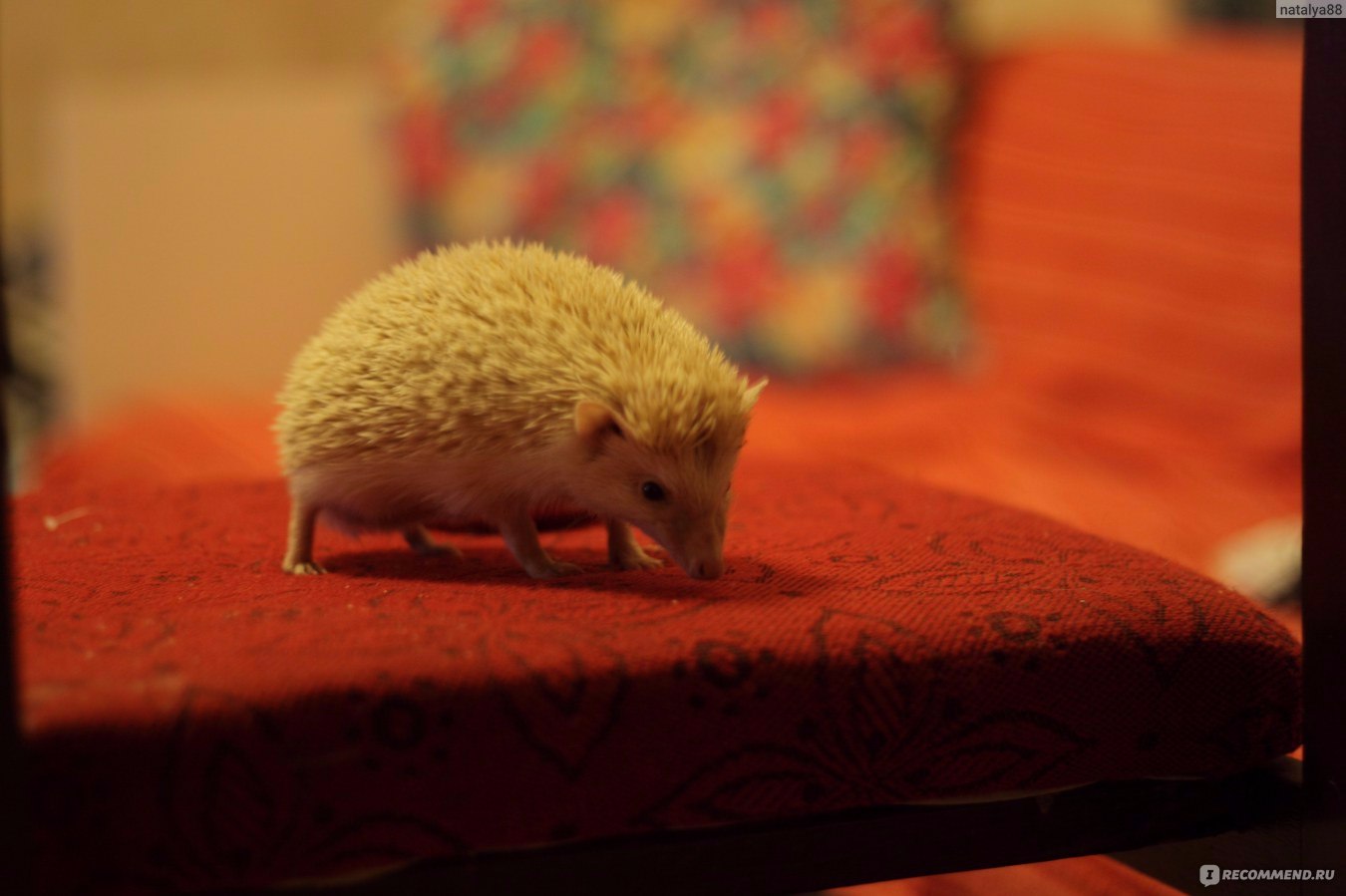
African hedgehogs are smart and energetic, but they don't get along well with other animals.
Keeping an African hedgehog at home has many advantages:
- People who breed these animals claim that the hedgehog can relieve fatigue and even lower blood pressure;
- Hedgehogs are very intelligent creatures. They can quickly become attached to their owners and bond with them;
- The African pygmy hedgehog can be easily trained to a routine of eating, resting and interacting with its owner;
- This animal doesn't require much time in terms of care. It's enough to keep the cage clean, wash the pet occasionally, and trim its claws;
- Hedgehogs very rarely make sounds, and when they do, they are practically inaudible;
- The hedgehog is very compact. There's room for it even in the smallest apartment;
- Since the animal lives in a cage, it will not damage your wallpaper, furniture and other valuables;
- Hedgehogs don't need to be walked. They relieve themselves in a designated corner of the cage;
- African pygmy hedgehogs are not picky eaters. They can even eat regular cat food.
However, despite such a number of positive aspects, keeping a hedgehog also has its disadvantages:
- If you let your pet out of the cage often, you will have to collect needles around the apartment;
- The hedgehog is a nocturnal animal, and it is not recommended to place its cage in a room where people sleep – it will be a nuisance;
- Hedgehogs have a highly developed hunting instinct. If there are other pets in the house, this trait can cost the hedgehog its life;
- Not all veterinary clinics can treat African pygmy hedgehogs. This is because this animal is not particularly common in our country.
Many people may wonder if their pet has an unpleasant odor. If the pet's cage is kept clean, and its health and diet are monitored properly, there won't be any offensive odor.
Care and maintenance at home
To ensure your pet lives as long as possible, you need to follow a number of rules and recommendations.
What to feed
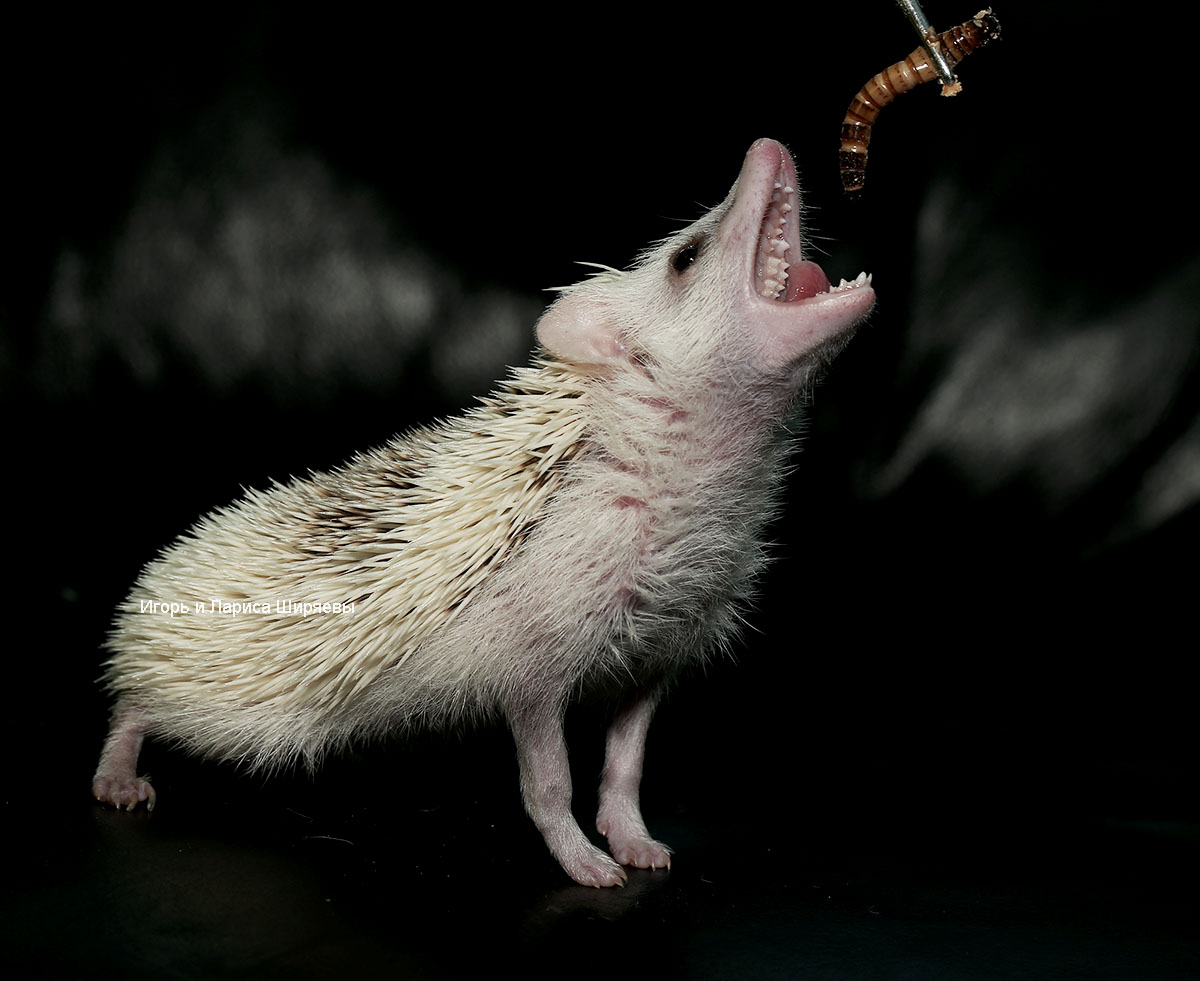
Insects are a real delicacy for a hedgehog.
The hedgehog is a carnivore. Its best food is insects and meat.Specialty stores sell pet food, but it's best to stick to natural products.
It's recommended to feed your hedgehog boiled or steamed meat. For example, 1 tablespoon of beef, chicken, or turkey. Meat should be finely chopped or ground before feeding. Chicken necks, gizzards, liver, and other meats are also acceptable. One to two pieces of organ meat are needed per serving. Once a week, your pet can be given boiled or steamed fish.
Please note: any meat, poultry and fish should not contain salt or spices!
Hedgehogs prefer crickets and zophobus insects as insects. However, these foods are quite fatty, so they should only be fed a couple of times a week. Pygmy hedgehogs are also fed grasshoppers, mealworms, caterpillars, brown marmorated cockroaches, and locusts.
The hedgehog also enjoys vegetables. It loves zucchini, carrots, green beans, asparagus, pumpkin, cucumbers, broccoli, spinach, and bell peppers. Among fruits and berries, the hedgehog prefers apples, pears, bananas, peaches, watermelon, cherries (pitted, of course), strawberries, blueberries, raspberries, blackberries, and kiwi.
You can add variety to your pet's diet with chicken or quail eggs. They can be given hard-boiled or raw. Hedgehogs also enjoy baby food.
Hygiene and bathing
Bathing the African pygmy hedgehog is a must. It's necessary not only to eliminate unpleasant odors but also to remove dirt and parasites. Bathing is always extremely stressful for an animal. The spines take a long time to dry, and the pet can catch a severe cold (especially in cold weather). Therefore, it's recommended to bathe no more than 1-2 times a month. Avoid bathing weak, sick, or maladapted animals, as this can cause irreparable harm to the spine-bearing pet.
To perform hygiene procedures, fill a basin with approximately 5 liters of water. The temperature should not exceed 34.8 degrees Celsius (95.5 degrees Fahrenheit). Lower the animal into the water slowly, gently supporting its upper body. First, thoroughly rinse the paws and belly. Then move on to the back. The quills can be cleaned with baby shampoo and a soft toothbrush. Be careful not to let water get on the muzzle. After bathing, wrap the animal in a warm towel. Allow the hedgehog to dry naturally. Protect it from drafts.
Video: African hedgehog bathing
Diseases and treatment
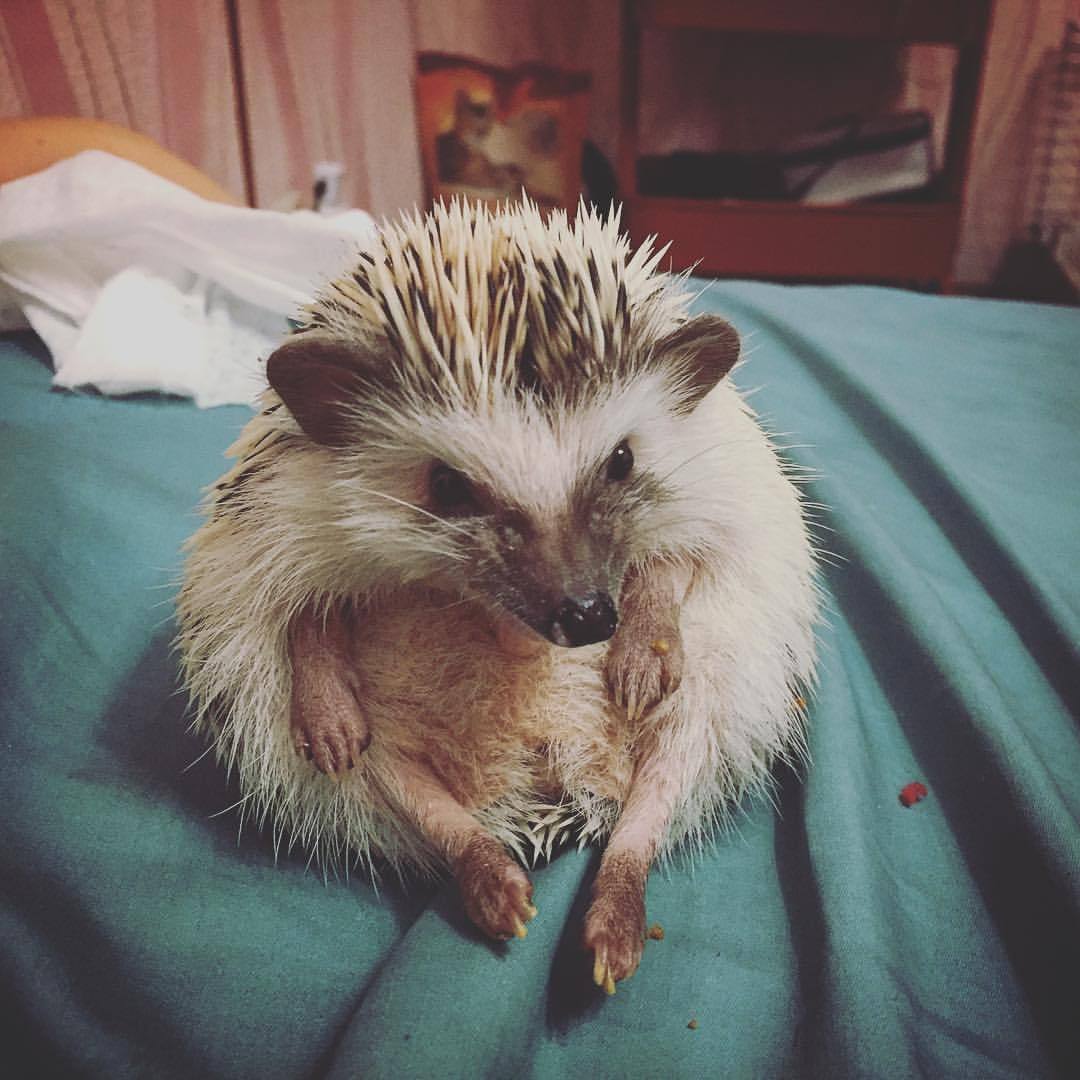
African pygmy hedgehogs are susceptible to a wide range of diseases.
When properly cared for, hedgehogs generally rarely get sick. However, it's still important to know what ailments you might encounter and how to treat them.
Pneumonia. This condition can result from hypothermia. The animal refuses to eat, frequently licks its nose, sneezes, and coughs. Breathing becomes labored, and a characteristic clicking sound is heard. This pathological condition is treated with antibiotics.
Your pet should be examined by a veterinarian. If this is not possible, veterinarians recommend treating the animal with Ceftriaxone or Katozal. To treat a runny nose, you can use a saline solution to rinse the nose, or children's Farmozolin or Maxidin. The antibiotic is administered intramuscularly into the thigh. Katozal is applied to a fold of skin on the back.
Gastrointestinal disorders. African hedgehog feces are elongated and approximately the diameter of a pencil. A healthy animal's stool is dark brown. If mucus or bile is present in the pet's stool, it indicates a digestive disorder. This is often caused by introducing new foods into the diet. Simply eliminate them and monitor the stool. If nothing changes within 2-3 weeks, consult a veterinarian. Your pet may have an infection. If the stool is healthy but resembles cow dung, it is necessary to cleanse the gastrointestinal tract. Cockroaches can help with this. If diarrhea occurs, ensure your pet drinks plenty of water. If it refuses to drink, administer saline subcutaneously. Nifuroxazide can be used to treat the stomach. If diarrhea persists for more than 2 days, consult a veterinarian.
Wounds, scratches, fractures. Wounds and scratches should be washed with hydrogen peroxide. Afterwards, the injury should be treated with Chlorhexidine. Then, wait a little while and apply Levomekol. Serious injuries can only be treated by a veterinarian. Fractures usually require amputation.
Fungus. The animal's quills and fur are falling out. The skin becomes crusty and flaky. In this situation, Imaverol is recommended. For every 1 cc of medication, mix 50 cc of water. Spray your pet with this solution three times a day.
Ticks, worms. If a tick infestation occurs, scratches and sores will appear on the animal's body. If the animal has worms, it will lose weight even if it has a good appetite. Mucus and blood will be present in the stool. Stronghold, Frontline, and Advocate are helpful in these cases. The exact dosage is described in the instructions.
Vaccination
African pygmy hedgehogs are treated only for external and internal parasites. These pets are not vaccinated, and there are no specific vaccines for them. Furthermore, these animals have a weak liver, and any vaccination can be fatal or significantly shorten their lifespan.
Selecting a cage and accessories
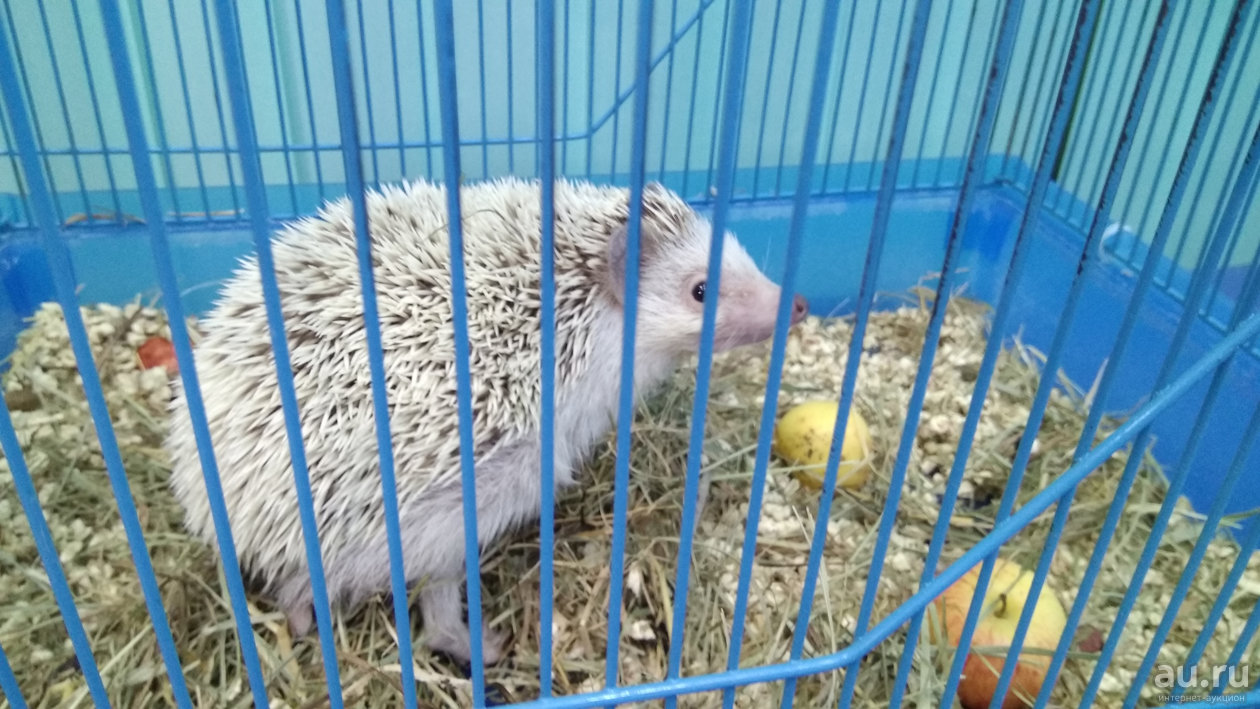
The hedgehog needs to be provided with a sufficient level of comfort in the cage.
The animal's cage must be spacious, with a bottom size of at least 60*60 cm.It must be solid. The distance between the bars shouldn't be too large. An animal could squeeze through them and escape, or get stuck.
Do not purchase multi-level cages for pygmy hedgehogs!
A running wheel should be placed in the cage. It should be solid and at least 28 cm in diameter. Depending on the animal's personality, a shelter should be provided in the cage. For a sociable hedgehog, simply lay down a soft towel or blanket. A shy pet will need a house.
A food bowl and water bottle should be placed in the cage. The bowl should be heavy so that the pet doesn't roll it around the cage. A nipple-type water bottle is best.
Many hedgehogs love to play. Cat toys, such as a ball with bells inside or tunnels, are perfect for them.
Breeding
Breeding African pygmy hedgehogs is a very important step. Carefully weigh the pros and cons beforehand. Make sure you have enough free time to care for the pregnant hedgehog and her babies.
How to determine gender
To determine the gender, hold the hedgehog in your hands so its belly is visible. In females, the genitals are located near the anus. In males, they are located approximately 1 cm from the anus in juveniles and 2–2.5 cm in adults.
Knitting
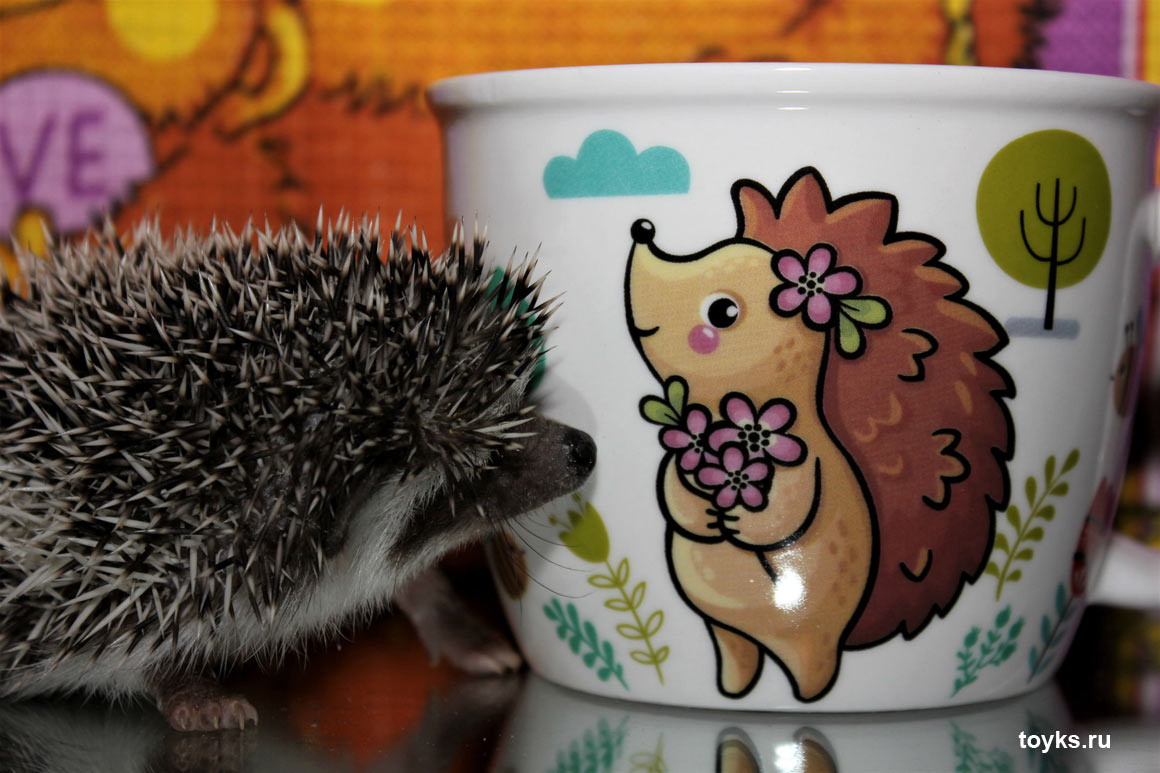
For mating to be successful, the hedgehogs must be in the same age category.
Hedgehogs reach sexual maturity at 5.5–6 weeks. Animals should not be inbred until at least the third generation, so the babies should be separated by sex early. It is not allowed to mate weakened and sick hedgehogs.
A young male should not be mated with an adult female. Due to inexperience, he may become aggressive and be bitten. Mating should not occur before 5.5–6 weeks.
A female can become pregnant before 5.5 weeks. This should not be allowed to happen. She may not carry the litter to term or refuse to nurse her young. A female who has never given birth before should not be allowed to mate after 11 weeks. Fused pelvic bones can complicate labor and lead to the death of the female.
Mating occurs within 6-7 days. Keeping the animals together for longer is not recommended. If mating does not occur, separate the hedgehogs for a week and then reunite them.
A male can be mated every two weeks. A female should not be mated more than twice a year. Otherwise, she will kill her young.
Pregnancy
Hedgehog pregnancy lasts 34–36 days. Over the next couple of weeks, the female gains 10–50 g in weight. By the 25th day, pregnancy is already evident: she becomes plump, and her behavior also changes. She begins to take care of herself, and her gait slows.
How to care for newborn hedgehogs
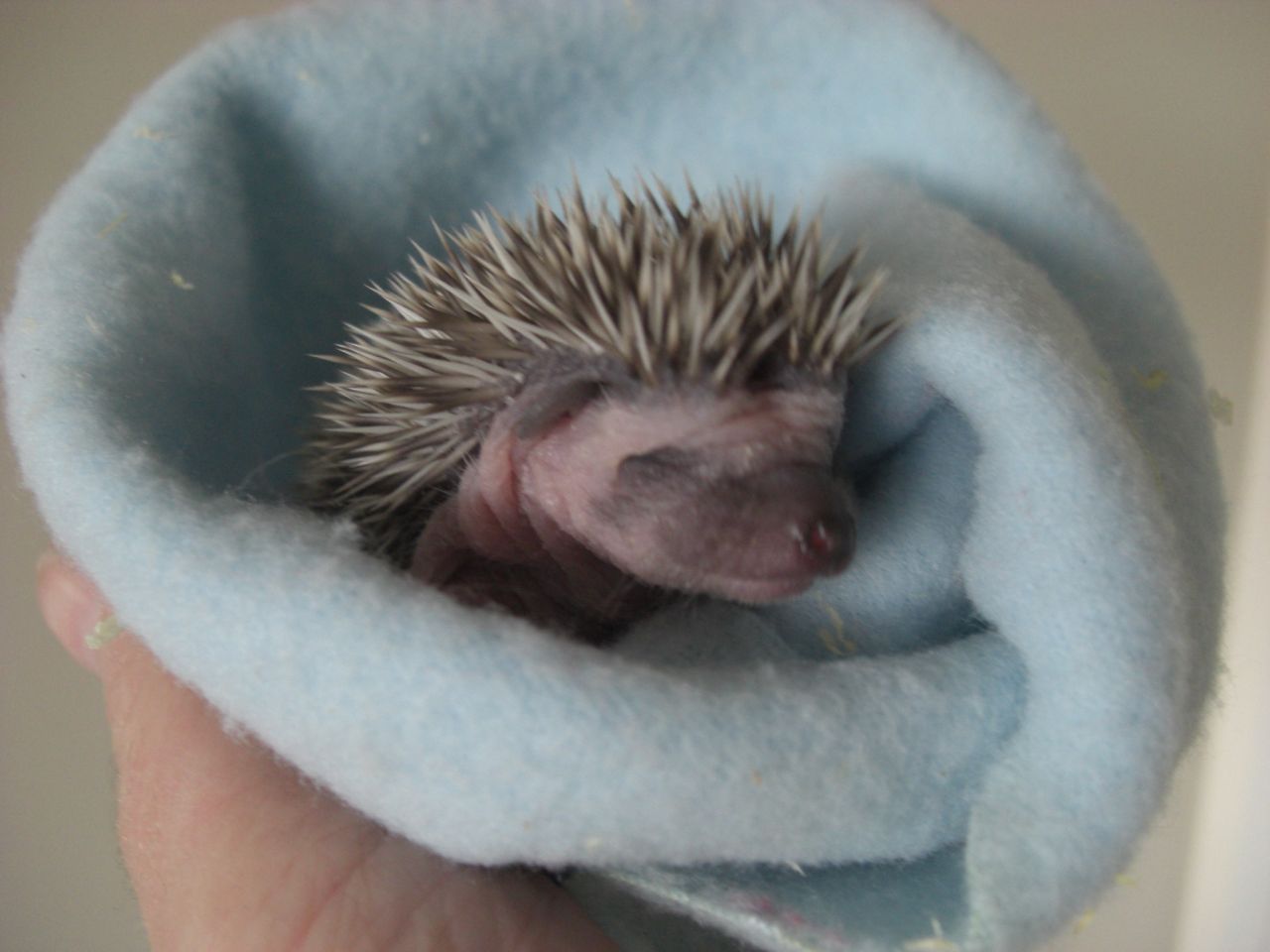
It is better to touch newborn hedgehogs only through a cloth.
During the first few days of the babies' lives, the mother will be very nervous. She should be placed in a separate cage and provided with complete rest. Otherwise, she may refuse to feed the offspring or even kill them.
It is better not to touch the baby hedgehogs - the female may reject them if she smells a humanBut sometimes situations arise when picking up the baby is absolutely necessary. In this case, wash your hands thoroughly with plain water, put on clean clothes, and try to avoid any odors. When picking up the baby, distract the mother. The same should be done when placing it back.
For the first two weeks, the hedgehogs feed exclusively on their mother's milk, then she begins to bring them other food. By two months, the hedgehogs are no longer completely dependent on their mother.
Training and playing with your pet
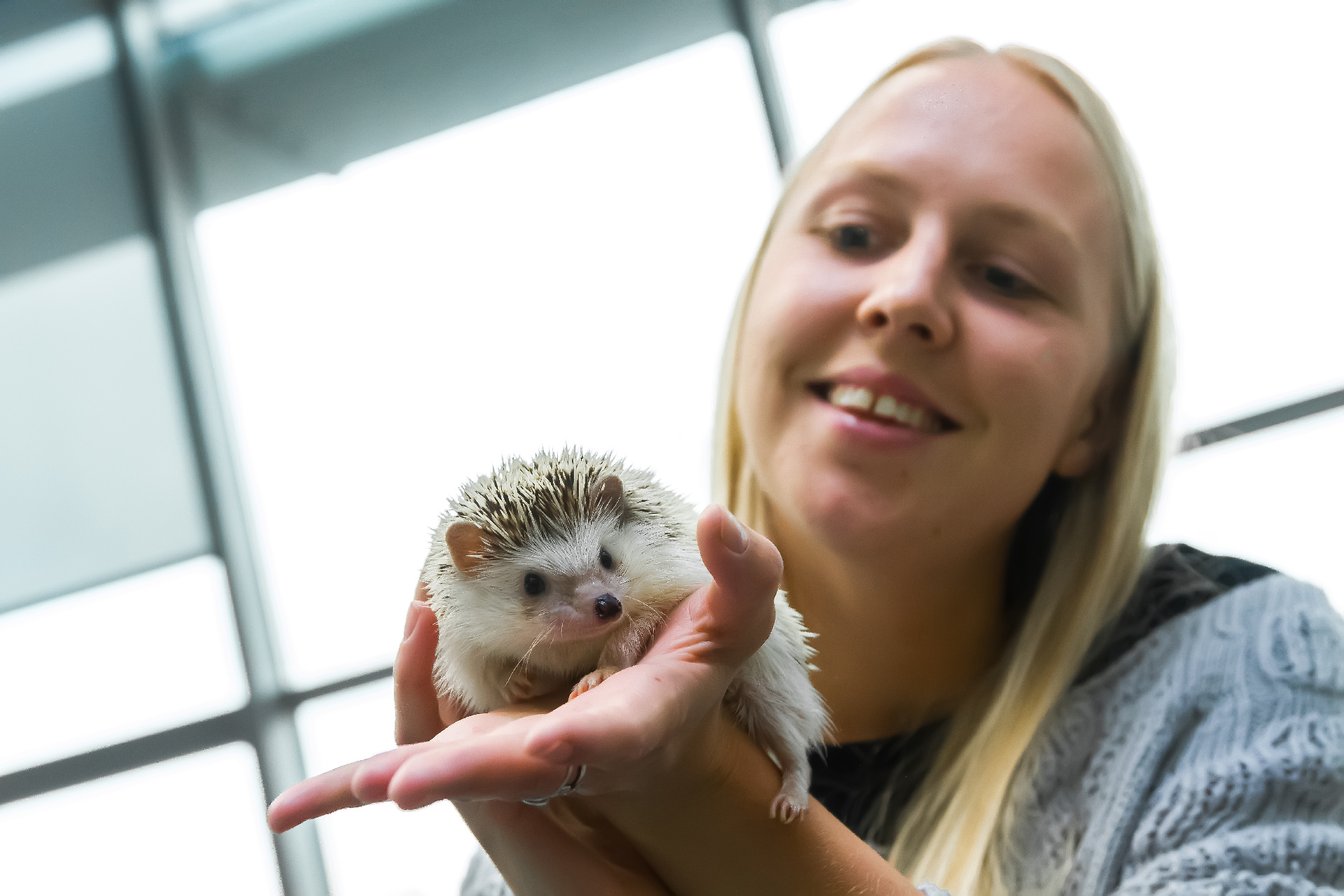
Small, prickly Africans are very trainable.
The African pygmy hedgehog is highly trainable. For example, you can create an obstacle course with treats scattered throughout, allowing it to train independently.
If you exercise your hedgehog regularly, it will learn its name and respond to it.You can also teach your pet the commands "stand" and "come." To do this, lure the animal toward you with the words "come" and a treat. Then, tell it to "stand" and block its path with your foot or a book. The hedgehog will quickly understand what to do and will obey your commands.
The most important thing during training is not to yell or frighten the animal. Otherwise, it will become fearful and refuse to do anything.
Lifespan of an African hedgehog in captivity
With proper care, the African hedgehog lives for approximately 7 years. Cases have been recorded of pets living up to 10 years. With a caring and responsible owner, the hedgehog will live a long and happy life.
How to name a pet
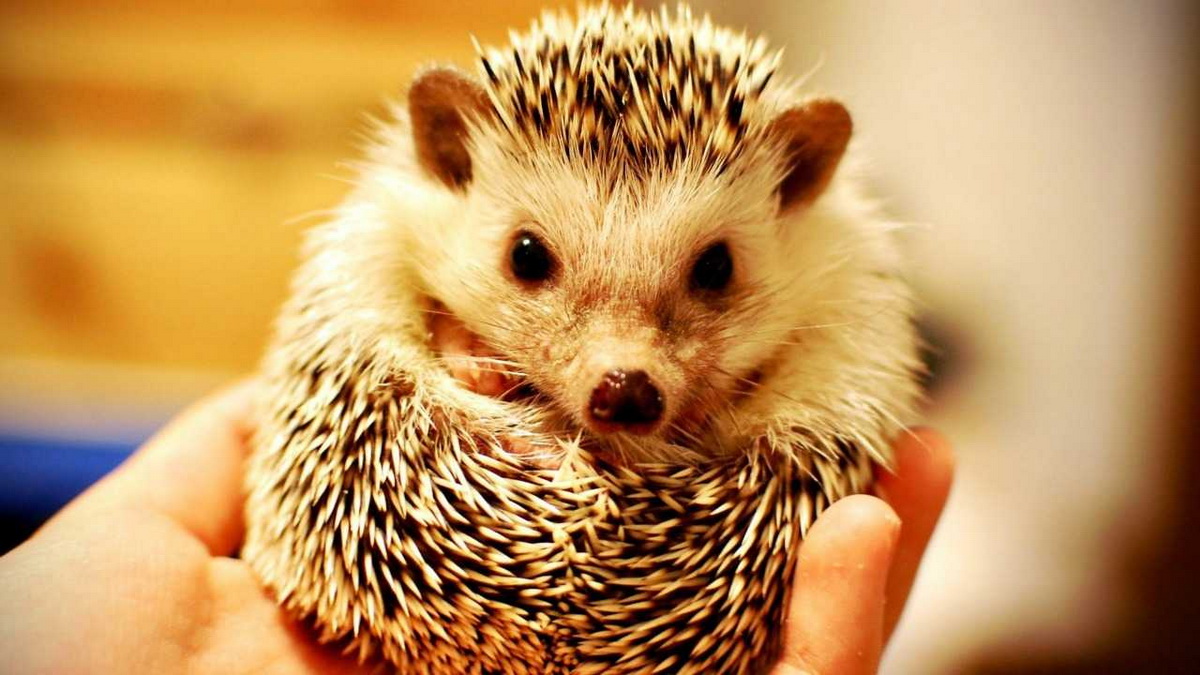
When choosing a name, you can only be limited by your own imagination.
You can name your hedgehog whatever you like. For example, you can take cues from the pet's spines (Cactus, Thorny, Needle, etc.) or transform the word "hedgehog" (Ezhana, Ezhinka, Yozha, etc.).
You can name your hedgehog based on its appearance (White, Snowflake, Coal, etc.). In other words, there are countless nicknames you can come up with for your prickly pet. Just use your imagination.
The African pygmy hedgehog is a pet bred specifically for domestic use. It's relatively easy to eat, small in size, and requires minimal time. Besides these positive attributes, this pet is highly trainable and can become a loyal companion to its owner.