Yuri Alekseyevich Gagarin became the first human to conquer outer space. But before his flight, animals were sent into space. Some successfully completed their flights, while others never returned safely to Earth. The most famous animals to have traveled to space are discussed further in this article.
Zvezdochka the Cosmonaut Dog
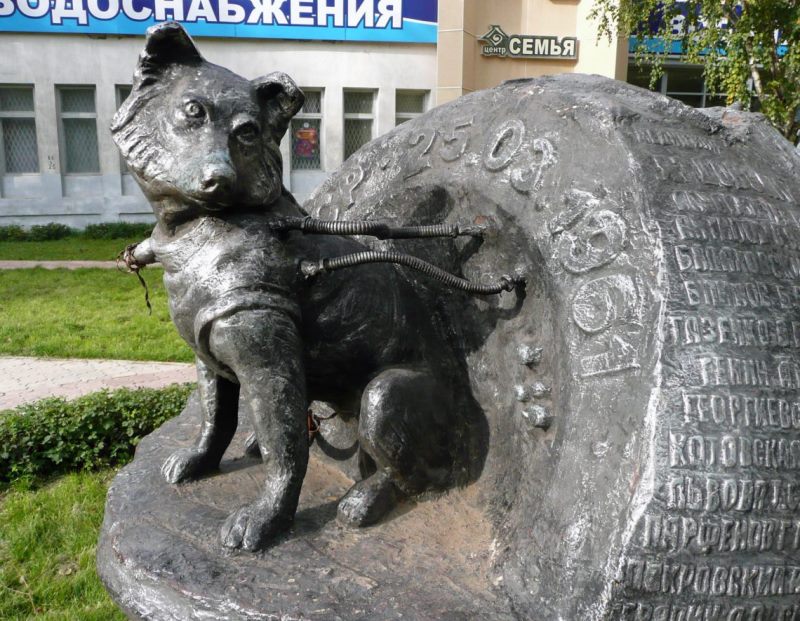
Zvezdochka was launched into space shortly before the first human orbital journey. A mannequin was also on board the rocket, along with the animal. The spacecraft spent two hours in low Earth orbit before landing safely in the Perm region. The mannequin was ejected during descent, and the container containing the dog remained on board the spacecraft until the end of the flight.
The search for Zvezdochka was entrusted to a special search team, but due to poor weather forecasts, the rescue operation did not begin immediately after the landing of the rocket's landing module.
The pilot, Lev Karlovich Okkelman, managed to find the dog, after which Zvezdochka received medical assistance.
Dogs Belka and Strelka
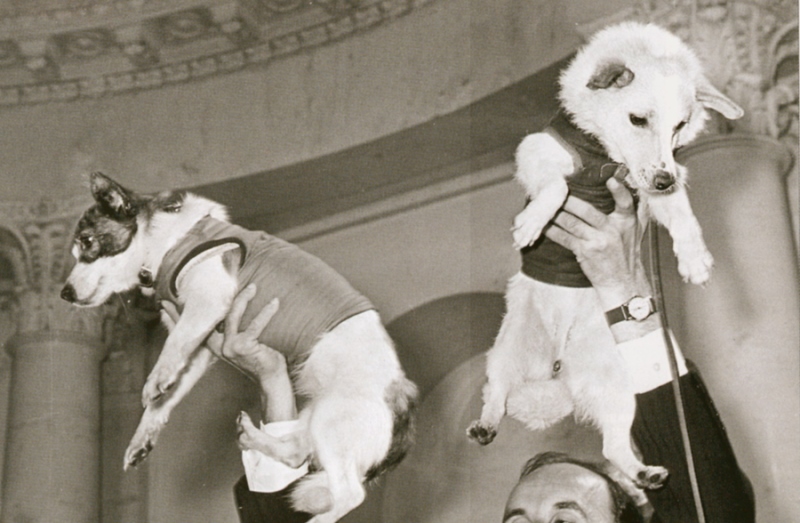
Belka and Strelka are the most famous canine cosmonauts. They launched their mission on August 19, 1960. After entering orbit, the spacecraft completed a full orbit around the planet.
After this, the rescue compartment containing the animals separated from the aircraft's body. It was after Belka and Strelka's flight that scientists concluded that human spaceflight was a real possibility.
Numerous postcards, banners, and calendars were created in honor of these dogs. Both dogs lived long and full lives. Strelka had many puppies, one of which was given to the daughter of American President John F. Kennedy.
Cat Felicette
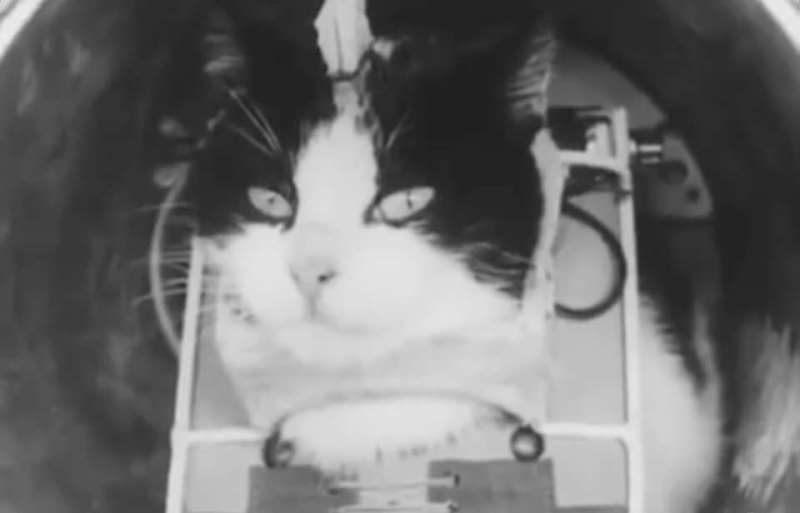
Initially, French scientists were preparing a cat named Felix for space flight. On the day of the rocket launch, he escaped, and another cat had to go. She was given a similarly named Felicette.
The cat was not fully prepared for the flight, but the spacecraft with Felicette on board was launched nonetheless on October 18, 1963.
The flight lasted 15 minutes, including five minutes of weightlessness. The spacecraft landed safely, and the cat was unharmed.
Able Monkeys and Miss Baker
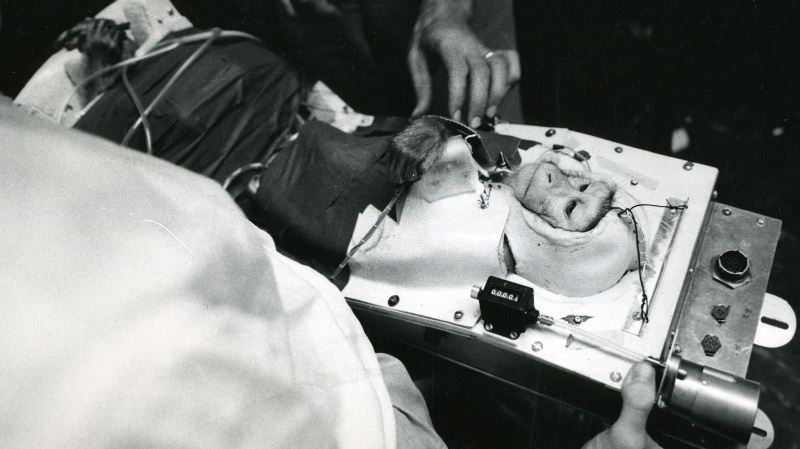
These monkeys were the first to return alive to Earth after a sojourn in space. Other attempts ended in the animals' deaths. The Jupiter AM-18 space rocket's flight took place on May 28, 1959. It lasted 16 minutes, nine of which the monkeys spent in zero gravity. The rocket's maximum speed exceeded 16,000 km/h.
Dogs Veterok and Ugolyok
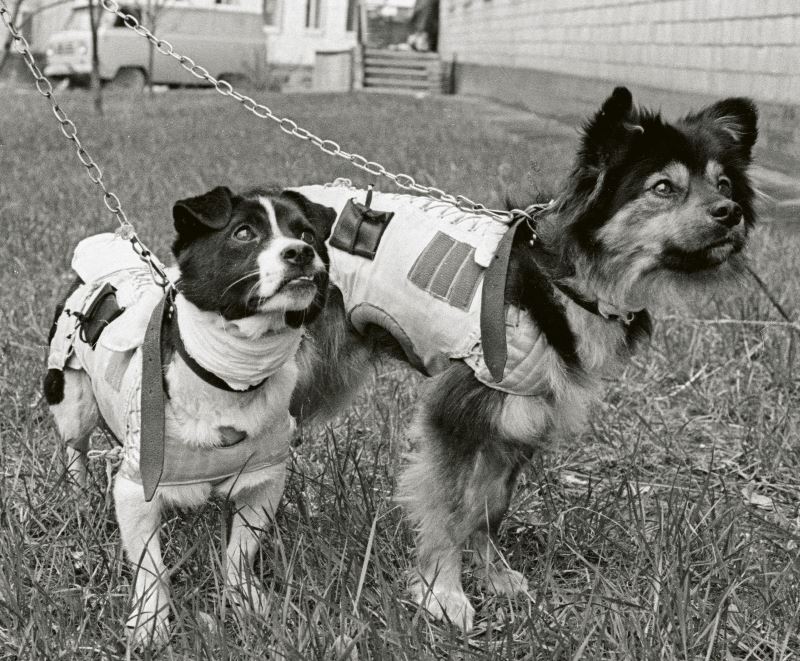
Veterok and Ugolyok successfully survived a record-breaking spaceflight. Their rocket launched on February 22, 1966, and remained in orbit for 22 days. During their training for the flight, Veterok and Ugolyok were trained in specially tailored one-size-fits-all suits.
The animals' tails had to be docked to avoid interfering with the ventilation system in the rocket cabin. During such a long flight, the dogs were fed directly through a special hole in their stomachs.
During training, the animals were placed in the aircraft cabin for several hours, secured in a single position. Each training session was longer than the previous one. The optimal flight duration was determined through trial and error: no more than 20 days.
After returning to Earth, the dogs were diagnosed with muscle atrophy, heart problems, changes in their blood composition, intense thirst, and hair loss. But both dogs survived and lived long lives. Ugolka had a litter of six puppies.
Rats Hector, Castor, Pollux
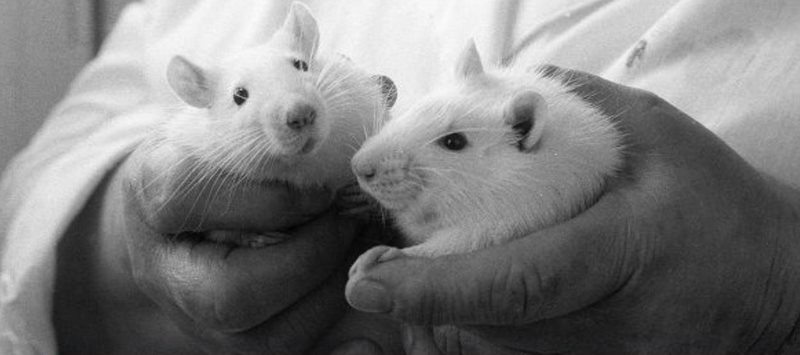
Before launching rats into space, electrodes were implanted in their brains. The first successful flight took place on February 22, 1961. The rat, nicknamed Hector by journalists, spent 40 minutes in space. Hector was then returned to the Earth's surface. Six months after landing, Hector was euthanized to study the effects of radiation on rodents.
Subsequent launches of space rockets carrying Castor and Pollux took place on October 15 and 18, 1962. Both flights ended tragically for the animals. The capsules housing Castor and Pollux, which had separated from the rocket, were found. The animals perished.
Chimpanzee Ham
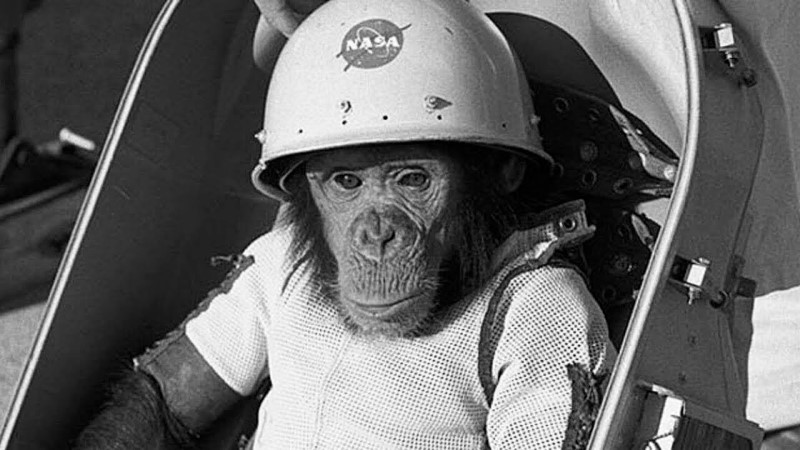
Ham was the first chimpanzee sent into space. During his flight, which took place on January 31, 1961, he was tasked with performing individual motor commands using simple gestures.
The flight lasted 17 minutes. The rocket's trajectory reached its highest point at an altitude of 254 kilometers above Earth. The equipment used by scientists to monitor the chimpanzee's physical condition was virtually identical to that later used during human spaceflight.
Ham returned safely to Earth and died of natural causes in 1983.
Cockroach Nadezhda
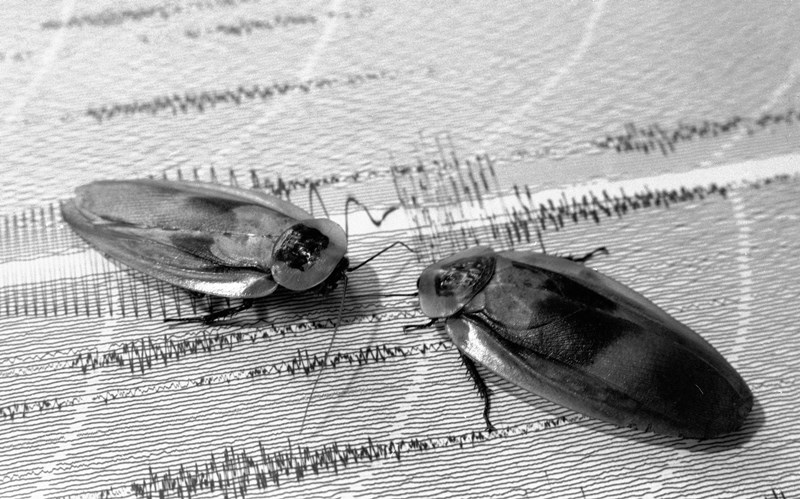
Nadezhda spent 12 days in space. During the flight, the insect managed to conceive and gave birth to offspring after landing. During the flight, Nadezhda was kept in a sealed container. Her behavior was monitored using video cameras. Nadezhda's pregnancy proceeded without any complications or abnormalities. The offspring, conceived in zero-gravity conditions, developed a darkening of the protective chitinous layer very early.