Every owner wants to protect their beloved pets from fleas and ticks. One way to do this is by using special collars. Simply wearing them while walking will prevent your dog from picking up these dangerous and annoying parasites.
Content
Flea and tick treatments for dogs
Blood-sucking parasites are a nuisance to pets, but there are effective treatments for them. They are divided into six types:
- aerosols and sprays;
- collars;
- drops;
- shampoos;
- vaccines;
- pills.
Each has its own advantages and disadvantages, which limits its scope of application. Wearing collars is an excellent preventative measure against tick or lice infestation. The straps are also impregnated with substances that kill insects, making them particularly attractive to pet owners.
If your puppy is small or your dog has allergies or serious illnesses, ask your veterinarian which products are best.

To remove ticks and fleas from dogs, special collars, shampoos, sprays, drops, tablets and vaccines are used.
Key Features of Flea and Tick Collars
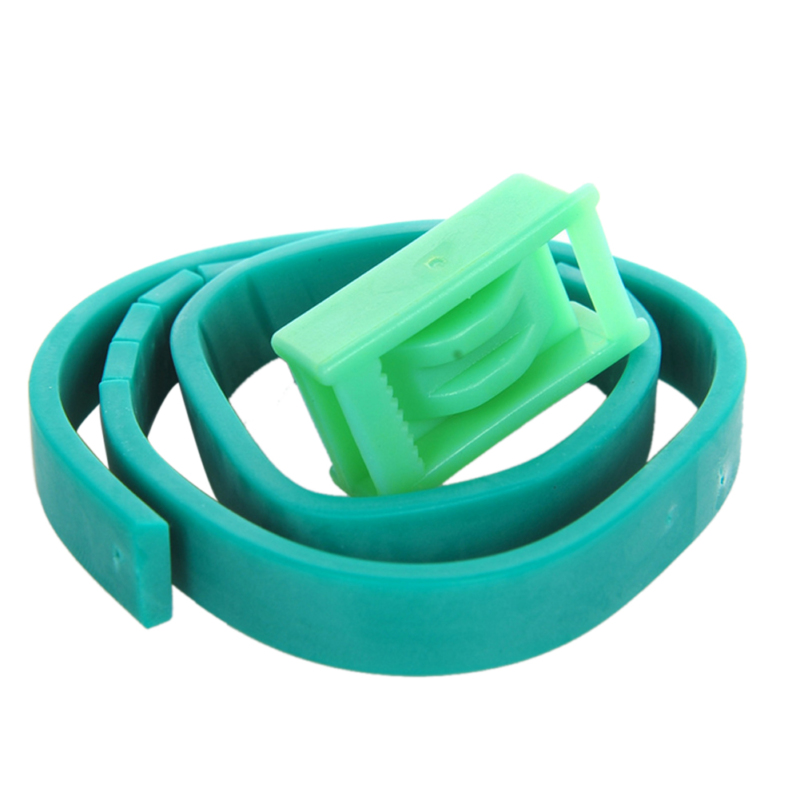
The product is an elastic plastic strap impregnated with insecticides—fipronil, diazinon, deltamethrin, ivermectin, propoxul, permethrin, and other substances. It is secured around the animal's neck with a buckle. It works simply: the active ingredients spread over the surface of the dog’s skin and fur, repelling fleas and ticks. This effect lasts as long as the dog wears the strap.
Advantages and disadvantages of collars
When stored properly and within warranty periods, these insecticidal accessories have many advantages:
- ease of use (just attach the strap to the animal’s neck using a simple clasp and wait for the positive effect);
- Safety for the animal's health - biological models are completely harmless, and in chemical collars the daily dose of toxic substances is minimal and does not have a negative impact on the dog's body;
- Hygienic - the collar does not stain the animal's fur or surrounding objects, such as furniture or carpets in the room, and does not require special care or daily monitoring;
- Multifunctionality - the product is designed to combat not just one type of insect, but several at the same time - fleas, ticks, lice, mosquitoes and other parasites;
- Availability and choice - pharmacies and veterinary departments in stores offer a fairly wide range of products at various price points and from different manufacturers.
Inexpensive models and products from little-known brands often contain pesticides and other hazardous components that cause allergies and various side effects.
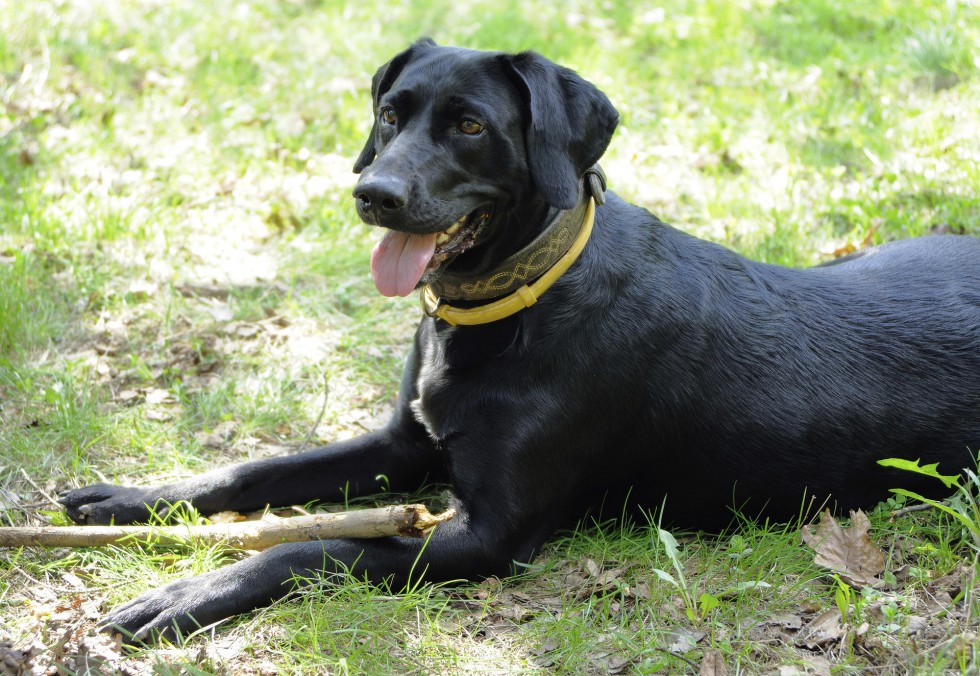
If a flea collar is used, insectoacaricides in other forms cannot be used.
Collars also have their downsides:
- uneven effect of the drug due to limited localization (except for the neck, it cannot be worn anywhere, so it is necessary to periodically examine other parts of the dog's body for the presence of parasites);
- it is impossible to combine the collar with other insecticides;
- Individual intolerance to the chemical components included in the impregnation: to detect this in a timely manner, monitor your dog during the first hours after putting on the collar.
Due to the toxicity of the substances impregnated in the straps, the product has a limited shelf life—usually six months. To protect dogs from the negative effects of chemicals, it is not recommended to use the flea collar on puppies under a certain age, sick or elderly animals, or pregnant dogs.
Make sure your pet doesn't bite through the collar when playing with other dogs, as this can cause serious poisoning.

Make sure your dog doesn't bite through a collar that's soaked in chemicals.
Types of collars
Products are:
- Chemical. They contain toxic substances that kill parasites. They are used on adult (from about six months of age) and healthy dogs.

The collar is a flexible strip impregnated with a chemical that repels and kills ticks and fleas.
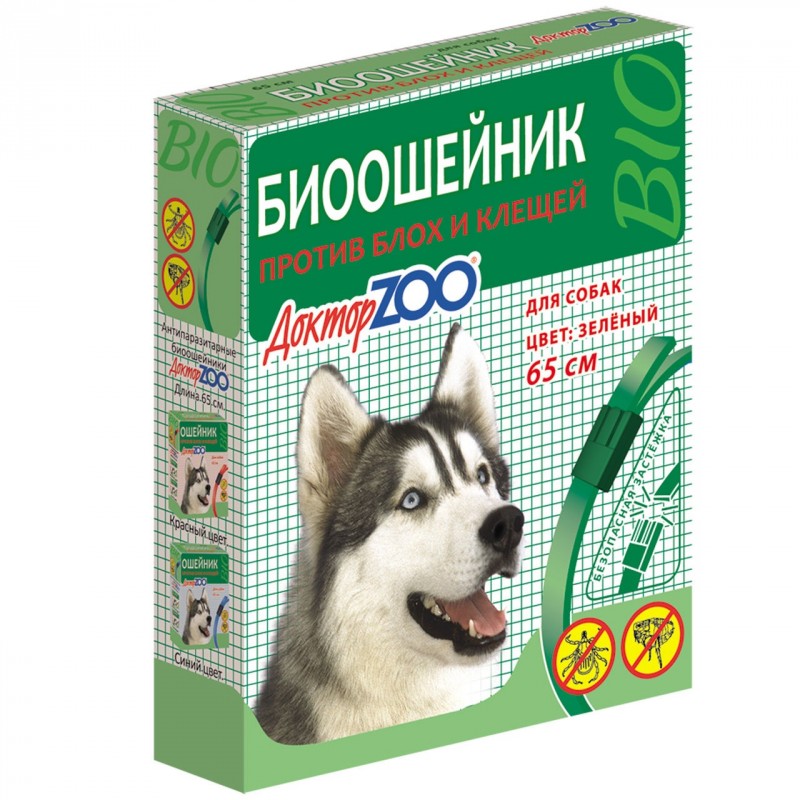
- Biological. Impregnated with essential oils or medicinal herbs that repel insects. Suitable for puppies and pregnant dogs.
Biological collars against ticks and fleas are suitable for puppies and pregnant dogs.
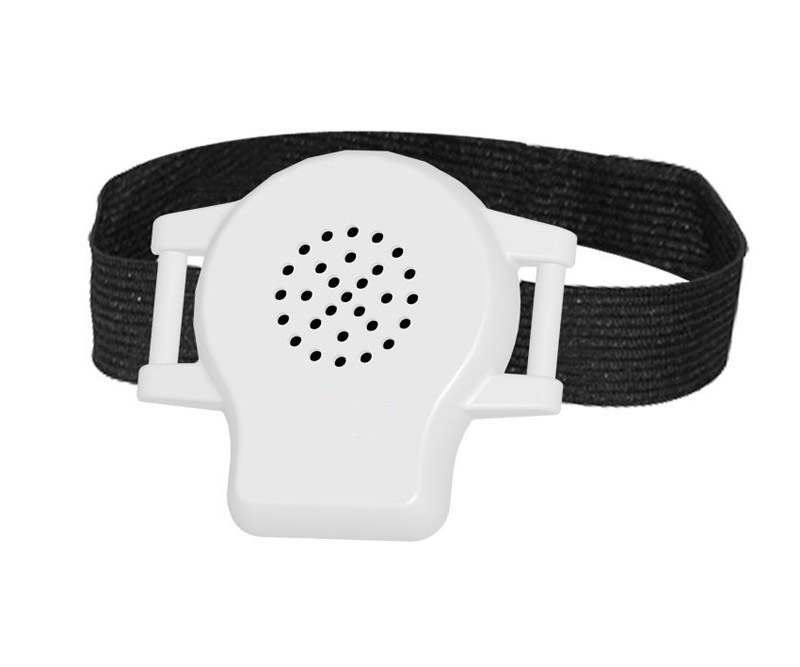
- Ultrasonic. These contain no aromatic or chemical components and use ultrasonic radiation to kill parasites. These are the most expensive models, but they are less effective and therefore less commonly used.
The collar repels ticks and fleas from dogs using ultrasound.
Popular collar models
Many Russian, European, and American companies produce antiparasitic collars. According to dog owners, the most effective and comfortable ones are:
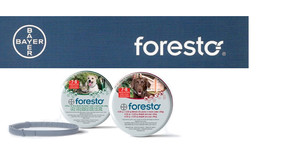
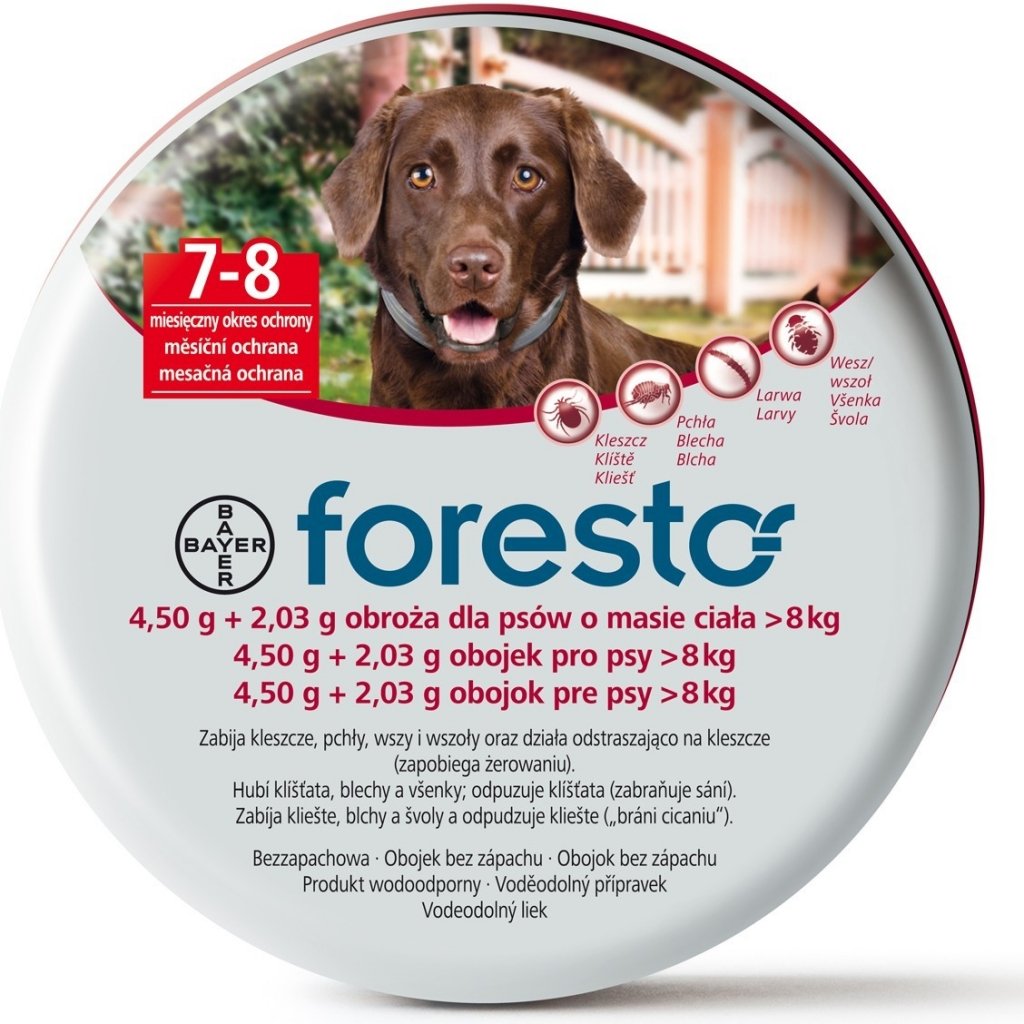
- Foresto. Provides maximum and long-lasting protection against parasite bites. Suitable for active pets.
The Foresto collar has no unpleasant odor and is not damaged by exposure to water.
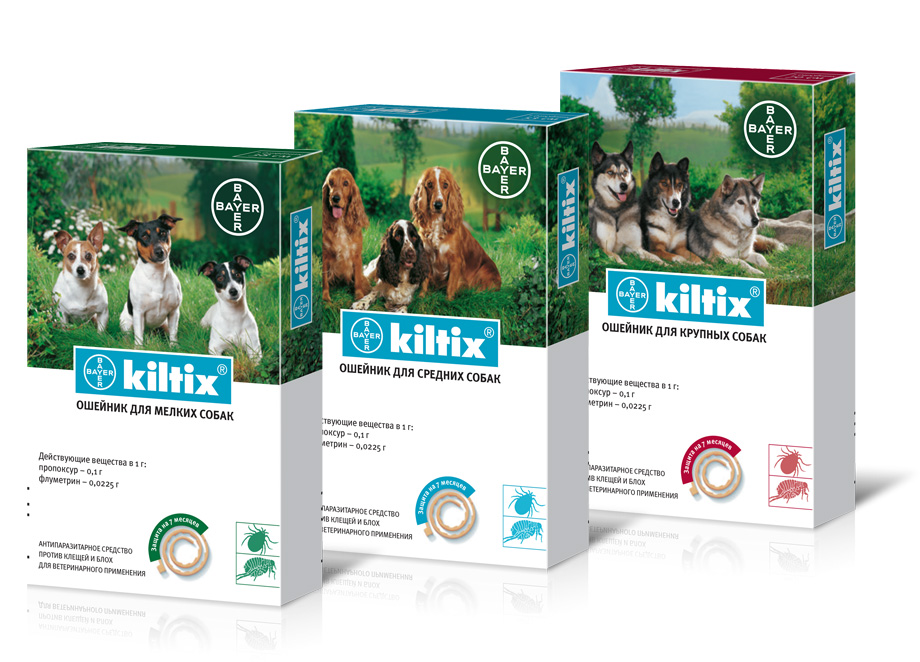
- Kiltix. It begins working within 24 hours and provides protection for up to seven months. It is used for healthy adult dogs.
Kiltix collars come in three varieties: for small, medium and large dogs.
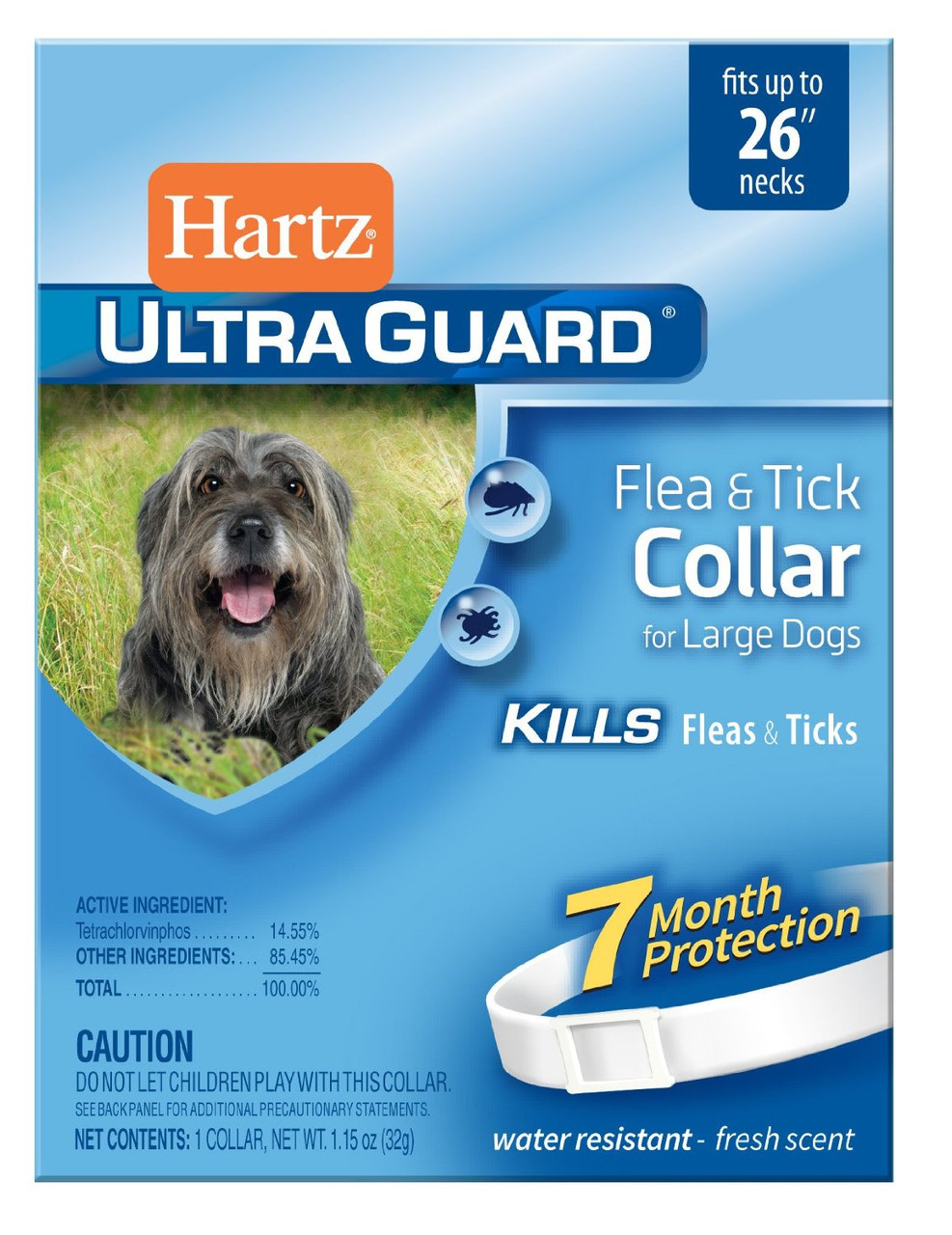
- Hartz (Hartz Ultra Guard). Water-resistant, pleasantly scented, and effective upon application. Not suitable for puppies under six months.
Hartz collars provide reliable protection for dogs against blood-sucking parasites for 7 weeks.
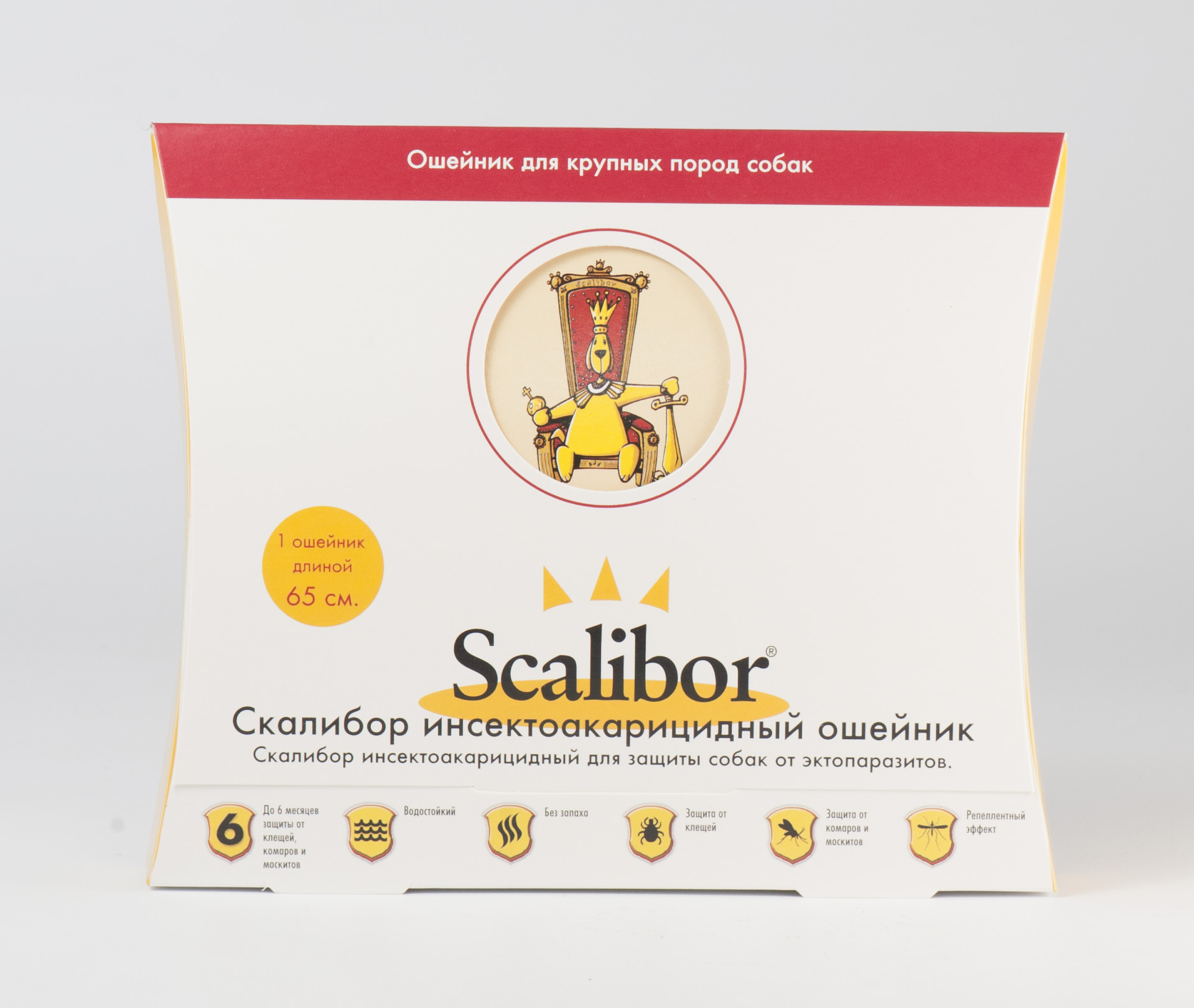
- Scalibor. Suitable for pregnant dogs and puppies aged 7 weeks and older.
Even pregnant dogs will not be harmed by the Scalibor collar.
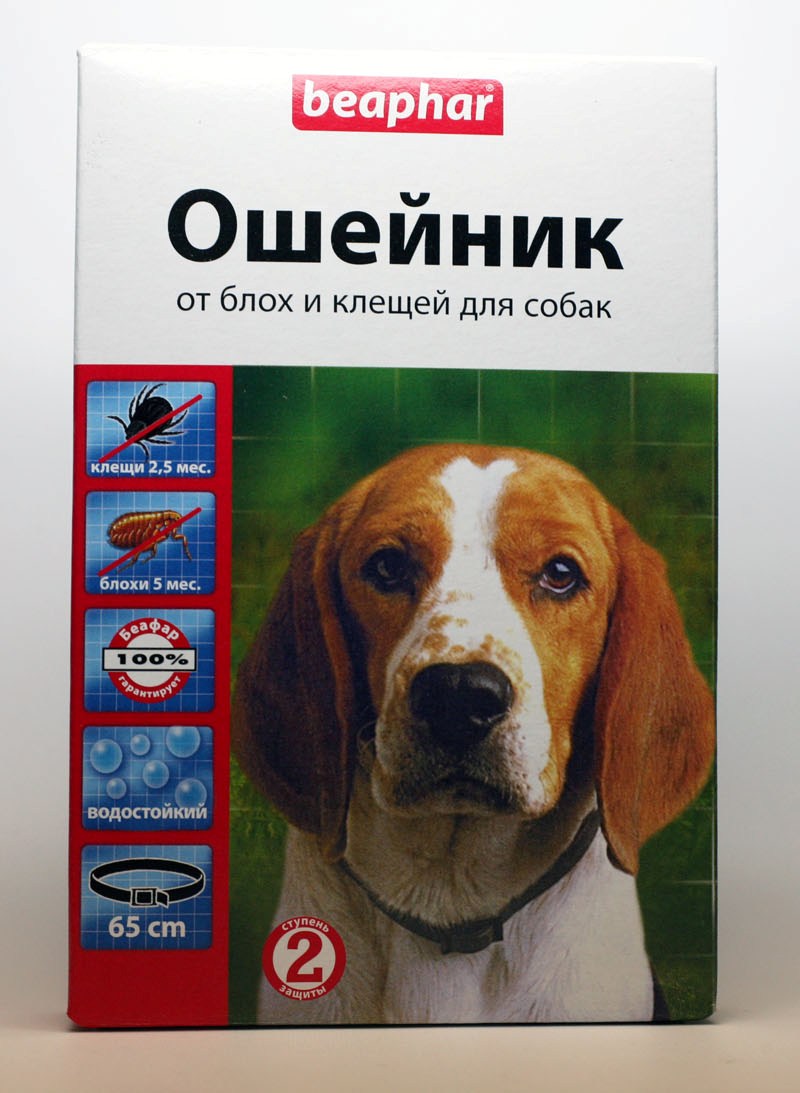
- Beaphar. Effective for up to five months and has no weight limit.
Beaphar is one of the most popular and effective collars for protecting dogs from ticks and fleas.
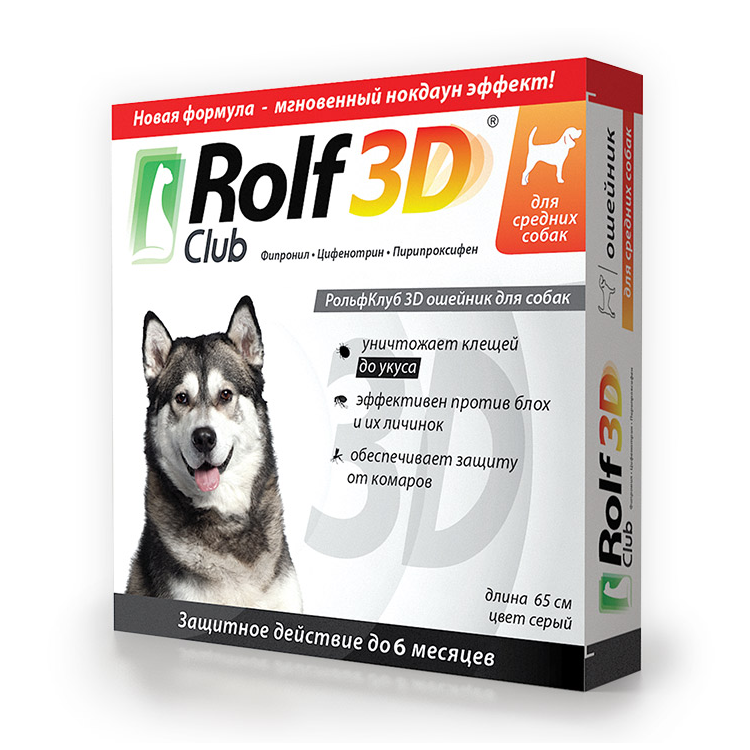
- Rolf Club 3D. Low-toxic, odorless collar.
The Rolf Club 3D collar kills ticks before they bite.
The products described are popular, but other types are also used.
Table: Features of popular collars
| Name, manufacturer | Active ingredient | From what age is it used? | How many months is it valid? | Peculiarities |
|---|---|---|---|---|
| Foresto, Germany | Imidacloprid - 10%, flumethrin - 4.5% | From 7 weeks | 8 | Waterproof, odorless, equipped with reflectors. |
| Kiltix, Germany | Propoxur, flumethrin | From 6 months | Up to 7 | Waterproof. |
| Beaphar, Netherlands | Diazinon | From 6 months | Up to 6 | The effect is activated 5 days after being attached to the dog’s neck. |
| Inspector, Russia | Fipronil - 5%, pyriproxyfen - 2%, ivermectin - 1.2% | From 2 months | 4 protects against fleas and 3 against ticks | It has a distinctive odor. It works in two directions: it paralyzes and disrupts the hormonal balance of the parasites, causing sterilization of the adults. |
| Celandine, Russia | Fipronil and permethrin | From 8 weeks | 4 - from fleas and 2 - from ticks | Not to be used with other insectoacaricidal agents. |
| Gamma, Russia | Siberian fir and tea tree oils | From 2 months | Up to 4 | Strong scent, safety clasp automatically releases if dog accidentally gets caught. |
| Hartz Ultra Guard, USA | Tetrachlorvifos | From 6 months | Up to 7 | Waterproof. |
| Trixie, Germany | Propoxur | From six months | From fleas - 4, from ticks - 2.5 | |
| Scalibor, France | Deltamethrin | From 7 weeks | Up to 6 | Three protective effects:
|
| Rolf Club 3D, Russia | Fipronil - 5%, permethrin - 1% | From two months | Up to 4 | Waterproof and elastic. |
Video: Foresto collar against ticks and fleas
Tips for choosing
For each dog, a collar is selected individually, taking into account the following criteria:
- the size of the product is important for the animal’s comfort;
- age and individual characteristics of the pet - not all collars are approved for use on puppies, as well as on old or sick dogs, pregnant and lactating dogs;
- Manufacturer - trusted brands guarantee product quality and reliability, which is important for the dog's safety.
Detailed product information, including restrictions and special instructions for use, and the concentration of active ingredients, is provided in the instructions. Be sure to read them carefully. Consulting a veterinarian is also a good idea.
What collars are suitable for puppies?
Sometimes, even puppies need to be protected from blood-sucking parasites. They can become infected from their mother or another dog in the house, or accidentally while playing outside. The dangers of bites for puppies include the following:
- severe itching and scratching, which leads to the development of anemia due to significant blood loss for a small dog;
- high risk of infection with parasitic and worm-borne infections due to an incompletely formed immune system.

There are collars available for sale that are designed specifically for puppies.
However, products intended for adult dogs are not suitable for puppies, as they can trigger allergic reactions and weaken the body's immune system. Choose special products approved for dogs up to 6 months old. These are odorless and can be used from three weeks, two months, or other ages. More details are provided in the instructions.
Veterinarians do not recommend putting a collar on a puppy under 2 months of age, nor do they recommend using other types of protective products such as drops, shampoos, or tablets.
The following collars are suitable for puppies:
- Insektal Plus (Russia). Impregnated with permethrin and fipronil, it is effective for 2 to 4 months and can be used from 8 weeks of age.
- Insektal Combo is a low-toxic, odorless product based on ivermectin. Do not use on dogs under 2 months of age and is contraindicated for Sheltie and Collie breeds.
- Hartz Ultra Guard Flea (Germany) – used from three months of age, provides protection for up to seven months, active ingredient – tetrachlorvinphos.
Video: How to choose and put a collar on your dog
Rules for using collars
To achieve the desired effect, it is important to put the collar on the dog correctly:
- Unpack the product and remove the straps that hold it in place when twisted.
- Stretch the collar slightly and put it on the animal, adjusting it to size and leaving a gap of one and a half centimeters for comfortable wearing.
- Trim off the excess end of the strap.
If fleas are already present, remove them first. Treat the dog's coat with a special shampoo, if the instructions allow it.

A dog should feel comfortable wearing a flea collar.
Contraindications
Not every animal can always use a safety harness. It is not suitable for:
- if the pet is already receiving medication, including treatment aimed at killing ticks or fleas;
- pregnant and lactating dogs;
- older dogs or those with serious health problems;
- puppies up to 6 months old (each collar has an age indication from which it can be worn);
- if there are allergic reactions to the active ingredients of the impregnation or to other things - dust, food, etc.
The most common side effects include allergic dermatitis, itching, lacrimation, increased salivation, sneezing, and hyperarousal. Rarely, long-term consequences of wearing such products are possible, including the development of liver, respiratory, and kidney problems. However, medical researchers have not conducted any studies in this area, and it is impossible to say for sure that the collar caused the condition.
If your dog is weakened (after an illness or simply old), choose ultrasonic flea and tick collars or collars based on essential oils.

If your dog is old or sick, it is not recommended to put a collar impregnated with chemicals on it.
Precautionary measures
To prevent tick bites and fleas, it's recommended to wear the collar at all times and only remove it during bathing. For best results, it's important to follow these guidelines:
- Do not combine wearing a collar with the use of insecticides in other forms (drops, sprays, etc.) to prevent the development of dermatitis or hair loss;
- If allergic reactions occur, it is recommended to choose a product from another manufacturer;
- Don't give preference to cheap options: they are often of poor quality and can harm the dog.
Reviews
I have a Yorkie, and every season we're prone to ticks. No drops, collars, or sprays helped. Thank goodness he didn't get piroplasmosis. We tried different collars, but they all smelled awful, and he was always itchy. Last year I bought a Foresto. Knock on wood, not a single tick even landed on him. In May, we were camping for the first time, and only later did I notice ticks crawling in swarms in the grass, like ants. It was already late afternoon, so I grabbed my dog and started examining him. But not a single one. And so until winter, we were free; the only protection we had was the collar, no drops or sprays.
During the first few days after putting the collar on your pet, ticks may attack and attach themselves, but the parasites fall off spontaneously after a few days. Indeed, on the first and second days of using the collar, I found two ticks on Johnny's body. On the third day, the tick was still present, but inactive and motionless. Hopefully, the Bayer Kiltix collar will help protect our pet from ticks, which are especially dangerous in May and June.
Hartz Ultra Guard Flea, Tick, and Mosquito Collar - A good flea and tick repellent for my dog. Pros: Lasts a long time, no fleas or ticks detected for a long time. Cons: Has a distinctive odor at first.
It was terrifying when, after a walk in the woods, I picked up a ton of ticks from my dog (15 in just 20 minutes). After that, I never set foot in the woods again... Finally, the drops expired, and on the advice of friends, I bought a Scalibor collar. It protects not only from fleas and ticks, but also from mosquitoes and other parasites. But the most important thing for me is high-quality tick protection.
This year I bought a Beaphar flea and tick collar for dogs. Overall, I like the collar. It does its job as an extra layer of protection. Of course, it's not 100% effective; some wily creatures still manage to get through, but Frontline is already effective against them. The only downside I can think of is the smell. But I've never encountered an unscented collar before. It's not a big deal; the smell will fade over time. I bought the collar online for 260 rubles on sale. I highly recommend it.
We've been using Rolf Club collars and drops for about six years now (maybe longer). We have a variety of dogs in the house: a Great Dane, a Toy Poodle, and a German Shepherd. We used both the collar and drops simultaneously. They've never worked on any of the dogs, even during the height of tick season during a trip outdoors. None of the dogs have had any allergies (I should note, our white Toy Poodle is allergic!). We really like the price and quality.
The Rolf Club flea and tick collar provides excellent protection against skin parasites. Pros: Effective tick protection. Good collar length. Stays securely on the dog's neck. Cons: White isn't a good color for a black dog.
I bought the "Gamma" flea and tick collar for dogs at the O'KEY store. It cost 67 rubles. This is my third time buying one. The collar is 65 cm long and black. It suits my dog, who has a red coat, so it's a good match. The collar protects against fleas, ticks, mosquitoes, lice, and other critters. It's oil-based, making it safe for dogs. However, the collar has a strong odor. I observed the collar in action at my dacha. Flies and mosquitoes were flying around the dog, but they didn't land. No fleas yet.
Using tick and flea collars is a convenient and safe way to protect your pet from blood-sucking parasites. Choose a collar that's appropriate for your pet's age, size, and individual characteristics to ensure it provides positive results without harming their health.