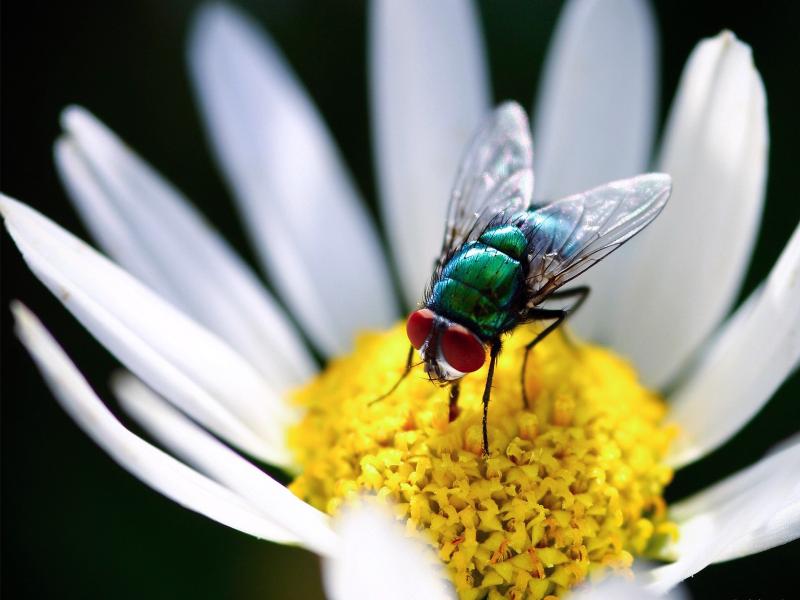
The onion fly appears harmless, but in reality, it's a pest that causes irreparable damage to crops. Its larvae can destroy onions, garlic, and lettuce. Bulbous flowers are also at risk. At the first sign of plant infestation, begin pest control.
Content
Meet the onion fly
The onion fly (Delia antique) belongs to the family Diptera. The insect's life cycle consists of four stages: imago (adult), egg, larva, and pupa. Detection methods depend on the developmental stage.
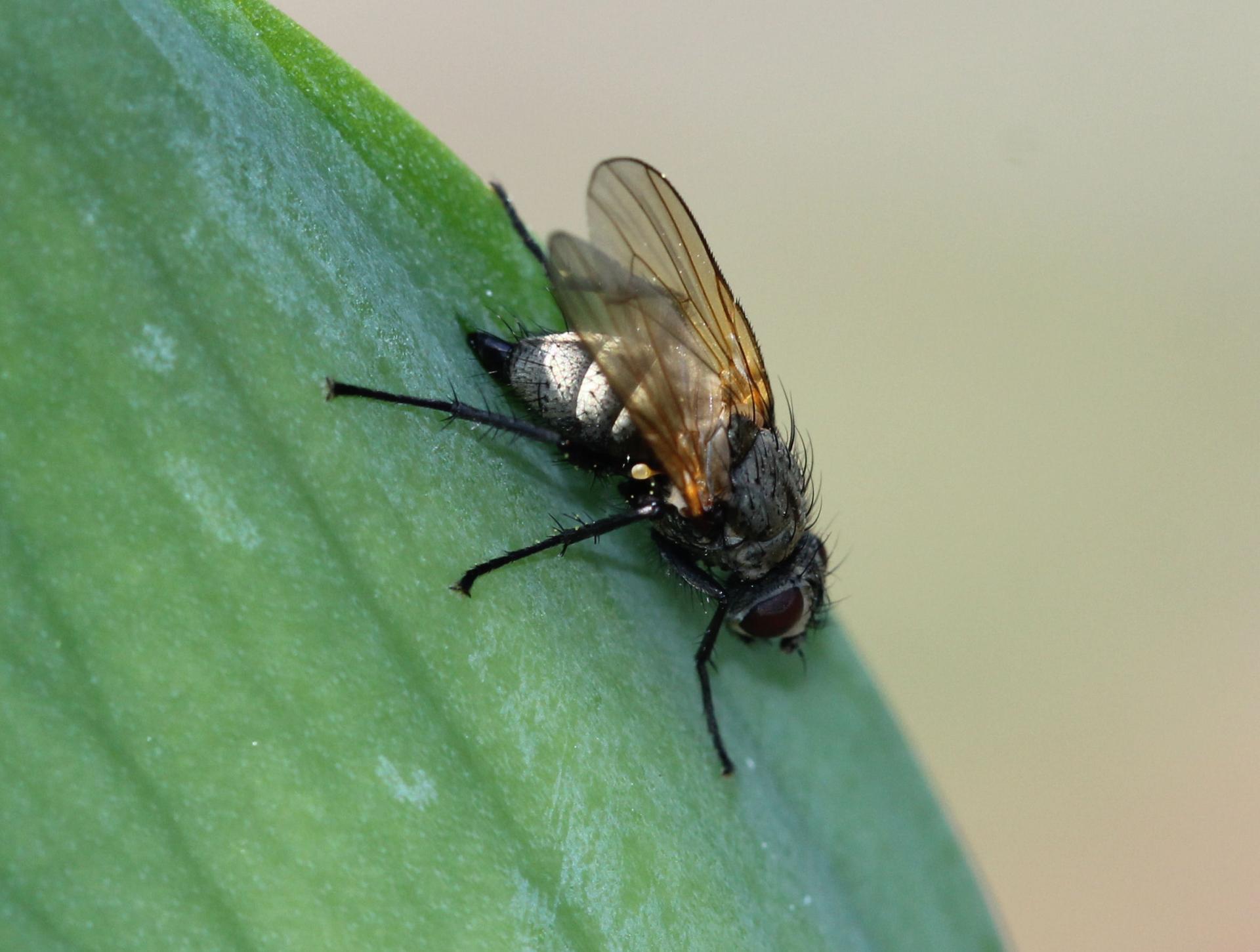
At the imago stage, the onion fly has an appearance that differs little from that of a common fly.
In the adult stage, the pest's body is yellowish-silver-gray with longitudinal stripes on the abdomen and back, black legs, and bronze wings. In this form, the insect flies in April and May, when cherry trees and dandelions—the pest's favorite delicacies—are in bloom. Having sated themselves with the blossoms, the females lay eggs (5–20 at a time) in the soil near the plant (onion) or on the leaves.
You should know: An adult fly lays eggs almost constantly (40–60 eggs throughout its life).
After a few days, larvae emerge. The leaves of affected young plants quickly turn yellow and dry out, and the bulbs rot.
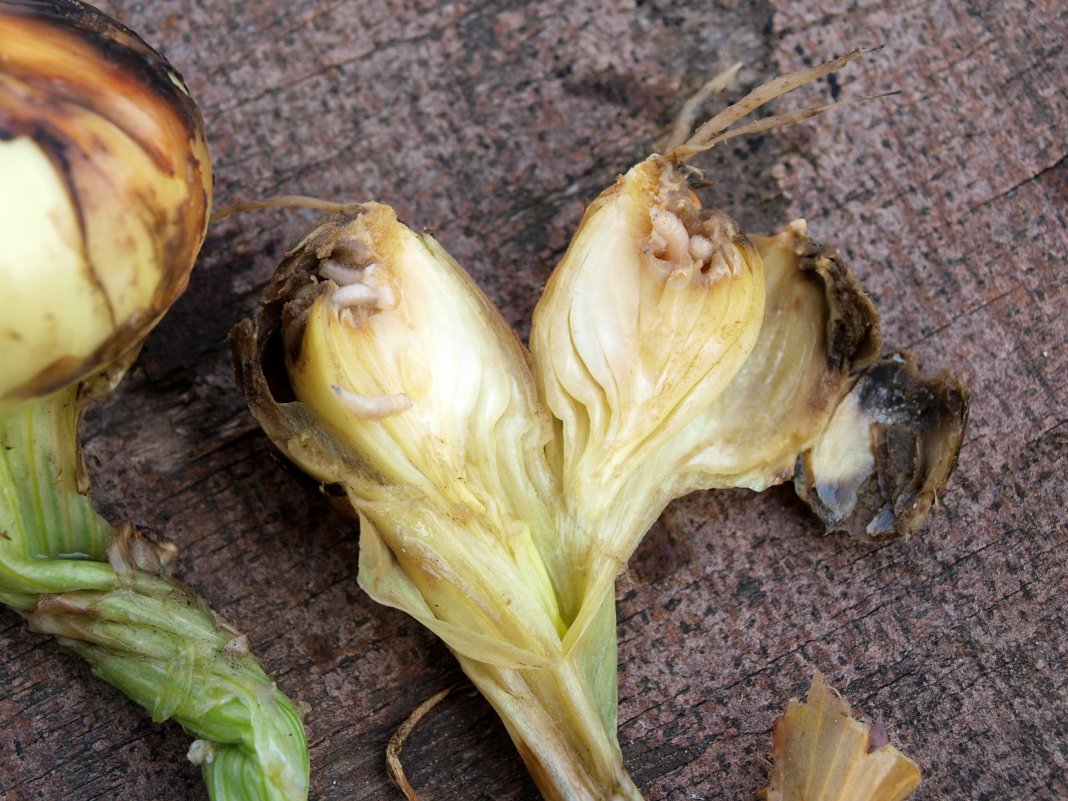
An onion bulb affected by an onion fly rots and the plant dies.
More mature plantings do not die, but yellowing of leaves and deformation of bulbs are obvious.
Important to know: Fruit damaged by pathogens during storage can become a source of infection.
The larvae develop over two weeks, sometimes a month. They penetrate adjacent bulbs from the base. Once formed, the larvae leave the host plant and pupate in the adjacent soil at a depth of 20 cm.
The pupal stage lasts about three weeks. During this stage, the insects overwinter in the soil. The number of generations depends on the climatic conditions in the region.
Table: Onion fly life cycle and pest detection methods
| Onion fly development stage | What does it look like? | Where to find |
| Imago | Length up to 7 mm, color yellowish-silver-gray, with a longitudinal stripe on the abdomen (males), similar to houseflies | On or near onion plants |
| Egg | About 1 mm, white, elongated, with a longitudinal stripe | On leaves, in soil, on the neck of the bulb |
| Larva | It reaches a size of 10 mm, is creamy white in color, has a cylindrical shape with dark mouthparts on the conical side. | On the roots, in the bulbs |
| Doll | About 7 mm, reddish-brown in color, barrel-shaped | In the soil near plants |
The impact of insects on plants
Onion pest numbers are rapidly increasing, meaning the damage is also increasing. Those who rely on flies, which don't feed on onions but only lay eggs, are mistaken. The key is to control the larvae, which devour the harvest. They suck the sap of young plants and feed on their juicy flesh. As a result, the onion tips turn yellow, the scapes and feathers droop, and sometimes curl into a spiral. The pest attacks plants of the lily family, as well as crops grown under plastic.
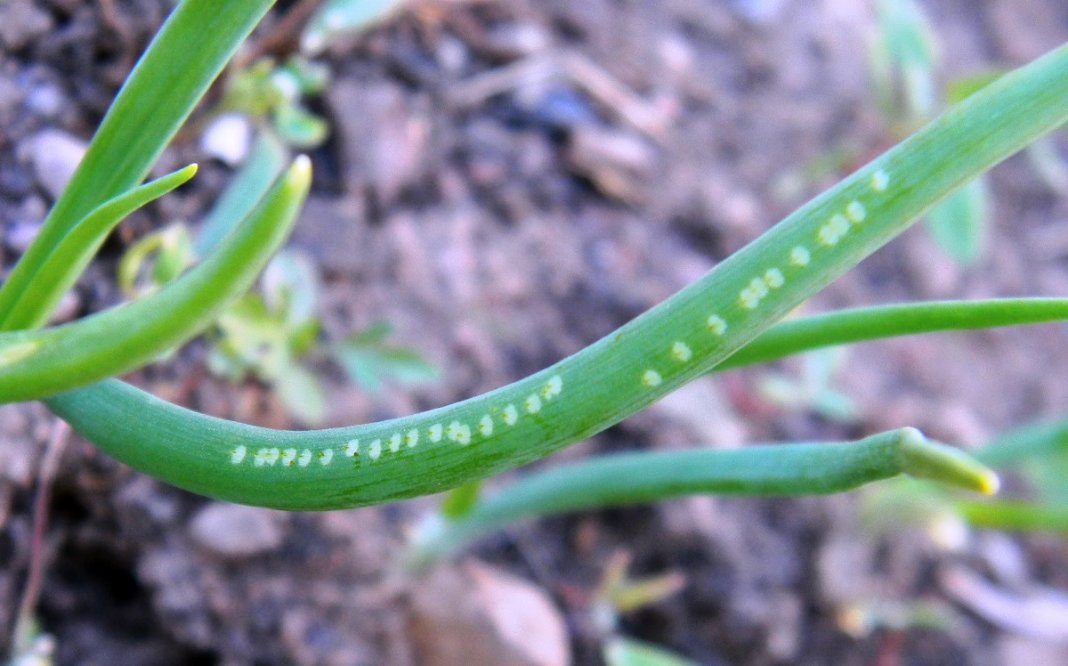
Maggots cause obvious damage, and flies are potentially harmful, but this does not diminish the need to fight them
Methods of control
Regardless of the stage of insect development at which the greatest harm is caused to the plant, pest control should begin when the first signs of damage appear.
Specialized chemicals
When using medications, follow the rules:
- Use chemicals against adults (before laying eggs).
- Set the timing for spraying plants.
- To avoid resistance (“habituation”) in the pest, use products with different principles of action.
- Carefully study the information about the chemicals used (hazard class, area of application, dosage, precautions).
Table: Popular insecticides
| Name | Brief description |
| Piperazine, Pyrantel | Anthelmintic medications. Available in tablet form. Their primary purpose is to treat ascariasis and enterobiasis. They are safe to use as a spray on infected plants. Treated fruits can be eaten. Dosage: Dissolve 5 tablets in 10 liters of water. |
| Fly eater | A product with contact and stomach action. Active ingredient: diazinon. Available in granules. Non-toxic to plants, does not accumulate in the soil. Effective against most pests, both flying and soil-dwelling. A single application to the soil is sufficient. The granules retain their toxic properties for up to 60 days. |
| Creolin | A distillation product of coal or peat. A dark brown or brown oily liquid with a pungent tarry odor. The emulsion is used to prepare an aqueous solution for irrigation (2 tablespoons per bucket of water). Watering: first time when the onion leaves reach 8–10 cm in length; repeat treatment after three weeks. |
| ExtraFlor | A bio-product based on plant components (tobacco extract). Non-toxic, does not accumulate in plants or soil. Protection period: 15 days. |
| Aktara | A Class III hazard insecticide with stomach and contact action. Active ingredient: thiamethoxam. The product is resistant to rain and ultraviolet rays. It is used twice per season. Dangerous for bees and animals. Read the instructions carefully before use. |
| Fitoverm | A Class III hazard insecticide with stomach and contact action. The active ingredient is avermectin C. It paralyzes the pest after entering its stomach. It does not affect eggs, so regular spraying is necessary. Vegetable crops are treated with a solution (5 ml per 1 liter of liquid) during the growing season. A 14-day break is recommended. |
Folk remedies
If chemicals aren't an option, try proven home remedies to control the pest. Prepare "repellent" solutions:
- herbal infusions (valerian, wild rosemary, mint, etc.);
- saline solution for watering sprouts (250–300 g per 10 l of water);
- a solution with tobacco dust (poured into hot water and left to steep for two days);
- aqueous solution of ammonia (20 ml per bucket of water);
- soap solution (30 g of soap per bucket of water);
- turpentine solution for watering the soil (50 ml per bucket of water);
- kerosene solution for watering under the roots of the plant (50 ml per bucket of water);
- tar solution (20 ml per bucket of water).
The method of “dusting” (sprinkling) the beds with ash and dry mustard is also used.
Carefully remove the rotten bulb from the ground and place it in a bucket of water - the larvae will die without turning into flies.
Prevention of the spread of insect pests
To reduce the damage caused by larvae, follow these simple rules:
- Adjust sowing times (do not plant onions during the period of peak fly activity).
- In the fall, plow the land on the site.
- Get rid of weeds in a timely manner.
- Treat the seeds before planting (soak them for 5 minutes in hot water (55 0C), air dry).
- Remove infected plants regularly.
- Harvest your crops thoroughly (do not leave bulbs in the field).
Monitoring onion fly activity as a means of crop protection
To catch adult onion flies, use special traps (cone-shaped with a mesh structure). Bait them with damaged onion bulbs. This method is effective for detecting the pest's flight activity when the plants are still young. You can also use yellow sticky traps, placing them directly above the plants. Monitoring results helps you schedule the right spraying schedule.
Video: How to properly prepare seedlings for planting
Gardeners' tips for controlling onion pests
I always transplant rows of onions with rows of carrots, and indeed, the onion fly is almost gone. It's a simple and practical method for controlling this pest.
You can also water the onions at the roots with a solution of table salt. 300 grams per bucket. After 3-4 hours, water as usual with clean water.
To get rid of onion flies, I prepare a rich pink solution of potassium permanganate and water the plants late in the evening to avoid burning them. If necessary, I repeat this procedure 3-4 times, 8 days apart. This is how I save my onion crop every summer.
Practice crop rotation with onions, sowing them away from previous year's crops. In addition to the advice already given by forum members, you can mulch the plant rows with peat and sprinkle them with strong-smelling substances (tobacco or shag dust, or mothballs mixed with sand). Apply two treatments (weekly intervals) to the first generation of insects and one or two to the second generation. The first treatment should coincide with the onion fly's egg-laying period.
Onion flies can be controlled using both industrial and traditional methods. The key is attention. Conduct preventative maintenance promptly, and the onion pest will bypass your garden. If you spot the pests, choose the appropriate control method and take action. Eliminate the onion fly and enjoy your harvest.