We all love the first warm weekend, which often falls during the May holidays. We can get out into the fresh air with our family or friends, have a small picnic, someone grills kebabs, children frolic with a ball, a frisbee, and other toys, adults chat peacefully as if they don't even have to go to work. This is a true holiday for everyone, which, unfortunately, can be marred by small insects like ticks. If you aren't allergic to insect bites, it might seem like a big deal to you: so they bit you, so it itches, so it'll go away in an hour, and for now, just ignore it. Unfortunately, this isn't the case—ticks carry various dangerous diseases (encephalitis, typhus, tularemia, and others), the pathogens of which enter the human bloodstream through the insect's saliva. Therefore, when outdoors (especially in May-July), you need to be extremely careful around these creatures.
Content
Where and when can you pick up a tick?
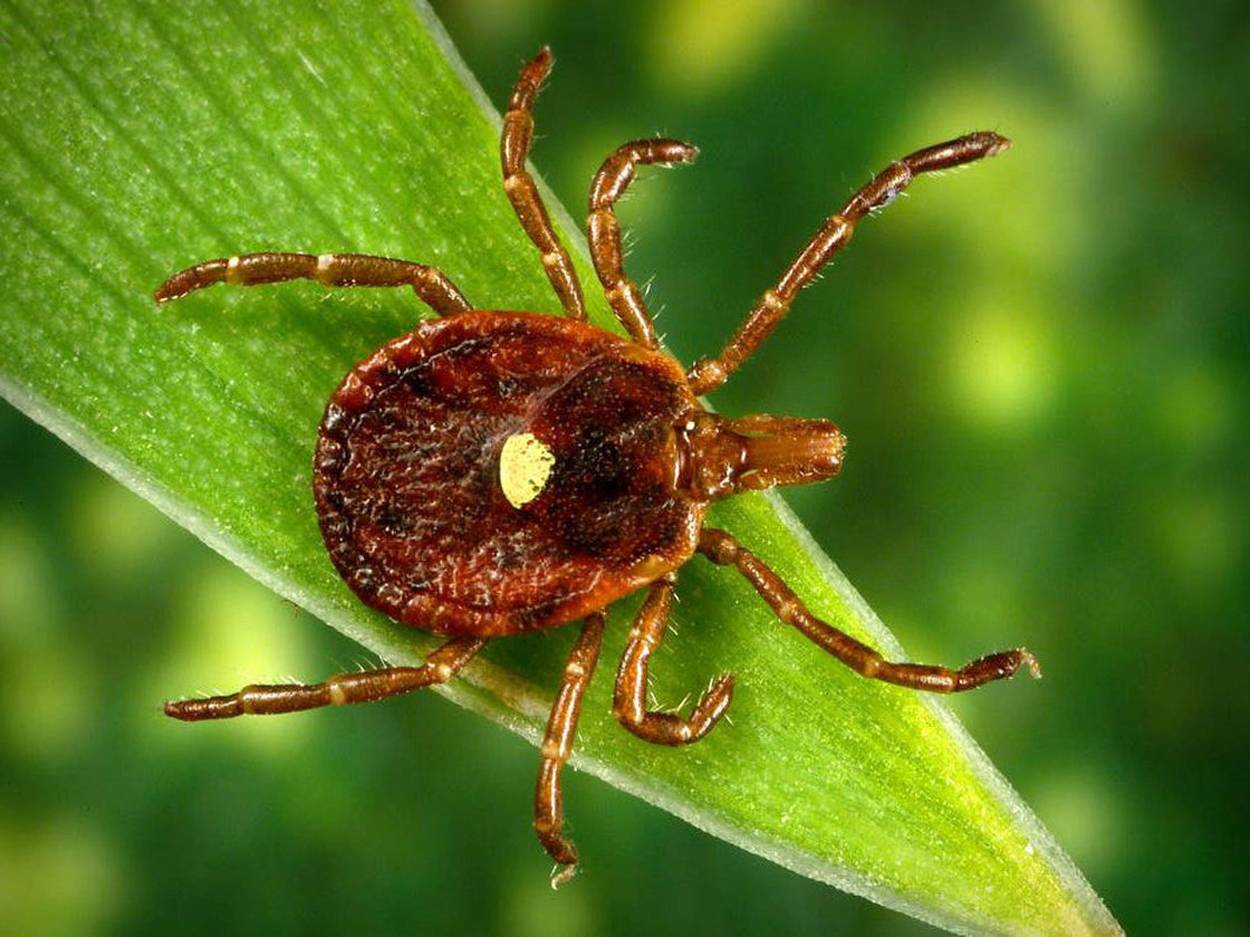
Ticks are very small insects that live primarily in areas with abundant vegetation and high humidity: forests, lawns, and fields. Some people mistakenly believe that these arthropods live in trees—they are everywhere, but trees make it easier for them to spot prey.
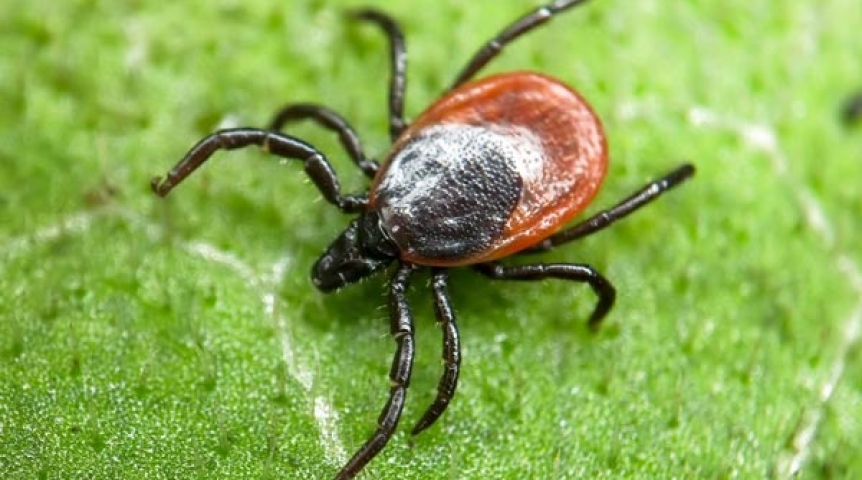
Ticks live where there is very high humidity and a lot of plants.
Ticks feed primarily on plant matter, soil fungi, and other small arthropods, but often feed on the blood of humans and other animals. They have special "heat sensors" that allow them to sense the approach of a warm-blooded creature. As soon as the heat is at its peak (meaning the animal or person is underneath the tick), the "hunter" pounces on its prey and moves to the nearest exposed area of the body, where it begins its parasitic feeding. Ticks can be found in grass, bushes, and damp leaves, so when outdoors, you need to be extremely careful, even if you are far from trees.
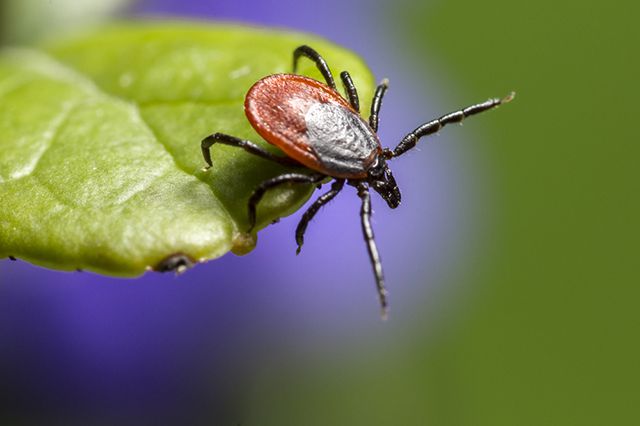
Ticks can be found in grass, trees and bushes.
Like many other insects, ticks hibernate during the cold season and awaken when the temperature outside is already warm enough—8-10 degrees Celsius. In central Russia, this occurs in May, just in time for the holidays. After hibernation, the bodies of all insects begin intensively recovering and gaining strength, requiring large amounts of nutrients, which are abundant in the blood of warm-blooded creatures. Therefore, ticks begin actively "hunting" for people and animals at this time of year. This "hunting" continues until late June or early July, when the body does not require such an abundance of nutrients and has sufficient other food.
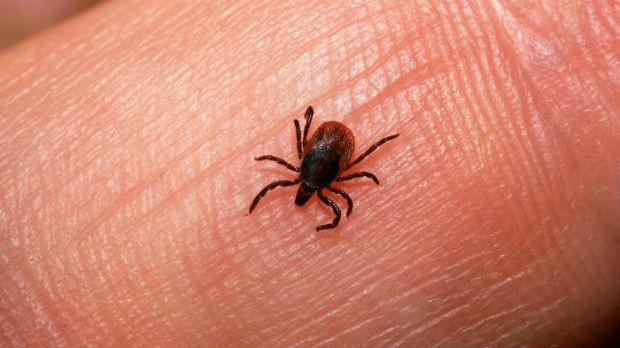
In spring and summer, when it just starts to get warmer, ticks feed on the blood of people and animals
How to protect yourself from ticks
The presence of ticks in nature is no reason to stay home and avoid fresh air. Following a few safety rules and checking all family members and pets for ticks after an outing will make your vacation possible and relatively peaceful.
Cloth
Regardless of how warm it is outside, it's best to avoid wearing revealing clothing when going outdoors until mid-July. Dress accordingly:
- Shoes with a high, thick sole; they should fit snugly to the foot and cover the ankle area; sneakers are ideal;
- high socks with a thick elastic band that stretches well;
- wide long pants; tuck the legs into your socks to prevent ticks from getting inside;
- a turtleneck with a tight-fitting collar and long sleeves; insects will not get into the collar and sleeves;
- long-sleeved jacket;
- a head covering that completely covers the hair; women and girls are advised to wear headscarves, especially if they have long hair; hair under a head covering.
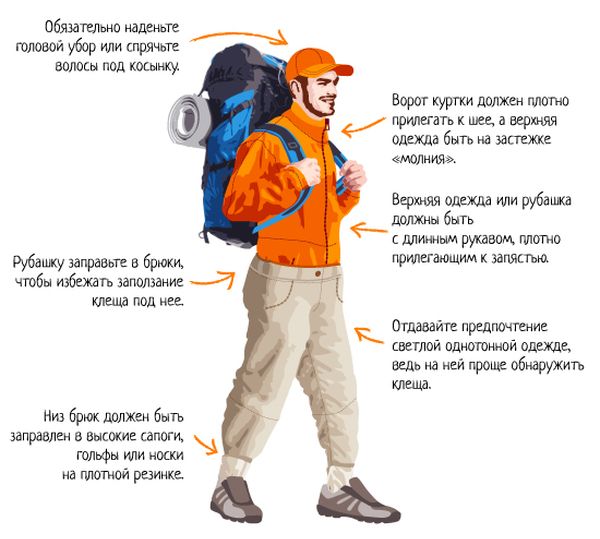
The body should be as closed as possible to make it difficult for ticks to reach the skin.
These are the basic rules of what clothes should be, but there are some more tips:
- wear a jacket and pants made of slippery materials that are very difficult to catch on, so that insects cannot crawl anywhere on your clothes;
- Wear light-colored clothes without patterns - this will make it easier to spot ticks;
Tick repellents
There are a wide variety of tick and insect repellents available that are recommended for use while outdoors.
For processing clothes
It is necessary to distinguish between products intended for treating clothing and leather - not all are suitable for the human body.
The following groups of products are used against ticks and other insects:
- repellent: only repel insects;
- acaricidal: kill arthropods upon contact with the substance;
- insecticidal repellents: they repel and kill if an insect has already landed;
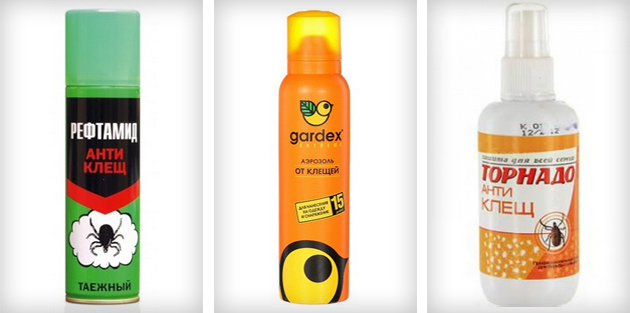
Use tick repellents to keep them away from you.
It is important to remember the following rules when using any tick repellents:
- Apply the product to clothing that is not being worn; lay out and straighten the items you are going to wear; treat them with the product (paying special attention to the ankles, knees, hips, waist, hands, and neck), let them dry, and then put them on;
- On average, the preparations work for 14 days, after which it is necessary to repeat the treatment of clothing;
- Factors such as rain, heat, sweat, etc. may shorten the effectiveness of the product; for more information, please refer to the instructions for each product;
In the spring, the countryside is teeming with ticks. Every year I buy a can of repellent to repel them. This year I used "Klesh-Kaput." I sprayed my clothes liberally. The repellent had a strong odor, and when driving in a hot car, it was quite unpleasant. They say to reapply after 10-15 days. Ticks don't like this odor. At least, I haven't seen any crawling on treated clothing yet. So, the product is considered safe for use.
For me, summer isn't just about the joy of relaxing and getting outdoors with my family and children. But there's also the problem: I'm allergic—and, unfortunately, so are my children. Every mosquito bite causes intense redness and itching, which then turns into something resembling a bloody spot. Of course, I try to treat the bites immediately with creams and ointments, but I try even more to prevent them. For this reason, I use various insect repellent products and apply them to my clothes. The most important things for me are: - Taking it with you - Suitable for children. So, I got Picnic Baby tick and mosquito repellent. It's an aerosol spray in a compact can. It also lasts for two weeks (but for me, that's just a marketing ploy). I wash my children's clothes every time after a walk (since they're dirty from falls and playing outdoors). The spray is definitely chemical-based and has a distinctive smell. For this reason, I carry out the treatment either in the hallway or outside (I spray it, but make sure it doesn’t get on the child’s skin or face). The smell quickly disappears, but the effect remains for the entire walk (sometimes it lasts for several hours). As a result, the children walk peacefully, and I don’t worry about their skin.
For application to skin
Only repellents, meaning products that simply repel insects with their scent, can be applied to the human body. They contain minimal amounts of harmful ingredients, making them safe to apply to the skin. Most products are contraindicated for children under 5 years of age, pregnant and breastfeeding women, and allergy sufferers.
The effectiveness of repellents varies from product to product, and choosing the right one should be tailored to your specific needs. To do this, carefully read the ingredients and potential side effects when applying the product to the skin. Almost all products in this category have a terribly pungent and very persistent odor—there's no getting around it.
All types of ticks cannot stand the strong smell of repellents.
Rules for using repellents:
- Apply the product in small quantities only to exposed areas of the body;
- do not apply the substance to your face;
- Avoid contact with eyes, mouth and respiratory tract;
- Before use, apply a small amount of the product to your wrist and wait 15 minutes; if there is no reaction, you can use this product; if any reaction occurs (itching, burning, redness of the skin, tingling, etc.), put the product aside and do not use it;
- Do not treat the hands of small children - they like to put them in their mouths;
The most convenient and safe for humans are repellent creams and gels that are quickly absorbed into the skin.
At the very beginning of summer, I bought KomarEND mosquito repellent cream, which promised to get rid of not only pesky mosquitoes but also a wider range of annoying insects—flies, midges, ticks, and horseflies. It's easy to apply, but it leaves a sticky, unpleasant feeling on the skin. Regarding insect bites, I used this cream several times before forming a final opinion (almost three months, to be exact), and now I can confidently say that it's not as effective as the manufacturer claims.
What else needs to be processed?
Ideally, every item you own should repel ticks with a pungent odor, so it's worth treating everything: bags, backpacks, and even your tent if you're going hiking. Mothers with small children often go for walks in forested parks and get some fresh air. If your child is already walking and doesn't use a stroller, it's important to treat all their toys with tick repellent. But it is important to keep in mind that the child may either put the toy in his mouth, or his hands after the toy, and then the product may enter the body. If your baby is still very young and you're pushing them in a stroller, treat it with tick repellent to prevent an unexpected visitor from falling from a tree onto your child. Spray not only the wheels, but also the sides of the stroller and even the hood.
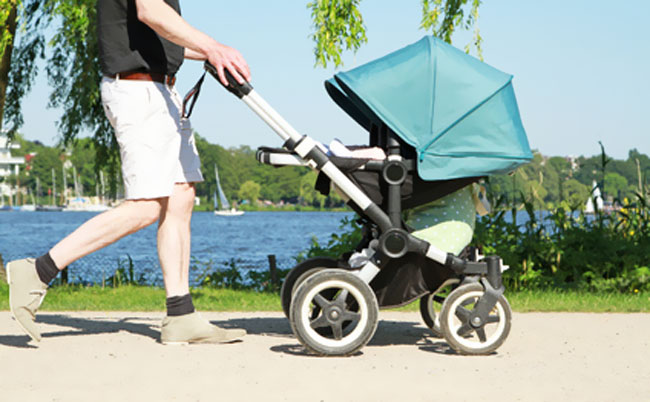
Treat the entire stroller to prevent ticks from reaching your child.
Try to treat all your belongings with tick repellent to avoid accidentally finding a "forest gift" in them when you get home. It's a good thing you spot it early, but if you bring it home and don't notice...
Checking for ticks
Everyone knows that it is necessary to be checked for ticks, but how often should this be done?
Everything should be done sensibly and rationally. If you're not walking alone, check each other's clothing at least once an hour. If you see a tick, knock it to the ground. Try not to touch it with your hands, to prevent it from biting you. Never take off your clothes outside to see if you're carrying this bloodsucker: chances are you haven't, but you'll definitely find one, because the scary, smelly item isn't on something that produces heat, and the insects will be drawn to you.
When you get home, remove all clothing and shoes in a well-lit, closed room where there are few objects a tick could hide. Carefully inspect your clothing for ticks, and if any are found, catch and kill them using paper or a plastic bag—avoid touching the tick with your hands. Next, inspect your shoes, and then those of other family members (have someone else inspect you). If a tick is found, remove it very carefully, ensuring neither the head nor the proboscis remains under the skin.
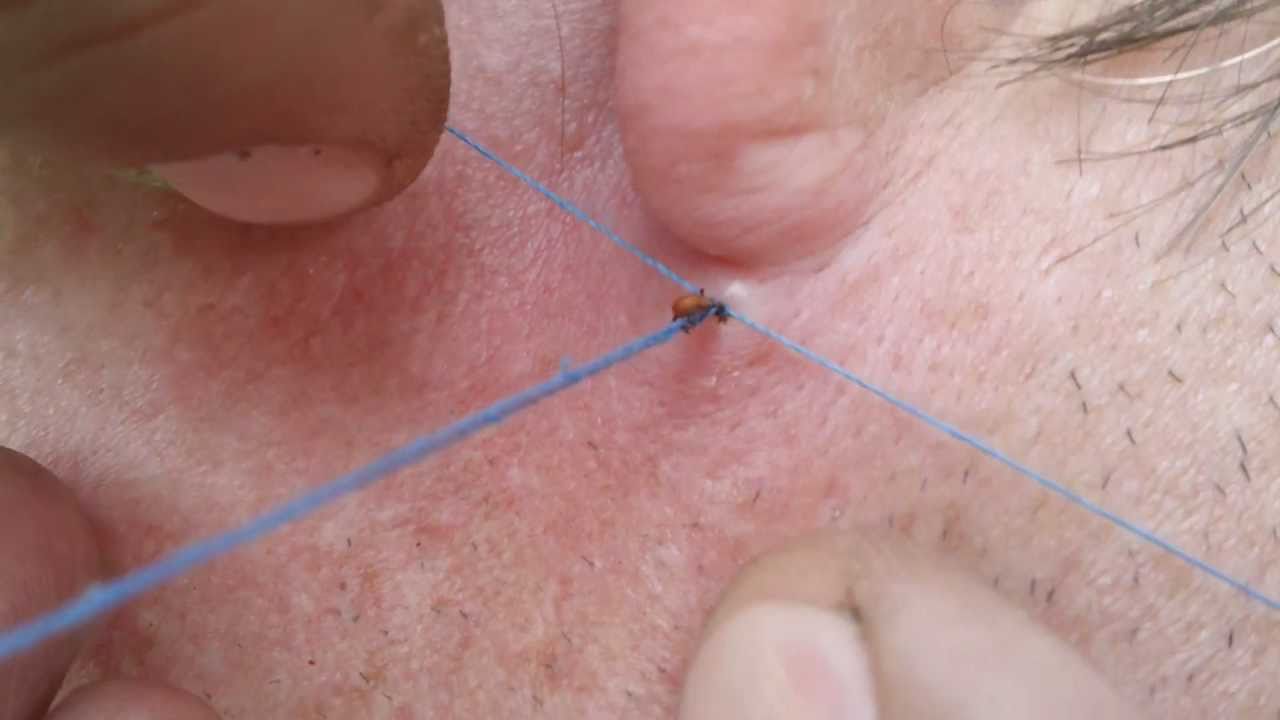
The tick must be removed carefully so as not to tear off the head.
What places do ticks choose to bite?
Ticks only bite exposed areas where they can easily reach, so they should be examined first. If you were wearing open clothing that was easy for the tick to crawl under, the insect could have bitten somewhere further away, so you need to inspect your entire body very carefully.
A reminder for children and their parents: how to protect yourself from ticks
Children should not:
- play with insects and even look at them without adults (what if a tick crawls onto a child and he doesn’t even realize it’s dangerous);
- bring something close to your face (flowers, leaves, even your toys);
- putting something in your mouth; while this is still acceptable at a certain age at home, it is absolutely forbidden outside;
- touch sick animals (they may have ticks);
- climb into bushes and tall grass, climb trees;

Children love to play in the grass, bushes and trees where there are plenty of ticks.
Parents should:
- keep a close eye on your child outside;
- Carefully select the clothes your child will wear for a walk; they should be comfortable for playing, lightweight, yet warm enough to keep your child warm if the weather is changeable, and well-covered;
- Treat your child's clothing with repellent before each time they go outside; it's not necessary to use insect repellent creams and gels; sprays for clothing and shoes are sufficient;
- If the child no longer puts anything in his mouth, treat the toys with tick repellents;
- If your child is not walking on his own, treat the entire stroller with insect repellents (only the outside, not the inside);
- vaccinate your children against ticks;
Prevention of tick-borne diseases
To avoid contracting any infection from ticks, avoid contact with them. If you've been bitten by an insect carrying an infection, the likelihood that you're already infected is very high. To avoid this, get vaccinated against tick-borne encephalitis at the start of tick season and follow these simple rules:
- Dress so that only your hands and face are exposed; clothing should fit tightly to the body;
- use repellents and acaricidal agents to treat clothing and personal belongings;
- Avoid dark places with a lot of plants; walk where it is warm and sunny;
- periodically inspect the clothes you and your comrades are wearing;
- inspect your clothes when you get home, and your pet if it was walking with you;
If you find a tick on yourself, remove it without leaving the head under the skin and have it tested to find out whether you are infected or not.

Vaccinate yourself and your children against tick-borne encephalitis.
How to protect animals from ticks
Ticks bite not only humans but also a variety of animals, from cats and dogs to cows and goats. Regardless of your pet, it should be checked for ticks after every walk. If an insect is found, it should be removed immediately—the likelihood of your pet becoming infected is immediately reduced to a minimum, as piroplasmosis (if the tick is infected) will not enter the animal's bloodstream until two days after the bite, when the bloodsucker will spit some of the victim's blood back into the body. However, it's still important to take your pet to the veterinarian, and the sooner the better.
There are various drops available for dogs and cats that last for a month or two. They have repellent properties, making them safe for animals. Apply a few drops to the withers.
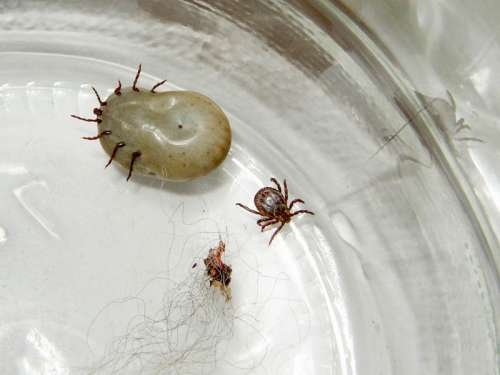
Ticks bite dogs mainly in the neck and chest.
Domestic animals such as cows, goats, and others are treated with special tick control products. These can include repellents and insecticides that kill the insects. These products are specially designed for large and medium-sized cattle, so they are absolutely harmless for them. The product should be applied over the entire length of the animal's body, from the withers to the tail. It's best to do this 12 hours before going outside. This time is required for the product to penetrate the body (it's harmless) and be secreted by the sebaceous glands. The instructions state that the product is effective for up to 6 weeks, but you should only expect it to last 3–3.5 weeks, after which it's recommended to reapply.

Cows have short hair, which is not an obstacle for various insects.
Ticks are very dangerous insects, causing significant problems for both humans and various animals. It's essential to protect yourself from them as much as possible (and remember your own safety) and help our little animal friends avoid them.